Medically Reviewed By
Dr. Ch. Srujith, MBBS, MD (General Medicine)
General Physician & Diabetologist | 15+ Years Experience
View Doctor Profile →High blood sugar vs low blood sugar can cause very different symptoms and require very different responses. Understanding the difference is especially important for people with diabetes who use insulin or other glucose-lowering medicines.
The medical terms are hyperglycemia for high blood glucose and hypoglycemia for low blood glucose. The American Diabetes Association (ADA) defines clinically important hypoglycemia as glucose below 70 mg/dL (3.9 mmol/L), with more severe categories below 54 mg/dL.
Table of Contents
High Blood Sugar vs Low Blood Sugar: Quick Comparison
| Feature | High Blood Sugar | Low Blood Sugar |
|---|---|---|
| Medical term | Hyperglycemia | Hypoglycemia |
| Common glucose concern | Often >180 mg/dL in people with diabetes | <70 mg/dL |
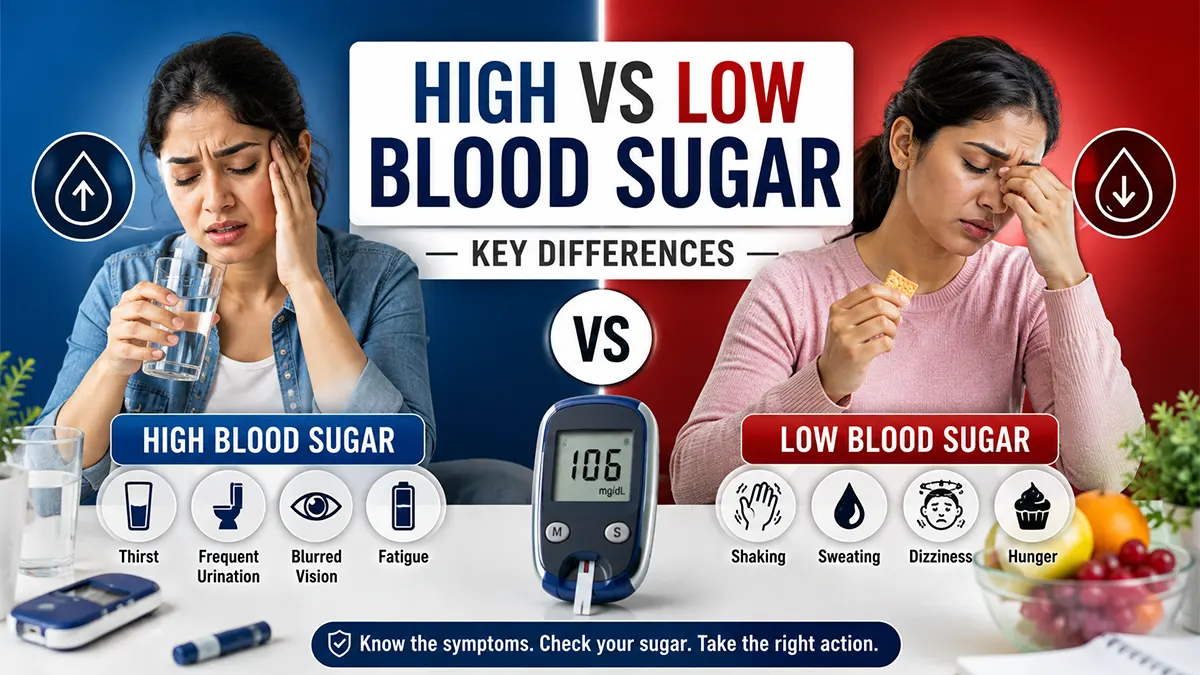
| Common symptoms | Thirst, frequent urination, tiredness, blurred vision | Shaking, sweating, hunger, confusion |
| Common causes | Illness, stress, food, insufficient insulin/medication | Insulin/medication, missed meals, exercise |
| Immediate concern | Severe hyperglycemia can lead to DKA or HHS | Severe hypoglycemia can cause loss of consciousness or seizures |
| Usual response | Follow the diabetes treatment/sick-day plan | Treat promptly with fast-acting glucose if conscious and able to swallow |
For many people with diabetes, glucose above 180 mg/dL is considered high, although individual targets can differ.
What Is Low Blood Sugar?
Low blood sugar is called hypoglycemia.
For people with diabetes, the ADA classifies:
- Level 1: glucose <70 and ≥54 mg/dL
- Level 2: glucose <54 mg/dL
- Level 3: severe hypoglycemia involving altered mental or physical function that requires assistance from another person, regardless of the glucose number.
A reading below 70 mg/dL is clinically important even when a person does not notice symptoms.
How to Lower Blood Sugar Naturally: 10 Healthy Ways
Symptoms of Low Blood Sugar
Low blood glucose can develop relatively quickly.
Common symptoms include:
- Shaking or trembling
- Sweating
- Hunger
- Irritability
- Fast heartbeat
- Headache
- Confusion
- Weakness
- Dizziness
The ADA identifies symptoms including shakiness, irritability, confusion, tachycardia, sweating, and hunger.
Severe hypoglycemia can cause altered mental or physical functioning and may progress to loss of consciousness, seizure, or coma.
A1C Chart Explained: Normal, Prediabetes & Diabetes Ranges
What Causes Low Blood Sugar?
Hypoglycemia is particularly common among people using insulin or certain diabetes medicines.
Possible triggers include:
1. Taking too much insulin or certain medication
A medication dose that is too high for the amount of food eaten can cause glucose to fall.
2. Skipping or delaying a meal
Not eating enough carbohydrate can contribute to hypoglycemia, particularly when using insulin or certain glucose-lowering medicines.
3. Increased physical activity
Exercise can lower glucose during activity and for some time afterward.
4. Alcohol
Alcohol can contribute to hypoglycemia, particularly when consumed without enough food.
5. Changes in eating patterns
A significant reduction in food intake can alter the balance between medication and glucose availability.
The appropriate cause should be evaluated based on the individual’s medications, meals, activity, and medical circumstances.
Fasting Blood Sugar Chart: Normal, Prediabetes & Diabetes Ranges (2026)
What Should You Do If Blood Sugar Is Low?
For a conscious person who can safely swallow, the ADA recommends glucose as the preferred treatment for hypoglycemia below 70 mg/dL. For most people, 15 g of fast-acting carbohydrate is recommended, followed by rechecking glucose after 15 minutes. Treatment can be repeated if the glucose remains low.
Examples of fast-acting carbohydrate can include glucose tablets or another appropriate glucose-containing carbohydrate.
What if the person cannot swallow?
Do not give food or liquid by mouth to someone who is unconscious, having a seizure, severely confused, or unable to swallow safely.
Severe hypoglycemia may require glucagon and emergency medical assistance. NIDDK identifies glucagon as the best treatment for severely low blood glucose and recommends teaching family members or others how to use it when prescribed.
What Is High Blood Sugar?
High blood sugar is called hyperglycemia.
For many people with diabetes, blood glucose above 180 mg/dL (10.0 mmol/L) is considered high, although glucose targets are individualized.
A single elevated glucose reading does not necessarily mean a medical emergency.
However, persistent or very high glucose, particularly when accompanied by concerning symptoms, can require urgent medical assessment.
Normal Blood Sugar Levels by Age: What Is a Healthy Range?
Symptoms of High Blood Sugar
High blood glucose can cause:
- Increased thirst
- Frequent urination
- Tiredness
- Blurred vision
- Dehydration
NIDDK lists thirst, frequent urination, tiredness, and blurry vision among possible symptoms of high blood glucose.
Some people may have few or no noticeable symptoms even when their glucose is elevated.
When High Blood Sugar Becomes an Emergency: Warning Signs, DKA & HHS (2026)
What Causes High Blood Sugar?
Several factors can raise blood glucose.
Common causes include:
- Eating more carbohydrate than planned
- Missing or insufficient diabetes medication
- Insufficient insulin
- Illness or infection
- Physical or emotional stress
- Reduced physical activity
- Certain medications, including some steroids
- Hormonal changes
If high readings occur repeatedly, the diabetes treatment plan may need review.
NIDDK notes that frequent high blood glucose may require changes to a person’s meal plan, physical activity plan, or medicines.
High vs Low Blood Sugar Symptoms Can Overlap
This is an important point.
Some symptoms, such as:
- Weakness
- Headache
- Confusion
- Feeling unwell
can occur for different reasons.
Therefore, symptoms alone cannot reliably tell you whether blood sugar is high or low.
If you have a glucose meter or CGM and have symptoms, checking your glucose can help determine the appropriate response.
Diabetes Symptoms in Children: Early Warning Signs Every Parent Should Know
Why Low Blood Sugar Can Become an Emergency
Severe hypoglycemia can affect the brain because glucose is an important energy source.
Level 3 hypoglycemia is defined by the need for assistance because of altered mental or physical functioning. Severe episodes can lead to loss of consciousness, seizures, coma, or death.
This is why low glucose should be treated promptly.
Why Very High Blood Sugar Can Become an Emergency
Very high blood glucose can contribute to serious metabolic emergencies, particularly:
Diabetic Ketoacidosis (DKA)
DKA is a potentially life-threatening complication involving ketosis and metabolic acidosis along with diabetes/hyperglycemia or a previous history of diabetes. The 2026 ADA criteria include glucose ≥200 mg/dL or a prior history of diabetes, plus significant ketosis and metabolic acidosis.
DKA is most commonly associated with type 1 diabetes but can also occur in some people with type 2 diabetes.
Hyperosmolar Hyperglycemic State (HHS)
HHS is another serious hyperglycemic emergency. The ADA’s 2026 criteria include plasma glucose ≥600 mg/dL, significant hyperosmolarity, and the absence of significant ketoacidosis.
Signs of Diabetes in Men: 12 Early Warning Symptoms You Shouldn’t Ignore
High Blood Sugar vs Low Blood Sugar: The Biggest Difference
The simplest way to remember the difference is:
Low blood sugar → glucose is too low and needs prompt correction.
High blood sugar → glucose is above the person’s desired range and may require adjustment of the diabetes management plan.
But very high glucose with symptoms of DKA or HHS is an emergency.
High Blood Sugar vs Low Blood Sugar: Key Numbers
Low Blood Sugar
<70 mg/dL (3.9 mmol/L)
Clinically important hypoglycemia.
<54 mg/dL (3.0 mmol/L)
Level 2 hypoglycemia requiring immediate action.
Level 3
Severe hypoglycemia requiring assistance, regardless of the measured glucose level.
High Blood Sugar
For many people with diabetes:
>180 mg/dL (10.0 mmol/L)
Above the commonly used target range, although individual targets vary.
≥600 mg/dL (33.3 mmol/L)
Meets the glucose criterion for HHS, but HHS requires additional diagnostic criteria.
Important: A glucose number alone does not diagnose DKA or HHS. These emergencies require clinical and laboratory assessment.
Signs of Diabetes in Women: 12 Early Warning Symptoms You Shouldn’t Ignore (2026)
When to Seek Urgent Medical Help
Seek urgent medical attention if:
- A person with low glucose is unconscious or cannot safely swallow
- A seizure occurs
- Severe confusion or altered consciousness develops
- Very high glucose occurs with vomiting
- There is difficulty breathing
- There is severe dehydration
- There is fainting
- Fruity-smelling breath or other symptoms suggest DKA
NIDDK identifies DKA as a medical emergency and lists symptoms including extreme tiredness, difficulty breathing, fruity-smelling breath, and fainting.
High Blood Sugar Symptoms
High blood sugar, or hyperglycemia, can develop gradually. Common symptoms include:
- Increased thirst
- Frequent urination
- Tiredness
- Blurred vision
- Dehydration
NIDDK notes that for many people with diabetes, glucose above 180 mg/dL is considered high, although individual targets may differ.
A person can also have elevated glucose without obvious symptoms.
Low Blood Sugar Symptoms
Low blood sugar, or hypoglycemia, often develops more quickly.
Common symptoms include:
- Shaking or trembling
- Sweating
- Hunger
- Dizziness
- Headache
- Irritability
- Fast heartbeat
- Confusion
- Weakness
NIDDK notes that severe hypoglycemia can cause loss of consciousness or seizures.
10 Silent Symptoms of High Blood Sugar You Shouldn’t Ignore (2026 Guide)
High vs Low Blood Sugar Symptoms
| Symptom | High Blood Sugar | Low Blood Sugar |
|---|---|---|
| Thirst | Common | Less typical |
| Frequent urination | Common | Not typical |
| Blurred vision | Possible | Possible |
| Shaking | Not typical | Common |
| Sweating | Not typical | Common |
| Hunger | Not typical | Common |
| Confusion | Possible when severe | Possible |
| Weakness/tiredness | Common | Possible |
| Seizure | Possible in severe metabolic emergencies | Possible in severe hypoglycemia |
| Loss of consciousness | Possible in severe emergencies | Possible in severe hypoglycemia |
Important: This table is for general education. Symptoms alone cannot reliably determine whether glucose is high or low.
How to Tell If Blood Sugar Is High or Low
If you have a glucose meter or CGM, check your glucose rather than guessing from symptoms.
For many people with diabetes:
Below 70 mg/dL
This is considered low blood glucose and requires prompt attention.
70–180 mg/dL
This is a commonly used target range for many people with diabetes, although individual targets can differ.
Above 180 mg/dL
This is generally considered high blood glucose for many people with diabetes.
These numbers should not be interpreted as universal targets for every person.
What to Do When Blood Sugar Is Low
If your glucose is below 70 mg/dL and you are conscious and able to swallow safely, the ADA recommends glucose as the preferred treatment.
For most people, approximately 15 g of fast-acting carbohydrate is used, followed by another glucose check after about 15 minutes. If glucose remains low, treatment may need to be repeated.
Examples can include:
- Glucose tablets
- Glucose gel
- An appropriate amount of regular fruit juice
- Another suitable fast-acting carbohydrate containing glucose
NIDDK provides similar guidance and recommends rechecking glucose after 15 minutes.
If the person cannot swallow
Do not give food or liquid by mouth to someone who is unconscious, having a seizure, severely confused, or unable to swallow safely.
Severe hypoglycemia may require glucagon and emergency medical assistance. NIDDK identifies glucagon as the best treatment for severely low blood glucose when a person cannot treat themselves.
What to Do When Blood Sugar Is High
The response to high glucose depends on:
- Your diabetes type
- Your medications
- Your usual glucose targets
- How high the glucose is
- Whether you have symptoms
- Whether ketones are present
- Whether you are sick
Follow the diabetes management or sick-day plan provided by your healthcare team.
Do not take extra insulin or other medication unless your healthcare professional has given you instructions for doing so.
NIDDK notes that frequent high glucose may require changes to the meal plan, physical activity plan, or medicines.
High Blood Sugar During Illness
Illness can make glucose management more difficult.
In people with diabetes, infections and other illnesses can increase glucose and may increase the risk of serious complications.
If you are sick, follow your healthcare team’s sick-day instructions. Depending on your diabetes type and treatment, you may need to monitor glucose more frequently and check ketones.
NIDDK notes that people at risk of DKA may be advised to check urine or blood ketones when appropriate.
When High Blood Sugar May Mean DKA
Diabetic ketoacidosis (DKA) is a serious and potentially life-threatening complication.
The ADA’s 2026 diagnostic criteria include:
- Glucose ≥200 mg/dL or a previous history of diabetes
- Significant ketosis
- Metabolic acidosis
All required criteria must be evaluated to diagnose DKA.
DKA is most commonly associated with type 1 diabetes, although it can also occur in some people with type 2 diabetes.
Possible warning symptoms
- Extreme tiredness
- Difficulty breathing
- Fruity-smelling breath
- Vomiting
- Dehydration
- Confusion
- Fainting
DKA requires urgent medical treatment.
What Is HHS?
Hyperosmolar hyperglycemic state (HHS) is another serious hyperglycemic emergency.
The ADA’s 2026 diagnostic criteria include:
- Plasma glucose ≥600 mg/dL
- Significant hyperosmolarity
- No significant ketonemia
- No significant metabolic acidosis
HHS can cause severe dehydration and altered mental status and requires urgent medical treatment.
A glucose reading of 600 mg/dL by itself does not establish HHS; the complete clinical and laboratory criteria are required.
Can High Blood Sugar Become Low Blood Sugar?
Yes.
This can happen when someone with diabetes takes insulin or certain glucose-lowering medications and then:
- Eats less carbohydrate than expected
- Skips a meal
- Exercises more than usual
- Drinks alcohol
- Takes too much medication
NIDDK identifies insulin and some other diabetes medicines as important causes of hypoglycemia. Physical activity can also lower glucose during and after exercise.
This is one reason glucose monitoring and individualized medication instructions are important.
Can Low Blood Sugar Cause High Blood Sugar Later?
It can happen indirectly.
For example, someone may consume a large amount of carbohydrate after experiencing hypoglycemia, resulting in a subsequent glucose rise.
Repeated hypoglycemia can also lead people to change their medication or eating behavior out of fear of another low.
The better approach is to identify why the low occurred and discuss recurring episodes with your healthcare team.
Why Do Some People Not Feel Low Blood Sugar?
Some people with diabetes develop impaired hypoglycemia awareness, meaning they don’t experience the usual warning symptoms when glucose becomes dangerously low.
This can be particularly concerning because a person may not recognize that treatment is needed.
The ADA recommends assessing people at risk for hypoglycemia for impaired awareness and reviewing hypoglycemic events regularly.
If you frequently have low glucose without symptoms, discuss it with your healthcare professional.
Diabetes Guide: Symptoms, Causes, Types, Treatment & Prevention (2026)
High Blood Sugar vs Low Blood Sugar at Night
Both conditions can occur during sleep.
Nighttime low blood sugar may cause:
- Sweating
- Nightmares
- Restless sleep
- Waking with a headache
- Confusion or tiredness after waking
NIDDK notes that nighttime hypoglycemia can continue for several hours and may not always wake the person.
Nighttime high blood sugar may cause:
- Increased thirst
- Frequent urination
- Poor sleep
- Tiredness the next day
If nighttime highs or lows happen repeatedly, discuss the pattern with your healthcare team.
High Blood Sugar vs Low Blood Sugar: Treatment Difference
Low blood sugar
Goal: Raise glucose safely.
For a conscious person who can swallow, fast-acting glucose/carbohydrate is generally used, followed by rechecking glucose.
High blood sugar
Goal: Identify and address the cause while following the person’s individualized diabetes plan.
Do not attempt to rapidly correct severe hyperglycemia with unapproved home remedies or unsupervised medication changes.
High Blood Sugar vs Low Blood Sugar: A Simple Memory Trick
Think of it this way:
LOW = GLUCOSE NEEDED
If glucose is below 70 mg/dL, treat promptly according to your hypoglycemia plan.
HIGH = FIND THE CAUSE
Consider food, medication, physical activity, illness, stress, and other factors, and follow your diabetes management plan.
VERY HIGH + SERIOUS SYMPTOMS = URGENT CARE
Symptoms suggesting DKA or another hyperglycemic emergency should not be managed with home remedies.
Important Safety Warning
If someone is:
- Unconscious
- Having a seizure
- Unable to swallow
- Severely confused
- Having difficulty breathing
- Fainting
- Experiencing severe vomiting or dehydration
Do not rely on an online blood sugar chart or home remedy. Seek urgent medical care.
For severe hypoglycemia, glucagon may be needed when prescribed and available. For suspected DKA or HHS, urgent medical evaluation is required.
High Blood Sugar vs Low Blood Sugar: What Should You Do?
Knowing the difference between high blood sugar and low blood sugar is useful, but the correct response depends on the actual glucose reading, symptoms, medications, and your individual diabetes plan.
1. If Your Blood Sugar Is Low
For most people with diabetes, below 70 mg/dL (3.9 mmol/L) is considered hypoglycemia.
If you are awake and can swallow safely:
- Take about 15 g of fast-acting carbohydrate.
- Wait about 15 minutes.
- Check your glucose again.
- If it remains below 70 mg/dL, repeat the treatment.
- Once glucose has recovered, follow your healthcare professional’s advice about food or your next meal.
This is commonly known as the 15-15 approach.
Examples of fast-acting carbohydrate
Depending on your treatment plan, examples can include:
- Glucose tablets
- Glucose gel
- An appropriate amount of regular juice
- Other rapidly absorbed carbohydrate containing glucose
Chocolate and high-fat foods are generally not the preferred first treatment because fat can slow glucose absorption.
2. What If Low Blood Sugar Is Severe?
Severe hypoglycemia can cause:
- Severe confusion
- Loss of consciousness
- Seizures
- Inability to swallow
- Need for assistance from another person
If someone cannot safely swallow, do not give food, drinks, or tablets by mouth.
If glucagon has been prescribed and is available, it can be administered according to the product instructions. Emergency medical assistance should also be sought for severe symptoms.
Family members and close contacts of people at risk for severe hypoglycemia should know how to recognize the condition and use prescribed glucagon.
3. If Your Blood Sugar Is High
A high glucose reading does not always mean you need emergency treatment.
For many people with diabetes, glucose above 180 mg/dL (10.0 mmol/L) is considered high, although individualized targets can differ.
If your glucose is repeatedly high:
- Follow your prescribed diabetes plan.
- Take medicines as directed.
- Review recent meals and carbohydrate intake.
- Consider recent physical activity.
- Check whether you are ill or experiencing unusual stress.
- Monitor glucose as recommended.
- Contact your healthcare professional if high readings persist.
Do not take additional insulin or medication unless your healthcare team has provided instructions for correction doses.
4. Check Ketones When Appropriate
People with diabetes, especially those with type 1 diabetes, may be instructed to check ketones when blood glucose is very high or during illness.
Ketones can be measured using urine or blood tests.
High ketones together with hyperglycemia can indicate a risk of diabetic ketoacidosis (DKA).
Follow the sick-day and ketone-testing instructions provided by your healthcare team.
5. High Blood Sugar With DKA Symptoms Is Different
DKA is a serious medical emergency.
Warning symptoms can include:
- Nausea or vomiting
- Abdominal pain
- Deep or difficult breathing
- Fruity-smelling breath
- Severe tiredness
- Dehydration
- Confusion
- Loss of consciousness
The ADA’s 2026 criteria for DKA require more than simply having a high glucose reading; diagnosis involves hyperglycemia or a history of diabetes together with significant ketosis and metabolic acidosis.
Do not try to treat suspected DKA with exercise, fasting, herbal remedies, or extra water alone.
Urgent medical evaluation is required.
6. What Is the Difference Between DKA and HHS?
Both are serious hyperglycemic emergencies, but they are not identical.
DKA
DKA involves:
Hyperglycemia or diabetes history + ketosis + metabolic acidosis
It is particularly associated with type 1 diabetes but can also occur in people with type 2 diabetes.
HHS
HHS involves extremely high glucose and severe hyperosmolarity without significant ketoacidosis.
The ADA’s 2026 diagnostic criteria include plasma glucose ≥600 mg/dL (33.3 mmol/L) along with the required hyperosmolarity criteria.
Both conditions require urgent medical treatment.
7. Can High and Low Blood Sugar Have Similar Symptoms?
Yes.
Some symptoms can occur with both conditions, including:
- Weakness
- Headache
- Confusion
- Feeling unwell
- Difficulty concentrating
This is why symptoms alone aren’t enough to determine whether glucose is high or low.
If possible, check your glucose using your meter or CGM.
8. Why Medication Matters
The risk of low blood sugar is particularly important for people using:
- Insulin
- Sulfonylureas
- Other glucose-lowering treatments that can cause hypoglycemia
A person may develop low glucose after taking medication if they:
- Skip a meal
- Eat less than expected
- Exercise more than usual
- Drink alcohol
- Take more medication than prescribed
Medication should therefore be considered whenever unexplained lows occur.
9. Exercise and Blood Sugar
Exercise usually has a beneficial effect on glucose management, but the response isn’t always predictable.
Physical activity can lower glucose during and after exercise. However, high-intensity exercise can sometimes temporarily raise glucose.
People using insulin or medicines that can cause hypoglycemia should follow their individualized exercise and glucose-monitoring instructions.
Don’t use strenuous exercise as a way to force down a very high glucose reading when you may have ketones or symptoms of DKA.
10. Alcohol and Low Blood Sugar
Alcohol can increase the risk of hypoglycemia in people using insulin or certain diabetes medicines, particularly when consumed without enough food.
The risk can occur during or after drinking because alcohol can interfere with the liver’s release of glucose.
If you have diabetes and drink alcohol, discuss safe limits and precautions with your healthcare professional.
11. Why Blood Sugar May Rise in the Morning
Some people notice higher glucose after waking.
Possible contributors include:
- The dawn phenomenon
- Insufficient medication or insulin coverage
- Eating patterns
- Illness
- Stress
- Poor sleep
Don’t assume that every high morning reading has the same cause.
If fasting glucose is repeatedly elevated, your healthcare professional can help identify the pattern and determine whether your treatment plan needs adjustment.
12. Why Blood Sugar May Drop Overnight
Nighttime hypoglycemia can occur, particularly in people taking insulin or certain diabetes medicines.
Possible warning signs include:
- Night sweats
- Restless sleep
- Nightmares
- Waking with a headache
- Feeling unusually tired or confused after waking
CGM can sometimes identify nighttime glucose changes that a person might otherwise miss.
If you repeatedly experience nighttime lows, discuss them with your healthcare team.
13. High Blood Sugar vs Low Blood Sugar During Illness
Illness can affect glucose in different ways.
Infections and physical stress can increase blood glucose. At the same time, reduced food intake or medication changes can increase the risk of hypoglycemia in some people.
If you become sick:
- Monitor glucose according to your sick-day plan.
- Continue prescribed medication unless your healthcare team instructs otherwise.
- Check ketones when recommended.
- Stay appropriately hydrated.
- Seek medical advice if symptoms or glucose levels become concerning.
People using insulin generally should not stop insulin simply because they are not eating, unless specifically instructed by their healthcare team.
14. Why a Glucose Meter Is Important
A glucose meter can provide an objective measurement when symptoms are confusing.
For example:
Shaking + sweating → could indicate low glucose
Thirst + frequent urination → may indicate high glucose
But instead of assuming, checking glucose provides useful information.
CGM systems can also show glucose trends and may provide alerts for high or low glucose, depending on the device and settings.
15. Blood Sugar Targets Are Individual
It’s important not to treat every glucose number as universal.
Targets may vary according to:
- Age
- Type of diabetes
- Pregnancy
- Medications
- Hypoglycemia risk
- Other health conditions
- Individual treatment goals
The ADA therefore recommends individualized glycemic goals rather than applying exactly the same target to everyone.
High Blood Sugar vs Low Blood Sugar: Quick Action Guide
| Situation | General action |
|---|---|
| Glucose <70 mg/dL | Treat hypoglycemia promptly if conscious and able to swallow |
| Glucose <54 mg/dL | More serious hypoglycemia requiring immediate treatment |
| Severe low + unable to swallow | Glucagon if available/prescribed + emergency assistance |
| Repeated high readings | Follow treatment plan and contact healthcare professional |
| Very high glucose + vomiting | Urgent medical assessment |
| High glucose + difficult breathing | Urgent medical assessment |
| High glucose + confusion/fainting | Urgent medical assessment |
| Suspected DKA/HHS | Emergency medical evaluation |
Common Mistakes to Avoid
❌ Mistake 1: Treating every symptom as low blood sugar
Symptoms overlap. Check glucose whenever possible.
❌ Mistake 2: Giving food to an unconscious person
This can cause choking or aspiration.
❌ Mistake 3: Taking extra insulin without instructions
Correction doses should follow an individualized plan from your healthcare team.
❌ Mistake 4: Exercising intensely when DKA may be present
Suspected DKA requires medical assessment rather than an exercise-based correction.
❌ Mistake 5: Ignoring repeated lows
Frequent hypoglycemia may indicate that medication, meals, activity, or other factors need review.
❌ Mistake 6: Assuming one high reading means an emergency
Context matters. Persistent or very high glucose, particularly with symptoms, is more concerning.
Final Takeaway
The simplest distinction is:
🟢 LOW BLOOD SUGAR
Below 70 mg/dL → treat promptly according to your hypoglycemia plan.
🟠 HIGH BLOOD SUGAR
Above your individualized target → follow your diabetes management plan and investigate persistent elevations.
🔴 SERIOUS WARNING SIGNS
Loss of consciousness, seizures, difficulty breathing, severe vomiting, confusion, or suspected DKA/HHS → seek urgent medical care.
Understanding high blood sugar vs low blood sugar can help you respond appropriately, but your personal diabetes treatment plan should always take priority over general information.
Sources: American Diabetes Association, Standards of Care in Diabetes—2026; National Institute of Diabetes and Digestive and Kidney Diseases (NIDDK).
Prevention, Daily Management & FAQs
How to Prevent Low Blood Sugar
If you frequently experience hypoglycemia, the goal is to identify why it happens rather than simply treating each episode.
Common prevention strategies include:
- Take diabetes medicines exactly as prescribed.
- Avoid skipping meals if your treatment plan requires regular carbohydrate intake.
- Check glucose when recommended.
- Be aware of glucose changes during and after exercise.
- Carry a source of fast-acting carbohydrate when appropriate.
- If prescribed glucagon, make sure family members or close contacts know where it is and how to use it.
- Discuss repeated or unexplained lows with your healthcare professional.
People using insulin or certain glucose-lowering medicines have a higher risk of hypoglycemia.
How to Prevent High Blood Sugar
Preventing high glucose usually involves consistent diabetes management rather than one particular food or remedy.
Helpful strategies may include:
- Following your individualized meal plan
- Staying physically active
- Taking prescribed medicines consistently
- Monitoring glucose as recommended
- Getting adequate sleep
- Managing stress
- Maintaining a healthy weight when appropriate
- Following your sick-day plan when ill
If high readings become frequent, speak with your healthcare professional because your treatment plan may need adjustment.
High Blood Sugar vs Low Blood Sugar After Eating
Blood glucose normally changes after meals.
After eating, glucose may rise
Carbohydrates are broken down into glucose, which enters the bloodstream. The size of the increase depends on factors such as:
- Type and amount of carbohydrate
- Meal composition
- Physical activity
- Insulin sensitivity
- Diabetes medications
A high reading after a meal should therefore be interpreted according to your individual target and the timing of the test.
Low glucose after eating
Low glucose after a meal can occur in some circumstances, particularly in people taking insulin or medicines that can cause hypoglycemia.
If you repeatedly experience lows after meals, your healthcare professional can review your medication, meal timing, carbohydrate intake, and activity.
High Blood Sugar vs Low Blood Sugar in People Without Diabetes
High and low glucose can occur in people without diagnosed diabetes, but persistent abnormal readings require appropriate evaluation.
High glucose
Repeatedly elevated blood glucose may be associated with:
- Prediabetes
- Diabetes
- Certain medications
- Illness
- Hormonal conditions
- Other medical factors
Low glucose
Hypoglycemia in someone who does not take glucose-lowering medication can have different causes and should not automatically be attributed to diabetes.
If you repeatedly have documented low glucose, discuss it with a healthcare professional.
Can Stress Cause High or Low Blood Sugar?
Stress can affect blood glucose, although the response varies.
Physical or emotional stress can increase hormones such as cortisol and adrenaline, which may raise glucose.
However, stress can also indirectly contribute to glucose fluctuations through:
- Changes in eating
- Poor sleep
- Reduced physical activity
- Changes in medication routines
If you notice a consistent relationship between stressful situations and glucose changes, tracking the pattern can be useful.
Can Dehydration Cause High Blood Sugar?
Dehydration and high glucose can occur together.
High blood glucose can cause increased urination, which can contribute to fluid loss. Severe dehydration can then make hyperglycemia more difficult to manage.
This is particularly important during severe hyperglycemic conditions such as HHS, where dehydration is a major feature.
If you have persistent high glucose with significant thirst, frequent urination, vomiting, weakness, or confusion, seek medical advice rather than relying only on increased water intake.
High Blood Sugar vs Low Blood Sugar and Headaches
A headache can occur with both high and low glucose, so a headache alone cannot tell you which condition is present.
If you have diabetes and develop a headache along with other symptoms:
Check your glucose if possible.
This is more reliable than assuming the headache is caused by high or low blood sugar.
High Blood Sugar vs Low Blood Sugar and Dizziness
Dizziness can also occur with hypoglycemia and may occur for many other reasons.
If dizziness occurs together with:
- Shaking
- Sweating
- Hunger
- Confusion
check for low glucose if possible.
If dizziness occurs with:
- Severe dehydration
- Vomiting
- Difficulty breathing
- Very high glucose
urgent medical evaluation may be necessary.
Can High Blood Sugar Cause Shaking?
Shaking is more commonly associated with low blood glucose than ordinary hyperglycemia.
However, symptoms alone are not enough to make a diagnosis.
If you have diabetes and suddenly begin shaking, check your glucose when possible.
Can Low Blood Sugar Cause Excessive Thirst?
Excessive thirst is more commonly associated with high blood glucose and dehydration than with hypoglycemia.
If unusual thirst occurs together with frequent urination and elevated glucose, discuss the pattern with your healthcare professional.
What Is a Normal Blood Sugar Level?
There is no single glucose number that applies to everyone at every time of day.
For many adults with diabetes, commonly used targets include:
- Before meals: 80–130 mg/dL
- 1–2 hours after beginning a meal: less than 180 mg/dL
These are common ADA targets for many nonpregnant adults with diabetes, but individual goals can differ.
Therefore, don’t use a general online chart to change your medication doses.
High Blood Sugar vs Low Blood Sugar: Why Timing Matters
The same glucose value can mean different things depending on when it was measured.
For example, a glucose reading may be interpreted differently if it was:
- Before breakfast
- Before lunch
- Immediately after eating
- 1–2 hours after a meal
- During exercise
- Overnight
- During illness
Always consider the timing, symptoms, medications, and individual glucose targets.
High Blood Sugar vs Low Blood Sugar in Children
Children with diabetes can experience both hypoglycemia and hyperglycemia.
Parents and caregivers should know:
- How to recognize symptoms
- How to check glucose when recommended
- How to treat low glucose according to the child’s diabetes plan
- When glucagon may be needed
- When urgent medical care is required
Children should have an individualized diabetes management plan developed with their pediatric diabetes team.
High Blood Sugar vs Low Blood Sugar During Exercise
Exercise can affect glucose differently depending on:
- Exercise intensity
- Duration
- Starting glucose
- Food intake
- Insulin dose
- Other medications
- Type of activity
People using insulin or medications that can cause hypoglycemia should follow their individualized exercise instructions.
Checking glucose before and after activity may be recommended for some people.
High Blood Sugar vs Low Blood Sugar: When to Call Your Doctor
Contact your healthcare professional if you experience:
- Repeated low glucose
- Repeated high glucose
- Unexplained glucose fluctuations
- Nighttime hypoglycemia
- Low glucose without warning symptoms
- Glucose readings that consistently differ from your treatment goals
- Difficulty managing glucose despite following your plan
Your treatment may need adjustment.
High Blood Sugar vs Low Blood Sugar: When It Is an Emergency
Possible severe hypoglycemia
Seek emergency help when someone:
- Is unconscious
- Has a seizure
- Cannot swallow safely
- Requires another person’s assistance because of severe confusion or altered consciousness
Possible hyperglycemic emergency
Seek urgent medical attention for:
- Difficulty breathing
- Repeated vomiting
- Severe dehydration
- Confusion
- Fainting
- Severe weakness
- Symptoms suggesting DKA or HHS
These situations require medical assessment rather than home treatment.
Frequently Asked Questions
Is 70 mg/dL high or low?
For most people with diabetes, 70 mg/dL is the threshold used to identify hypoglycemia. A reading below 70 mg/dL is considered low.
Is 180 mg/dL high or low?
For many people with diabetes, 180 mg/dL is around the upper end of a commonly used post-meal target. Values above this may be considered high depending on the timing and the person’s individualized target.
Which is more dangerous, high or low blood sugar?
Both can become dangerous when severe.
Severe hypoglycemia can rapidly affect brain function, while severe hyperglycemia can lead to emergencies such as DKA or HHS.
Can I tell high and low blood sugar by symptoms?
Not reliably. Some symptoms overlap. If possible, check your glucose rather than relying only on symptoms.
What should I eat for low blood sugar?
For a conscious person who can swallow safely, fast-acting glucose or carbohydrate is generally recommended. The ADA commonly recommends approximately 15 g of fast-acting carbohydrate followed by a glucose recheck after 15 minutes.
Should I exercise when my blood sugar is high?
It depends on the glucose level, symptoms, ketone status, diabetes type, and your treatment plan. Do not use strenuous exercise to treat suspected DKA.
Can drinking water fix high blood sugar?
Water helps prevent dehydration but does not replace diabetes treatment.
Can high blood sugar turn into low blood sugar?
Yes. Medication changes, insulin, exercise, reduced food intake, or other factors can cause glucose to fall after a period of high glucose.
Why does my blood sugar keep going high and low?
Possible contributors include medication timing or doses, meals, exercise, illness, stress, alcohol, sleep, and changes in insulin sensitivity. Repeated fluctuations should be discussed with your healthcare team.
Final Summary
Understanding high blood sugar vs low blood sugar comes down to recognizing three important situations:
🔵 Low glucose
Below 70 mg/dL → treat promptly when appropriate.
🟠 High glucose
Above your individualized target → follow your diabetes management plan and investigate repeated elevations.
🔴 Severe symptoms
Loss of consciousness, seizures, difficulty breathing, severe vomiting, confusion, or suspected DKA/HHS → urgent medical evaluation.
The most important rule is simple:
Don’t guess from symptoms when you can safely check your glucose.
And never change insulin or other glucose-lowering medication doses without appropriate medical guidance.
Sources: American Diabetes Association, Standards of Care in Diabetes—2026; National Institute of Diabetes and Digestive and Kidney Diseases (NIDDK).
Conclusion — High Blood Sugar vs Low Blood Sugar
Understanding high blood sugar vs low blood sugar can help you recognize when glucose may be outside your target range and respond appropriately.
Low blood sugar (hypoglycemia) is generally defined as glucose below 70 mg/dL (3.9 mmol/L) for people with diabetes. When a person is conscious and able to swallow safely, prompt treatment with fast-acting glucose or carbohydrate is recommended. Severe hypoglycemia can cause confusion, seizures, or loss of consciousness.
High blood sugar (hyperglycemia) can cause increased thirst, frequent urination, tiredness, and blurred vision. For many people with diabetes, glucose above 180 mg/dL is considered high, although individual targets vary.
Very high glucose accompanied by vomiting, difficulty breathing, severe dehydration, confusion, or loss of consciousness can indicate a serious complication such as DKA or HHS and requires urgent medical evaluation.
Most importantly, don’t rely on symptoms alone. If you have a glucose meter or CGM, checking your glucose can help distinguish high from low blood sugar.
References
This article is based on current recommendations from internationally recognized medical organizations and peer-reviewed evidence, including:
- American Diabetes Association (ADA) Standards of Care
- Centers for Disease Control and Prevention (CDC)
- National Institute of Diabetes and Digestive and Kidney Diseases (NIDDK)
- World Health Organization (WHO)
Medically Reviewed By
Dr. Ch. Srujith, MBBS, MD (General Medicine)
General Physician & Diabetologist | 15+ Years of Clinical Experience | Hyderabad, India
This article has been medically reviewed for medical accuracy and reflects current evidence-based recommendations available as of 2026. It is intended for educational purposes only and should not replace personalized medical advice, diagnosis, or treatment. For concerns about diabetes or blood sugar management, consult a qualified healthcare professional.
Author
Yamanandan Reddy
Health Content Writer & Frontend Developer
Yamanandan Reddy is a health content writer and frontend developer with over 4 years of experience in website design and digital content creation. He writes research-based health articles to help readers understand symptoms, causes, treatments, and prevention methods related to common health conditions.
⚠️ Medical Disclaimer
This content is for informational purposes only and does not replace professional medical advice. Always consult a qualified healthcare provider for diagnosis and treatment.
2 thoughts on “High Blood Sugar vs Low Blood Sugar: 7 Key Differences”