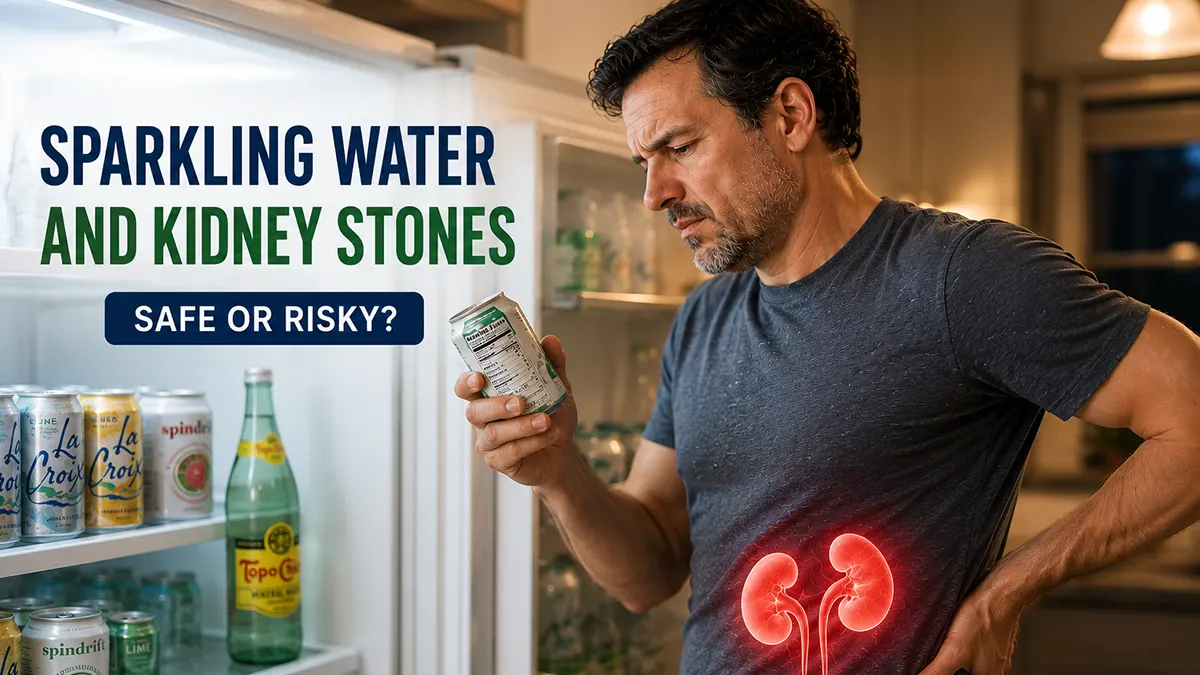
If you’ve ever tried drinking more water to prevent kidney stones, you know the struggle.
Plain water can get boring fast. That’s why millions of Americans are reaching for sparkling waters like LaCroix, Topo Chico, Bubly, and flavored seltzers to stay hydrated.
But if you have a history of kidney stones, you may wonder:
Is your sparkling water habit helping your kidneys — or quietly making things worse?
The good news is that the relationship between sparkling water and kidney stones is not as scary as many people think.
In fact, some sparkling waters may actually support hydration goals when chosen carefully.
The key is understanding which bubbly drinks are safe — and which hidden ingredients may increase stone risk.
Table of Contents
The Science: The Link Between Sparkling Water and Kidney Stones
The science behind sparkling water and kidney stones shows that plain carbonated water is usually safer than sugary sodas.
Let’s start with the biggest myth.
Plain carbonated water is generally considered safe for people prone to kidney stones.
Most sparkling water contains:
- Water
- Carbon dioxide (CO2)
That’s it.
The carbonation itself does NOT directly cause kidney stones.
Even better, plain sparkling water still counts toward your daily hydration goals — which is one of the most important ways to reduce kidney stone risk.
Hydration helps:
- Dilute urine
- Reduce mineral buildup
- Lower crystal formation
- Support kidney function
So if sparkling water helps you drink more fluids overall, it may actually help protect your kidneys.
That said, not all sparkling beverages are created equal.
Read Also : kidney stone prevention diet
Not All Bubbles Are Equal: Seltzer vs. Club Soda vs. Tonic
This is where confusion happens.
Many people assume all sparkling drinks are basically the same.
They’re not.
Seltzer Water
Seltzer is usually the safest option.
It typically contains:
- Carbonated water
- Natural flavors
- No sodium
- No sugar
Popular examples include:
- LaCroix
- Bubly
- Waterloo
These are generally considered kidney-friendly hydration choices.
Club Soda
Club soda often contains added minerals and sodium.
Some brands may include:
- Sodium bicarbonate
- Potassium sulfate
- Added salts
Excess sodium may increase calcium levels in urine, which can contribute to stone formation in some people.
If you drink club soda regularly, label reading becomes important.
Tonic Water
Tonic water is very different from seltzer.
It often contains:
- Added sugar
- Sweeteners
- Quinine
Many tonic waters are surprisingly high in calories and sugar.
Excess sugar intake may increase kidney stone risk over time, especially when combined with poor hydration habits.
Read Also : lemon water for kidney stones
3 Things to Check on the Label if You Have a History of Stones
If you’re prone to kidney stones, the label matters more than the bubbles themselves.
Here are the biggest things to watch for.
1. Sodium Content
Too much sodium can increase calcium excretion into urine.
Look for:
- Low sodium
- Sodium-free
- No added salts
Many kidney specialists recommend limiting high-sodium beverages whenever possible.
2. Added Sugar or Artificial Sweeteners
Some sparkling beverages are loaded with hidden sweeteners.
Excess sugar may:
- Increase obesity risk
- Affect urine chemistry
- Increase stone formation risk
Choose drinks with:
- No added sugar
- Minimal ingredients
- Natural flavoring only
3. Phosphoric Acid
This ingredient is more common in dark sodas and cola-style drinks.
Some research suggests high phosphoric acid intake may negatively affect kidney health in certain people.
While occasional intake is usually fine, relying heavily on cola beverages instead of water may increase long-term risk.
Read Also : apple cider vinegar for kidney stones
Can Lemon-Flavored Sparkling Water Actually Help?
Surprisingly, yes — in some cases.
Lemon and lime contain citric acid, which may help reduce calcium crystal formation.
That’s why some kidney stone prevention plans include:
- Lemon water
- Citrus fruits
- Citrate supplements
Sparkling waters flavored with real lemon or lime may offer small hydration benefits alongside citrate exposure.
However, there’s an important distinction:
- Natural citrus flavoring = potentially helpful
- Sugary citrus soda = not the same thing
Always check the ingredient label carefully.
Read Also : kidney stone emergency
How Much Sparkling Water Is Safe?
For most healthy adults, moderate sparkling water intake is usually fine.
The bigger question is whether you’re meeting total hydration needs.
Many kidney stone prevention guidelines encourage:
- 2.5 to 3 liters daily
- Roughly 85–100 ounces of fluids
If sparkling water helps you drink more fluids consistently, it may support healthier hydration habits overall.
Just remember:
Plain water should still remain your primary source of hydration.
When Sparkling Water Might Be a Problem
Some people may notice:
- Bloating
- Acid reflux
- Stomach discomfort
Highly mineralized sparkling waters may also contain more sodium than expected.
People with:
- Chronic kidney disease
- Severe sodium restrictions
- Hypertension
…should speak with their healthcare provider about beverage choices.
Conclusion
The connection between sparkling water and kidney stones depends more on ingredients and hydration habits than carbonation itself.
The truth about sparkling water and kidney stones is more reassuring than many online myths suggest.
Plain sparkling water is generally safe and still counts toward daily hydration goals — one of the best ways to help prevent kidney stones.
The real concern comes from:
- Excess sodium
- Added sugars
- Artificial ingredients
- Cola-style beverages
If you choose low-sodium sparkling water and stay properly hydrated, there’s a good chance you can keep enjoying your favorite bubbles without harming your kidneys.
FAQs
Doctors say sparkling water and kidney stones are generally not dangerous together when choosing low-sodium, sugar-free sparkling water.
Does LaCroix cause kidney stones?
Plain sparkling waters like LaCroix are generally considered safe because they contain carbonated water without high sodium or sugar levels.
Is club soda bad for kidney stones?
Club soda may contain added sodium, which could increase kidney stone risk if consumed excessively.
Can sparkling water count as hydration?
Yes. Plain sparkling water contributes to your daily fluid intake and may help support kidney stone prevention through hydration.
Medical Review
Dr. Jayanth Reddy – Consultant Urologist
My Health Hospitals, Hyderabad
This content has been medically reviewed for accuracy, safety, and reliability based on current urology treatment guidelines and patient education standards.
According to the National Health Service kidney stone symptoms guidance, severe flank pain may worsen during rest or nighttime and should never be ignored if accompanied by fever, vomiting, or difficulty urinating.
Author
Yamanandan Reddy
Health Content Writer & Frontend Developer
Yamanandan Reddy is a health content writer and frontend developer with over 4 years of experience in website design and digital content creation. He writes research-based health articles to help readers understand symptoms, causes, treatments, and prevention methods related to common health conditions.
His articles are written using information from trusted medical sources such as the World Health Organization (WHO), Mayo Clinic, and the Centers for Disease Control and Prevention (CDC).
Sources
The information in this article is researched and verified using trusted medical resources, including:
• World Health Organization (WHO)
• Mayo Clinic
• National Institutes of Health (NIH)
• Centers for Disease Control and Prevention
⚠️ Medical Disclaimer
This content is for informational purposes only and does not replace professional medical advice. Always consult a qualified healthcare provider for diagnosis and treatment.
1 thought on “The Truth About Sparkling Water and Kidney Stones”