Medically Reviewed By
Dr. Ch. Srujith, MBBS, MD (General Medicine)
General Physician & Diabetologist | 15+ Years Experience
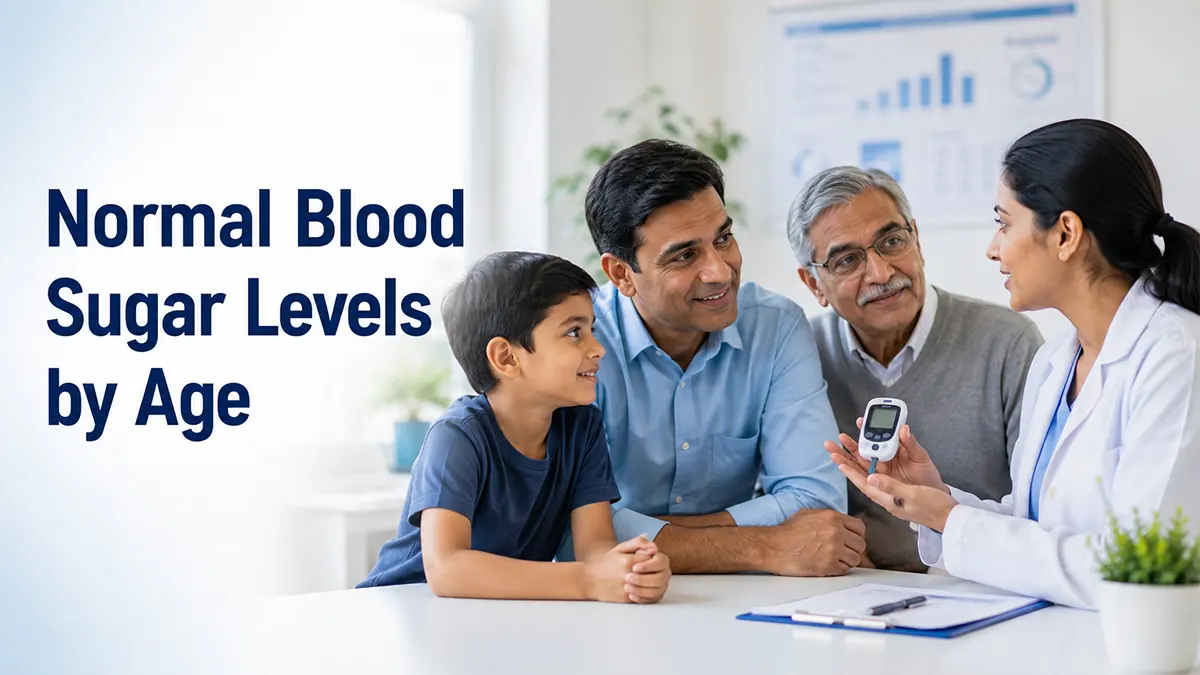
View Doctor Profile →Normal Blood Sugar Levels by Age is a common search among parents, adults, and older people who want to understand whether a glucose reading is healthy. However, there is an important point to understand: standard diabetes diagnostic ranges are generally not changed simply because a person is older or younger.
For nonpregnant people, the commonly used diagnostic categories are based on tests such as fasting plasma glucose, A1C, and the 2-hour oral glucose tolerance test (OGTT). The American Diabetes Association’s diagnostic criteria classify fasting plasma glucose below 100 mg/dL as normal, 100–125 mg/dL as the prediabetes range, and 126 mg/dL or higher as the diabetes range.
That does not mean every person with diabetes should aim for a fasting glucose below 100 mg/dL. Diagnostic ranges and personal treatment targets are different things.
Table of Contents
What Is Blood Sugar?
Blood sugar, also called blood glucose, is the main sugar circulating in your blood. Your body uses glucose as an important source of energy.
After you eat, carbohydrates are broken down into glucose, causing blood glucose to rise. Insulin helps glucose move from the bloodstream into cells where it can be used for energy.
When the body cannot produce enough insulin or cannot use insulin effectively, blood glucose can remain elevated. Over time, persistent high blood glucose can contribute to diabetes-related complications.
Does Normal Blood Sugar Change With Age?
A common misconception is that healthy blood sugar has completely different fasting ranges for a child, teenager, adult, and older adult.
For diabetes diagnosis in nonpregnant people, the standard thresholds are broadly the same rather than being divided into separate age-specific fasting ranges.
For example, the ADA diagnostic categories are:
| Test | Normal | Prediabetes | Diabetes |
|---|---|---|---|
| Fasting plasma glucose | Below 100 mg/dL | 100–125 mg/dL | 126 mg/dL or higher |
| 2-hour OGTT | Below 140 mg/dL | 140–199 mg/dL | 200 mg/dL or higher |
| A1C | Below 5.7% | 5.7–6.4% | 6.5% or higher |
These values are diagnostic categories, not universal daily glucose targets.
When High Blood Sugar Becomes an Emergency: Warning Signs, DKA & HHS (2026)
Normal Fasting Blood Sugar
A fasting plasma glucose (FPG) test measures blood glucose after fasting for at least 8 hours. The test is commonly performed in the morning before breakfast.
For nonpregnant people:
- Below 100 mg/dL: normal range
- 100–125 mg/dL: prediabetes range
- 126 mg/dL or higher: diabetes diagnostic range
A result in the diabetes range generally needs appropriate confirmation unless the person has unequivocal hyperglycemia or classic symptoms in the appropriate clinical setting.
Example
Suppose a laboratory fasting glucose result is:
92 mg/dL → within the normal category.
110 mg/dL → within the prediabetes category.
130 mg/dL → within the diabetes diagnostic category, but diagnosis should be established by a healthcare professional using appropriate testing and confirmation.
A single result should therefore not be interpreted as a diagnosis without considering the clinical context.
Diabetes Symptoms in Children: Early Warning Signs Every Parent Should Know
Normal Blood Sugar in Children
Children can develop diabetes, including type 1 diabetes and type 2 diabetes.
For children being evaluated for diabetes, standard diagnostic blood glucose criteria are used rather than assuming that children automatically have a completely different “normal” fasting glucose range. NIDDK notes that doctors use blood tests to diagnose diabetes and that type 1 diabetes is often identified in children and young adults when symptoms develop.
Parents should pay attention to symptoms such as:
- Excessive thirst
- Frequent urination
- New bedwetting
- Unexplained weight loss
- Increased hunger
- Fatigue
- Blurred vision
- Nausea or vomiting
Symptoms that develop quickly, particularly when accompanied by vomiting, abdominal pain, fruity-smelling breath, or unusual breathing, require prompt medical evaluation because diabetic ketoacidosis can be a serious complication of type 1 diabetes.
Signs of Diabetes in Men: 12 Early Warning Symptoms You Shouldn’t Ignore
Normal Blood Sugar in Teenagers
Teenagers without diabetes generally use the same diagnostic categories when laboratory testing is used to evaluate diabetes.
However, a teenager who already has diabetes may have individualized glucose targets based on factors such as diabetes type, treatment, risk of hypoglycemia, and overall health.
Therefore, parents should not use a general internet blood sugar chart to change a teenager’s insulin or medication dose.
Why a “Normal Range” Is Not the Same as a Diabetes Target
This distinction is extremely important.
A diagnostic range helps healthcare professionals determine whether someone may have prediabetes or diabetes.
A treatment target helps a person who already has diabetes manage glucose safely.
For example, a fasting glucose of 110 mg/dL falls within the prediabetes diagnostic category in someone without an established diabetes diagnosis. But treatment targets for a person who already has diabetes are determined individually.
Trying to force every glucose reading into one “normal” number can therefore be misleading.
Signs of Diabetes in Women: 12 Early Warning Symptoms You Shouldn’t Ignore (2026)
Blood Glucose Is Not Constant Throughout the Day
Blood glucose naturally changes depending on:
- Meals
- Physical activity
- Stress
- Illness
- Sleep
- Hormonal changes
- Medications
- Timing of the test
A fasting reading should not be compared directly with a reading taken shortly after eating.
That is why healthcare professionals consider which test was performed, when it was performed, and the person’s overall clinical situation.
10 Silent Symptoms of High Blood Sugar You Shouldn’t Ignore (2026 Guide)
Normal Blood Sugar After Eating
Blood glucose normally rises after a meal because carbohydrates are digested and glucose enters the bloodstream. Therefore, a blood sugar reading taken after eating should not be compared directly with a fasting reading.
For many nonpregnant adults who already have diabetes, the American Diabetes Association (ADA) recommends a typical treatment target of:
- Before meals: 80–130 mg/dL
- 1–2 hours after the beginning of a meal: less than 180 mg/dL
These are treatment targets for many adults with diabetes, not diagnostic definitions of normal blood sugar for people without diabetes. Targets can be individualized.
For diabetes diagnosis, the 2-hour oral glucose tolerance test (OGTT) uses different thresholds:
- Below 140 mg/dL: normal
- 140–199 mg/dL: prediabetes
- 200 mg/dL or higher: diabetes diagnostic range
The OGTT is a specific laboratory test and should not be confused with an ordinary home glucose reading taken two hours after a meal.
Diabetes Guide: Symptoms, Causes, Types, Treatment & Prevention (2026)
Blood Sugar Targets for Adults With Diabetes
If an adult has already been diagnosed with diabetes, the goal is not necessarily to keep every glucose reading within the “normal” range for someone without diabetes.
For many nonpregnant adults with diabetes, the ADA’s 2026 Standards of Care list these general goals:
| Measurement | Typical target for many adults with diabetes |
|---|---|
| A1C | <7% |
| Before meals | 80–130 mg/dL |
| Peak after-meal glucose | <180 mg/dL |
These targets are not appropriate for every person. The ADA emphasizes individualized goals based on health status, duration of diabetes, complications, hypoglycemia risk, treatment burden, and personal circumstances.
For example, a person who frequently experiences severe hypoglycemia may need a different target from someone who has diabetes without significant complications or hypoglycemia risk.
Normal Blood Sugar in Older Adults
Age alone does not mean that an older person without diabetes has a completely different diagnostic definition of normal fasting glucose.
However, older adults with diabetes may have individualized treatment goals.
The ADA’s 2026 recommendations divide older adults with diabetes broadly according to health and functional status rather than age alone.
Older adults with good health and intact function
For some healthy older adults with diabetes, reasonable goals may be similar to those used for younger adults, including an A1C below approximately 7–7.5%, depending on individual circumstances.
Older adults with complex health
People with multiple chronic conditions, cognitive limitations, frailty, or other significant health concerns may benefit from less stringent glucose goals.
The ADA’s 2026 framework gives examples such as:
- A1C <8%
- Fasting or premeal glucose around 90–150 mg/dL
- Bedtime glucose around 100–180 mg/dL
These are examples within a clinical framework, not universal targets for everyone over a particular age.
Older adults with very complex or poor health
For people with very complex health or limited life expectancy, clinicians may focus less on achieving a specific A1C and more on avoiding hypoglycemia and symptomatic hyperglycemia.
The ADA emphasizes individualized care rather than forcing every older adult into the same glucose range.
What Does A1C Tell You About Blood Sugar?
The A1C test provides an estimate of average blood glucose over approximately the previous 2–3 months.
For people without pregnancy, commonly used diagnostic categories are:
| A1C result | Interpretation |
| Below 5.7% | Normal |
| 5.7–6.4% | Prediabetes |
| 6.5% or higher | Diabetes diagnostic range |
An A1C result in the diabetes range generally requires appropriate confirmation when the person does not have clear symptoms or unequivocal hyperglycemia.
A1C is useful because it does not require fasting. However, it is not suitable for diagnosing every type of diabetes or every clinical situation, and certain conditions can affect its accuracy.
Blood Sugar in the Morning
Morning glucose can be influenced by several factors, including:
- Overnight hormone changes
- Previous meals
- Medication timing
- Insulin availability
- Illness
- Stress
- Physical activity
- The person’s diabetes treatment plan
A high morning glucose reading does not automatically mean that someone has diabetes.
If a person without a diabetes diagnosis repeatedly records elevated fasting readings, laboratory testing such as fasting plasma glucose and/or A1C may be appropriate.
NIDDK notes that a laboratory fasting plasma glucose test is used for diagnosis and that meter results are not suitable for establishing a diabetes diagnosis.
Blood Sugar Before Bed
Bedtime glucose is different from fasting glucose.
For someone without diabetes, there is no single universal bedtime glucose number that should be used as a diagnostic threshold.
For people with diabetes, bedtime targets may be individualized according to:
- Diabetes type
- Medication or insulin use
- Risk of overnight hypoglycemia
- Age
- Other health conditions
- Treatment goals
This is especially important in older adults, where the ADA recommends adjusting glucose goals according to overall health and hypoglycemia risk.
Home Glucose Meter vs Laboratory Blood Test
A home glucose meter is valuable for monitoring blood glucose, but it is not the same as a laboratory diagnostic test.
Home monitoring can help people with diabetes understand how glucose changes with:
- Food
- Exercise
- Medication
- Stress
- Illness
- Daily routines
However, if someone is trying to determine whether they have diabetes, a healthcare professional should use an appropriate diagnostic test.
NIDDK specifically states that diagnosis using fasting plasma glucose requires a laboratory test, and meter results are not suitable for diagnosis.
Why One Abnormal Reading May Not Mean Diabetes
Blood glucose can fluctuate naturally.
A single unexpected result can be influenced by:
- Recent food or drink
- Incorrect testing technique
- Illness
- Stress
- Medication
- Physical activity
- Meter or strip issues
For this reason, a person should not diagnose themselves based on one home glucose measurement.
If laboratory testing shows a result in the diabetes range but there are no clear symptoms, healthcare professionals generally use repeat testing or another appropriate diagnostic test to confirm the diagnosis.
When Should You Talk to a Doctor?
Consider discussing your blood glucose with a healthcare professional if:
- Fasting glucose readings are repeatedly elevated
- A1C is in the prediabetes or diabetes range
- You have symptoms of high blood sugar
- You experience unexplained weight loss
- You have excessive thirst or frequent urination
- You repeatedly have unusually high readings
- You are taking diabetes medication and your readings are consistently outside your prescribed targets
Persistent abnormal readings deserve evaluation rather than relying on a generic age-based chart.
Important Difference: Diagnostic Range vs Target Range
This is one of the most important points in understanding Normal Blood Sugar Levels by Age.
Diagnostic range
Used to determine whether someone has:
- Normal glucose
- Prediabetes
- Diabetes
Treatment target
Used to help someone who already has diabetes manage their condition safely.
These two concepts are not interchangeable.
For example, the ADA’s typical target of 80–130 mg/dL before meals applies to many adults with diabetes. It does not mean that a fasting glucose of 120 mg/dL is considered “normal” for diabetes diagnosis. For someone without diabetes, a fasting plasma glucose of 120 mg/dL falls within the prediabetes range.
Blood Sugar Levels: A Practical Guide by Age
The phrase “normal blood sugar levels by age” can make it seem as though every age group has a completely different glucose range. In reality, standard diagnostic thresholds for diabetes are generally not separated into different fasting ranges simply because someone is a child, adult, or older adult.
What does change with age is often the treatment goal for people who already have diabetes, particularly in children, older adults, pregnancy, and people with other health conditions.
Normal Blood Sugar Levels for Children
Children without diabetes are evaluated using established laboratory criteria when diabetes is suspected.
For diagnostic testing, the commonly used categories include:
| Test | Normal | Prediabetes | Diabetes |
|---|---|---|---|
| Fasting plasma glucose | <100 mg/dL | 100–125 mg/dL | ≥126 mg/dL |
| 2-hour OGTT | <140 mg/dL | 140–199 mg/dL | ≥200 mg/dL |
| A1C | <5.7% | 5.7–6.4% | ≥6.5% |
These are diagnostic categories rather than a recommendation that every child should maintain exactly the same glucose throughout the day. (niddk.nih.gov)
When parents should seek medical evaluation
A child should be evaluated promptly if symptoms such as excessive thirst, frequent urination, new bedwetting, unexplained weight loss, or persistent fatigue develop.
If these symptoms occur with vomiting, abdominal pain, fruity-smelling breath, rapid or deep breathing, or unusual drowsiness, urgent medical assessment is important because diabetic ketoacidosis can occur with newly diagnosed type 1 diabetes.
Normal Blood Sugar Levels for Teenagers
Teenagers without diabetes generally use the same diagnostic categories when laboratory testing is performed.
However, adolescents with diabetes may have individualized treatment goals.
The appropriate target can depend on:
- Diabetes type
- Insulin or medication regimen
- Risk of hypoglycemia
- Duration of diabetes
- Other health conditions
- Ability to manage treatment independently
Parents should therefore avoid changing insulin or medication doses based on a generic online blood sugar chart.
Normal Blood Sugar Levels for Adults
For a nonpregnant adult without diabetes, a fasting plasma glucose:
Below 100 mg/dL is in the normal diagnostic category.
A fasting result of:
- 100–125 mg/dL → prediabetes range
- 126 mg/dL or higher → diabetes diagnostic range
A diabetes-range result generally needs appropriate confirmation when there are no unequivocal symptoms or hyperglycemia. (niddk.nih.gov)
Normal Blood Sugar Levels for Older Adults
For diagnosis, older age does not automatically create a separate “normal fasting glucose” category.
However, treatment targets for older adults who have diabetes are individualized.
The ADA’s 2026 Standards of Care specifically recommends considering health status, cognitive and functional status, coexisting illnesses, frailty, hypoglycemia risk, and life expectancy when establishing glycemic goals. (diabetesjournals.org)
Healthy older adults with diabetes
For older adults who have few stable chronic conditions and intact cognitive and functional abilities, the ADA gives examples such as:
- A1C: <7.0–7.5%
- Fasting/premeal glucose: 80–130 mg/dL
- Bedtime glucose: 80–180 mg/dL
These are treatment goals for a particular health category, not universal normal ranges for everyone over a certain age. (diabetesjournals.org)
Older adults with complex health
For people with multiple chronic illnesses, frailty, or cognitive or functional limitations, the ADA provides less stringent examples, such as:
- A1C: <8.0%
- Fasting/premeal glucose: 90–150 mg/dL
- Bedtime glucose: 100–180 mg/dL
The purpose is to balance glucose control against the risk of hypoglycemia and treatment burden. (diabetesjournals.org)
Very complex or poor health
For older adults with very complex health or limited life expectancy, the ADA recommends avoiding reliance on a strict A1C goal and focusing on preventing:
- Hypoglycemia
- Symptomatic hyperglycemia
- Excessive treatment burden
The glucose goals should be individualized by the healthcare team. (diabetesjournals.org)
What Blood Sugar Is Too Low?
Understanding normal blood sugar also requires knowing about hypoglycemia.
For many people with diabetes, a glucose level below 70 mg/dL is considered clinically important hypoglycemia.
Possible symptoms include:
- Shaking
- Sweating
- Hunger
- Fast heartbeat
- Dizziness
- Irritability
- Confusion
- Difficulty concentrating
Severe hypoglycemia can cause seizures, loss of consciousness, or inability to treat oneself and requires urgent assistance.
People taking insulin or medicines that can cause hypoglycemia should discuss an individualized low-blood-sugar action plan with their healthcare professional.
What Blood Sugar Is Considered High?
There is no single number that automatically means an emergency in every person.
For people with diabetes, the ADA’s 2026 guidance lists typical targets for many nonpregnant adults as:
- Before meals: 80–130 mg/dL
- Peak after meals: <180 mg/dL
- A1C: <7%
However, goals may be more or less stringent depending on the individual. (diabetesjournals.org)
Persistently high glucose can become dangerous, particularly when accompanied by:
- Ketones
- Vomiting
- Dehydration
- Abdominal pain
- Fruity-smelling breath
- Rapid or deep breathing
- Confusion
- Severe weakness
These symptoms can indicate a hyperglycemic emergency such as diabetic ketoacidosis or hyperosmolar hyperglycemic state.
When Should You Get Medical Help?
Contact a healthcare professional if blood glucose readings are repeatedly outside your prescribed target range.
Prompt medical assessment is especially important when abnormal glucose is accompanied by symptoms such as:
- Excessive thirst and urination
- Unexplained weight loss
- Persistent vomiting
- Severe weakness
- Confusion
- Difficulty breathing
- Fainting
If severe symptoms or suspected DKA/HHS occur, seek emergency medical care rather than trying to correct the problem at home.
Why You Should Not Rely Only on an Age-Based Chart
An online chart can provide general information, but it cannot determine the correct glucose target for every individual.
Two people of the same age may have very different targets because one may have:
- Type 1 diabetes
- Type 2 diabetes
- Kidney disease
- Cardiovascular disease
- Frequent hypoglycemia
- Frailty
- Multiple medications
The ADA’s 2026 recommendations emphasize individualized glycemic goals, particularly for older adults. (diabetesjournals.org)
Frequently Asked Questions
1. What is a normal fasting blood sugar?
For nonpregnant people, a fasting plasma glucose below 100 mg/dL is within the normal diagnostic category.
2. Is 110 mg/dL fasting blood sugar normal?
No. A laboratory fasting plasma glucose of 110 mg/dL falls within the prediabetes range, although diagnosis and interpretation should be handled by a healthcare professional.
3. Is 120 mg/dL fasting blood sugar normal?
For someone without diabetes, a fasting laboratory glucose of 120 mg/dL is within the prediabetes range. It is not considered normal fasting glucose.
4. Is 130 mg/dL fasting blood sugar diabetes?
A laboratory fasting plasma glucose of 126 mg/dL or higher is within the diabetes diagnostic range, but appropriate confirmation is generally required when there is no unequivocal hyperglycemia. (niddk.nih.gov)
5. Is 140 mg/dL after eating normal?
The answer depends on the type and timing of the test. An ordinary home reading after a meal is not the same as a standardized 2-hour OGTT. For the diagnostic 2-hour OGTT, below 140 mg/dL is considered normal.
6. What is a normal A1C?
For diabetes diagnosis, an A1C below 5.7% is in the normal category. (niddk.nih.gov)
7. Does normal blood sugar change after age 60?
The diagnostic thresholds for diabetes do not simply change because someone reaches age 60. However, glucose treatment goals for older adults with diabetes may be individualized according to health status and hypoglycemia risk.
8. What is a normal blood sugar for someone with diabetes?
There is no single target that applies to everyone with diabetes. For many nonpregnant adults, the ADA lists 80–130 mg/dL before meals and below 180 mg/dL at peak after meals as typical goals, but individual targets may differ. (diabetesjournals.org)
9. Can stress raise blood sugar?
Yes. Physical or emotional stress can affect blood glucose through hormonal changes. Illness and certain medications can also raise glucose.
10. Can a home glucose meter diagnose diabetes?
A home glucose meter is useful for monitoring, but a person should not diagnose diabetes based solely on home meter readings. Appropriate laboratory testing and clinical evaluation are recommended.
Final Takeaway
Normal Blood Sugar Levels by Age should not be interpreted as a simple chart in which every age has a completely different fasting range.
For most nonpregnant people, the standard diagnostic categories remain:
- Fasting glucose <100 mg/dL: normal
- Fasting glucose 100–125 mg/dL: prediabetes range
- Fasting glucose ≥126 mg/dL: diabetes diagnostic range
- A1C <5.7%: normal
- A1C 5.7–6.4%: prediabetes range
- A1C ≥6.5%: diabetes diagnostic range
- 2-hour OGTT <140 mg/dL: normal
- 2-hour OGTT 140–199 mg/dL: prediabetes range
- 2-hour OGTT ≥200 mg/dL: diabetes diagnostic range
For people who already have diabetes, treatment targets are different from diagnostic ranges and should be individualized.
This distinction is especially important for older adults, children, people taking insulin, and anyone at increased risk of hypoglycemia.
If you repeatedly receive abnormal blood glucose results, discuss them with a qualified healthcare professional instead of relying solely on an age-based chart.
References
This article is based on current recommendations from internationally recognized medical organizations and peer-reviewed evidence, including:
- American Diabetes Association (ADA) Standards of Care
- Centers for Disease Control and Prevention (CDC)
- National Institute of Diabetes and Digestive and Kidney Diseases (NIDDK)
- World Health Organization (WHO)
Medically Reviewed By
Dr. Ch. Srujith, MBBS, MD (General Medicine)
General Physician & Diabetologist | 15+ Years of Clinical Experience | Hyderabad, India
This article has been medically reviewed for medical accuracy and reflects current evidence-based recommendations available as of 2026. It is intended for educational purposes only and should not replace personalized medical advice, diagnosis, or treatment. For concerns about diabetes or blood sugar management, consult a qualified healthcare professional.
Author
Yamanandan Reddy
Health Content Writer & Frontend Developer
Yamanandan Reddy is a health content writer and frontend developer with over 4 years of experience in website design and digital content creation. He writes research-based health articles to help readers understand symptoms, causes, treatments, and prevention methods related to common health conditions.
⚠️ Medical Disclaimer
This content is for informational purposes only and does not replace professional medical advice. Always consult a qualified healthcare provider for diagnosis and treatment.
4 thoughts on “Normal Blood Sugar Levels by Age: What Is a Healthy Range?”