
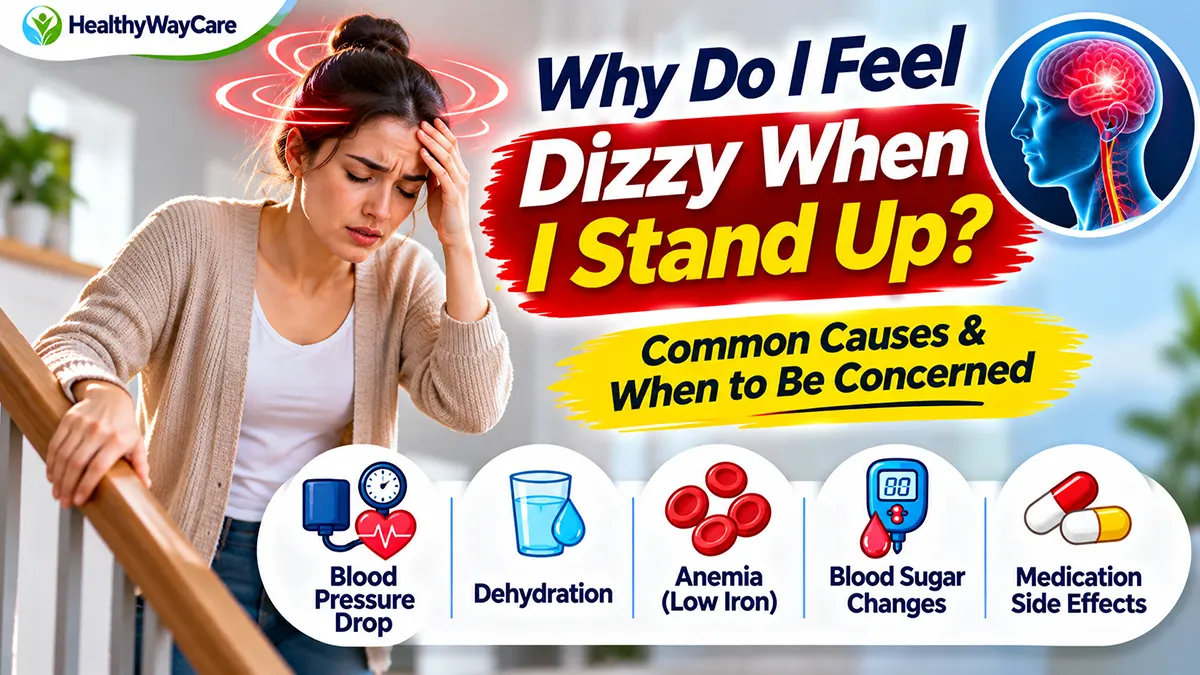
Dizzy when standing up but comfortable while sitting? A brief lightheaded feeling after getting out of bed or rising from a chair can happen when your circulation takes a moment to adjust. However, repeated dizziness, fainting, or symptoms accompanied by chest pain or neurological changes should not be dismissed. The pattern, duration, associated symptoms, medications, and medical history all help determine the likely cause.
This guide explains why you may feel dizzy when standing up, how orthostatic hypotension differs from vertigo and other problems, what you can safely do in the moment, and when to seek medical care. It is educational information, not a diagnosis or a substitute for an individual medical assessment.
Table of Contents
Why Do I Feel Dizzy When I Stand Up but Fine When Sitting?
When you stand, gravity shifts blood toward the legs and abdomen. Your nervous system normally responds by tightening blood vessels and adjusting heart rate to preserve blood flow to the brain. If that response is delayed, insufficient, or overwhelmed by dehydration or medication effects, you may temporarily feel faint, unsteady, weak, or as though your vision is dimming. Sitting or lying down often helps because less blood has to be pushed upward against gravity.
The medical term orthostatic hypotension, also called postural hypotension, describes a sustained blood-pressure fall after standing. Clinicians commonly define it as a decrease of at least 20 mm Hg in systolic pressure or 10 mm Hg in diastolic pressure within three minutes of standing. These measurements require proper technique and clinical interpretation; symptoms alone do not establish the diagnosis.
Not every brief dizzy spell is orthostatic hypotension. A person may feel dizzy because of low blood sugar, a heart rhythm problem, anemia, an inner-ear disorder, or a medication effect. A useful first question is whether the sensation is lightheadedness or near-fainting, rather than a true spinning sensation.
Dizziness, Lightheadedness, and Vertigo: What Is the Difference?
| Feeling | How people describe it | Possible clues |
|---|---|---|
| Lightheadedness | About to faint, vision dimming, weak or woozy | Often triggered by standing; may improve when lying down |
| Vertigo | Room or body seems to spin or move | May occur with head movement, nausea or ear symptoms |
| Unsteadiness | Trouble maintaining balance while walking | May involve neurological, medication or vestibular causes |
| General dizziness | Vague floating, foggy or disconnected feeling | Requires context; many possible causes |
These categories overlap. For example, a person with an inner-ear disorder may feel unsteady on standing, and someone with a blood-pressure drop may describe the experience as “spinning.” A clinician will ask you to describe the sensation in your own words and identify whether it starts immediately, after several minutes upright, or with head movement.
1. Orthostatic Hypotension: A Drop in Blood Pressure
Orthostatic hypotension is one of the most relevant explanations for dizziness that starts when you rise from sitting or lying down. Symptoms may include lightheadedness, blurry or tunnel vision, weakness, fatigue, nausea, and occasionally fainting. It may be more noticeable in the morning, after a hot shower, after a large meal, or when you have been ill and drinking less than usual.
Common contributors include fluid loss, some blood-pressure medications, medicines that affect the nervous system, prolonged bed rest, and conditions that interfere with automatic blood-pressure regulation. Older adults and people with certain neurological or metabolic conditions may be more susceptible. It is important not to stop prescribed medication based on an article; a clinician can review the benefits and risks of any adjustment.
Orthostatic symptoms can also occur without a sustained blood-pressure drop that meets formal criteria. This is one reason a healthcare professional may check blood pressure and pulse repeatedly while you change position, rather than relying on a single seated reading.
2. Dehydration and Fluid Loss
Dehydration reduces the amount of fluid circulating in the body and can make it harder to maintain blood pressure when you stand. You might notice thirst, a dry mouth, darker urine, fatigue, headache, or less frequent urination. Vomiting, diarrhea, fever, heavy sweating, hot weather, and not drinking enough can all contribute.
If symptoms are mild and you have no fluid restrictions, drinking water and resting may help. People with heart failure, kidney disease, or a prescribed fluid limit should follow their clinician’s individualized instructions rather than increasing fluids on their own. Severe dehydration, inability to keep fluids down, confusion, or fainting warrants prompt medical evaluation.
3. Medications That Can Make You Dizzy When Standing Up
Some medications lower blood pressure, promote fluid loss, or interfere with the body’s normal response to standing. Examples include certain diuretics, blood-pressure medicines, medications for prostate symptoms, some antidepressants, and sedating medicines. The effect may be stronger after a new prescription, dose change, illness, or reduced fluid intake.
Bring an up-to-date medication list to your appointment, including over-the-counter products and supplements. Tell your clinician when symptoms started relative to medication changes. Never abruptly stop a prescribed medicine or change doses without professional guidance, because doing so can create other risks.
4. Low Blood Sugar and Diabetes-Related Factors
Low blood glucose can cause sweating, shaking, hunger, palpitations, confusion, and dizziness. It may occur at the same time as standing, but it is not specifically caused by standing up. People who use insulin or certain diabetes medications should follow their prescribed glucose-monitoring and hypoglycemia-treatment plan if symptoms suggest low blood sugar.
For background on glucose readings, see normal blood sugar levels by age. To understand why both high and low readings can cause symptoms, read high blood sugar vs. low blood sugar. These related pages provide context but cannot establish the cause of an individual dizzy spell.
Diabetes can also affect autonomic nerves that help regulate blood pressure, and high blood glucose can contribute to dehydration in some circumstances. If dizziness occurs with severe illness, vomiting, confusion, or concerning glucose and ketone readings, see our guide to when high blood sugar becomes an emergency and seek urgent care when appropriate.
5. Anemia and Other Conditions That Reduce Oxygen Delivery
Anemia can cause fatigue, weakness, shortness of breath with activity, paleness, and lightheadedness. Iron deficiency is one possible cause, but not the only one. Heavy menstrual bleeding, gastrointestinal blood loss, chronic illness, and vitamin deficiencies can also be relevant. A clinician may order a complete blood count and other tests based on your history.
Do not assume that dizziness means iron deficiency or begin high-dose iron supplements without testing. Excess iron can be harmful, and treatment depends on identifying the cause. New dizziness accompanied by black or bloody stools, significant bleeding, or marked weakness needs prompt medical attention.
6. Heart Rhythm Problems and Circulation Disorders
An unusually fast, slow, or irregular heartbeat can sometimes reduce blood flow to the brain and cause lightheadedness or fainting. Some people notice palpitations, chest discomfort, breathlessness, or symptoms during exertion. A normal pulse between episodes does not necessarily exclude a rhythm problem.
A clinician may check an electrocardiogram (ECG), recommend heart monitoring, or evaluate structural heart disease when the history suggests it. Dizziness with chest pain, severe shortness of breath, or loss of consciousness is an emergency, especially if it occurs during exercise or without warning.
7. Postural Orthostatic Tachycardia Syndrome (POTS)
POTS is a condition associated with excessive heart-rate increase after standing, along with symptoms such as lightheadedness, palpitations, fatigue, and exercise intolerance. It is different from classic orthostatic hypotension: the defining issue is a sustained increase in heart rate in the absence of a qualifying blood-pressure fall, alongside other diagnostic criteria and exclusion of alternative explanations.
POTS cannot be diagnosed from a smartwatch reading or one episode of dizziness. A clinician may use standing measurements or tilt-table testing and evaluate for dehydration, anemia, medication effects, and other causes. Treatment is individualized, so avoid starting high-salt regimens or compression strategies without discussing suitability if you have cardiovascular, kidney, or blood-pressure conditions.
8. Inner-Ear Disorders, Migraine, and Anxiety
Not all dizziness that happens while upright comes from circulation. Inner-ear conditions can create a spinning sensation or balance disturbance, sometimes triggered by moving the head. Vestibular migraine may cause dizziness with or without a headache. Anxiety and rapid breathing can also contribute to lightheadedness, but they should not be assumed to be the explanation before serious causes have been considered.
Tell your clinician about hearing changes, ringing in the ears, headaches, recent infections, motion sensitivity, and whether turning in bed causes symptoms. These details help distinguish vestibular disorders from position-related blood-pressure changes.
Common Causes of Dizziness on Standing: Comparison Table
| Possible cause | Typical clues | What a clinician may check |
|---|---|---|
| Orthostatic hypotension | Lightheaded after rising; better lying down | Lying and standing blood pressure and pulse |
| Dehydration | Thirst, recent vomiting or diarrhea, dark urine | Hydration history, examination, sometimes blood tests |
| Medication effect | Symptoms after starting or changing a medicine | Medication and dose review |
| Low blood glucose | Shakiness, sweating, hunger, diabetes medication use | Blood glucose when symptomatic |
| Anemia | Fatigue, pallor, breathlessness, bleeding history | Complete blood count and targeted tests |
| Heart rhythm issue | Palpitations, fainting, exertional symptoms | ECG and possibly ambulatory monitoring |
| POTS | Sustained upright symptoms and rapid pulse | Structured standing or tilt-table assessment |
| Inner-ear disorder | Spinning, head-motion trigger, nausea | Neurological and vestibular examination |
What to Do Immediately If You Feel Dizzy When Standing Up
- Sit or lie down right away. Avoid trying to walk through the feeling; falls can cause injury.
- Rise slowly when symptoms settle. Move from lying to sitting, pause, and then stand while holding a stable support.
- Drink water if appropriate. This may help if you are mildly dehydrated, but respect any fluid restriction.
- Avoid driving, climbing ladders, or operating machinery while dizzy or faint.
- Check glucose if relevant. People at risk of hypoglycemia should follow their diabetes care plan.
- Ask for help. If you cannot stand safely, symptoms are severe, or you faint, seek medical assessment.
If dizziness is new and severe, or occurs with chest pain, breathing trouble, sudden weakness, facial droop, speech difficulty, or a severe new headache, call emergency services. Do not delay because the sensation improves after sitting down.
How to Reduce Dizziness When Getting Out of Bed
Small changes may reduce symptoms in some people. Before rising, sit at the edge of the bed for a moment and move your ankles or legs gently. Stand with support and wait until you feel steady. Avoid abrupt posture changes, especially after a hot bath or shower. If prolonged standing triggers symptoms, take breaks and sit before you feel faint.
Regular meals and adequate fluids can be helpful when skipped meals or dehydration contribute, but dietary changes should fit your health conditions. Alcohol may worsen dehydration or blood-pressure effects in some people. If you frequently feel dizzy after eating, mention this specifically: post-meal blood-pressure changes can occur, particularly in older adults.
Some patients benefit from clinician-directed compression garments, exercise conditioning, or medication adjustments. These are not universal fixes. Increasing salt intake, in particular, may be unsafe for people with hypertension, heart failure, or kidney disease and should only be considered after medical advice.
How Doctors Check Orthostatic Blood Pressure
A healthcare professional may ask you to lie down quietly, measure blood pressure and heart rate, then repeat measurements after standing at specified intervals. A sustained systolic drop of at least 20 mm Hg or diastolic drop of at least 10 mm Hg within three minutes is a commonly used diagnostic threshold for orthostatic hypotension. Symptoms and clinical context still matter.
If you use a home blood-pressure monitor, record the device, date, time, posture, symptoms, and readings to discuss with your clinician. Do not attempt repeated standing measurements alone if you are at risk of fainting. Home readings can be useful background but do not replace a supervised examination or confirm a diagnosis.
When to See a Doctor for Repeated Dizziness
Arrange a medical appointment if episodes keep recurring, interfere with daily activities, begin after a medication change, or are associated with persistent fatigue, palpitations, unusual thirst, or falls. Mention whether dizziness occurs after getting out of bed, after meals, in hot environments, or after prolonged standing. Bring your medication list and any safe, previously recorded blood-pressure or glucose measurements.
The clinician may assess hydration, examine your heart and nervous system, check orthostatic vital signs, and order selected tests. Depending on the history, tests could include a complete blood count, electrolytes, kidney function, glucose testing, ECG, or further cardiac or autonomic evaluation. Not everyone needs every test.
Emergency Warning Signs: When Dizziness Is Not Safe to Ignore
- Sudden weakness or numbness on one side, facial drooping, difficulty speaking, or sudden vision loss
- Chest pain, severe shortness of breath, or a racing or irregular heartbeat with collapse
- Fainting during exercise, repeated unexplained fainting, or an injury from falling
- A sudden severe headache, new confusion, or difficulty walking or coordinating movements
- Heavy bleeding, black stools with weakness, or signs of severe dehydration
- Persistent inability to stand, severe worsening symptoms, or reduced responsiveness
Call 911 in the United States for possible stroke, heart attack, or other immediately dangerous symptoms. If someone is unconscious, do not give them food or drinks. Dizziness alone is often not an emergency, but these associated symptoms change the urgency.
Questions to Ask at Your Appointment
- Does my symptom pattern suggest a blood-pressure drop, vertigo, low glucose, or another cause?
- Should my blood pressure and pulse be measured while lying down and standing?
- Could any of my prescriptions or over-the-counter medicines contribute?
- Would a blood count, glucose test, ECG, or other test be useful for my situation?
- What should I do if I feel faint at home, and what symptoms mean I need urgent care?
- Are there hydration, activity, or medication recommendations specific to my medical history?
Frequently Asked Questions About Feeling Dizzy When Standing Up
1. Is it normal to get dizzy when standing up quickly?
A brief, occasional lightheaded feeling can occur when circulation adjusts to standing, especially if you are dehydrated or have been lying down for a long time. Frequent, severe, or worsening episodes are not something to ignore and should be assessed.
2. Why am I dizzy when standing up but not when sitting?
Standing shifts blood toward the lower body. If blood-pressure regulation does not compensate quickly enough, brain blood flow may briefly fall and cause lightheadedness. Other causes, including medications, anemia, and heart problems, are possible.
3. Can dehydration make me dizzy when I stand?
Yes. Fluid loss can reduce circulating blood volume and contribute to dizziness on standing. Vomiting, diarrhea, heat exposure, and poor fluid intake are common contributors. Severe dehydration requires medical attention.
4. How do I know if my dizziness is from low blood pressure?
A clinician can measure blood pressure and pulse while you are lying down and after standing. Symptoms can suggest orthostatic hypotension, but they cannot confirm it. A single seated reading may miss the change.
5. Can low blood sugar cause dizziness when standing up?
Yes, low glucose can cause dizziness, shakiness, sweating, hunger, or confusion, particularly in people using insulin or certain diabetes medicines. It may coincide with standing but is not specifically a posture-related condition.
6. Is dizziness on standing a sign of POTS?
It can be one symptom, but POTS has specific diagnostic criteria involving heart-rate changes and chronic upright symptoms. Dehydration, medication effects, anemia, and other conditions need to be considered before diagnosis.
7. Should I drink more salt water to stop dizziness?
Not without medical advice. Although some patients with particular conditions may be advised to adjust fluid or sodium intake, extra salt can be harmful for people with high blood pressure, kidney disease, or heart failure.
8. When should I go to the emergency room for dizziness?
Seek emergency care for dizziness with chest pain, severe breathing trouble, stroke-like symptoms, new severe headache, loss of consciousness, or other serious warning signs. Call 911 in the United States if you suspect a medical emergency.
Final Takeaway
If you feel dizzy when standing up but fine while sitting, a temporary blood-pressure adjustment is one possibility, especially when you are dehydrated or taking medications that affect circulation. But similar symptoms can occur with low blood sugar, anemia, heart rhythm problems, POTS, and inner-ear disorders. The safest approach is to note the pattern, avoid falls, and get recurrent symptoms evaluated rather than assuming a single cause.
Sit or lie down when you feel faint, stand slowly once recovered, and seek urgent help for fainting with serious symptoms, chest pain, breathing problems, or neurological changes. A clinician can determine whether orthostatic vital signs or additional testing are appropriate and recommend treatment tailored to your health history.
Medical References
- American Heart Association: Orthostatic Hypotension in Adults With Hypertension — Top Things to Know
- NHS: Dizziness — symptoms, causes and when to get help
- NHS: Low Blood Pressure (Hypotension)
- National Institute of Neurological Disorders and Stroke: POTS
Editorial note: This article is for general education and does not provide personal medical advice. It has not been represented as medically reviewed by a clinician. Arrange clinical review before publishing health advice.