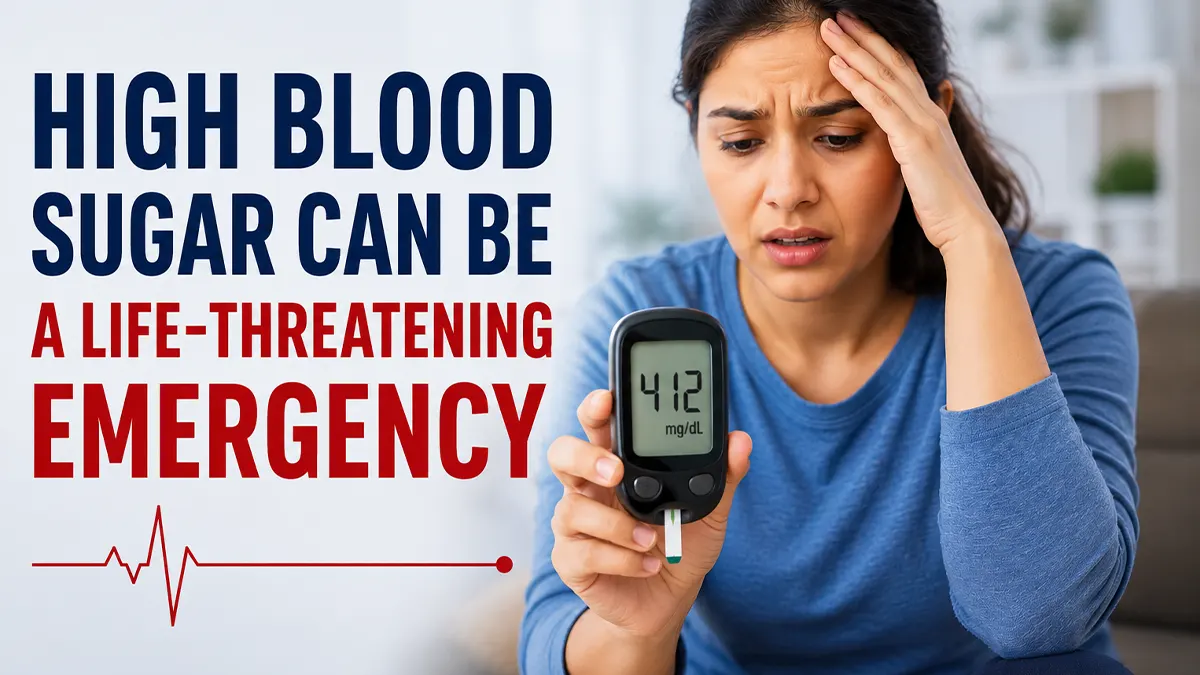
When does high blood sugar become an emergency? A glucose reading alone cannot determine every emergency. Vomiting, confusion, deep or rapid breathing, significant ketones, severe dehydration, or loss of consciousness can indicate a life-threatening complication of diabetes. Seek emergency medical care for these warning signs—even if the glucose number is not extremely high.
The two main hyperglycemic emergencies are diabetic ketoacidosis (DKA) and hyperosmolar hyperglycemic state (HHS). Both require urgent assessment and hospital treatment; neither should be managed by waiting at home.
Table of Contents
When to Seek Emergency Care for High Blood Sugar
- Repeated vomiting or inability to keep fluids down
- Rapid, unusually deep, or difficult breathing
- Confusion, extreme drowsiness, fainting, or loss of consciousness
- Fruity-smelling breath with other symptoms of DKA
- Moderate or high urine ketones, or elevated blood ketones suggesting possible DKA
- Signs of severe dehydration, such as marked weakness, dizziness, or very little urine
Call emergency services immediately for severe breathing problems, altered consciousness, or collapse. Do not drive yourself if you are confused, faint, or severely unwell. Do not delay care while trying to obtain a ketone reading.
What Blood Sugar Level Is an Emergency?
There is no universal glucose cutoff that determines an emergency in every person. Readings of 300–400 mg/dL (16.7–22.2 mmol/L) are markedly high and warrant prompt action according to a diabetes care plan and medical advice. Serious symptoms or significant ketones make the situation urgent regardless of the number. Persistent readings at or above 300 mg/dL should prompt urgent contact with a healthcare professional, especially if they do not respond to the prescribed plan.
The CDC advises checking ketones during illness or when blood sugar is 250 mg/dL (13.9 mmol/L) or higher, according to the individual care plan. DKA can also occur at lower glucose levels, particularly with certain SGLT2 inhibitor medications, so a lower reading does not rule it out.
DKA vs HHS: Key Differences
| Feature | Diabetic ketoacidosis (DKA) | Hyperosmolar hyperglycemic state (HHS) |
|---|---|---|
| More common in | Type 1 diabetes; also possible in type 2 | Type 2 diabetes |
| Main problem | Insulin deficiency, excess ketones and blood acidity | Very high glucose, high blood osmolality and profound dehydration |
| Blood glucose | Often high, but can be lower than expected | Usually extremely high, often 600 mg/dL or more |
| Typical clues | Nausea, vomiting, abdominal pain, fruity breath, deep breathing | Extreme thirst, dehydration, weakness, confusion or drowsiness |
| Treatment | Emergency hospital care | Emergency hospital care |
DKA and HHS can overlap. Only a healthcare team can diagnose them using symptoms, blood tests, ketones, acid-base measurements, and other laboratory results.
Signs and Symptoms of Diabetic Ketoacidosis (DKA)
DKA develops when the body has too little effective insulin and produces excess ketones, causing dangerous acidity. Warning signs may develop over hours and include:
- Excessive thirst and frequent urination
- Nausea, vomiting, or abdominal pain
- Fruity or acetone-like breath
- Fast or unusually deep breathing
- Severe fatigue, confusion, or unusual sleepiness
- High blood or urine ketones
DKA is more common with type 1 diabetes but also occurs with type 2 diabetes. A person taking an SGLT2 inhibitor can develop euglycemic DKA without very high blood glucose. Suspected DKA needs emergency assessment.
Signs and Symptoms of Hyperosmolar Hyperglycemic State (HHS)
HHS typically develops over days and involves severe hyperglycemia and dehydration. It may cause intense thirst, frequent urination early on, dry mouth, severe weakness, vision changes, confusion, drowsiness, or loss of consciousness. HHS is a medical emergency, often affecting people with type 2 diabetes, especially during illness or dehydration.
What to Do if Your Blood Sugar Is Very High
- Check for emergency symptoms first. If vomiting, abnormal breathing, confusion, severe dehydration, or other serious symptoms are present, seek emergency care now.
- Recheck glucose with a finger-stick meter if a continuous glucose monitor result seems unexpected and you are well enough to do so. Do not postpone emergency care for this.
- Check ketones if you have the supplies and your sick-day plan advises it, particularly during illness or persistent high glucose.
- Follow your prescribed correction and sick-day plan. Do not guess an extra insulin dose or stop prescribed insulin without professional advice.
- Drink water or sugar-free fluids if alert and able to swallow. If you cannot keep fluids down, seek urgent care.
- Avoid exercise when ketones are elevated or you may have DKA. Contact your diabetes care team promptly for persistent high readings.
If you use an insulin pump, check for infusion-set or pump problems according to your care plan. Never rely on home measures as a substitute for emergency treatment when DKA or HHS is suspected.
Why High Blood Sugar Emergencies Happen
- Missed insulin, inadequate insulin, or insulin pump/infusion-set failure
- Infection, fever, or another acute illness
- Dehydration and reduced fluid intake
- New or previously undiagnosed diabetes
- Certain medicines, including corticosteroids; SGLT2 inhibitors can be associated with DKA at lower glucose levels
Pregnant people and children with possible DKA symptoms need prompt medical evaluation. Pregnancy-related DKA may occur at lower glucose levels than expected. Parents should seek urgent care for a child with vomiting, deep breathing, marked lethargy, or suspected new-onset diabetes.
How Are DKA and HHS Treated in the Hospital?
Clinicians assess blood glucose, electrolytes, kidney function, ketones, blood acidity, and hydration. Treatment commonly includes carefully monitored intravenous fluids, insulin when indicated, electrolyte management—especially potassium—and treatment of the trigger, such as an infection. The exact treatment differs between DKA and HHS and requires medical supervision.
How to Help Prevent a Hyperglycemic Emergency
- Take diabetes medicines and insulin as prescribed; have a plan for missed doses and pump failures.
- Monitor glucose as recommended, particularly during illness.
- Keep ketone-testing supplies if your clinician recommends them and know when to use them.
- Create a written sick-day plan with your diabetes team, including when to call for help.
- Stay hydrated and seek medical advice early if you cannot eat or drink normally.
- Learn the emergency symptoms and make sure family members recognize them.
Frequently Asked Questions
Is 300 mg/dL blood sugar an emergency?
It is significantly high. Recheck and follow your prescribed plan, and contact your care team promptly if it persists. If you have vomiting, ketones, abnormal breathing, confusion, or severe dehydration, seek emergency care.
Is 400 mg/dL blood sugar an emergency?
It is very high and needs prompt medical attention. Emergency symptoms or significant ketones require immediate emergency evaluation. Do not wait for a higher reading.
Can DKA happen when blood sugar is not extremely high?
Yes. Euglycemic DKA is possible, including in some people taking SGLT2 inhibitor medicines. Symptoms and ketones matter even when glucose is not extremely high.
Should I exercise to bring down very high blood sugar?
Do not exercise if you have significant ketones or suspect DKA. Follow your personal diabetes plan and seek medical advice.
Should I stop insulin when I am sick?
Do not stop prescribed insulin on your own. Illness may change insulin needs. Follow your clinician-approved sick-day instructions and contact your care team.
What are the main differences between DKA and HHS?
DKA involves excess ketones and acidosis; HHS involves extreme hyperglycemia and severe dehydration, usually without substantial ketoacidosis. Both need hospital treatment.
Related Diabetes Guides
- Normal Blood Sugar Levels by Age
- Diabetes Symptoms in Children
- Silent Symptoms of High Blood Sugar
- Diabetes Guide
References
- CDC — Diabetic Ketoacidosis
- American Diabetes Association — DKA
- NIDDK — Preventing Diabetes Problems
References and internal URLs should be checked before publication. This article is educational and does not replace individualized diabetes care.
Author
Yamanandan Reddy — Health Content Writer & Frontend Developer. This article summarizes general health information and should be clinically reviewed before publication.
Medical Disclaimer
This information is not a diagnosis or treatment plan. If DKA or HHS is suspected, seek emergency medical care immediately. Medical review should be credited only after the named clinician has actually reviewed and approved the content.
4 thoughts on “When High Blood Sugar Becomes an Emergency: Warning Signs, DKA & HHS (2026)”