
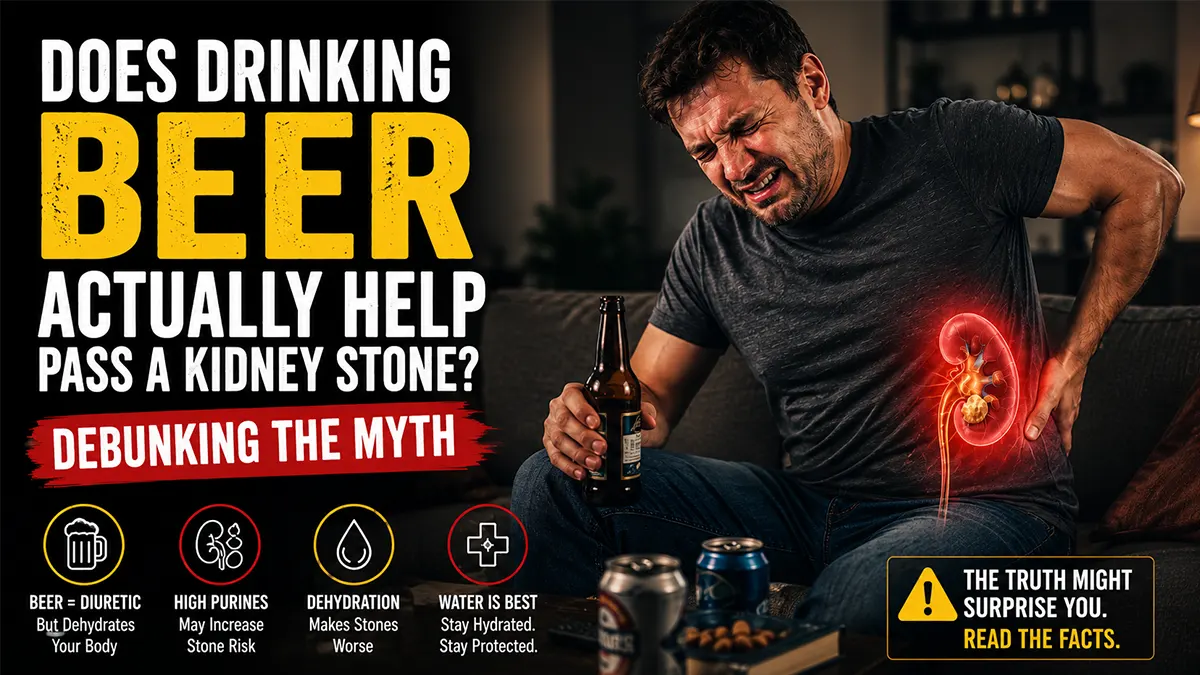
Imagine this: you’re doubled over in agonizing flank pain, pacing the floor at 2 a.m., and someone casually tells you, “Just drink a six-pack of beer. It’ll flush the stone out.”
It’s one of the most common kidney stone myths in America.
The idea of using beer for kidney stones has been passed around for years in bars, online forums, and family advice circles. Many people genuinely believe beer can help “wash out” stones naturally.
But does it actually work?
The reality is far more complicated — and potentially dangerous.
While beer may temporarily increase urination, medical experts warn that alcohol can actually worsen dehydration, increase stone risk, and create conditions that make kidney stones more painful over time.
Table of Contents
Why Do People Think Beer for Kidney Stones Works?
Doctors say the myth around beer for kidney stones continues because people confuse increased urination with proper hydration.
The myth exists for one main reason:
Beer is a diuretic.
That means it increases urine production and makes you urinate more frequently.
The logic sounds simple:
- More urine = more flushing
- More flushing = stone passes faster
Some people also report that drinking beer seemed to help them pass a small stone in the past.
But there’s a major problem with this theory.
Increasing urination temporarily is not the same thing as properly hydrating the body.
And when it comes to kidney stones, hydration is everything.
Read Also : lemon water for kidney stones
The Backfire Effect: 3 Reasons Beer Makes Stones Worse
What starts as “flushing the system” can quickly backfire.
Here’s why many urologists strongly discourage using beer as a kidney stone remedy.
Severe Dehydration
This is the biggest issue.
Alcohol causes your body to lose fluids faster than normal.
As you urinate more, your body becomes progressively dehydrated — which is exactly the opposite of what kidney stone patients need.
When urine becomes concentrated:
- Minerals crystallize more easily
- Stones may grow faster
- Pain can worsen
- Stone passage may become harder
Many people confuse increased urination with hydration.
They are not the same thing.
Drinking several pints of beer without replacing water can leave you significantly dehydrated.
That may increase the risk of severe kidney stone symptoms.
High Purine Content (Uric Acid Risk)
Another overlooked problem is the purine content in alcoholic beverages.
Beer contains compounds called purines, which break down into uric acid inside the body.
High uric acid levels can contribute to:
- Uric acid kidney stones
- Gout
- Increased stone recurrence
For people already prone to stones, this may create an even greater problem.
This is one reason doctors caution against relying on beer for kidney stones, especially if someone has a history of uric acid stones.
Empty Calories and Weight Gain
Beer also adds:
- Empty calories
- Excess carbohydrates
- Sugar load
- Potential weight gain
Why does this matter?
Obesity and metabolic syndrome are both linked to higher kidney stone risk.
People who regularly consume high amounts of alcohol may also:
- Eat more processed foods
- Consume excess sodium
- Drink less water overall
This combination can quietly increase stone formation over time.
Read Also : kidney stone emergency
Does Beer Ever Help a Kidney Stone Pass?
A very small kidney stone may pass naturally regardless of whether someone drinks beer.
This sometimes creates the illusion that beer “worked.”
In reality:
- The stone may have already been close to passing
- Time and natural urine flow likely played a bigger role
- Water would have been safer and more effective
There’s currently no strong medical evidence showing beer is a recommended treatment for kidney stones.
In fact, many experts warn the risks often outweigh the benefits.
Read Also : kidney stones in young adults
What Should You Actually Drink to Flush a Stone?
If you’re trying to support natural stone passage safely, hydration matters far more than alcohol.
Water Is Still the Best Option
Doctors typically recommend increasing water intake unless you’ve been told otherwise medically.
Most adults may need:
- 2.5 to 3 liters daily
- Roughly 85–100 ounces of fluids
The goal is to produce pale yellow or nearly clear urine.
Lemon Water May Help
Lemon contains citrate, which may help reduce calcium crystal formation.
While lemon water won’t magically dissolve stones, it may support a healthier urinary environment.
A simple option:
- 1–2 tablespoons lemon juice
- Mixed into water several times daily
Electrolyte Balance Matters
Heavy sweating, workouts, summer heat, or vomiting can worsen dehydration quickly.
In some cases, electrolyte drinks may help maintain hydration better than alcohol.
What About Other Alcohol?
Many people wonder if wine or liquor is safer.
The answer is still complicated.
Alcohol in general can contribute to:
- Dehydration
- Poor dietary habits
- Increased uric acid production
Occasional moderate drinking may not directly cause stones in every person.
But using alcohol as a “treatment” strategy is not recommended.
The truth is that beer for kidney stones may do more harm than good, especially for people already prone to dehydration or uric acid stones.
When to Seek Medical Help Immediately
Some kidney stone symptoms require urgent care.
Go to the ER immediately if you develop:
- Fever over 101.5°F
- Severe vomiting
- Blood clots in urine
- Inability to urinate
- Unbearable flank pain
These symptoms may signal infection or urinary blockage.
No amount of beer can safely treat those complications.
Conclusion
The myth about beer for kidney stones survives because beer temporarily increases urination. But that short-term effect can be misleading.
The hard truth is that alcohol often worsens dehydration, may increase uric acid stone risk, and can create conditions that make kidney stones more difficult to manage.
If you’re dealing with a kidney stone, water, proper hydration, and medical guidance are far safer choices than relying on barstool remedies.
FAQs
Can I drink any alcohol with kidney stones?
Occasional moderate alcohol may not directly cause stones in everyone, but alcohol can worsen dehydration and increase certain stone risks.
Does beer dissolve kidney stones?
No. Beer does not dissolve kidney stones. It may increase urination temporarily, but it does not break down existing stones.
What is the best drink for passing kidney stones?
Water is usually the safest and most effective option. Lemon water may also help support urinary health because it contains citrate.
Dr. Jayanth Reddy – Consultant Urologist
My Health Hospitals, Hyderabad
This content has been medically reviewed for accuracy and reliability based on current urology treatment guidelines.
According to the kidney stone symptoms NHS guide, severe flank pain can worsen during rest or nighttime.
Author
Yamanandan Reddy
Health Content Writer & Frontend Developer
Yamanandan Reddy is a health content writer and frontend developer with over 4 years of experience in website design and digital content creation. He writes research-based health articles to help readers understand symptoms, causes, treatments, and prevention methods related to common health conditions.
His articles are written using information from trusted medical sources such as the World Health Organization (WHO), Mayo Clinic, and the Centers for Disease Control and Prevention (CDC).
Sources
The information in this article is researched and verified using trusted medical resources, including:
• World Health Organization (WHO)
• Mayo Clinic
• National Institutes of Health (NIH)
• Centers for Disease Control and Prevention
⚠️ Medical Disclaimer
This content is for informational purposes only and does not replace professional medical advice. Always consult a qualified healthcare provider for diagnosis and treatment.