
Medically Reviewed By
Dr. Ch. Srujith, MBBS, MD (General Medicine)
General Physician & Diabetologist | 15+ Years Experience
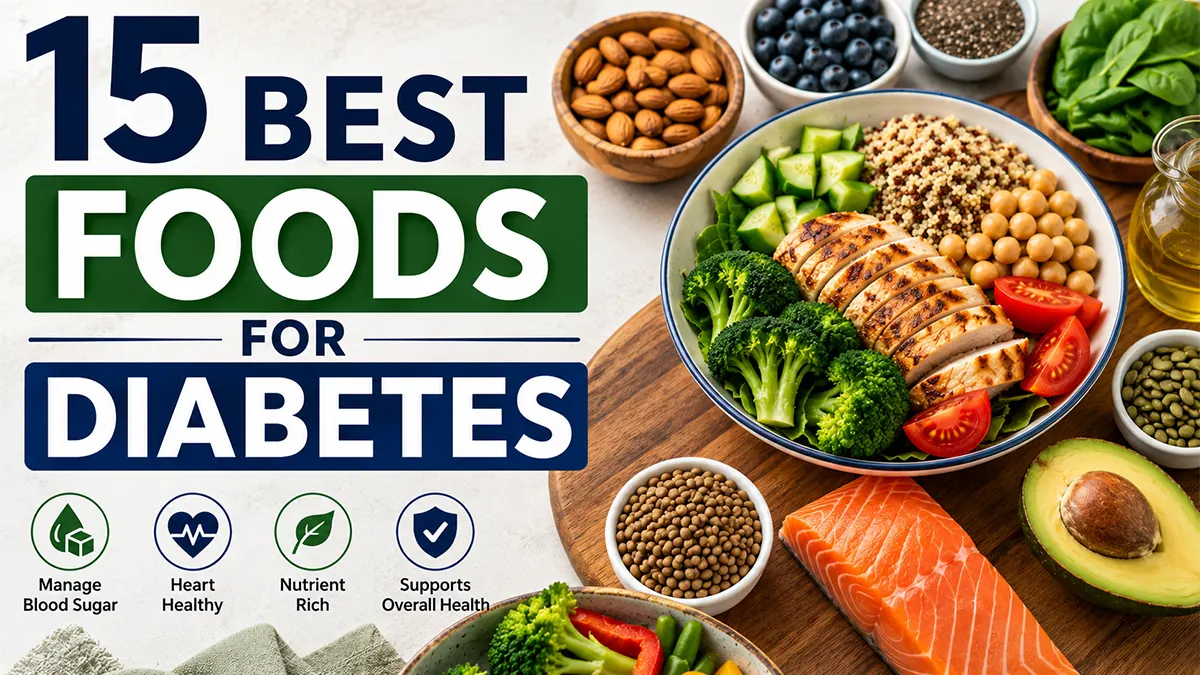
View Doctor Profile →Best foods for diabetes are generally foods that provide fiber, vitamins, minerals, healthy fats, and quality protein while fitting into an individual’s overall carbohydrate and calorie needs. There is no single “diabetes superfood” and no one diet that works for everyone.
The American Diabetes Association (ADA) recommends focusing on overall eating patterns and nutrient-dense foods rather than judging foods only by their carbohydrate, protein, or fat content. Its 2026 guidance emphasizes nonstarchy vegetables, whole fruits, legumes, lean proteins, whole grains, nuts, seeds, and low-fat dairy or suitable nondairy alternatives, while recommending less refined grain, sweets, sugar-sweetened beverages, processed foods, and foods high in saturated fat.
Table of Contents
What Makes a Food a Good Choice for Diabetes?
A diabetes-friendly food doesn’t have to be completely carbohydrate-free.
A better way to evaluate food is to consider:
- Fiber content
- Carbohydrate amount
- Protein
- Type of fat
- Portion size
- Degree of processing
- Added sugar
- Overall meal composition
- Your individual glucose response
NIDDK also emphasizes that what you eat, how much you eat, and when you eat can all be part of an individualized diabetes meal plan.
Why Blood Sugar Spikes After Meals: Causes, Symptoms & What to Do
1. Nonstarchy Vegetables
Nonstarchy vegetables are among the most useful foods to include regularly in a diabetes-friendly eating pattern.
Examples include:
- Spinach
- Broccoli
- Cauliflower
- Cabbage
- Green beans
- Bell peppers
- Tomatoes
- Cucumber
- Mushrooms
- Zucchini
- Eggplant
- Carrots
- Okra
These foods provide important nutrients and fiber without supplying as much carbohydrate as foods such as rice, bread, potatoes, or sweets.
The ADA specifically recommends emphasizing nonstarchy vegetables, including dark green, red, and orange varieties. Fresh, frozen, and low-sodium canned options can all fit into a healthy eating pattern.
Easy ways to use them
Try adding vegetables to:
- Breakfast omelets
- Dal
- Soups
- Salads
- Stir-fries
- Curries
- Lunch and dinner plates
The goal isn’t to find one magical vegetable. Eating a variety of vegetables regularly is more useful.
High Blood Sugar vs Low Blood Sugar: 7 Key Differences
2. Leafy Greens
Leafy greens such as spinach, kale, lettuce, and other dark green vegetables can be excellent additions to meals.
They provide:
- Fiber
- Vitamins
- Minerals
- Plant compounds
- Relatively little carbohydrate per typical serving
You can use leafy greens as the base of a salad or add them to soups, curries, eggs, and other meals.
For people who don’t enjoy salads, cooked greens can be an equally practical option.
How to Lower Blood Sugar Naturally: 10 Healthy Ways
3. Beans and Lentils
Beans, peas, chickpeas, and lentils are particularly useful because they provide a combination of carbohydrate, plant protein, and fiber.
Examples include:
- Chickpeas
- Kidney beans
- Black beans
- Green gram
- Bengal gram
- Lentils
- Black-eyed peas
- Soybeans
The ADA recommends legumes as part of healthy eating patterns for people with diabetes.
Why they can be useful
Their fiber and protein content can make meals more filling, while they provide nutrients that refined carbohydrate foods may lack.
However, beans and lentils still contain carbohydrate, so portion size remains relevant for glucose management.
A1C Chart Explained: Normal, Prediabetes & Diabetes Ranges
4. Whole Fruits
Having diabetes does not automatically mean avoiding fruit.
Whole fruits can provide:
- Fiber
- Vitamins
- Minerals
- Water
- Naturally occurring carbohydrates
Examples include:
- Apples
- Oranges
- Guava
- Pears
- Berries
- Kiwi
- Peaches
- Plums
The ADA specifically recommends whole fruits as part of healthy eating patterns for people with diabetes.
Whole fruit vs fruit juice
Whole fruit is generally a better choice than juice because it retains its natural fiber and requires more chewing.
Juice can provide a concentrated amount of carbohydrate without the same amount of fiber as whole fruit.
Fasting Blood Sugar Chart: Normal, Prediabetes & Diabetes Ranges (2026)
5. Berries
Berries can be a convenient fruit choice because they provide fiber and nutrients while working well in meals and snacks.
Options include:
- Strawberries
- Blueberries
- Raspberries
- Blackberries
You can combine them with plain yogurt, nuts, or seeds.
But remember: berries are not a treatment for diabetes.
They are simply one nutritious food that can fit into an appropriate eating pattern.
Normal Blood Sugar Levels by Age: What Is a Healthy Range?
6. Whole Grains
Whole grains contain more of the grain’s natural structure than refined grains.
Examples include:
- Oats
- Barley
- Brown rice
- Whole-wheat bread
- Whole-grain pasta
- Millets
- Other intact or minimally processed whole grains
The ADA recommends whole grains as part of a diabetes-friendly eating pattern.
What about rice?
You don’t necessarily have to completely eliminate rice.
For people who regularly eat rice, a more practical approach may be to pay attention to:
- Portion size
- Type of rice
- Vegetables served with it
- Protein included in the meal
- Overall carbohydrate intake
NIDDK’s plate method suggests making half the plate nonstarchy vegetables, one-quarter a high-fiber carbohydrate food, and one-quarter protein.
When High Blood Sugar Becomes an Emergency: Warning Signs, DKA & HHS (2026)
7. Oats
Oats can provide whole-grain carbohydrate and fiber.
A simple breakfast could combine oats with:
- Plain yogurt or milk
- Nuts or seeds
- A small portion of whole fruit
Avoid turning a healthy bowl of oats into a high-sugar meal by adding large amounts of sugar, syrup, sweetened dried fruit, or flavored toppings.
8. Nuts
Nuts can provide:
- Unsaturated fats
- Protein
- Fiber
- Vitamins and minerals
Examples include:
- Almonds
- Walnuts
- Pistachios
- Peanuts
- Cashews
The ADA includes nuts and seeds among foods to emphasize in diabetes-friendly eating patterns.
Because nuts are energy-dense, portion size still matters, especially for people managing calorie intake or body weight.
Choose unsalted or lightly salted varieties when possible.
Diabetes Symptoms in Children: Early Warning Signs Every Parent Should Know
9. Seeds
Seeds can add texture and nutrients to meals.
Useful options include:
- Chia seeds
- Flaxseeds
- Pumpkin seeds
- Sunflower seeds
- Sesame seeds
They can be added to:
- Oatmeal
- Plain yogurt
- Salads
- Vegetable dishes
Choose them as part of an overall balanced diet rather than treating them as a diabetes remedy.
Signs of Diabetes in Men: 12 Early Warning Symptoms You Shouldn’t Ignore
10. Fatty Fish
Fatty fish can be a useful source of protein and omega-3 fatty acids.
Examples include:
- Salmon
- Sardines
- Mackerel
- Tuna
The ADA specifically identifies fatty fish such as salmon, tuna, sardines, and mackerel as heart-healthy protein choices.
This is important because people with diabetes can have an increased risk of cardiovascular disease.
Choose preparations that don’t add excessive saturated fat, salt, or refined carbohydrates.
11. Eggs
Eggs provide protein and can be incorporated into many meals.
Possible options include:
- Boiled eggs
- Vegetable omelets
- Scrambled eggs with vegetables
- Eggs with whole-grain toast
The overall meal matters more than labeling one food as simply “good” or “bad.”
12. Lean Protein
Lean protein can help make meals more satisfying and can be combined with vegetables and high-fiber carbohydrate sources.
Examples include:
- Skinless chicken
- Turkey
- Fish
- Eggs
- Tofu
- Tempeh
- Beans
- Lentils
The ADA recommends lean proteins and plant-based protein sources as part of healthy eating patterns for diabetes.
Signs of Diabetes in Women: 12 Early Warning Symptoms You Shouldn’t Ignore (2026)
13. Tofu and Soy Foods
Tofu and other minimally processed soy foods can be useful plant-based protein choices.
They can be added to:
- Vegetable stir-fries
- Soups
- Curries
- Salads
Choose preparations that don’t rely heavily on sugary sauces or excessive sodium.
14. Plain Yogurt and Low-Fat Dairy
Plain yogurt and suitable low-fat dairy products can provide:
- Protein
- Calcium
- Other nutrients
However, flavored yogurts may contain substantial amounts of added sugar.
A practical option is plain, unsweetened yogurt combined with whole fruit, nuts, or seeds.
The ADA includes low-fat dairy products or suitable nondairy alternatives among foods that can fit into a healthy diabetes eating pattern.
10 Silent Symptoms of High Blood Sugar You Shouldn’t Ignore (2026 Guide)
15. Avocado
Avocado provides predominantly unsaturated fat and can add texture and flavor to meals.
You can use it in:
- Salads
- Whole-grain toast
- Vegetable bowls
- Homemade spreads
It is nutritious but calorie-dense, so portion size still matters.
16. Olive Oil
Olive oil can be used as a source of unsaturated fat.
For example, it can be used for:
- Salad dressing
- Cooking vegetables
- Homemade meals
The ADA emphasizes the quality of dietary fat, with attention to limiting saturated fat and favoring healthier unsaturated fat sources.
17. Water
Water is often the simplest beverage choice.
The ADA recommends water as the primary beverage for people with diabetes. Unsweetened or no-calorie beverages can also be options for people who don’t prefer plain water.
Replacing sugary drinks with water can reduce a significant source of added sugar and carbohydrate.
A Simple Diabetes-Friendly Plate
One practical approach is the plate method.
NIDDK describes a 9-inch plate divided into:
Half the plate
Nonstarchy vegetables
Examples:
- Broccoli
- Spinach
- Cucumber
- Green beans
- Peppers
One-quarter
High-fiber carbohydrate foods
Examples:
- Brown rice
- Whole grains
- Beans
- Fruit
One-quarter
Protein
Examples:
- Fish
- Lean meat
- Tofu
- Beans
- Other suitable protein foods
This method can help with portions without requiring every ingredient to be weighed or measured.
Diabetes Guide: Symptoms, Causes, Types, Treatment & Prevention (2026)
Important: There Is No Single “Best Food” for Diabetes
The phrase “best foods for diabetes” can be misleading if it suggests that one food can control or cure diabetes.
Diabetes management involves much more than individual foods.
A healthy eating pattern should consider:
- Your diabetes type
- Medicines
- Glucose targets
- Activity level
- Weight goals
- Kidney and heart health
- Food preferences
- Cultural eating habits
- Budget and food availability
The ADA recommends individualized meal plans rather than a one-size-fits-all diet.
18. Greek Yogurt — Choose Unsweetened
Plain Greek yogurt can provide protein and calcium. It can work well as a snack or part of breakfast.
Try combining it with:
- A small portion of berries
- Nuts
- Chia or flaxseed
Choose plain, unsweetened varieties when possible, because flavored versions may contain added sugars.
19. Cottage Cheese
Cottage cheese can provide protein and may work as a convenient snack.
You can pair it with:
- Cucumber
- Tomato
- Peppers
- A small serving of whole fruit
Check the nutrition label if you need to limit sodium, as some cottage cheese products can contain substantial amounts.
20. Chickpeas
Chickpeas are a useful combination of plant protein, fiber, and carbohydrate.
They can be used in:
- Chana curry
- Hummus
- Salads
- Soups
- Vegetable bowls
Because chickpeas contain carbohydrates, portion size still matters for blood glucose management.
Legumes such as chickpeas, beans, peas, and lentils are specifically encouraged in the ADA’s 2026 nutrition guidance.
21. Lentils
Lentils are another practical choice for people with diabetes.
They provide:
- Fiber
- Plant protein
- Carbohydrate
- Vitamins and minerals
You can use them in dal, soups, salads, or mixed vegetable dishes.
A bowl of dal can be part of a balanced meal when paired with appropriate portions of vegetables and other foods.
22. Beans
Kidney beans, black beans, pinto beans, soybeans, and other beans can fit well into a diabetes-friendly eating pattern.
Their combination of fiber and protein makes them particularly useful in meals.
The ADA recommends legumes as part of an overall nutrient-dense eating pattern.
23. Quinoa
Quinoa is a whole-grain-like seed that provides carbohydrate, fiber, and some protein.
It can replace or complement other grain foods in meals.
However, quinoa is not a carbohydrate-free food. If you are monitoring carbohydrate intake, include its portion in your overall meal plan.
24. Barley
Barley is a whole grain that can provide fiber and can be used in:
- Soups
- Grain bowls
- Salads
- Side dishes
Whole grains are among the carbohydrate sources encouraged in diabetes nutrition guidance.
25. Millets
Millets are traditional grains consumed in many parts of India and other regions.
Examples include:
- Ragi
- Bajra
- Jowar
- Foxtail millet
They can provide fiber and other nutrients, but they still contain carbohydrate.
So don’t assume that a millet-based food is automatically “low sugar” or that unlimited amounts are appropriate for diabetes.
Portion and overall meal composition still matter.
26. Ragi
Ragi, or finger millet, is commonly used for:
- Ragi dosa
- Ragi roti
- Ragi porridge
- Other traditional preparations
It can be part of a balanced diet, but claims that ragi cures diabetes or cannot raise blood glucose are not medically accurate.
The way it is prepared and the portion consumed also matter.
27. Sweet Potatoes
Sweet potatoes contain carbohydrate, fiber, vitamins, and minerals.
They can be included in a diabetes-friendly diet when portions fit the individual’s meal plan.
A practical approach is to combine a suitable portion with:
- Nonstarchy vegetables
- Protein
- Other nutrient-dense foods
Rather than labeling sweet potatoes as either completely “good” or “bad,” consider the whole meal.
28. Tomatoes
Tomatoes are versatile and can be included in:
- Salads
- Soups
- Curries
- Vegetable dishes
- Sandwiches
They contribute relatively little carbohydrate in typical portions and provide nutrients such as vitamin C and potassium.
Fresh tomatoes are different from highly processed tomato products that may contain added sugar or large amounts of sodium.
29. Cucumbers
Cucumbers are mostly water and can be a simple addition to meals.
Try them in:
- Salads
- Raita
- Sandwiches
- Vegetable plates
They can add volume and freshness without contributing a large carbohydrate load in typical servings.
30. Broccoli
Broccoli is a nonstarchy vegetable that provides fiber and several vitamins and minerals.
It can be:
- Steamed
- Roasted
- Stir-fried
- Added to soups
- Combined with lean protein
The ADA encourages nonstarchy vegetables as a core component of diabetes-friendly eating patterns.
31. Cauliflower
Cauliflower is another versatile nonstarchy vegetable.
It can be used in:
- Curries
- Soups
- Stir-fries
- Roasted vegetable dishes
- Mixed vegetable meals
It can also replace some refined or highly processed carbohydrate foods in certain recipes, although this doesn’t mean every cauliflower-based product is automatically healthy.
32. Green Beans
Green beans can add fiber and nutrients to meals without contributing as much carbohydrate as many starchy foods.
Try combining them with:
- Lean protein
- Lentils
- Other vegetables
- A suitable whole-grain portion
Fresh, frozen, or low-sodium canned vegetables can all fit into a healthy eating pattern.
33. Bell Peppers
Bell peppers provide color, flavor, and nutrients.
You can add them to:
- Omelets
- Salads
- Stir-fries
- Soups
- Vegetable curries
Using a variety of vegetables can make healthy eating more enjoyable and sustainable.
34. Apples
Apples provide carbohydrate along with fiber and other nutrients.
A whole apple can be a convenient snack.
For a more balanced snack, you could combine it with a small portion of nuts or another suitable protein-rich food.
The ADA recommends whole fruits, rather than treating fruit as something people with diabetes must avoid.
35. Guava
Guava is a nutrient-rich whole fruit that can fit into a diabetes-friendly eating pattern.
As with other fruits, the important considerations are:
- Portion size
- Total carbohydrate
- Your individual glucose response
- Overall meal plan
There is no need to claim that guava is a “diabetes cure” or that it cannot affect glucose.
36. Oranges
Whole oranges provide fiber, vitamin C, and naturally occurring carbohydrate.
Choose the whole fruit rather than regularly replacing it with juice.
NIDDK recommends limiting sugary drinks and choosing beverages with little or no added sugar.
37. Pears
Pears can be another whole-fruit option.
Try eating a whole pear rather than choosing a sweetened canned fruit product.
If using canned fruit, check the label and choose options packed in water or their own juice without added sugar when available.
38. Chia Seeds
Chia seeds provide fiber, plant-based fat, and other nutrients.
They can be added to:
- Plain yogurt
- Oatmeal
- Salads
- Homemade meals
They are nutritious, but they should not be presented as a medicine that lowers blood sugar.
39. Flaxseeds
Ground flaxseed can add fiber and healthy fats to meals.
It can be mixed into:
- Oatmeal
- Plain yogurt
- Smoothies
- Whole-grain dishes
As with other seeds, use reasonable portions because they are energy-dense.
40. Walnuts
Walnuts provide unsaturated fats, plant protein, and fiber.
A small portion can work as a snack or meal addition.
The ADA recommends nuts and seeds as part of a diverse eating pattern and encourages healthier sources of dietary fat.
41. Almonds
Almonds can provide:
- Protein
- Fiber
- Unsaturated fat
- Several micronutrients
Choose plain or lightly salted almonds instead of heavily sugar-coated or flavored varieties.
42. Peanut Butter
Peanut butter can be a useful source of protein and unsaturated fat.
When buying it, check the ingredient list and choose products with minimal added sugar and unnecessary ingredients.
A practical serving can be combined with:
- Whole fruit
- Whole-grain toast
- Plain yogurt
Because peanut butter is calorie-dense, portion size is still important.
43. Salmon
Salmon is a fatty fish that provides protein and omega-3 fatty acids.
The ADA includes fatty fish such as salmon, tuna, sardines, and mackerel among heart-healthy protein choices.
This can be especially relevant because cardiovascular health is an important consideration for people with diabetes.
44. Sardines
Sardines provide protein and omega-3 fats.
Fresh, frozen, or low-sodium canned versions can be used.
If choosing canned sardines, check the sodium content if you have been advised to restrict sodium.
45. Mackerel
Mackerel is another fatty fish that can provide omega-3 fatty acids.
It can be prepared by:
- Baking
- Grilling
- Steaming
Avoid relying on heavily fried preparations as your main way of consuming fish.
46. Chicken
Skinless chicken can provide lean protein.
A balanced meal might combine chicken with:
½ plate nonstarchy vegetables + ¼ plate protein + ¼ plate high-fiber carbohydrate
This follows the general plate-method approach described by NIDDK.
47. Tofu
Tofu is a versatile plant-based protein.
It can be used in:
- Stir-fries
- Soups
- Curries
- Salads
The ADA recommends incorporating more plant-based protein sources, including soy foods, nuts, seeds, and legumes.
48. What About Indian Foods?
You don’t have to completely abandon traditional Indian foods after a diabetes diagnosis.
Many familiar foods can be incorporated with appropriate portions and meal planning.
Examples include:
- Dal
- Chana
- Rajma
- Vegetable sabzi
- Sambar
- Unsweetened curd
- Whole-grain roti
- Brown rice
- Millets
- Fish
- Eggs
- Paneer in appropriate portions
The key is to consider portion size, preparation method, added sugar, saturated fat, and the overall meal.
49. What About Idli and Dosa?
Idli and dosa contain carbohydrates and can raise blood glucose.
That doesn’t automatically mean they must be completely avoided.
Consider:
- Portion size
- Ingredients
- Accompaniments
- Added oil
- Overall meal composition
Pairing a carbohydrate-rich food with protein and vegetables can make the meal more balanced.
Individual glucose responses can vary.
50. What About Chapati?
Whole-wheat chapati can fit into many diabetes meal plans.
But chapati is still a carbohydrate-containing food.
The number of chapatis appropriate for one person cannot be prescribed universally because it depends on the individual’s overall diet, energy needs, medications, glucose targets, and other factors.
A dietitian can help determine an appropriate portion.
51. What About Brown Rice?
Brown rice is a whole-grain option and provides more fiber than refined white rice.
However, brown rice is not carbohydrate-free.
Portion size remains important.
The ADA recommends whole-grain foods such as brown rice as part of healthy eating patterns, while NIDDK includes brown rice among high-fiber carbohydrate choices for the plate method.
52. What Foods Should Be Limited?
Instead of thinking only about foods to eat, it is also useful to identify foods that are best limited.
These include:
- Sugar-sweetened beverages
- Sweets
- Refined grains
- Highly processed foods
- Ultra-processed foods
- Foods high in saturated fat
- Large portions of refined carbohydrates
The ADA’s 2026 guidance specifically recommends minimizing these foods in eating patterns for people with diabetes and prediabetes.
53. Don’t Be Fooled by “Diabetes-Friendly” Labels
A product labeled:
“Diabetic-friendly”
isn’t automatically a healthy choice.
Check the nutrition facts and ingredient list.
Look at:
- Total carbohydrate
- Added sugar
- Fiber
- Saturated fat
- Sodium
- Portion size
- Overall ingredients
A food marketed specifically for diabetes can still be highly processed.
54. What About Sugar-Free Foods?
“Sugar-free” doesn’t necessarily mean carbohydrate-free or calorie-free.
Some sugar-free products can still contain substantial carbohydrates from other ingredients.
Therefore, check the nutrition label rather than relying only on front-of-package claims.
55. What About Diabetes Supplements?
Be cautious with supplements marketed for blood sugar control.
NIDDK states that there is no clear proof that specific foods, herbs, spices, or dietary supplements can manage diabetes, and recommends discussing supplements with a healthcare professional because they can have side effects or interact with medicines.
Food should not be replaced with unproven supplements.
The Simple Rule to Remember
You don’t need a complicated “diabetes diet.”
A useful starting point is:
🥦 Half the plate
Nonstarchy vegetables
🌾 One-quarter
High-fiber carbohydrate
🐟 One-quarter
Protein
💧 Drink
Water or another low/no-calorie beverage
This plate method is recommended as a practical portion-control approach by NIDDK.
Key Takeaway
The best foods for diabetes are generally nutrient-dense foods that fit your individual meal plan. Vegetables, whole fruits, legumes, whole grains, nuts, seeds, lean proteins, fatty fish, and suitable dairy or nondairy alternatives can all have a place.
You don’t need to completely eliminate rice, fruit, chapati, or other carbohydrate-containing foods simply because you have diabetes. Portion, preparation, overall meal composition, and individual glucose response matter.
56. Make Nonstarchy Vegetables the Base of Your Meals
Vegetables such as spinach, broccoli, cauliflower, peppers, cabbage, cucumber, and green beans can make up a large part of a balanced meal.
NIDDK’s plate method recommends making half of a 9-inch plate nonstarchy vegetables.
This can make portion control easier without requiring you to weigh every food.
57. Choose Whole Fruit Instead of Juice
You don’t have to eliminate fruit because you have diabetes.
Good options include:
- Apples
- Guava
- Oranges
- Pears
- Berries
- Kiwi
- Peaches
The ADA recommends whole fruit as part of healthy eating patterns. It also recommends replacing sugar-sweetened beverages, including juices, with water or low- or no-calorie beverages to help manage glucose.
58. Include Legumes Regularly
Beans, lentils, peas, and chickpeas provide a combination of carbohydrate, fiber, and plant protein.
They can be used in:
- Dal
- Chana
- Rajma
- Lentil soups
- Bean salads
- Vegetable curries
Legumes are specifically included among the foods encouraged in the ADA’s 2026 nutrition recommendations.
59. Choose Whole-Grain Carbohydrates
Whole-grain options can include:
- Brown rice
- Oats
- Barley
- Whole-wheat bread
- Whole-grain pasta
- Other whole grains appropriate to your culture and preferences
The ADA recommends minimally processed, nutrient-dense, high-fiber carbohydrate sources.
If whole grains aren’t practical or culturally preferred, portion control remains important. You don’t have to force yourself to eat a particular grain simply because it is labeled “healthy.”
60. Add Plant-Based Protein
Plant-based protein sources include:
- Beans
- Lentils
- Soybeans
- Tofu
- Nuts
- Seeds
The ADA recommends incorporating more plant-based protein sources into a diverse eating pattern, partly because of their potential cardiovascular benefits.
61. Choose Fish Regularly
Fish can provide high-quality protein, and fatty fish such as salmon, sardines, tuna, and mackerel provide omega-3 fatty acids.
The ADA identifies fatty fish as a heart-healthy protein choice.
How you prepare the fish matters. Grilled, baked, steamed, or otherwise simply prepared fish may be preferable to heavily fried preparations.
62. Use Healthier Fats
Not all dietary fats have the same nutritional profile.
Sources of predominantly unsaturated fats include:
- Nuts
- Seeds
- Avocado
- Olive oil
- Canola oil
- Fatty fish
The ADA recommends limiting foods high in saturated fat and incorporating healthier sources of dietary fat.
63. Watch Added Sugar
You don’t need to eliminate every naturally occurring carbohydrate.
A more important step is to reduce foods and beverages with substantial added sugar, particularly when they displace more nutritious foods.
Examples include:
- Sweets
- Cakes
- Cookies
- Sugary cereals
- Sweetened drinks
- Sweetened coffee beverages
The ADA recommends minimizing added-sugar foods and sugar-sweetened beverages.
64. Make Water Your Main Beverage
Water is generally the simplest beverage choice.
If plain water is difficult to enjoy, alternatives can include:
- Sparkling water
- Unsweetened tea
- Unsweetened coffee
- Water flavored naturally with lemon, lime, berries, or cucumber
The ADA recommends water as the primary beverage for people with diabetes or at risk for diabetes.
65. Read Food Labels
Food labels can help you compare products.
When choosing packaged foods, look at:
- Serving size
- Total carbohydrate
- Fiber
- Added sugar
- Saturated fat
- Sodium
- Protein
Don’t rely only on claims such as “diabetic,” “sugar-free,” or “healthy.”
The nutrition facts panel gives you more useful information about what you’re actually eating.
How to Build a Diabetes-Friendly Breakfast
A balanced breakfast could include:
Option 1:
Oats + plain yogurt + berries + nuts
Option 2:
Vegetable omelet + whole-grain toast + unsweetened beverage
Option 3:
Plain yogurt + whole fruit + seeds
Option 4:
Traditional breakfast foods in appropriate portions + vegetables or another nutrient-dense side
There is no requirement to eat a particular breakfast food. Choose something that fits your culture, preferences, schedule, and glucose-management plan.
How to Build a Diabetes-Friendly Lunch
A simple lunch could follow the plate method:
½ plate
Nonstarchy vegetables
¼ plate
Protein such as fish, chicken, tofu, beans, or lentils
¼ plate
A high-fiber carbohydrate source
For example:
Vegetable sabzi + dal + appropriate rice portion + salad
The exact portions should be individualized.
NIDDK notes that meal timing and food choices can depend on diabetes medicines, physical activity, work schedule, and other health conditions.
How to Build a Diabetes-Friendly Dinner
Dinner can follow the same basic structure.
For example:
Grilled fish + mixed vegetables + a suitable whole-grain portion
or
Tofu + vegetable stir-fry + an appropriate portion of brown rice
The goal isn’t perfection. A sustainable eating pattern is generally more useful than an extremely restrictive diet.
Best Snacks for Diabetes
There is no universal “best snack.”
Depending on your nutritional needs, possible choices include:
- A small portion of nuts
- Plain yogurt
- Whole fruit
- Vegetables with hummus
- Boiled egg
- Cottage cheese
- A small portion of roasted chickpeas
If you use insulin or certain diabetes medicines, your need for snacks may depend on your treatment plan and activity level.
What About Sweets?
Having diabetes doesn’t necessarily mean you can never eat a dessert.
However, sweets are generally best treated as occasional foods and in appropriate portions, rather than everyday staples.
The ADA recommends minimizing sweets, refined grains, sugar-sweetened beverages, and highly processed foods.
If you enjoy a traditional dessert, discuss how it can fit into your overall eating plan rather than assuming you must completely eliminate it.
What About Red Meat?
The ADA’s 2026 nutrition guidance recommends minimizing red meat as part of an overall eating pattern for people with diabetes and prediabetes.
You can vary your protein sources with:
- Fish
- Poultry
- Beans
- Lentils
- Tofu
- Nuts
- Seeds
This provides more dietary variety and can support cardiovascular health.
What About Processed Meat?
Processed meats such as certain sausages, bacon, and similar products are generally foods to limit.
Instead, consider less processed protein sources such as:
- Fish
- Eggs
- Chicken
- Beans
- Lentils
- Tofu
The overall quality of the eating pattern matters more than finding one perfect protein.
What About Alcohol?
Alcohol requires additional caution for people with diabetes.
If you take insulin or certain diabetes medicines, alcohol can contribute to low blood glucose. NIDDK recommends discussing alcohol use with your healthcare team and notes that eating food when drinking may be important for people at risk of hypoglycemia.
If you don’t drink alcohol, there is no health reason to start drinking because of diabetes.
Do You Need to Count Carbohydrates?
Not everyone with diabetes needs to count carbohydrates.
NIDDK explains that carbohydrate counting can be particularly useful for people who take insulin, while the plate method can provide a simpler way to manage portions for some people.
If you use insulin, your healthcare team can teach you whether carbohydrate counting is appropriate and how to do it safely.
Is There One Best Diet for Diabetes?
No.
The ADA states that there is no one-size-fits-all eating pattern for people with diabetes. Acceptable evidence-based approaches can include Mediterranean-style, DASH, plant-based, low-carbohydrate, and other individualized patterns.
The best eating plan is one that:
- Meets your nutritional needs
- Fits your culture and preferences
- Supports your glucose goals
- Works with your medications
- Is affordable and practical
- You can maintain over time
Important: Don’t Try to Cure Diabetes With Food
Healthy food is an important part of diabetes management, but food alone should not be presented as a cure for diabetes.
Be cautious about claims that specific foods, herbs, spices, or supplements can replace diabetes medication. NIDDK states that there is no clear proof that specific foods, herbs, spices, or dietary supplements can manage diabetes and recommends discussing supplements with a healthcare professional.
Key Takeaway
The best foods for diabetes are generally ordinary, nutrient-dense foods rather than expensive specialty products.
Build most meals around:
🥦 Nonstarchy vegetables
🍎 Whole fruits
🫘 Legumes
🌾 High-fiber whole grains
🐟 Lean and plant-based proteins
🥜 Nuts and seeds
🥛 Appropriate dairy or nondairy alternatives
💧 Water
At the same time, limit sugar-sweetened beverages, sweets, refined grains, highly processed foods, and foods high in saturated fat.
Most importantly, your diabetes meal plan should be individualized. If you use insulin, have kidney disease, are pregnant, or have other medical conditions, your food choices and portions may need additional adjustment.
FAQs, Meal Planning & Conclusion
1. What are the best foods for diabetes?
There is no single best food for everyone with diabetes. Good choices generally include nonstarchy vegetables, whole fruits, legumes, whole grains, nuts, seeds, fish, lean proteins, and suitable dairy or nondairy alternatives. Portion size and overall meal composition are also important.
2. Can people with diabetes eat fruit?
Yes. Whole fruits can be part of a healthy diabetes eating pattern. Fruits contain carbohydrates, so portion size and individual glucose response still matter. Whole fruit is generally preferable to fruit juice because it provides more fiber.
3. Which vegetables are best for diabetes?
Nonstarchy vegetables such as spinach, broccoli, cauliflower, cabbage, cucumber, peppers, tomatoes, mushrooms, and green beans are excellent choices. NIDDK’s plate method recommends making about half the plate nonstarchy vegetables.
4. Can I eat rice if I have diabetes?
Yes. Rice can fit into an individualized diabetes meal plan. The important factors include portion size, the type of rice, what you eat with it, and your overall carbohydrate intake. Brown rice and other whole grains can provide more fiber than refined grains.
5. Is brown rice better than white rice for diabetes?
Brown rice is a whole grain and generally contains more fiber than white rice. However, both contain carbohydrate and can raise blood glucose. Portion size and the overall meal remain important.
6. Can people with diabetes eat chapati?
Yes. Whole-wheat chapati can be included in many diabetes meal plans. However, chapati still contains carbohydrates, so the appropriate portion depends on your individual nutritional needs and glucose-management plan.
7. Are oats good for diabetes?
Oats can be a nutritious whole-grain option because they provide fiber and other nutrients. Choose minimally processed oats when practical and be careful with added sugar, syrups, sweetened dried fruit, and heavily sweetened toppings.
8. Are eggs good for diabetes?
Eggs provide protein and can be included in a balanced eating pattern. Their role in your diet should also take into account your overall cardiovascular health, dietary pattern, and any specific advice from your healthcare professional.
9. Are nuts good for diabetes?
Nuts provide unsaturated fats, protein, fiber, and other nutrients. Because they are energy-dense, reasonable portions are important. Unsalted or lightly salted varieties can be useful choices.
10. Can I eat bananas if I have diabetes?
A banana can be part of a diabetes-friendly diet. It contains carbohydrate, so portion size matters. The effect on glucose can vary depending on the amount eaten and the rest of the meal.
11. Is guava good for diabetes?
Guava can fit into a healthy eating pattern as a whole fruit. However, it should not be described as a food that treats or cures diabetes. Portion size and total carbohydrate intake remain relevant.
12. Is milk good for diabetes?
Milk contains carbohydrate in the form of lactose as well as protein and other nutrients. It can fit into a diabetes meal plan, but the amount and type should be considered as part of the person’s overall diet.
13. Is curd or yogurt good for diabetes?
Plain, unsweetened yogurt can provide protein and calcium. Flavored varieties may contain added sugar, so checking the nutrition label is useful.
14. What should I drink if I have diabetes?
Water is generally the simplest choice. Unsweetened tea, coffee, sparkling water, and other low- or no-calorie beverages can also be options. Sugar-sweetened beverages are best limited.
15. Can I drink fruit juice if I have diabetes?
Fruit juice can contain a concentrated amount of carbohydrate and generally provides less fiber than whole fruit. For routine hydration or fruit intake, whole fruit and water are generally more useful choices.
16. Are millets good for diabetes?
Millets such as ragi, jowar, and bajra can be included in a balanced eating pattern. However, they still contain carbohydrates and should not automatically be considered unlimited “low-sugar” foods.
17. Is ragi good for diabetes?
Ragi can provide carbohydrate, fiber, and other nutrients. It can be included in an appropriate portion, but claims that ragi prevents or cures diabetes are not medically supported.
18. Is honey better than sugar for diabetes?
Honey still contains sugars and carbohydrate and can raise blood glucose. It should not be considered a diabetes-friendly substitute that can be consumed without limits.
19. Is brown sugar better than white sugar for diabetes?
Brown sugar and white sugar both provide added sugar and can raise blood glucose. Switching between them does not remove the need to limit added sugars.
20. Can people with diabetes eat sweets?
Occasional sweets can sometimes fit into an individualized eating plan, but sweets are generally foods to limit because they often provide substantial added sugar and calories with relatively few nutrients.
21. What foods should people with diabetes avoid?
Rather than having a universal list of completely forbidden foods, focus on limiting sugar-sweetened beverages, sweets, refined grains, highly processed foods, and foods high in saturated fat. The appropriate approach depends on the person’s overall health and treatment plan.
22. What is the best breakfast for diabetes?
There is no single best breakfast. A balanced meal might combine a high-fiber carbohydrate source with protein and nutrient-dense foods, such as oats with plain yogurt and berries or a vegetable omelet with an appropriate portion of whole-grain toast.
23. What is the best dinner for diabetes?
A practical dinner can follow the plate method: approximately half nonstarchy vegetables, one-quarter protein, and one-quarter a high-fiber carbohydrate source. Individual portions may need to be adjusted according to your nutritional and medical needs.
24. Do people with diabetes need to count carbohydrates?
Not everyone needs to count carbohydrates. It can be particularly useful for some people using insulin. Others may find the plate method easier for managing portions. Your healthcare team can help determine which approach is appropriate.
25. Can food cure diabetes?
No food should be described as a cure for diabetes. Healthy eating can be an important part of diabetes management, but it does not replace prescribed treatment.
7-Day Simple Diabetes-Friendly Food Pattern
This is an example rather than a medical prescription. Portions should be individualized.
| Day | Breakfast | Lunch | Dinner |
|---|---|---|---|
| Monday | Oats + plain yogurt + berries | Dal + vegetables + appropriate whole-grain portion | Fish + vegetables + whole grain |
| Tuesday | Vegetable omelet + whole-grain toast | Chickpeas + salad + suitable carbohydrate | Chicken/tofu + vegetables |
| Wednesday | Plain yogurt + fruit + nuts | Rajma + vegetables + appropriate rice portion | Vegetable soup + protein |
| Thursday | Oats + seeds + whole fruit | Dal + mixed vegetables + chapati | Fish + salad + suitable grain |
| Friday | Eggs + vegetables + whole-grain toast | Chana + vegetables + appropriate grain | Tofu + vegetable stir-fry |
| Saturday | Plain yogurt + berries + nuts | Lentils + vegetables + chapati | Chicken/fish + vegetables |
| Sunday | Vegetable omelet + fruit | Beans + vegetables + suitable rice portion | Mixed vegetables + protein + whole grain |
Important: People taking insulin, people with kidney disease, pregnant individuals, and those with other medical conditions may need a more specific meal plan.
Foods to Keep at Home
A practical shopping list can include:
Vegetables
- Spinach
- Broccoli
- Cauliflower
- Cucumber
- Tomatoes
- Bell peppers
- Green beans
- Cabbage
Protein
- Eggs
- Fish
- Skinless chicken
- Tofu
- Lentils
- Chickpeas
- Beans
- Plain yogurt
High-Fiber Carbohydrates
- Oats
- Brown rice
- Barley
- Whole-wheat flour
- Other whole grains
Healthy Fat Sources
- Almonds
- Walnuts
- Seeds
- Avocado
- Olive oil
Fruit
- Apples
- Oranges
- Guava
- Pears
- Berries
- Other whole fruits
Beverages
- Water
- Unsweetened tea
- Unsweetened coffee
- Other low- or no-calorie beverages
A Simple Grocery Shopping Rule
When buying packaged foods, don’t rely only on words such as:
“Diabetic”
“Sugar-free”
“Natural”
“Healthy”
Instead, check the nutrition facts and ingredient list.
Pay attention to:
- Serving size
- Total carbohydrate
- Fiber
- Added sugar
- Saturated fat
- Sodium
- Protein
This can help you make decisions based on the actual nutritional content rather than marketing claims.
Important Considerations for Certain People
If You Take Insulin
Your meal timing and carbohydrate intake may need to be coordinated with insulin. Don’t make major changes to carbohydrate intake or insulin doses without guidance from your diabetes care team.
If You Have Kidney Disease
Some foods that are generally healthy may need to be limited depending on kidney function, potassium, phosphorus, protein requirements, and other factors.
A renal dietitian can provide individualized guidance.
If You Are Pregnant
Pregnancy changes nutritional requirements and glucose targets. Gestational diabetes requires individualized medical and nutrition guidance.
If You Are Older
Older adults may have different nutritional requirements, medication considerations, and risks of hypoglycemia. Avoid overly restrictive diets unless medically recommended.
Final Conclusion
The best foods for diabetes are not one particular fruit, vegetable, grain, or supplement. A sustainable eating pattern is usually more important than finding a single “superfood.”
A strong foundation includes:
🥦 Plenty of nonstarchy vegetables
🍎 Whole fruits in appropriate portions
🫘 Beans, lentils, and other legumes
🌾 High-fiber whole grains
🐟 Fish and other suitable protein sources
🥜 Nuts and seeds
🥑 Sources of healthier unsaturated fats
💧 Water and other low- or no-calorie beverages
At the same time, limit sugar-sweetened beverages, sweets, refined grains, highly processed foods, and foods high in saturated fat.
Most importantly, diabetes nutrition should be individualized. Your age, diabetes type, medications, glucose targets, activity level, kidney health, cardiovascular health, cultural food preferences, and personal goals can all influence what works best for you.
Healthy food can support diabetes management, but no individual food can cure diabetes or replace prescribed medical treatment.
Sources: American Diabetes Association, Standards of Care in Diabetes—2026; National Institute of Diabetes and Digestive and Kidney Diseases (NIDDK).
References
This article is based on current recommendations from internationally recognized medical organizations and peer-reviewed evidence, including:
- American Diabetes Association (ADA) Standards of Care
- Centers for Disease Control and Prevention (CDC)
- National Institute of Diabetes and Digestive and Kidney Diseases (NIDDK)
- World Health Organization (WHO)
Medically Reviewed By
Dr. Ch. Srujith, MBBS, MD (General Medicine)
General Physician & Diabetologist | 15+ Years of Clinical Experience | Hyderabad, India
This article has been medically reviewed for medical accuracy and reflects current evidence-based recommendations available as of 2026. It is intended for educational purposes only and should not replace personalized medical advice, diagnosis, or treatment. For concerns about diabetes or blood sugar management, consult a qualified healthcare professional.
Author
Yamanandan Reddy
Health Content Writer & Frontend Developer
Yamanandan Reddy is a health content writer and frontend developer with over 4 years of experience in website design and digital content creation. He writes research-based health articles to help readers understand symptoms, causes, treatments, and prevention methods related to common health conditions.
⚠️ Medical Disclaimer
This content is for informational purposes only and does not replace professional medical advice. Always consult a qualified healthcare provider for diagnosis and treatment.
2 thoughts on “Best Foods for Diabetes: A Practical, Evidence-Based Food Guide”