
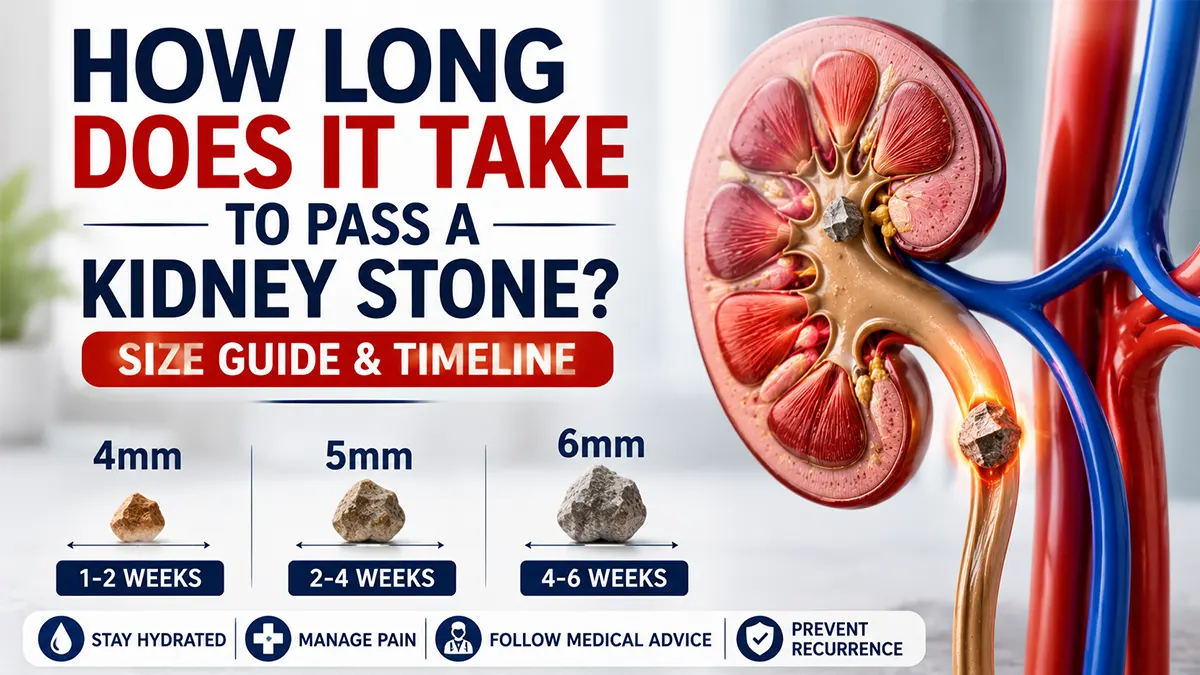
Kidney stones are among the most painful conditions affecting the urinary tract. One of the first questions patients ask after diagnosis is, “How long does it take to pass a kidney stone?” The answer depends on several factors, including stone size, location, shape, hydration status, and whether the stone becomes lodged within the urinary tract.
Most kidney stones can pass naturally, especially smaller stones. However, larger stones may require medication or surgical intervention. Understanding what to expect can help reduce anxiety and ensure timely treatment when necessary.
Table of Contents
Understanding Kidney Stones
Kidney stones are hard mineral deposits that form when substances such as calcium, oxalate, uric acid, or cystine become concentrated in urine.
Common stone types include:
- Calcium oxalate stones
- Calcium phosphate stones
- Uric acid stones
- Struvite stones
- Cystine stones
A kidney stone may remain inside the kidney without causing symptoms. Pain usually begins when the stone starts moving into the ureter, the tube connecting the kidney to the bladder.
Kidney Stone Emergency Symptoms (When to Go to ER Immediately)
Kidney Stone Size Chart Passing Time
The size of the stone is one of the strongest predictors of whether it will pass naturally.
| Stone Size | Natural Passage Rate | Average Passing Time |
|---|---|---|
| Less than 4mm | 80-95% | 1-2 weeks |
| 4mm | 70-90% | 1-2 weeks |
| 5mm | 50-65% | 2-4 weeks |
| 6mm | 20-50% | 4-6 weeks |
| 7mm+ | Less than 20% | Often requires treatment |
Kidney Stone Pain Location Chart – Where Does Kidney Stone Pain Occur?
How Long Does It Take to Pass a Kidney Stone?
The primary keyword question has no single answer because every patient is different.
Several factors influence stone passage:
- Stone size
- Stone shape
- Stone location
- Ureter width
- Hydration level
- Presence of infection
- Previous stone history
Generally, smaller stones pass faster than larger stones.
Kidney Stone Symptoms at Different Ages (2026 Guide: What Changes With Age?)
How Long to Pass a 4mm Kidney Stone?
A 4mm kidney stone is considered relatively small.
Chances of Passing a 4mm Kidney Stone Naturally
Studies suggest approximately 70-90% of 4mm stones pass without surgery.
Most patients pass a 4mm stone within:
- 7 to 14 days
- Occasionally up to 30 days
Real-World Scenario
A 34-year-old woman develops sudden flank pain and is diagnosed with a 4mm ureteric stone.
Her doctor recommends:
- Increased water intake
- Pain medications
- Medical expulsive therapy
The stone passes naturally after 10 days.
This is a common outcome for stones of this size.
4mm Kidney Stone Passing Time Female
Women and men generally have similar passage rates.
However, factors such as:
- Ureter anatomy
- Pregnancy
- Hydration status
may influence the exact timeline.
Most women pass a 4mm stone within one to three weeks.
Signs a Kidney Stone Is Stuck in the Ureter: Symptoms Doctors Warn You Not to Ignore
Can You Pass a 5mm Kidney Stone Without Surgery?
Yes, many people can pass a 5mm kidney stone naturally.
However, passage becomes less predictable.
Approximately 50-65% of 5mm stones pass without surgical intervention.
Average Time to Pass a 5mm Kidney Stone
Most patients require:
- 2 to 4 weeks
- Sometimes up to 40 days
The stone may move slowly through the ureter before reaching the bladder.
5mm Kidney Stone Passing Timeline
Week 1
- Severe flank pain
- Blood in urine
- Urinary urgency
Week 2
- Intermittent pain
- Stone continues descending
Week 3
- Increased bladder symptoms
- Frequent urination
Week 4
- Stone often passes naturally
Some patients require intervention if symptoms persist.
How to Speed Up Passing a 5mm Kidney Stone
Several measures may help:
Hydration
Drink enough fluids to produce pale urine.
Walking and Physical Activity
Movement may encourage stone migration.
Medications
Doctors may prescribe:
- Tamsulosin
- Alpha blockers
These medications relax the ureter and improve passage rates.
Pain Management
Pain control helps maintain activity and hydration.
Kidney Stones and Low Water Intake: Medical Facts Every Adult Should Know in 2026
Is a 6mm Kidney Stone Too Big to Pass?
A 6mm stone is considered borderline.
Some people pass it naturally, while others require treatment.
Passage rates range from 20% to 50%.
How Painful Is Passing a 6mm Kidney Stone?
Pain levels vary significantly.
Patients often describe kidney stone pain as:
- Sharp
- Cramping
- Intermittent
- Severe
The pain occurs as the ureter contracts around the stone.
Many patients rate kidney stone pain among the worst pain experiences of their lives.
6mm Kidney Stone Stuck in Ureter Symptoms
When a 6mm stone becomes lodged, symptoms may include:
- Severe flank pain
- Nausea
- Vomiting
- Blood in urine
- Frequent urination
- Burning urination
- Reduced urine output
These symptoms require close monitoring.
When discussing how long does it take to pass a kidney stone, a 6mm stone may require additional treatment if it does not pass naturally.
How Long Does a Kidney Stone Take to Move From Kidney to Bladder?
Movement speed varies greatly.
Some stones travel within:
- Hours
- Days
Others take:
- Several weeks
The journey often occurs in stages rather than continuously.
A stone may remain in one location for days before progressing further.
Understanding the Stages of Kidney Stone Passage
Stage 1: Stone Inside the Kidney
Many stones remain symptom-free.
Stage 2: Entering the Ureter
Pain often begins suddenly.
Stage 3: Traveling Through the Ureter
Pain comes in waves.
Stage 4: Reaching the Bladder
Symptoms often improve significantly.
Stage 5: Passing Through the Urethra
Most patients experience only mild discomfort.
Signs a 5mm Kidney Stone Is About to Pass
Many patients notice changes shortly before stone passage.
Common signs include:
- Increased urinary urgency
- Frequent urination
- Mild pelvic pressure
- Reduced flank pain
- Temporary burning during urination
These signs suggest the stone has reached the lower urinary tract.
Factors That Affect Passing Time
Stone Location
Lower ureter stones often pass faster.
Hydration
Well-hydrated patients may experience quicker passage.
Ureter Size
Wider ureters allow easier stone movement.
Previous Stone History
Patients who have passed stones before may do so more easily.
Symptoms During Kidney Stone Passage
Common symptoms include:
- Sharp side pain
- Back pain
- Blood in urine
- Nausea
- Vomiting
- Frequent urination
- Painful urination
Symptoms may fluctuate as the stone moves.
The question of how long does it take to pass a kidney stone often becomes more important when symptoms such as severe pain or blood in the urine occur.
Diagnosis
Medical History
Doctors assess:
- Symptom duration
- Previous stones
- Family history
Urinalysis
Checks for:
- Blood
- Infection
- Crystals
Blood Tests
Evaluate:
- Kidney function
- Calcium levels
- Uric acid
Imaging
Common studies include:
- CT scan
- Ultrasound
- X-ray
These tests help determine stone size and location.
Treatment Options
Conservative Management
Small stones often require:
- Hydration
- Pain medications
- Medical expulsive therapy
Medical Expulsive Therapy
Alpha-blockers may improve passage rates.
Examples include:
- Tamsulosin
- Alfuzosin
Shock Wave Lithotripsy (SWL)
Uses sound waves to break stones into smaller fragments.
Ureteroscopy
A small camera removes or fragments stones.
Percutaneous Nephrolithotomy (PCNL)
Used for larger stones.
Doctors consider several factors when determining how long does it take to pass a kidney stone, including size, location, and obstruction.
Foods to Eat After Kidney Stone Surgery: What to Eat for a Smooth Recovery
When to Go to ER for 6mm Kidney Stone
Seek emergency care immediately if you experience:
- Fever
- Chills
- Severe vomiting
- Inability to urinate
- Uncontrolled pain
- Signs of sepsis
These may indicate obstruction or infection.
Kidney Stone Emergency: 5 Signs to Go to the ER Now
Possible Complications
Untreated stones can lead to:
- Urinary obstruction
- Kidney infection
- Kidney damage
- Hydronephrosis
- Recurrent stones
Prompt treatment reduces these risks.
Prevention Tips
Stay Hydrated
Water remains the most effective prevention strategy.
Reduce Sodium Intake
Excess salt increases stone risk.
Maintain Healthy Calcium Intake
Normal calcium intake helps reduce oxalate absorption.
Limit Sugary Drinks
Particularly:
- Cola
- Energy drinks
Follow a Kidney Stone Prevention Diet
A balanced diet supports urinary health.
Although patients often focus on how long does it take to pass a kidney stone, prevention remains the most effective strategy.
Common Mistakes Patients Make
Waiting Too Long
Persistent symptoms require evaluation.
Drinking Too Little Water
Dehydration slows stone passage.
Ignoring Fever
Fever may signal infection.
Stopping Medications Early
Continue treatment as directed.
Assuming Large Stones Will Pass
Some stones require intervention.
Myth vs Fact
| Myth | Fact |
|---|---|
| All kidney stones require surgery | Many pass naturally |
| Bigger stones always cause more pain | Small stones can be extremely painful |
| Once pain stops, the stone is gone | The stone may still be present |
| Drinking beer removes stones | Water is more effective |
| Kidney stones affect only older adults | Stones can occur at any age |
Key Takeaways
Remember that how long does it take to pass a kidney stone varies from person to person and depends largely on stone size.
- How long does it take to pass a kidney stone depends primarily on size and location.
- Most 4mm stones pass within 1–2 weeks.
- Most 5mm stones pass within 2–4 weeks.
- A 6mm stone may require up to 6 weeks or medical intervention.
- Hydration plays a critical role in stone passage.
- Medical expulsive therapy may improve success rates.
- Severe pain, fever, or inability to urinate requires urgent evaluation.
- Early diagnosis helps prevent complications.
- Not all stones require surgery.
- Prevention remains the best strategy.
Conclusion
If you’re wondering how long does it take to pass a kidney stone, the answer largely depends on stone size. A 4mm stone often passes naturally within one to two weeks, while a 5mm stone may require several weeks. A 6mm stone can sometimes pass without surgery but frequently needs medical assistance. Staying hydrated, following your doctor’s recommendations, and monitoring symptoms closely can improve outcomes. If symptoms worsen or signs of infection develop, seek immediate medical attention. With proper management and preventive measures, most patients can successfully overcome kidney stones and reduce the risk of recurrence.
Medical Expert Review
Dr. Jayanth Reddy
Consultant Urologist | My Health Hospitals, Hyderabad
This content has undergone medical review to ensure it reflects current clinical evidence, accepted urological practices, and patient-centered healthcare guidance.
Author
Yamanandan Reddy
Health Content Writer & Frontend Developer
Yamanandan Reddy is a health content writer and frontend developer with over 4 years of experience in website design and digital content creation. He writes research-based health articles to help readers understand symptoms, causes, treatments, and prevention methods related to common health conditions.
His articles are written using information from trusted medical sources such as the World Health Organization (WHO), Mayo Clinic, and the Centers for Disease Control and Prevention (CDC).
Sources
The information in this article is researched and verified using trusted medical resources, including:
• World Health Organization (WHO)
• Mayo Clinic
• National Institutes of Health (NIH)
• Centers for Disease Control and Prevention
⚠️ Medical Disclaimer
This content is for informational purposes only and does not replace professional medical advice. Always consult a qualified healthcare provider for diagnosis and treatment.
4 thoughts on “How Long Does It Take to Pass a 4mm, 5mm, or 6mm Kidney Stone? (Size Guide)”