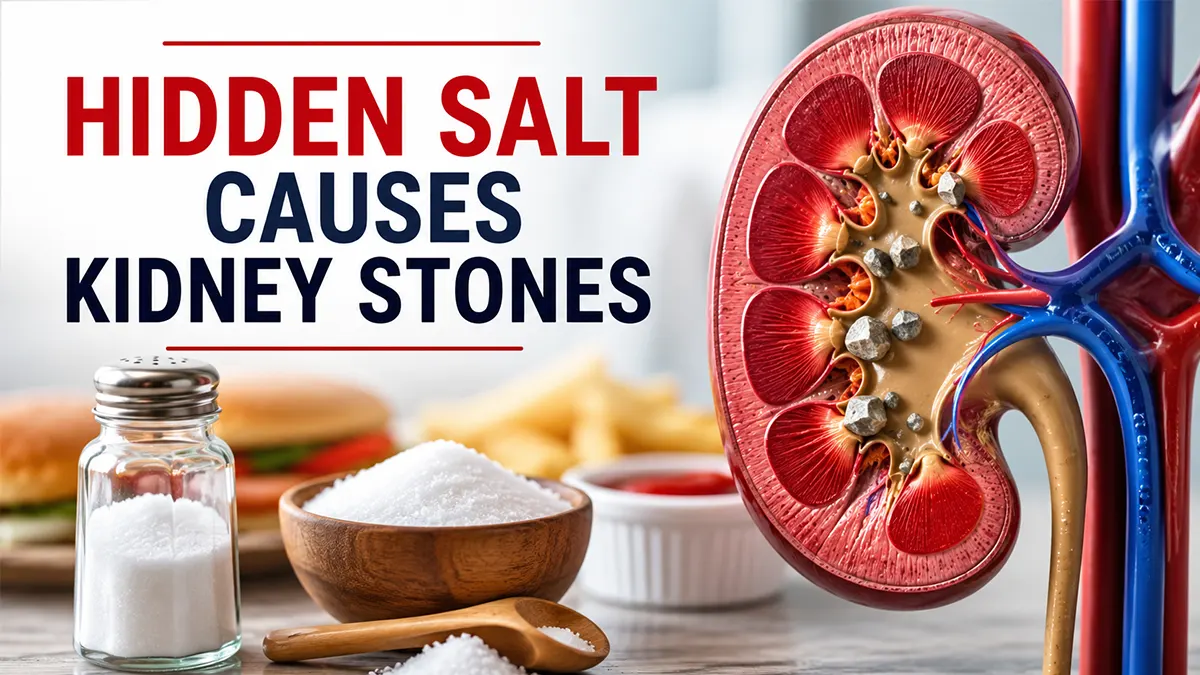
Hidden Salt and Kidney Stones are more closely connected than many people realize. Excess sodium from processed foods, fast food, and packaged snacks can increase calcium levels in urine, making kidney stone formation more likely. Understanding how hidden salt affects kidney health can help prevent painful stones and improve long-term urinary health.
The problem is not just the salt you sprinkle on food. Hidden sodium found in packaged foods, restaurant meals, fast food, processed meats, sauces, soups, and snacks often contributes far more sodium than table salt. As modern diets become increasingly processed, sodium intake continues to rise, leading to a greater risk of kidney stones, high blood pressure, and chronic kidney disease.
Understanding how sodium affects kidney health can help prevent future stones and improve overall urinary health.
Table of Contents
Hidden Salt and Kidney Stones: Understanding the Connection
Understanding Kidney Stones
Kidney stones are hard mineral deposits that form inside the kidneys when certain substances in urine become highly concentrated.
Common types include:
- Calcium oxalate stones (most common)
- Calcium phosphate stones
- Uric acid stones
- Struvite stones
- Cystine stones
Approximately 80% of kidney stones contain calcium. This is why sodium intake plays such an important role in stone development.
Hidden Salt and Kidney Stones affect millions worldwide.
Kidney Stones in Young Adults: A Rising Crisis
How Sodium Triggers Kidney Stones
Why Does Sodium Increase Calcium in Urine?
The kidneys regulate both sodium and calcium levels.
When you consume excessive sodium:
- More sodium enters the bloodstream.
- The kidneys work harder to remove excess sodium.
- Increased sodium excretion causes increased calcium excretion.
- Higher urinary calcium levels promote crystal formation.
- Crystals grow into kidney stones over time.
This process is called hypercalciuria, meaning excessive calcium in the urine.
Research consistently shows that individuals with high sodium diets excrete significantly more urinary calcium than those following low-sodium diets.
The connection between Hidden Salt and Kidney Stones is often overlooked.
The Sodium-Calcium Connection
| Sodium Intake | Effect on Urine | Kidney Stone Risk |
|---|---|---|
| Low Sodium | Lower calcium excretion | Lower risk |
| Moderate Sodium | Normal calcium levels | Moderate risk |
| High Sodium | Increased urinary calcium | High risk |
| Very High Sodium | Significant calcium loss | Very high risk |
Hidden Sources of Dietary Sodium to Avoid for Kidneys
Many people underestimate how much sodium they consume daily.
Fast Food
Hidden Sodium in Fast Food Kidney Stones Risk
Common fast-food items may contain:
- Burgers
- Fried chicken
- Pizza
- French fries
- Sandwiches
- Breakfast wraps
A single fast-food meal can exceed an entire day’s recommended sodium intake.
Lemon Water for Kidney Stones: Myth or Real Help?
Processed Meats
High Sodium Deli Meats and Kidney Pain
Examples include:
- Ham
- Bacon
- Sausages
- Salami
- Hot dogs
- Turkey slices
These foods often contain preservatives and large amounts of sodium that increase urinary calcium levels.
Ready Meals
Can High Salt Ready Meals Cause Kidney Stones?
Many frozen dinners and microwave meals contain:
- 1,000–2,500 mg sodium per serving
- Preservatives
- Excessive processed ingredients
Frequent consumption may significantly increase stone risk.
Packaged Snacks
Common offenders include:
- Crisps
- Salted nuts
- Crackers
- Pretzels
- Flavored popcorn
Even foods marketed as “healthy” may contain substantial sodium.
Condiments and Sauces
Hidden sodium is often found in:
- Soy sauce
- Ketchup
- BBQ sauce
- Salad dressings
- Pickles
A few tablespoons can add hundreds of milligrams of sodium.
Preventing Hidden Salt and Kidney Stones starts with reducing sodium intake.
How Much Sodium Causes Kidney Stones Per Day?
Health organizations generally recommend:
| Organization | Recommended Daily Sodium |
|---|---|
| WHO | Less than 2,000 mg |
| NHS | Less than 6 grams salt daily (approximately 2,300 mg sodium) |
| American Heart Association | Ideal limit 1,500 mg |
| Kidney Stone Patients | Often advised below 2,000 mg |
People with recurrent calcium stones often benefit from stricter sodium reduction plans under medical supervision.
Symptoms of Too Much Salt and Kidney Problems
Excess sodium may not immediately cause symptoms, but over time it can affect kidney function.
Symptoms of Too Much Salt Kidney Pain
Possible signs include:
- Increased thirst
- Bloating
- Swelling in hands and feet
- Frequent urination
- Elevated blood pressure
- Flank pain
- Kidney stone symptoms
- Fatigue
Real-World Patient Scenario
Case Example
A 42-year-old office worker experienced recurrent calcium oxalate kidney stones every two years.
Despite drinking adequate water, he regularly consumed:
- Fast food lunches
- Packaged snacks
- Deli meat sandwiches
- Restaurant dinners
After evaluation, his urinary sodium levels were extremely high.
His urologist recommended:
- Reducing sodium intake below 2,000 mg daily
- Increasing water consumption
- Limiting processed foods
Within three years, he experienced no new stone episodes.
This highlights the significant role of hidden salt in stone formation.
Diagnosis: How Doctors Identify Sodium-Related Kidney Stone Risk
Medical History
Doctors evaluate:
- Dietary habits
- Family history
- Previous stones
- Fluid intake
Urine Testing
A 24-hour urine test measures:
- Sodium
- Calcium
- Oxalate
- Citrate
- Uric acid
High urinary sodium often correlates with elevated urinary calcium.
Blood Tests
These may assess:
- Kidney function
- Calcium levels
- Electrolytes
- Uric acid
Imaging Studies
Common imaging includes:
- Ultrasound
- CT scan
- X-ray
These help locate stones and determine treatment options.
Treatment Options
Treat Existing Kidney Stones
Treatment depends on stone size and location.
Small Stones
May pass naturally with:
- Increased fluids
- Pain medication
- Medical expulsive therapy
Larger Stones
May require:
- Shockwave lithotripsy
- Ureteroscopy
- Percutaneous nephrolithotomy
Consult a qualified urologist for personalized treatment recommendations.
Doctors frequently discuss Hidden Salt and Kidney Stones with recurrent stone patients.
Kidney Stone Emergency: 5 Signs to Go to the ER Now
Prevention: The Most Effective Strategies
1. Reduce Sodium Intake
This remains one of the most important preventive measures.
Tips include:
- Read nutrition labels
- Choose fresh foods
- Avoid processed meats
- Limit restaurant meals
- Cook at home
2. Increase Water Intake
Does Drinking Water Flush Out Sodium Kidney Stones?
Water helps dilute urine and reduce crystal formation.
While water does not instantly “flush out” sodium, adequate hydration helps the kidneys eliminate excess sodium more effectively and lowers stone risk.
Aim for urine that appears pale yellow or nearly clear.
3. Maintain Normal Calcium Intake
Many people mistakenly reduce calcium intake.
Low dietary calcium may actually increase oxalate absorption and stone risk.
Choose healthy calcium sources such as:
- Milk
- Yogurt
- Cheese
- Fortified foods
4. Increase Citrate-Rich Foods
Helpful foods include:
- Lemons
- Limes
- Oranges
Citrate naturally helps prevent crystal formation.
5. Maintain Healthy Weight
Obesity is associated with:
- Kidney stones
- High blood pressure
- Diabetes
Weight management improves overall kidney health.
Understanding Hidden Salt and Kidney Stones can help avoid future complications.
7 Daily Habits That Quietly Increase Kidney Stone Risk
Low Sodium Diet Plan for Calcium Oxalate Stones
Breakfast
- Oatmeal with berries
- Low-fat milk
- Fresh fruit
Lunch
- Grilled chicken salad
- Olive oil dressing
- Fresh vegetables
Snack
Low Salt Alternatives to Crisps for Kidney Health
Choose:
- Unsalted nuts
- Fresh fruit
- Carrot sticks
- Cucumber slices
Dinner
- Baked fish
- Brown rice
- Steamed vegetables
Drinks
- Water
- Lemon water
- Unsweetened beverages
Is Himalayan Pink Salt Bad for Kidney Stones?
Many people believe Himalayan pink salt is healthier.
However, Himalayan pink salt still contains sodium.
The body processes sodium similarly regardless of whether it comes from:
- Table salt
- Sea salt
- Himalayan pink salt
Using Himalayan salt excessively may still increase kidney stone risk.
Sodium Bicarbonate (Baking Soda) and Kidney Stones
Sodium bicarbonate is sometimes prescribed for specific stone conditions.
However:
- It contains sodium.
- Self-treatment is not recommended.
- Excessive use may increase sodium intake.
Always use sodium bicarbonate under medical supervision.
Common Mistakes That Increase Kidney Stone Risk
Mistake #1: Only Avoiding Table Salt
Most sodium comes from processed foods.
Mistake #2: Not Reading Labels
Hidden sodium can be present even in sweet foods.
Mistake #3: Drinking Too Little Water
Hydration remains critical.
Mistake #4: Eliminating Calcium Completely
Normal dietary calcium is protective.
Mistake #5: Assuming “Natural” Salts Are Safe
Sea salt and Himalayan salt still contain sodium.
Mistake #6: Ignoring Fast Food Sodium
Restaurant meals can contain excessive amounts.
Myth vs Fact
| Myth | Fact |
|---|---|
| Kidney stones are caused only by calcium. | Sodium plays a major role in calcium stone formation. |
| Himalayan salt is safe for kidney stones. | Excess intake can still increase risk. |
| Drinking water instantly removes stones. | Water helps prevention but may not remove existing stones. |
| Only older adults get kidney stones. | Stones can occur at any age. |
| Avoiding dairy prevents stones. | Normal calcium intake may help reduce risk. |
| Salt from food is harmless. | Hidden sodium contributes significantly to stone formation. |
Potential Complications of Untreated Kidney Stones
Without treatment, stones may cause:
- Severe pain
- Urinary blockage
- Recurrent infections
- Kidney damage
- Reduced kidney function
- Chronic kidney disease
Prompt medical evaluation is important.
When to See a Doctor
Seek medical attention if you experience:
- Severe flank pain
- Blood in urine
- Fever and chills
- Persistent vomiting
- Difficulty urinating
- Recurrent stone episodes
Emergency care may be required for obstructing stones or infections.
Key Takeaways
- Hidden sodium is a major contributor to kidney stone formation.
- High sodium intake increases urinary calcium excretion.
- Processed foods often contain more sodium than table salt.
- Most adults should consume less than 2,300 mg sodium daily.
- Adequate hydration helps reduce stone risk.
- Normal calcium intake is important.
- Reading nutrition labels can significantly lower sodium intake.
- Fast foods, deli meats, sauces, and ready meals are major sodium sources.
- Low-sodium diets reduce recurrence of calcium-based stones.
- Early medical evaluation helps prevent complications.
Conclusion
In conclusion, understanding the relationship between Hidden Salt and Kidney Stones can help patients make healthier dietary choices and reduce future stone risk.
Fortunately, kidney stone prevention is achievable. By reducing sodium intake, drinking enough water, maintaining a balanced diet, consuming adequate calcium, and following medical advice, individuals can significantly reduce their risk of future stones. Small dietary changes made consistently can protect kidney health for years to come. If you have experienced kidney stones before, now is the time to review your sodium intake and take proactive steps toward long-term urinary health.
Patient FAQs
1. Can eating too much salt cause kidney stones?
Yes. Excess sodium increases calcium excretion in urine, which promotes calcium stone formation.
2. How much sodium should kidney stone patients consume daily?
Most experts recommend keeping sodium below 2,300 mg daily, with some patients benefiting from lower levels.
3. Does drinking more water prevent kidney stones?
Yes. Adequate hydration dilutes urine and reduces crystal formation.
4. Are fast foods linked to kidney stones?
Yes. Fast foods often contain excessive sodium, increasing stone risk.
5. Is Himalayan pink salt safer than table salt?
No. Both contain sodium and can contribute to kidney stone risk if consumed excessively.
6. Can kidney stones damage the kidneys?
Untreated stones can lead to blockage, infections, and kidney damage.
7. Should I stop eating calcium to prevent stones?
No. Normal dietary calcium may actually help prevent calcium oxalate stones.
8. What foods contain hidden sodium?
Processed meats, ready meals, sauces, soups, snacks, and restaurant foods.
9. Can children develop kidney stones from high sodium intake?
Yes. Excessive sodium intake may increase stone risk in children.
10. How do doctors test for sodium-related stone risk?
A 24-hour urine collection helps measure sodium and calcium excretion.
Medical Review
Dr. Jayanth Reddy – Consultant Urologist
My Health Hospitals, Hyderabad
This content has been medically reviewed for accuracy, safety, and reliability based on current urology treatment guidelines and patient education standards.
According to the National Health Service kidney stone symptoms guidance, severe flank pain may worsen during rest or nighttime and should never be ignored if accompanied by fever, vomiting, or difficulty urinating.
Author
Yamanandan Reddy
Health Content Writer & Frontend Developer
Yamanandan Reddy is a health content writer and frontend developer with over 4 years of experience in website design and digital content creation. He writes research-based health articles to help readers understand symptoms, causes, treatments, and prevention methods related to common health conditions.
His articles are written using information from trusted medical sources such as the World Health Organization (WHO), Mayo Clinic, and the Centers for Disease Control and Prevention (CDC).
Sources
The information in this article is researched and verified using trusted medical resources, including:
• World Health Organization (WHO)
• Mayo Clinic
• National Institutes of Health (NIH)
• Centers for Disease Control and Prevention
⚠️ Medical Disclaimer
This content is for informational purposes only and does not replace professional medical advice. Always consult a qualified healthcare provider for diagnosis and treatment.