
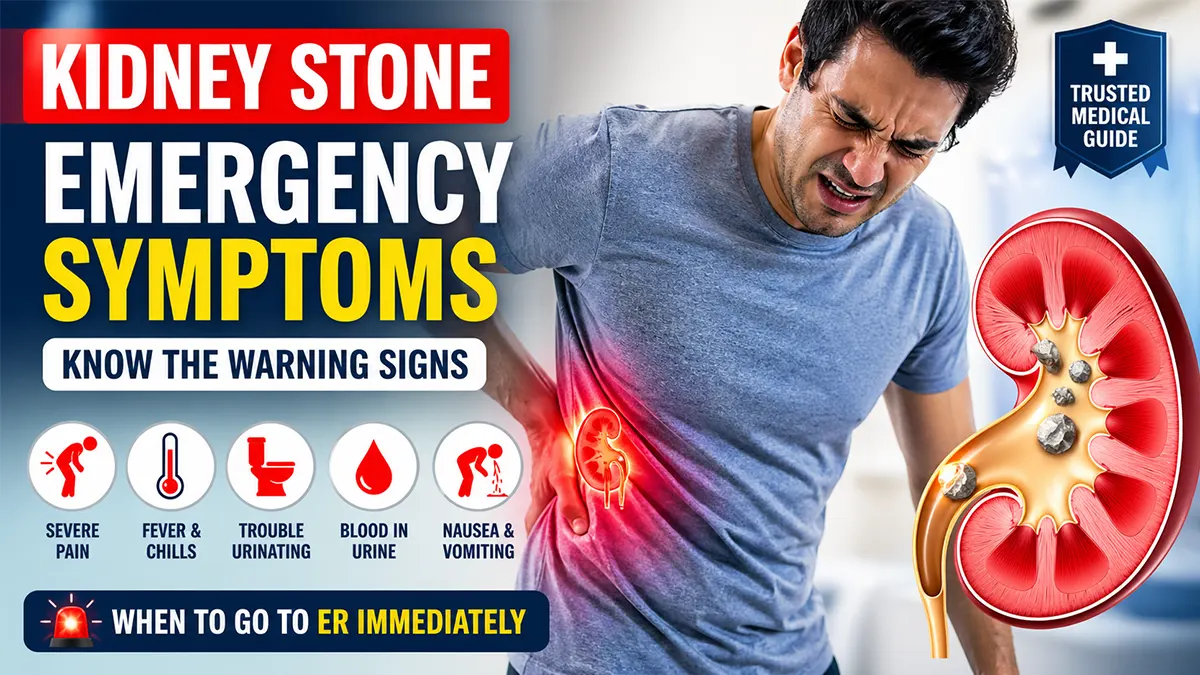
Kidney stones can cause severe pain—but not all symptoms are just “normal stone pain.” Some signs indicate a medical emergency that requires immediate care.
If you’re in the USA, UK, or Canada and searching for kidney stone emergency symptoms, this guide will help you identify danger signs, when to go to the ER, and what happens next.
Table of Contents
🧠 What Is a Kidney Stone Emergency?
A kidney stone becomes an emergency when it causes:
- Blocked urine flow
- Infection in the urinary tract
- Severe uncontrollable pain
👉 These conditions can lead to serious complications if not treated quickly.
Read Also : – Complete guide to kidney stones causes symptoms and treatment
⚠️ Top Kidney Stone Emergency Symptoms
🔴 1. Severe, Unbearable Pain (Renal Colic)
👉 Pain that:
- Comes suddenly
- Is extremely intense
- Radiates from back to groin
💡 If pain is not relieved by medication, go to ER immediately.
🌡️ 2. Fever and Chills (Infection Warning)
👉 This is a RED FLAG
- Fever + kidney stone = possible infection
- Can lead to sepsis (life-threatening)
🚨 Go to ER immediately
🚫 3. Difficulty or Inability to Urinate
- Blocked ureter
- Pressure buildup in kidney
👉 Needs urgent medical intervention
🩸 4. Heavy Blood in Urine
- Light pink urine = common
- Dark red or clots = emergency
🤢 5. Persistent Nausea and Vomiting
- Prevents hydration
- Worsens condition
👉 Risk of dehydration
⚡ 6. Pain with Fever + Burning Urination
👉 Possible urinary tract infection (UTI) with stone
Read Also : kidney stone formation process explained step by step
🚨 When to Go to the ER Immediately
👉 Go NOW if you have:
✔ Severe pain that won’t stop
✔ Fever + chills
✔ Cannot urinate
✔ Heavy bleeding in urine
✔ Vomiting continuously
🏥 What Happens in the Emergency Room?
Doctors will:
- Do CT scan or ultrasound
- Give IV fluids
- Provide strong pain relief
- Treat infection (if present)
👉 In severe cases:
- Immediate procedure (stent or surgery)
Read Also : medicines that help pass kidney stones faster
🌍 Emergency Care in USA, UK, Canada
USA
- Go to Emergency Room (ER)
- Immediate imaging + treatment
UK
- Visit A&E (Accident & Emergency)
- NHS provides urgent care
Canada
- Go to Emergency Department (ED)
- Covered under public healthcare
Read Also : can coffee cause kidney stones
⚠️ What NOT to Do During Emergency
❌ Ignore severe pain
❌ Delay hospital visit
❌ Self-medicate excessively
❌ Avoid drinking fluids
💡 How to Prevent Emergency Situations
- Stay hydrated (80–100 oz daily)
- Follow kidney-friendly diet
- Treat small stones early
- Regular check-ups
❓ what are the emergency symptoms of kidney stones that require immediate ER visit
Severe, unbearable pain, fever with chills, inability to urinate, heavy blood in urine, and persistent vomiting are key emergency symptoms that require immediate ER care.
❓ when should i go to the emergency room for kidney stone pain in USA UK or Canada
You should go to the ER immediately if pain is uncontrollable, lasts for hours, or is accompanied by fever, nausea, or difficulty passing urine.
❓ is fever with kidney stones a dangerous emergency symptom
Yes, fever with kidney stones can indicate a serious infection and may lead to sepsis, which is life-threatening and requires urgent medical attention.
❓ can kidney stones block urine flow and become a medical emergency
Yes, if a kidney stone blocks the ureter and prevents urine flow, it can cause pressure buildup and kidney damage, requiring emergency treatment.
❓ how do i know if kidney stone pain is serious or normal
Normal kidney stone pain comes in waves, but if it becomes constant, severe, and is not relieved by medication, it may indicate an emergency.
❓ is blood in urine always a sign of kidney stone emergency
Light blood in urine is common, but heavy bleeding or clots can indicate a serious issue and should be evaluated immediately.
❓ can nausea and vomiting with kidney stones indicate an emergency condition
Yes, persistent vomiting can lead to dehydration and prevent proper treatment, making it a sign that you need urgent medical care.
❓ what happens if kidney stone infection is left untreated in emergency cases
An untreated infection can spread rapidly and lead to sepsis, which is a life-threatening condition requiring immediate hospitalization.
❓ which symptoms of kidney stones should not be ignored at night or during travel
Severe pain, fever, inability to urinate, and vomiting should never be ignored, even at night or while traveling, as they may worsen quickly.
❓ what is the fastest way to get emergency treatment for kidney stones in developed countries
In the USA go to the ER, in the UK visit A&E, and in Canada go to the Emergency Department for immediate diagnosis and treatment.
📌 Key Takeaways
✔ Not all kidney stone pain is normal
✔ Fever = emergency
✔ Blocked urine = urgent care
✔ Early treatment saves complications
🚀 Final Thoughts
Kidney stones are painful—but ignoring emergency symptoms can be dangerous.
👉 Knowing when to seek help can save your life.
If something feels wrong, don’t wait—go to the ER immediately.
Dr. Jayanth Reddy – Consultant Urologist
My Health Hospitals, Hyderabad
This content has been medically reviewed for accuracy and reliability based on current urology treatment guidelines.
According to the kidney stone symptoms NHS guide, severe flank pain can worsen during rest or nighttime.
Author
Yamanandan Reddy
Health Content Writer & Frontend Developer
Yamanandan Reddy is a health content writer and frontend developer with over 4 years of experience in website design and digital content creation. He writes research-based health articles to help readers understand symptoms, causes, treatments, and prevention methods related to common health conditions.
His articles are written using information from trusted medical sources such as the World Health Organization (WHO), Mayo Clinic, and the Centers for Disease Control and Prevention (CDC).
Sources
The information in this article is researched and verified using trusted medical resources, including:
• World Health Organization (WHO)
• Mayo Clinic
• National Institutes of Health (NIH)
• Centers for Disease Control and Prevention
⚠️ Medical Disclaimer
This content is for informational purposes only and does not replace professional medical advice. Always consult a qualified healthcare provider for diagnosis and treatment.
4 thoughts on “🚨 Kidney Stone Emergency Symptoms (When to Go to ER Immediately)”