
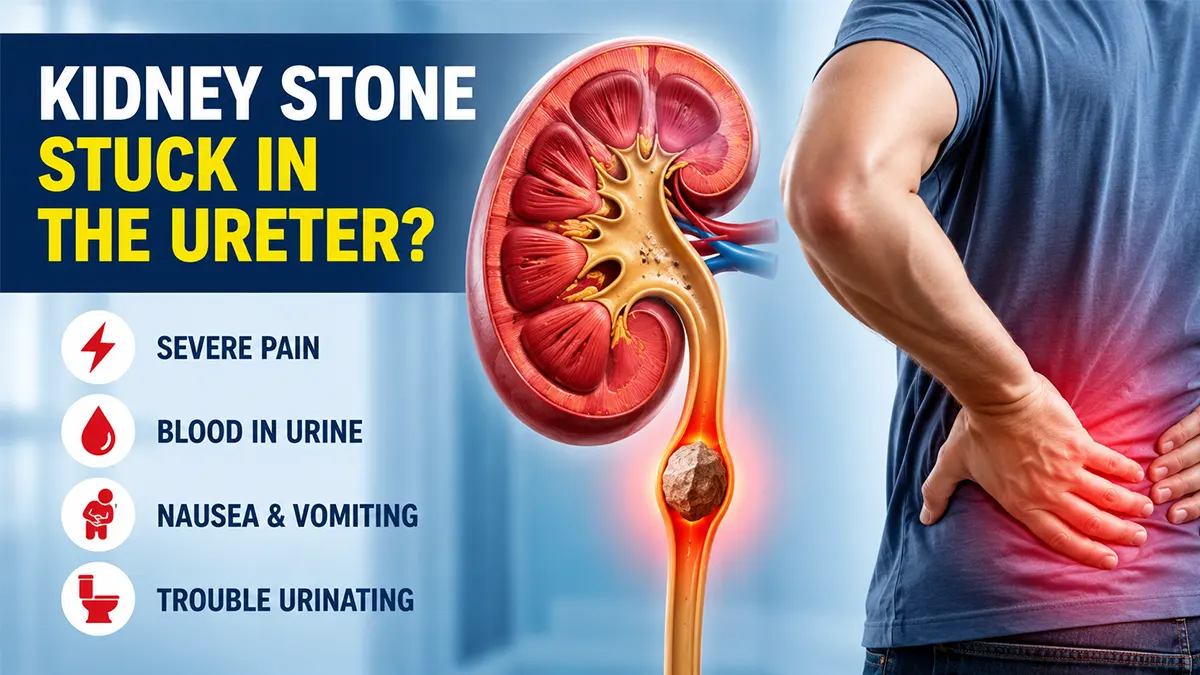
Signs a kidney stone is stuck in the ureter should never be ignored, especially if you have severe flank pain, blood in urine, nausea, or difficulty urinating. Many people mistake these symptoms for muscle pain or dehydration until the blockage becomes serious.
Doctors warn that signs a kidney stone is stuck in the ureter can quickly worsen and may lead to infection, kidney swelling, or reduced kidney function if left untreated. A ureteral stone can block urine flow and cause intense wave-like pain that radiates from the lower back to the groin.
Understanding the early symptoms, causes, and treatment options can help you seek medical care before complications develop.
If you have:
- Fever or chills
- Severe pain that comes in waves
- Vomiting
- Inability to urinate
- Blood in urine
Seek immediate medical attention or go to the ER/A&E right away.
Table of Contents
What Happens When a Kidney Stone Gets Stuck in the Ureter?
The ureter is the thin tube that carries urine from the kidney to the bladder. When a stone becomes trapped there, urine flow may partially or completely block.
This condition is called:
- Ureteral stone
- Ureterolithiasis
- Blocked ureter from kidney stone
The blockage increases pressure inside the kidney, causing intense pain known as renal colic.
Learn the early signs of kidney stone symptoms before severe pain starts.
How Do You Know if a Kidney Stone Is Stuck in the Ureter?
Many people first notice sudden pain that feels different from normal back pain.
Common Signs a Kidney Stone Is Stuck in the Ureter
1. Severe Flank Pain That Comes in Waves
This is one of the most common symptoms.
Pain usually:
- Starts in the side or lower back
- Comes in intense waves
- Moves toward the groin or lower abdomen
Many patients describe it as one of the worst pains they have ever experienced.
2. Sharp Pain in Lower Back and Groin
Pain may radiate downward as the stone moves.
Pain Radiating to Groin in Male/Female Patients
- Men may feel pain in the testicles
- Women may feel pelvic pain
- Groin discomfort often means the stone is moving lower in the ureter
3. Blood in Urine (Hematuria)
A stuck stone can scrape the urinary tract lining.
Urine may appear:
- Pink
- Red
- Brown
- Rust-colored
Sometimes blood is only visible under laboratory testing.
4. Urge to Urinate but Nothing Comes Out
A ureteral blockage may create:
- Frequent urge to urinate
- Difficulty passing urine
- Small urine output
- Pressure in the bladder area
Complete inability to urinate requires emergency care immediately.
5. Nausea and Vomiting With Back Pain
The kidneys and digestive system share nerve pathways.
This is why many patients with kidney stones experience:
- Nausea
- Vomiting
- Sweating
- Restlessness
6. Painful Urination (Dysuria)
If the stone is close to the bladder, urination may burn or sting.
Some people mistake this symptom for a urinary tract infection.
7. Fever and Chills
This may indicate infection behind the blockage.
Understand the difference between UTI and kidney stones.
This Is a Medical Emergency
A blocked infected kidney can become dangerous quickly.
Go to the ER, urgent care, or A&E immediately if you have:
- Fever
- Chills
- Severe pain
- Vomiting
- Trouble urinating
What Does a Kidney Stone in the Ureter Feel Like?
People describe the pain as:
- Sharp
- Cramping
- Stabbing
- Wave-like
- Unbearable
Unlike muscle pain, kidney stone pain often changes location as the stone moves.
See how dehydration may trigger kidney stones in our guide on can dehydration cause kidney stones overnight.
Signs a Kidney Stone Is Passing vs Stuck
| Symptom | Passing Stone | Stuck Stone |
|---|---|---|
| Pain | Improves gradually | Severe recurring waves |
| Urination | Normal urine flow | Reduced or blocked flow |
| Fever | Rare | Possible emergency |
| Nausea | Mild | Common |
| Blood in urine | Possible | Common |
| Duration | Short-term | Persistent symptoms |
Can a Stuck Kidney Stone Cause Kidney Damage?
Yes. A prolonged blockage can increase pressure inside the kidney and reduce kidney function.
Possible complications include:
- Hydronephrosis (kidney swelling)
- Kidney infection
- Permanent kidney damage
- Sepsis in severe infections
This is why timely treatment is extremely important.
How Long Can a Kidney Stone Stay in the Ureter Safely?
Small stones may pass naturally within:
- A few days
- 1–4 weeks
But doctors usually monitor closely because long-term blockage increases risks.
Large stones are less likely to pass on their own.
How Doctors Diagnose a Ureteral Stone
Common Tests Include
- CT scan for kidney stones
- Ultrasound kidney imaging
- Urine testing
- Blood tests
- X-rays in some cases
CT scans are often considered the most accurate method.
Important Warning Signs Many People Ignore
Doctors say signs a kidney stone is stuck in the ureter may start with mild discomfort before becoming severe. Some patients notice pressure in the lower abdomen, difficulty urinating, or pain moving toward the groin.
Another common symptom linked to signs a kidney stone is stuck in the ureter is severe flank pain that comes in waves. The pain may temporarily improve and suddenly return stronger as the stone shifts inside the ureter.
In some cases, signs a kidney stone is stuck in the ureter also include nausea, vomiting, blood in urine, and an urgent need to urinate with little urine output. These symptoms may indicate worsening blockage and should not be ignored.
Treatment Options for a Kidney Stone Stuck in the Ureter
Treatment depends on:
- Stone size
- Location
- Pain severity
- Infection risk
Small Stones
Doctors may recommend:
- Drinking fluids
- Pain medication
- Alpha blockers to relax the ureter
Larger or Stuck Stones
Advanced treatments include:
- Laser ureteroscopy
- Shock wave lithotripsy (ESWL)
- Stent placement
- PCNL surgery for larger stones
Kidney Stone Pain Relief Positions
Some patients feel temporary relief by:
- Lying on the unaffected side
- Curling knees toward the chest
- Using a heating pad
- Staying upright and walking slowly
These methods do not remove the stone but may reduce discomfort temporarily.
How to Flush a Kidney Stone Out of the Ureter
Doctors may recommend:
- Increased hydration
- Prescribed medications
- Physical movement
- Monitoring urine output
However, forcing fluids during severe blockage or infection may worsen symptoms.
Always follow medical advice.
When to Go to the ER for a Kidney Stone
Seek emergency care if you have:
- Fever with pain
- Vomiting that won’t stop
- Severe flank pain
- No urine output
- Blood in urine
- Dizziness or weakness
When to Go to A&E With a Kidney Stone
Call 111 or visit A&E if you experience:
- Severe pain
- Fever or chills
- Difficulty urinating
- Persistent vomiting
- Signs of infection
How do you know if a kidney stone is stuck in the ureter?
Severe flank pain, blood in urine, nausea, vomiting, and difficulty urinating are common signs of a ureteral blockage.
What does a kidney stone in the ureter feel like?
It often causes sharp wave-like pain in the lower back, side, abdomen, or groin.
Can a stuck kidney stone cause kidney damage?
Yes. Long-term blockage may cause kidney swelling, infection, or permanent kidney damage.
How long can a kidney stone stay in the ureter safely?
Some small stones pass within weeks, but prolonged blockage increases complication risks and requires medical evaluation.
How to flush a kidney stone out of the ureter?
Doctors may recommend hydration, medications, and monitoring, but larger stones often need medical treatment.
Conclusion
Signs a kidney stone is stuck in the ureter can quickly become serious if treatment is delayed. Severe pain, fever, vomiting, or trouble urinating may indicate a dangerous blockage.
Early diagnosis and timely treatment can help prevent kidney damage and serious complications. If symptoms worsen, seek urgent medical attention immediately.
Dr. Jayanth Reddy – Consultant Urologist
My Health Hospitals, Hyderabad
This content has been medically reviewed for accuracy and reliability based on current urology treatment guidelines.
According to the kidney stone symptoms NHS guide, severe flank pain can worsen during rest or nighttime.
Author
Yamanandan Reddy
Health Content Writer & Frontend Developer
Yamanandan Reddy is a health content writer and frontend developer with over 4 years of experience in website design and digital content creation. He writes research-based health articles to help readers understand symptoms, causes, treatments, and prevention methods related to common health conditions.
His articles are written using information from trusted medical sources such as the World Health Organization (WHO), Mayo Clinic, and the Centers for Disease Control and Prevention (CDC).
Sources
The information in this article is researched and verified using trusted medical resources, including:
• World Health Organization (WHO)
• Mayo Clinic
• National Institutes of Health (NIH)
• Centers for Disease Control and Prevention
⚠️ Medical Disclaimer
This content is for informational purposes only and does not replace professional medical advice. Always consult a qualified healthcare provider for diagnosis and treatment.
3 thoughts on “Signs a Kidney Stone Is Stuck in the Ureter: Symptoms Doctors Warn You Not to Ignore”