
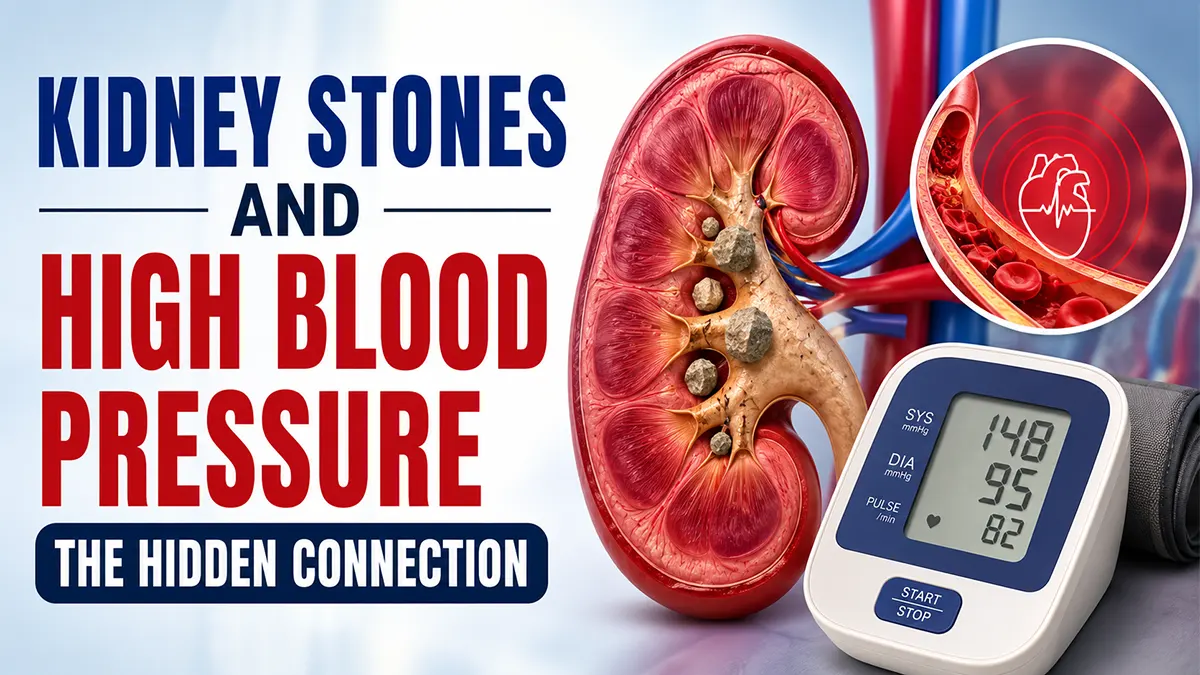
Many people know that kidney stones can cause severe pain, blood in the urine, and urinary problems. However, a common question patients ask is: Can kidney stones cause high blood pressure?
Research suggests that there is a significant relationship between kidney stones and hypertension. The kidneys play a vital role in regulating blood pressure by controlling fluid balance, electrolytes, and hormone production. When kidney stones interfere with normal kidney function, blood pressure may rise.
Understanding the connection between high blood pressure from kidney stones is important because both conditions can affect long-term kidney and cardiovascular health.
Table of Contents
What Are Kidney Stones?
Kidney stones are hard deposits made of minerals and salts that form inside the kidneys.
Common types include:
- Calcium oxalate stones
- Calcium phosphate stones
- Uric acid stones
- Struvite stones
- Cystine stones
Stones may remain inside the kidney or travel through the urinary tract, causing pain and obstruction.
Can a Kidney Stone Cause Permanent Kidney Damage? The Hidden Risks
Can Kidney Stones Cause High Blood Pressure?
Yes. Kidney stones and hypertension can be connected in several ways.
When a stone blocks urine flow or damages kidney tissue, the kidney may struggle to regulate blood pressure effectively. This can lead to temporary or persistent hypertension.
Several studies have shown that people with recurrent kidney stones have a higher risk of developing hypertension compared to those without stones.
How Long Does It Take to Pass a 4mm, 5mm, or 6mm Kidney Stone? (Size Guide)
How Kidney Stones Can Raise Blood Pressure
1. Urinary Tract Obstruction
A large stone may block urine flow.
This blockage can:
- Increase pressure inside the kidney
- Reduce kidney function
- Trigger hormonal responses that elevate blood pressure
The body may activate the renin-angiotensin-aldosterone system (RAAS), which can increase blood pressure.
2. Kidney Damage
Repeated kidney stone episodes can damage kidney tissue over time.
Kidney damage may:
- Reduce filtration efficiency
- Cause fluid retention
- Alter blood pressure regulation
This is one reason why secondary hypertension kidney stones can occur.
3. Severe Pain Response
Many patients experience sudden blood pressure spikes during kidney stone attacks.
Can Severe Pain Cause High Blood Pressure?
Yes.
Severe pain stimulates the release of:
- Adrenaline
- Cortisol
- Stress hormones
These substances increase:
- Heart rate
- Blood vessel constriction
- Blood pressure
As a result, temporary hypertension may occur during a stone episode.
4. Inflammation and Oxidative Stress
Research suggests chronic inflammation associated with kidney stone disease may contribute to:
- Endothelial dysfunction
- Vascular stiffness
- Hypertension
Inflammation may explain part of the long-term relationship between kidney stones and cardiovascular disease.
5. Chronic Kidney Disease
Frequent kidney stones increase the risk of chronic kidney disease (CKD).
Since kidney disease is a leading cause of secondary hypertension, recurring stones may indirectly contribute to elevated blood pressure.
Beer for Kidney Stones: Myth or Dangerous Mistake?
Kidney Stones and Blood Pressure: Comparison Table
| Factor | Kidney Stones | Hypertension |
|---|---|---|
| Primary Organ | Kidneys | Cardiovascular System |
| Common Symptoms | Flank pain, blood in urine | Often no symptoms |
| Can Affect Kidney Function | Yes | Yes |
| May Increase Cardiovascular Risk | Yes | Yes |
| Can Lead to Chronic Kidney Disease | Yes | Yes |
| Requires Medical Monitoring | Yes | Yes |
Symptoms of Kidney Stones Associated with High Blood Pressure
Some patients experience both kidney stone symptoms and elevated blood pressure.
Kidney Stone Symptoms
- Severe flank pain
- Lower abdominal pain
- Blood in urine
- Frequent urination
- Burning urination
- Nausea and vomiting
- Cloudy urine
Kidney Stone Symptoms High Blood Pressure Patients May Notice
- Headaches
- Dizziness
- Elevated blood pressure readings
- Increased heart rate
- Anxiety during pain attacks
Risk Factors for Kidney Stones and Hypertension
Certain risk factors increase the likelihood of developing both conditions.
Shared Risk Factors
- Obesity
- Diabetes
- High-salt diet
- Dehydration
- Metabolic syndrome
- Chronic kidney disease
- Family history
These overlapping risk factors help explain the strong link between kidney stones and blood pressure.
How Doctors Diagnose the Problem
If kidney stones and high blood pressure occur together, healthcare providers may recommend:
Physical Examination
- Blood pressure monitoring
- Symptom assessment
Laboratory Tests
- Urinalysis
- Urine culture
- Kidney function tests
- Blood chemistry tests
Imaging Tests
- Ultrasound
- CT scan
- X-ray (KUB)
Additional Evaluation
For persistent hypertension:
- Kidney function assessment
- Cardiovascular risk evaluation
- Secondary hypertension screening
Treatment Options
Treatment depends on stone size, location, symptoms, and blood pressure control.
Conservative Management
Small stones often pass naturally.
Recommendations include:
- Increased fluid intake
- Pain management
- Medical expulsive therapy
Medications
Doctors may prescribe:
For Kidney Stones
- Alpha blockers
- Pain medications
- Stone-specific treatments
For Hypertension
- ACE inhibitors
- ARBs
- Calcium channel blockers
- Diuretics
Treatment should be individualized by a healthcare professional.
Surgical Treatments
Larger stones may require:
- Shock Wave Lithotripsy (SWL)
- Ureteroscopy (URS)
- Percutaneous Nephrolithotomy (PCNL)
Removing obstruction often improves kidney function and may help stabilize blood pressure.
Does Passing a Kidney Stone Affect Blood Pressure?
Yes.
During passage, severe pain may temporarily increase blood pressure.
Once the stone passes and pain resolves:
- Blood pressure often returns to baseline
- Stress hormone levels decrease
- Kidney drainage improves
However, persistent hypertension requires medical evaluation.
High Blood Pressure After Kidney Stone Removal
Some patients ask whether blood pressure remains elevated after treatment.
Possible reasons include:
- Pre-existing hypertension
- Residual kidney damage
- Chronic kidney disease
- Other cardiovascular risk factors
Follow-up monitoring is essential after stone removal.
Prevention Tips
Preventing kidney stones may also support healthy blood pressure levels.
Stay Hydrated
Aim for adequate fluid intake throughout the day.
Reduce Excess Salt
High sodium intake increases:
- Stone formation risk
- Blood pressure levels
Maintain a Healthy Weight
Obesity is linked to both conditions.
Follow a Balanced Diet
Include:
- Fruits
- Vegetables
- Whole grains
- Adequate calcium
Limit:
- Excess animal protein
- Processed foods
Monitor Blood Pressure Regularly
Patients with recurrent stones should monitor blood pressure and kidney health.
When to See a Doctor
Seek medical attention if you experience:
- Severe flank pain
- Blood in urine
- Fever with urinary symptoms
- Difficulty urinating
- Recurrent kidney stones
- Persistent high blood pressure
- Kidney pain and high blood pressure together
Early diagnosis can prevent complications and preserve kidney function.
Expert Medical Insight
The kidneys are central to blood pressure regulation. Repeated kidney stone episodes can impair kidney function, increase inflammation, and contribute to hypertension. Patients with recurrent stones should undergo regular kidney function testing and blood pressure monitoring.
Medically reviewed according to guidance from:
- National Institutes of Health (NIH)
- Centers for Disease Control and Prevention (CDC)
- Mayo Clinic
- National Health Service (NHS)
- World Health Organization (WHO)
Can kidney stones cause high blood pressure permanently?
Yes. Recurrent stones or kidney damage caused by stones can contribute to long-term hypertension. Temporary blood pressure elevations from pain are common, but persistent hypertension requires medical evaluation.
Do kidney stones raise blood pressure during an attack?
Yes. Severe pain can trigger stress hormones that increase heart rate and blood pressure. Blood pressure spikes during kidney stone attacks are common.
Is high blood pressure a symptom of kidney stones?
High blood pressure is not a classic kidney stone symptom. However, some patients develop elevated blood pressure due to pain, obstruction, or kidney dysfunction.
Can kidney pain and high blood pressure occur together?
Yes. Kidney obstruction, inflammation, or infection may cause kidney pain and elevated blood pressure simultaneously.
Does passing a kidney stone affect blood pressure?
Temporary changes can occur. Pain may increase blood pressure, while relief after stone passage often leads to normalization.
Can kidney stones damage the kidneys?
Yes. Untreated stones can cause obstruction, infection, and kidney damage, especially if recurrent or large.
What is secondary hypertension from kidney stones?
Secondary hypertension occurs when another medical condition causes elevated blood pressure. Kidney stones may contribute through kidney damage or urinary obstruction.
Are people with kidney stones at higher cardiovascular risk?
Research suggests individuals with recurrent kidney stones may have an increased risk of cardiovascular disease and hypertension.
Can treating kidney stones lower blood pressure?
In some cases, relieving obstruction and restoring kidney function may help improve blood pressure control.
Should I monitor blood pressure if I have recurrent kidney stones?
Yes. Regular blood pressure monitoring is recommended because recurrent stones may increase hypertension risk over time.
Key Takeaways
- Kidney stones can contribute to high blood pressure.
- Severe pain may cause temporary blood pressure spikes.
- Urinary obstruction can interfere with blood pressure regulation.
- Recurrent stones may damage kidney tissue.
- Kidney stones and hypertension share several risk factors.
- Early treatment helps protect kidney and cardiovascular health.
- Persistent hypertension requires medical evaluation.
Conclusion
So, can kidney stones cause high blood pressure? The answer is yes. While not every patient with kidney stones develops hypertension, there is a well-established connection between kidney stones and hypertension. Urinary obstruction, kidney damage, inflammation, and severe pain can all contribute to elevated blood pressure.
If you experience high blood pressure from kidney stones, recurrent stone episodes, or persistent kidney symptoms, consult a urologist or kidney specialist. Early diagnosis and treatment can protect both kidney function and cardiovascular health.
Medical Expert Review
Dr. Jayanth Reddy
Consultant Urologist | My Health Hospitals, Hyderabad
This content has undergone medical review to ensure it reflects current clinical evidence, accepted urological practices, and patient-centered healthcare guidance.
Author
Yamanandan Reddy
Health Content Writer & Frontend Developer
Yamanandan Reddy is a health content writer and frontend developer with over 4 years of experience in website design and digital content creation. He writes research-based health articles to help readers understand symptoms, causes, treatments, and prevention methods related to common health conditions.
His articles are written using information from trusted medical sources such as the World Health Organization (WHO), Mayo Clinic, and the Centers for Disease Control and Prevention (CDC).
Sources
The information in this article is researched and verified using trusted medical resources, including:
• World Health Organization (WHO)
• Mayo Clinic
• National Institutes of Health (NIH)
• Centers for Disease Control and Prevention
⚠️ Medical Disclaimer
This content is for informational purposes only and does not replace professional medical advice. Always consult a qualified healthcare provider for diagnosis and treatment.