
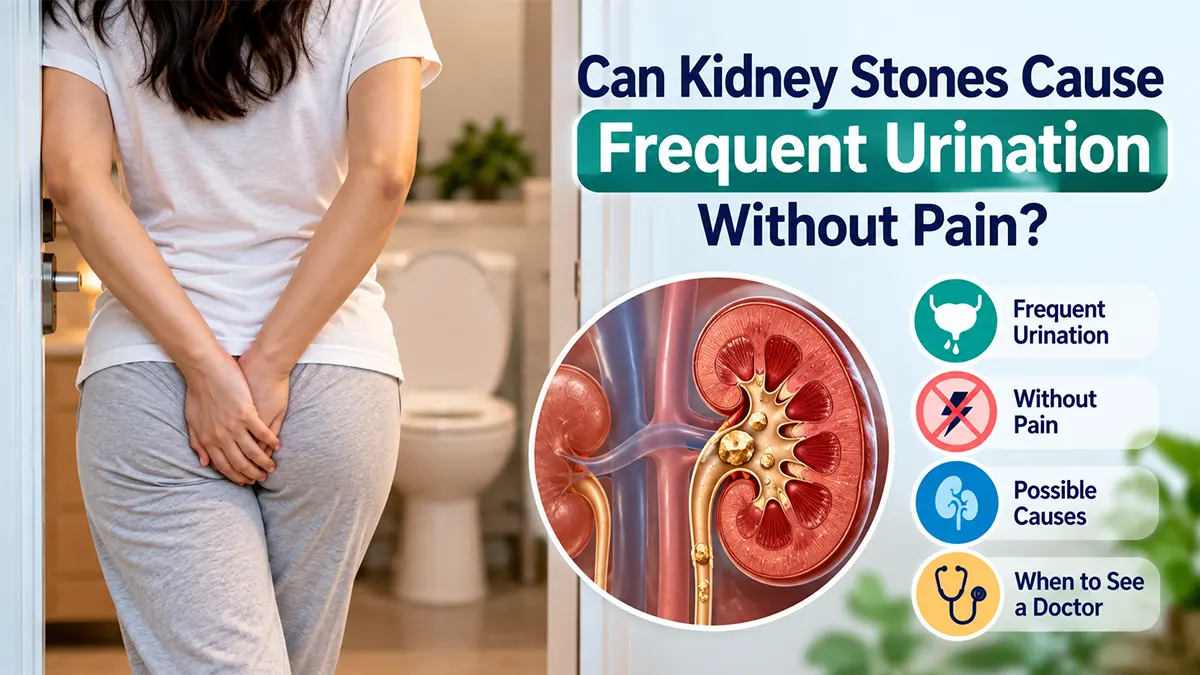
Kidney stones frequent urination without pain is a question many people have when they suddenly need to use the bathroom more often. Yes, a kidney stone can sometimes cause urinary urgency or frequency without obvious pain, particularly when it is near the bladder. But frequent urination by itself does not mean you have a stone. Fluid intake, caffeine, urinary tract infections, diabetes, pregnancy, and bladder conditions can also change how often you urinate.
Quick answer: Kidney stones can sometimes be linked to frequent urination without pain, but this symptom is not specific to stones. A clinician may use your medical history, a urine test, and sometimes imaging to determine the cause. Seek urgent care if you develop fever with urinary symptoms, severe pain, vomiting, or difficulty passing urine.
Table of Contents
This guide explains what may be happening, which symptoms matter, and how to decide when medical evaluation is needed. It is general information, not a way to diagnose yourself.
Can Kidney Stones Cause Frequent Urination Without Pain?
Yes, it is possible. Some kidney stones remain in the kidney and cause no symptoms. A stone moving through the ureter can cause severe pain, but symptoms vary. When a stone is low in the ureter, close to the bladder, it may be associated with urinary urgency or a feeling that you need to urinate repeatedly. Not everyone experiences the classic flank pain.
However, urinary frequency is much more common than kidney stones, and the symptom alone cannot confirm where a stone is or whether one exists. Even if you have had stones before, a new urinary symptom deserves an open-minded assessment rather than an automatic assumption that another stone has formed.
Why Might a Kidney Stone Affect Urination?
A stone near the bladder
A stone traveling down the ureter may irritate nearby urinary structures and create urgency or frequent trips to the bathroom. You might pass only a small amount of urine each time. Pain may be absent, mild, or intermittent. The pattern is not reliable enough to locate a stone without medical testing.
A stone that causes few or no symptoms
Small stones may be found incidentally during imaging performed for another reason. A painless stone does not necessarily explain frequent urination: both findings can occur together by coincidence. A healthcare professional considers the complete clinical picture before connecting them.
Urinary irritation or a separate condition
Burning, cloudy urine, strong urgency, or fever can point toward infection or inflammation. A urinary tract infection can coexist with a stone. An obstructed urinary tract with infection is particularly dangerous and needs emergency assessment.
Other Common Causes of Frequent Urination Without Pain
There are several possible explanations, and the most likely one depends on whether you are producing large volumes of urine or simply feeling the urge to go more often.
- More fluids, tea, coffee, or energy drinks: Extra fluid and caffeine can increase urination in some people.
- Diabetes: High blood sugar may lead to frequent, high-volume urination, often with unusual thirst.
- Urinary tract infection: Frequency and urgency can occur even without obvious burning; fever or back pain raises concern for a more serious infection.
- Overactive bladder: A sudden urge to urinate, sometimes with leakage, may occur without a stone.
- Pregnancy: Hormonal and physical changes can increase urinary frequency; a clinician should assess new concerning symptoms.
- Medications: Diuretics and some other medicines can increase urine production.
- Prostate or bladder-emptying problems: In some people, difficulty emptying the bladder leads to repeated small trips to the bathroom.
If you are urinating unusually often for more than a short period, or the change is unexplained, arrange a medical appointment. Keeping a record of how much you drink and how often you urinate can help.
Kidney Stone vs UTI vs Diabetes: Key Differences
| Feature | Kidney stone | UTI | Diabetes |
|---|---|---|---|
| Urinary frequency | Possible, especially with a lower ureteral stone | Common | Common, often larger urine volumes |
| Pain | May be severe, mild, or absent | Burning or pelvic discomfort may occur | Usually not caused by urination itself |
| Other clues | Flank pain, blood in urine, nausea; may be absent | Urgency, cloudy urine, fever in some cases | Excess thirst, fatigue, unexplained weight change |
| How it is assessed | History, urine testing, imaging if needed | Urine testing; culture when appropriate | Blood glucose or HbA1c testing |
Important: These symptoms overlap. Blood in the urine is not always visible, and the absence of pain or burning does not exclude infection or a stone. Only appropriate medical evaluation can establish the cause.
Signs That May Suggest a Kidney Stone
Frequent urination may be more suggestive of a stone when it occurs alongside other typical findings, such as:
- Sudden pain in the side or back that may travel toward the lower abdomen or groin.
- Pain that rises and falls in waves, sometimes with nausea or vomiting.
- Pink, red, or brown urine, which may indicate blood.
- A persistent urge to urinate or discomfort while passing urine.
- A previous history of kidney stones.
None of these signs proves that a stone is present, and some people with stones have no symptoms. For a deeper explanation of pain patterns, read our kidney stone pain stages guide. For changes in urine color, see what urine may look like with a kidney stone.
How Doctors Diagnose Frequent Urination
A clinician will usually begin by asking when the symptom started, how much you drink, whether you pass large or small amounts, which medicines you take, and whether you have pain, fever, thirst, or blood in the urine. A physical examination may also be appropriate.
- Urinalysis: Can identify blood and clues suggesting infection or other urinary problems. A normal result does not rule out a stone.
- Urine culture: May be requested when infection is suspected.
- Blood tests: Kidney function and blood glucose may be checked depending on the symptoms.
- Ultrasound or CT: Imaging may be needed when a stone or urinary blockage is suspected. The best test depends on age, pregnancy status, radiation considerations, and clinical urgency.
- Bladder assessment: Sometimes used if incomplete emptying or another bladder problem is suspected.
If you are pregnant or could be pregnant, tell the healthcare team before imaging. They can select an appropriate diagnostic approach.
When Is Frequent Urination an Emergency?
Seek emergency medical care now if urinary symptoms occur with fever or chills and suspected kidney stone or blockage, severe or worsening flank or abdominal pain, repeated vomiting that prevents drinking, an inability to pass urine, confusion, fainting, or feeling very unwell. A blocked urinary tract with infection can become life-threatening and needs prompt treatment.
Visible blood in the urine also needs timely medical assessment, even when there is no pain. If you have new persistent frequency, excessive thirst, unexplained weight loss, or repeated nighttime urination, schedule an appointment rather than trying to diagnose yourself online.
Do not delay emergency evaluation while trying home remedies or forcing yourself to drink large quantities of water.
What Can You Do Before Your Appointment?
- Record your bathroom visits, approximate urine volumes, fluid intake, and any new symptoms for one or two days.
- Drink a normal amount of water for your needs unless a clinician has advised fluid restriction; avoid forcing excessive fluids.
- Consider whether caffeine, alcohol, or a new medicine may be contributing. Do not stop prescribed medicines without advice.
- Write down any history of stones, infections, diabetes, or pregnancy and bring your medication list.
- Seek medical advice if symptoms persist or worsen, even if you feel no pain.
If you have had calcium-based kidney stones before, prevention advice should be tailored to your stone type and medical history. You may also find our kidney stone prevention drinks guide useful for general background; it is not a substitute for personalized advice.
Frequently Asked Questions
Can a kidney stone cause frequent urination but no pain?
Yes. Urinary urgency or frequency may occur without noticeable pain, especially when a stone is close to the bladder. But other causes are common, and testing may be needed.
Does painless frequent urination mean a kidney stone is passing?
No. Frequency alone cannot tell you whether a stone is present, moving, or passing. A clinician can assess whether imaging or urine tests are appropriate.
Can kidney stones cause frequent urination at night?
A stone may contribute to urinary urgency at any time, but nighttime urination has many other possible causes, including evening fluid intake, diabetes, medications, and bladder conditions.
Can I have a kidney stone without blood in my urine?
Yes. Blood may be absent or not visible. A normal-looking urine sample does not rule out a stone, and blood in the urine can have other causes.
When should I see a doctor for frequent urination without pain?
Book an appointment if the symptom is new, persistent, unexplained, or affects sleep or daily life. Seek urgent or emergency help for fever, severe pain, vomiting, inability to urinate, or feeling seriously unwell.
Key Takeaway
Kidney stones frequent urination without pain can happen, but it is only one possible explanation for a common symptom. A lower ureteral stone may cause urgency, while other stones may cause no symptoms at all. UTIs, diabetes, bladder conditions, medicines, and drinking habits are important alternatives. The safest approach is to look for warning signs and seek appropriate medical testing rather than relying on symptoms alone.
Sources and Further Reading
- NIDDK — Symptoms & Causes of Kidney Stones
- NIDDK — Diagnosis of Kidney Stones
- NHS — Kidney Stones
- NIDDK — Bladder Control Problems: Symptoms & Causes
- NIDDK — Symptoms & Causes of Diabetes
About the Author
Yamanandan Reddy — Health Content Writer & Frontend Developer. This article is an educational summary of publicly available medical information. It has not been represented as individually reviewed by a licensed clinician.
Medical Disclaimer
This article is for educational purposes only and is not a diagnosis or a substitute for professional medical advice. If you have concerning urinary symptoms, consult a qualified healthcare professional. For severe symptoms or signs of infection with urinary blockage, seek emergency care.