
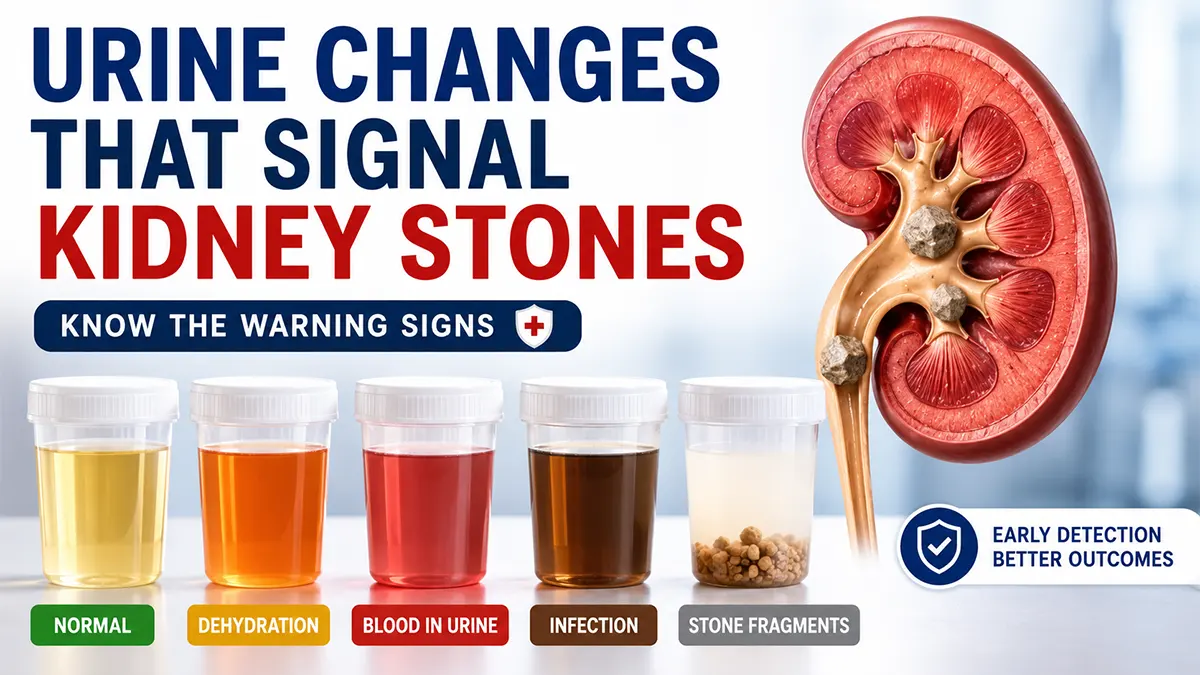
What does your urine look like when you have a kidney stone? If you notice pink, red, brown, cloudy, or sand-like particles in your urine, a kidney stone could be the cause. While these changes can be alarming, understanding what they mean can help you know when to seek medical attention.
The most important thing to remember is this: changes in urine color should never be ignored, but they also do not always indicate severe damage. Understanding what your urine is telling you can help you know when to stay calm and when to seek urgent medical care.
Many patients ask, “What does your urine look like when you have a kidney stone?” because urine changes are often one of the earliest warning signs.
Table of Contents
What Does Your Urine Look Like When You Have a Kidney Stone: Common Signs
The Colors of Kidney Stone Urine
Pink, Red, or Brown Urine (Hematuria)
One of the most common signs of a kidney stone is blood in the urine, medically known as hematuria.
As a kidney stone moves through the urinary tract, its rough edges can scratch the delicate lining of the ureter. Even a tiny amount of bleeding can dramatically change the color of urine.
Your urine may appear:
- Light pink
- Bright red
- Rust-colored
- Tea-colored
- Dark brown
Sometimes the blood is visible to the naked eye, while other times it can only be detected during a urine test.
Why Does This Happen?
Think of a kidney stone as a small rock moving through a narrow tube. As it travels, it can irritate and scrape the urinary tract lining, causing minor bleeding.
The amount of blood does not necessarily indicate the size of the stone. A small stone can cause noticeable bleeding, while a larger stone may cause very little visible blood.
Kidney Stones in Young Adults: A Rising Crisis
Cloudy or Murky Urine
What Does Cloudy Urine Mean?
Cloudy urine may occur when kidney stones cause inflammation or when minerals and crystals accumulate in the urinary tract.
Cloudiness can also indicate:
- Crystal buildup
- Increased white blood cells
- Urinary tract infection (UTI)
- Dehydration
If cloudy urine occurs along with burning urination, fever, or foul odor, an infection may be present and should be evaluated by a healthcare professional promptly.
Can Kidney Stones Cause Pus in Urine?
In some cases, severe urinary infections associated with kidney stones can cause pus cells in the urine, making it appear especially cloudy or milky.
This requires medical attention because an infected, blocked urinary tract can become a serious condition.
Understanding what your urine looks like when you have a kidney stone can help identify symptoms before complications develop.
Ultrasound vs. CT Scan: Which is Best for Diagnosing Kidney Stones?
Smell and Texture Changes
Foul-Smelling Urine
Urine affected by kidney stones may sometimes have an unusually strong or unpleasant smell.
This can occur due to:
- Urinary tract infection
- Concentrated urine from dehydration
- Certain stone-forming minerals
A strong odor alone does not confirm a kidney stone, but when combined with pain or urinary symptoms, it should not be ignored.
Passing Gravel or Sand
Some patients notice tiny particles in their urine.
These may look like:
- Sand grains
- Small crystals
- Gravel-like fragments
- Tiny stone pieces
This often happens when a kidney stone breaks apart and passes through the urinary tract.
Many patients feel relieved after passing these fragments because symptoms may begin to improve once the obstruction is cleared.
How Long Does It Take to Pass a 4mm, 5mm, or 6mm Kidney Stone? (Size Guide)
Other Symptoms That Often Accompany Kidney Stones
Changes in urine are rarely the only symptom.
Common accompanying symptoms include:
- Sharp pain in the side or back
- Pain that radiates to the groin
- Frequent urination
- Burning while urinating
- Nausea
- Restlessness
- Difficulty finding a comfortable position
The pain may come in waves and vary in intensity as the stone moves.
Red Flags: When to Rush to the ER
While many kidney stones can be managed safely, some situations require immediate emergency care.
Seek urgent medical attention if you experience:
Fever or Chills
A kidney stone combined with infection can become dangerous very quickly.
Persistent Vomiting
If you cannot keep fluids down, dehydration may worsen your condition.
Severe Back or Flank Pain
Intense pain that is unbearable or not relieved by medication should be evaluated immediately.
Difficulty Urinating
A blocked urinary tract can prevent urine from flowing normally.
Large Amounts of Blood in Urine
Heavy bleeding or blood clots should never be ignored.
Signs of Sepsis
Call emergency services immediately if you develop:
- High fever
- Confusion
- Rapid heartbeat
- Severe weakness
- Low blood pressure
Kidney Stone Emergency: 5 Signs to Go to the ER Now
Hospital Insights
What We Commonly Tell Patients in the Emergency Room
As urologists, one of the most common concerns we hear is, “Doctor, I saw blood in my urine. Is something seriously wrong?” While seeing red or pink urine can be alarming, we reassure patients that kidney stones frequently cause minor bleeding as they move through the urinary tract.
- The amount of blood you see does not always reflect the size or severity of the kidney stone.
- Many patients with kidney stones experience blood in their urine before they develop significant pain.
- Early evaluation helps us determine whether the symptoms are caused by a kidney stone, infection, or another urinary condition.
Daily Observations from Patients with Kidney Stones
In clinical practice, urine changes are often one of the first signs patients notice before seeking medical care.
- Many patients report pink, red, or tea-colored urine after a sudden episode of flank or back pain.
- Some patients notice tiny sand-like particles or crystal fragments in their urine, which may indicate that a small stone is breaking apart and passing naturally.
- Dehydration is a common factor we observe, particularly in individuals who do not drink enough water during hot weather or physically demanding work.
Common Misconceptions We Hear
There are several myths surrounding kidney stones and urine changes that can cause unnecessary anxiety or delay treatment.
- “If my urine is red, I must have a large kidney stone.” In reality, even a very small stone can cause noticeable bleeding.
- “Blood in urine is normal with kidney stones, so I don’t need to see a doctor.” Any visible blood in the urine should be medically evaluated.
- “If the pain goes away, the stone is gone.” Pain may improve temporarily even if the stone remains in the urinary tract and continues to cause obstruction.
- “Drinking excessive amounts of water will instantly flush out every kidney stone.” While hydration is important, larger stones often require medical treatment or specialized procedures.
How Are Kidney Stones Diagnosed?
Doctors may recommend:
- Urine analysis
- Blood tests
- Ultrasound scan
- CT scan
- Kidney function tests
These investigations help determine the size, location, and type of stone while ruling out infection or other urinary conditions.
Expert Urologist Perspective
Clinical Perspective from Dr. Jayanth Reddy, Urologist, My Health Hospitals
“The appearance of urine can provide valuable clues about what is happening inside the urinary tract. Blood in the urine, cloudy urine, or the passage of tiny stone fragments are common findings in patients with kidney stones. However, urine color alone cannot determine the size, severity, or exact location of a stone.
Patients should avoid self-diagnosis and seek proper evaluation if urinary changes are accompanied by pain, fever, difficulty urinating, or persistent symptoms. Early diagnosis allows us to identify complications, relieve pain, prevent infection, and choose the most appropriate treatment strategy.
Most importantly, not every episode of blood in the urine represents a medical emergency, but every episode deserves professional assessment to ensure nothing significant is overlooked.”
If you are wondering what does your urine look like when you have a kidney stone, remember that blood, cloudiness, and gravel-like particles are among the most common findings.
— Dr. Jayanth Reddy
Consultant Urologist
My Health Hospitals
Final Thoughts
If your urine looks pink, red, brown, cloudy, or contains tiny grain-like particles, a kidney stone could be one possible cause. Although these changes can be alarming, they are often explained by irritation of the urinary tract as the stone moves.
Pay attention to accompanying symptoms, stay well hydrated, and seek medical evaluation if symptoms persist or worsen. Early diagnosis can provide peace of mind and help prevent complications.
FAQs About What Does Your Urine Look Like When You Have a Kidney Stone
What does your urine look like when you have a kidney stone?
When you have a kidney stone, your urine may appear pink, red, brown, cloudy, or contain tiny sand-like particles. These changes occur because the stone can irritate the urinary tract and cause minor bleeding or crystal buildup.
Can a kidney stone cause blood in the urine?
Yes. Blood in the urine, known as hematuria, is one of the most common symptoms of kidney stones. The stone may scratch the lining of the urinary tract as it moves, causing the urine to appear pink, red, or brown.
Is cloudy urine a sign of a kidney stone?
Cloudy urine can be a sign of a kidney stone, especially when minerals and crystals are present in the urinary tract. However, it can also indicate a urinary tract infection, so it is important to seek medical evaluation if symptoms continue.
Can kidney stones make urine smell bad?
Yes. Some people with kidney stones notice foul-smelling urine, particularly if dehydration or a urinary tract infection is also present. A strong odor along with pain or fever should be assessed by a healthcare professional.
Can you see kidney stone fragments in urine?
Yes. Small kidney stones may break into tiny fragments that look like sand, gravel, or crystals in the urine. Passing these fragments may indicate that the stone is leaving the urinary tract naturally.
What color urine is dangerous with a kidney stone?
Dark red urine, urine with blood clots, or cloudy urine accompanied by fever, chills, or severe pain should be considered warning signs. These symptoms require immediate medical attention.
Should I go to the ER if I see blood in my urine?
You should seek emergency medical care if blood in the urine is accompanied by severe flank pain, fever, chills, vomiting, difficulty urinating, or large blood clots. These symptoms may indicate a serious complication.
Can a small kidney stone cause a lot of blood in the urine?
Yes. Even a very small kidney stone can cause noticeable bleeding. The amount of blood seen in the urine does not always reflect the size of the stone.
How long does blood in the urine last with a kidney stone?
Blood in the urine may last for a few hours or several days, depending on the size and location of the stone. Persistent or worsening bleeding should be evaluated by a doctor.
Can you have a kidney stone without changes in urine color?
Yes. Some people experience severe kidney stone pain without any visible changes in urine color. In certain cases, blood may only be detected through laboratory urine testing.
Medical Expert Review
Dr. Jayanth Reddy
Consultant Urologist | My Health Hospitals, Hyderabad
This content has undergone medical review to ensure it reflects current clinical evidence, accepted urological practices, and patient-centered healthcare guidance.
Author
Yamanandan Reddy
Health Content Writer & Frontend Developer
Yamanandan Reddy is a health content writer and frontend developer with over 4 years of experience in website design and digital content creation. He writes research-based health articles to help readers understand symptoms, causes, treatments, and prevention methods related to common health conditions.
His articles are written using information from trusted medical sources such as the World Health Organization (WHO), Mayo Clinic, and the Centers for Disease Control and Prevention (CDC).
Sources
The information in this article is researched and verified using trusted medical resources, including:
• World Health Organization (WHO)
• Mayo Clinic
• National Institutes of Health (NIH)
• Centers for Disease Control and Prevention
⚠️ Medical Disclaimer
This content is for informational purposes only and does not replace professional medical advice. Always consult a qualified healthcare provider for diagnosis and treatment.