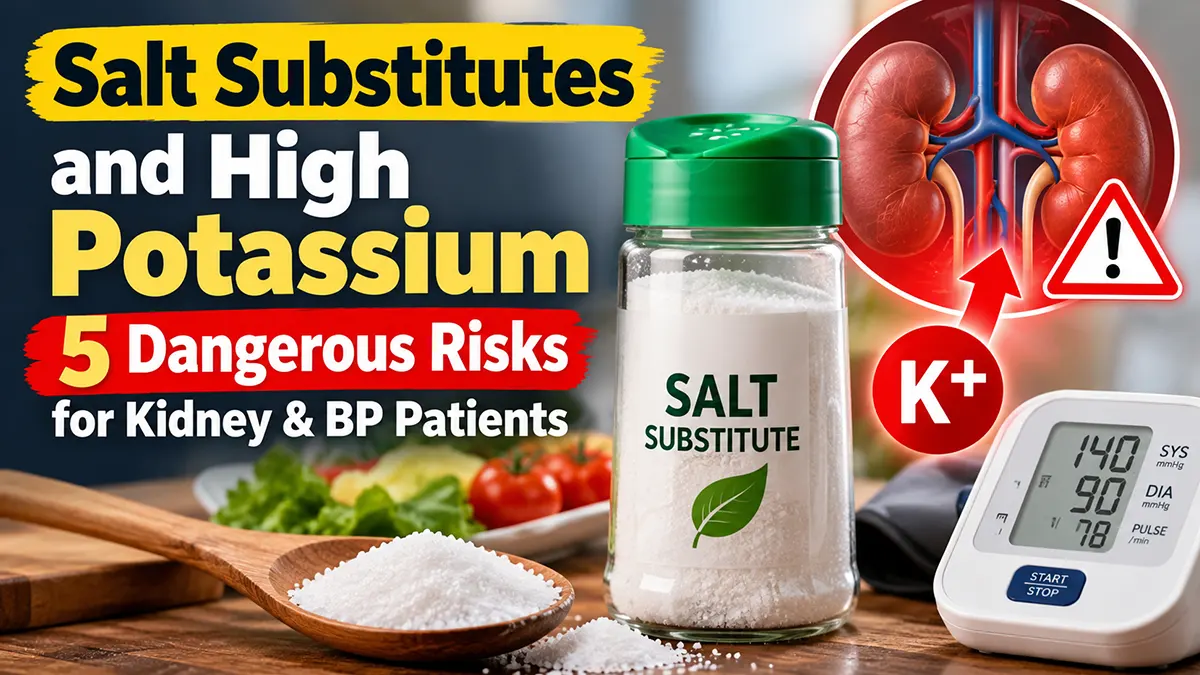
Understanding the hidden link between salt substitutes and high potassium could save you or a loved one from a sudden medical emergency. When a doctor tells you to cut back on salt for high blood pressure, diabetes, heart health, or kidney stones, buying a “Low-Sodium Salt” or “Salt-Free Substitute” at the grocery store sounds like the smartest swap you could make.
What most shoppers never realize is that nearly all commercial salt substitutes replace sodium chloride with potassium chloride—delivering a massive, concentrated dose of potassium in every single shake. According to clinical guidelines from the National Kidney Foundation, people with chronic kidney disease (CKD) or those taking common blood pressure medications should avoid potassium-based salt substitutes because they can push blood potassium into a life-threatening danger zone.
While extra dietary potassium helps lower blood pressure in healthy adults with normal kidney function, impaired kidneys—or kidneys affected by common blood pressure and diabetes medications—cannot flush out a sudden flood of potassium chloride.
Below, we break down the science behind salt substitutes and high potassium, reveal the five high-risk groups facing a “perfect storm” for hyperkalemia, and share delicious, zero-potassium herb blends recommended by renal dietitians.
Key Takeaways: Salt Substitutes and High Potassium
- 1/4 teaspoon = more potassium than a banana: A single 1/4-teaspoon serving (1.2 grams) of a standard potassium-chloride salt substitute packs 610 mg of pure potassium—meaning just 1 teaspoon delivers over 2,400 mg of potassium.
- The “Perfect Storm” with BP pills: Combining potassium salt substitutes with blood pressure medications like ACE inhibitors (lisinopril, ramipril), ARBs (losartan, telmisartan), or spironolactone blocks your kidneys from excreting potassium, triggering salt substitutes and high potassium emergencies.
- Know your blood potassium zones: Normal blood potassium is 3.5 to 5.0 mEq/L (Safe Zone), 5.1 to 6.0 mEq/L is the Caution Zone, and anything above 6.0 mEq/L is the Danger Zone for severe hyperkalemia.
- True zero-salt flavor is safe: Pure culinary herbs, garlic powder, onion powder (not onion salt), black pepper, cumin, and fresh lemon juice add bold flavor with zero sodium and negligible potassium.
Table of Contents
Why “Low-Sodium” Salt Triggers Salt Substitutes and High Potassium
On Healthy Way Care, many readers tell us they switched to “lite salt” or “no-sodium salt” to reduce water retention, protect their heart, or prevent kidney stones (see our Foods That Cause Kidney Stones Avoid List). To understand why salt substitutes and high potassium go hand in hand, you only need to turn the shaker around and read the ingredient label.
Regular table salt is 100% sodium chloride (NaCl). To mimic the sharp, salty taste on your tongue without using sodium, food manufacturers use potassium chloride (KCl)—either as a 100% sodium-free substitute or blended 50/50 with regular salt in “Lite Salt” products.
As documented in a clinical investigation published by the NIH Clinical Case Report, just 1/4 teaspoon (1.2 g) of a typical salt substitute contains 610 mg of rapidly absorbed potassium. Here is why that matters inside your body:
- Healthy Kidneys Use “Potassium Adaptation”: Normally, your kidneys filter out 90% of the potassium you eat every day through your urine, keeping your blood potassium locked in a tight window so your heart muscle beats steadily.
- Damaged or Medicated Kidneys Cannot Clear the Surge: Unlike whole fruits or vegetables—where potassium is bound inside plant fiber and absorbed slowly—potassium chloride powder dissolves instantly in your stomach and floods your bloodstream within minutes. If your kidney filtration (eGFR) is reduced or your medications block the hormone aldosterone, that extra potassium gets trapped in your blood, causing hyperkalemia ( dangerously high blood potassium).
Related Guide on Healthy Way Care: Taking over-the-counter pain pills alongside blood pressure medications? Read our guide on Painkillers and Kidney Damage: 6 Dangerous Mistakes With OTC NSAIDs.
5 High-Risk Groups for Salt Substitutes and High Potassium (“The Perfect Storm”)
1. Anyone With Chronic Kidney Disease (Stage 2 to Stage 5 CKD)
Even if you feel completely energetic and have zero back pain, reduced kidney filtration is the #1 trigger for salt substitutes and high potassium.
- Why it is dangerous: As your estimated glomerular filtration rate (eGFR) declines below 60 (and sometimes even in Stage 2 CKD when paired with heart or blood pressure drugs), your kidneys lose their ability to dump sudden loads of potassium into your urine. Sprinkling potassium chloride on breakfast, lunch, and dinner can quietly push your blood potassium from normal into the hospital danger zone within days.
- What to do instead: Check your most recent serum potassium and eGFR lab values before touching any product labeled “Low-Sodium” or “Salt Substitute” (see our guide on 7 Morning Kidney Warning Signs Your Kidneys Are Under Stress).
2. Patients Taking ACE Inhibitors, ARBs, or Potassium-Sparing Water Pills
Millions of adults with normal or mildly reduced kidney function take daily pills for high blood pressure, heart failure, or protein in the urine (albuminuria).
- Why it is dangerous: According to the National Kidney Foundation, the most common medications that protect your heart and kidneys also reduce your kidneys’ ability to excrete potassium:
- ACE Inhibitors (ending in -pril, such as lisinopril, ramipril, enalapril).
- ARBs / Angiotensin Receptor Blockers (ending in -sartan, such as losartan, telmisartan, valsartan).
- Potassium-Sparing Diuretics & Aldosterone Blockers (such as spironolactone/Aldactone, eplerenone, amiloride, and finerenone/Kerendia).
- Beta-Blockers (which slow the movement of potassium from blood into cells). Swallowing these medications while shaking potassium-chloride salt substitutes onto your food creates a clinical “perfect storm” for severe salt substitutes and high potassium.
- What to do instead: If you take any medication for blood pressure or heart failure, ask your doctor or pharmacist before using any salt substitute.
3. Adults Managing Type 2 Diabetes and High Blood Sugar
Many people with diabetes cut back on sodium to protect their arteries (read more in Diabetes and Heart Disease: 7 Essential Risks). However, diabetes itself alters how your body handles potassium—even before severe kidney failure develops.
- Why it is dangerous: First, the hormone insulin is responsible for pushing potassium out of your bloodstream and into your cells after a meal; when you have insulin deficiency or very high blood sugar, potassium stays trapped in your blood. Second, long-term diabetes often causes a condition called hyporeninemic hypoaldosteronism—meaning your kidneys and adrenal glands produce less aldosterone, the exact hormone needed to flush potassium into urine.
- What to do instead: Never use potassium-chloride salt substitutes to manage diabetic blood pressure unless your physician monitors your blood electrolyte panel.
4. People Who Take Frequent NSAID Painkillers (Ibuprofen or Naproxen)
Reaching for over-the-counter pain relievers for arthritis, headaches, or back stiffness multiplies the danger of salt substitutes and high potassium.
- Why it is dangerous: Non-steroidal anti-inflammatory drugs (NSAIDs like ibuprofen, naproxen, diclofenac, and meloxicam) constrict kidney blood vessels and suppress renin and aldosterone release. When NSAIDs slow down kidney filtration and block aldosterone at the same time you consume a potassium-based salt substitute, blood potassium levels can spike rapidly.
- What to do instead: Avoid oral NSAIDs if you have kidney disease or high blood pressure, and never pair them with potassium supplements or salt substitutes.
5. Shoppers Eating “Low-Sodium” Canned Soups, Deli Meats, and Broth
You don’t even have to buy a salt-substitute shaker to accidentally fall into the salt substitutes and high potassium trap!
- Why it is dangerous: To meet low-sodium label claims without losing flavor, food companies frequently inject potassium chloride into “Reduced-Sodium” or “Heart-Healthy” canned soups, chicken/vegetable broths, deli turkey, bacon, salad dressings, and sports drinks. Because potassium chloride is an added chemical salt rather than natural plant potassium, your digestive tract absorbs nearly 90% to 100% of it.
- What to do instead: Always read the Ingredients List on “Low-Sodium” packaged foods and put the item back on the shelf if you see potassium chloride, potassium lactate, or acesulfame potassium near the top.
Quick Reference Chart: Blood Potassium Levels & Salt Substitute Comparison
According to the National Kidney Foundation, a simple blood test measures your potassium level in milliequivalents per liter (mEq/L). Compare how different salts impact these zones:
| Blood Potassium Level / Salt Type | Clinical Status / Potassium Load | What It Means for Your Heart & Kidneys |
| 3.5 to 5.0 mEq/L (Blood Test) | SAFE Zone (Normal Potassium) | Healthy electrical rhythm for your heart muscle and nerves |
| 5.1 to 6.0 mEq/L (Blood Test) | CAUTION Zone (High Potassium / Hyperkalemia) | Requires immediate diet/medication review; stop all salt substitutes |
| Higher than 6.0 mEq/L (Blood Test) | DANGER Zone (Severe Hyperkalemia) | Life-threatening medical emergency; high risk of heart arrhythmias |
| Regular Table Salt / Sea Salt / Pink Himalayan Salt | ~580 mg Sodium / 0 mg Potassium (per 1/4 tsp) | Raises blood pressure, fluid retention, and urinary calcium (kidney stones) |
| 100% Potassium Salt Substitute (e.g., NoSalt / Nu-Salt) | 0 mg Sodium / ~610 to 650 mg Potassium (per 1/4 tsp) | Dangerous for CKD, diabetes & BP pill users — 1 tsp = >2,400 mg potassium |
| “Lite Salt” (50/50 Blend) | ~290 mg Sodium / ~350 mg Potassium (per 1/4 tsp) | Still delivers a heavy hidden potassium load if used multiple times daily |
| Pure Herb & Spice Shaker (Garlic, Onion Powder, Pepper, Lemon) | 0 mg Sodium / Negligible Potassium | 100% Kidney- & Heart-Safe for CKD, kidney stones, diabetes, and BP |
Warning Signs of High Potassium (Hyperkalemia) You Should Never Ignore
The scariest fact about salt substitutes and high potassium is that mild-to-moderate hyperkalemia often causes zero symptoms until blood levels climb into a dangerous range. However, call 911 or go to the nearest emergency room immediately if you use a salt substitute and experience any of these warning signs:
- Sudden muscle weakness, heaviness, or limpness in your legs, arms, or hands.
- Numbness, tingling, or “pins and needles” sensations around your mouth, fingers, or feet.
- Heart palpitations, a fluttering chest, or an abnormally slow or irregular heartbeat.
- Sudden shortness of breath, chest pain, or unexplained nausea and vomiting.
Related Guide on Healthy Way Care: Cutting back on sodium to stop calcium stones? Read our Calcium Oxalate Kidney Stones Guide to see how lowering sodium protects your kidneys without needing dangerous potassium salts.
What to Use Instead: NKF’s Kidney-Safe “Zero-Salt” Herb Shaker Recipe
Avoiding salt substitutes and high potassium does not mean eating bland, flavorless food! Renal dietitians at the National Kidney Foundation recommend swapping potassium-chloride shakers for pure herbs, spices, and natural citrus acids.
Mix this Kidney-Safe Everyday Savory Shaker Blend at home in 2 minutes (contains 0 mg added sodium and no potassium chloride):
- 5 teaspoons Onion Powder (make sure the label says “Onion Powder,” NOT “Onion Salt”)
- 1 tablespoon Garlic Powder (NOT Garlic Salt)
- 1 tablespoon Sweet Paprika
- 1 tablespoon Dry Mustard Powder
- 1 teaspoon Dried Crushed Thyme (or Oregano)
- 1/2 teaspoon Freshly Ground Black or White Pepper
- 1/2 teaspoon Celery Seeds (or Roasted Cumin Powder)
3 Kitchen Flavor Hacks That Beat Salt Every Time:
- Squeeze fresh lemon or lime juice at the very end of cooking: A splash of citrus acid wakes up the exact same taste buds on the sides of your tongue as salt—while providing natural citrate that helps block kidney stones!
- Toast whole spices in a drop of olive oil first: Heating cumin, coriander, mustard seeds, ginger, or garlic for 30 seconds releases aromatic oils that make dals, vegetables, chicken, and fish taste rich without salt.
- Beware of “Pink Himalayan Salt,” “Sea Salt,” and “Kosher Salt”: Many people think pink rock salt or sea salt is low in sodium—in reality, they contain almost the exact same sodium load as regular table salt, and rock salts used during fasting can also vary in mineral content.
Conclusion
The connection between salt substitutes and high potassium is one of the most important medication-and-nutrition traps every patient should know. While cutting back on regular sodium is a smart move for your blood pressure and kidneys, replacing table salt with potassium-chloride “low-sodium” shakers can trigger dangerous hyperkalemia if you have chronic kidney disease, diabetes, or take common blood pressure pills like ACE inhibitors, ARBs, or spironolactone. Ditch the potassium chloride shakers, check “Reduced-Sodium” food labels carefully, and flavor your meals with pure herbs, garlic, spices, and fresh lemon juice instead.
Frequently Asked Questions (FAQs)
1. Why are salt substitutes dangerous for people with kidney disease?
Most commercial salt substitutes replace sodium chloride with potassium chloride, packing roughly 610 mg of potassium into just 1/4 teaspoon. When you have chronic kidney disease (CKD), your kidneys cannot filter out excess potassium efficiently, causing salt substitutes and high potassium (hyperkalemia) that can trigger dangerous heart rhythm problems.
2. Which blood pressure medications interact with salt substitutes?
Blood pressure and heart medications that reduce potassium excretion—including ACE inhibitors (lisinopril, ramipril, enalapril), ARBs (losartan, telmisartan, valsartan), potassium-sparing diuretics (spironolactone, eplerenone), and finerenone—should never be combined with potassium-chloride salt substitutes without explicit doctor approval.
3. How much potassium is in 1 teaspoon of a salt substitute?
A full teaspoon of a 100% potassium-chloride salt substitute contains between 2,400 mg and 2,800 mg of pure potassium—more than an entire day’s potassium limit for many patients on a renal diet! Even “Lite Salt” (a 50/50 blend) contains around 1,200 to 1,400 mg of potassium per teaspoon.
4. What blood potassium level is considered a dangerous emergency?
According to the National Kidney Foundation, a normal blood potassium level is 3.5 to 5.0 mEq/L (Safe Zone). Levels between 5.1 and 6.0 mEq/L are in the Caution Zone, and any reading above 6.0 mEq/L is in the Danger Zone (severe hyperkalemia) requiring immediate emergency medical care.
5. Is Mrs. Dash or a pure herb seasoning blend safe for kidneys?
Yes, most pure herb-and-spice blends (and homemade mixes using onion powder, garlic powder, black pepper, paprika, cumin, and oregano) do not use potassium chloride. However, always check the Ingredients List on any store-bought “Salt-Free” seasoning bottle to confirm the words “potassium chloride” are not listed.
6. Can people with normal kidney function use potassium salt substitutes?
For healthy adults with normal kidney function (eGFR above 60) who do not take potassium-retaining blood pressure pills, potassium-enriched salt substitutes can help lower blood pressure. However, because 90% of adults with early CKD do not know they have it, you should always verify your eGFR and blood potassium lab test with your doctor before switching to a salt substitute.
Author & Editorial Standards
Written by Yamanandan Reddy — Health & Wellness Writer Yamanandan Reddy writes research-backed patient education guides at Healthy Way Care, helping readers understand kidney health, electrolyte safety, blood pressure nutrition, and diabetes management using official clinical guidelines.
Medical References & Clinical Sources:
- National Kidney Foundation (NKF) — Potassium and Your CKD Diet: High Potassium (Hyperkalemia) & Salt Substitutes
- National Institutes of Health (NIH / PMC) — Hyperkalemia from Dietary Supplements and Salt Substitutes
- National Institutes of Health (NIH / PMC) — Life-Threatening Hyperkalemia Secondary to Salt Substitute Use
- National Kidney Foundation (NKF) — Sodium and Your CKD Diet: How to Spice Up Your Cooking Without Salt
Medical Disclaimer: The information provided on Healthy Way Care is for educational and informational purposes only and is not a substitute for professional medical advice, diagnosis, or treatment. Always consult your physician, nephrologist, or registered renal dietitian before changing your diet, potassium intake, or blood pressure medications.