
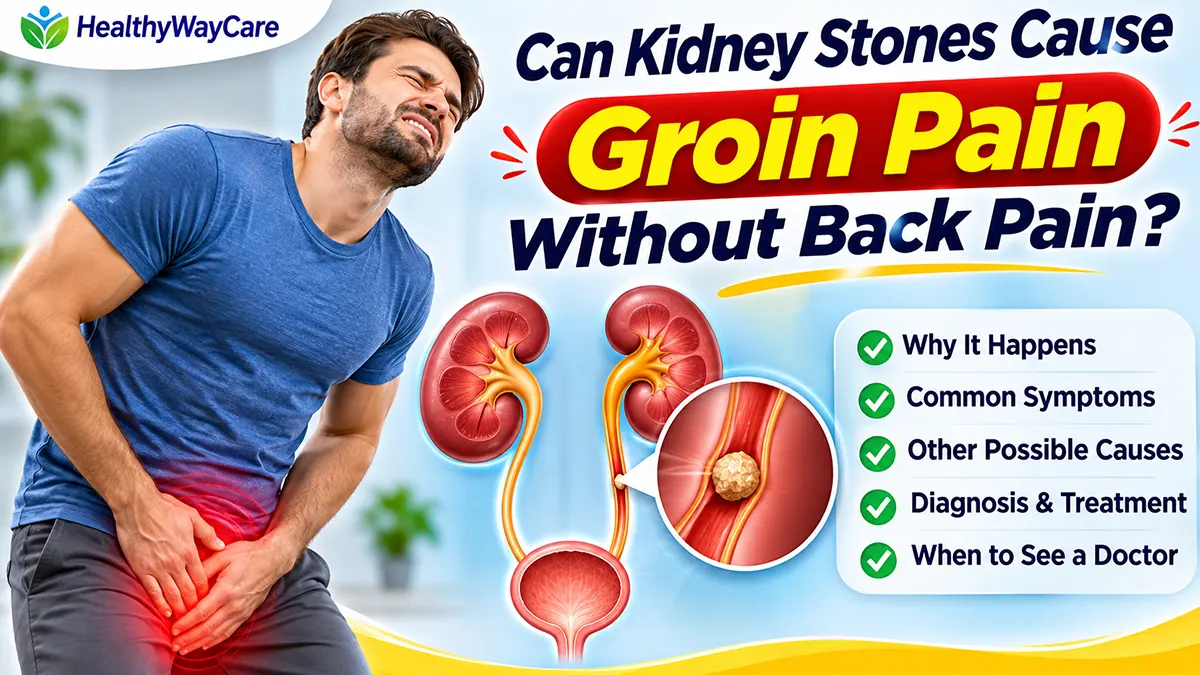
Kidney stone groin pain without back pain can occur when a stone moves into the lower ureter, the tube connecting the kidney to the bladder. Although kidney stones commonly cause pain in the side or back, some people experience discomfort mainly in the groin or lower abdomen. The location and intensity of pain can vary depending on where the stone is and whether it is obstructing urine flow. However, groin pain can have several other causes, so symptoms alone cannot confirm a kidney stone.
Table of Contents
Quick Answer: Can a Kidney Stone Cause Groin Pain Without Back Pain?
Yes. A kidney stone can cause groin pain even when you have no back pain. A stone moving through a ureter—the narrow tube that carries urine from a kidney to the bladder—may cause pain felt in the lower abdomen, pelvis, or groin. The exact location and intensity vary, and some stones cause surprisingly little discomfort. However, groin pain alone does not prove a kidney stone is present. Hernias, infections, muscle injuries, testicular or ovarian emergencies, and other conditions can produce similar symptoms.
If you have severe or worsening pain, fever or shaking chills, repeated vomiting, or difficulty passing urine, seek urgent medical care. Sudden severe testicular pain, a painful irreducible groin lump, or severe pelvic pain with possible pregnancy also requires emergency evaluation. This guide explains what kidney stone groin pain may feel like, how clinicians investigate it, and which symptoms should never be ignored.
Kidney Stone Groin Pain Without Back Pain: Why It Happens
Kidney stones form when minerals and other substances crystallize in urine. A stone may stay inside the kidney without producing symptoms. When it moves into a ureter, it can irritate the lining, interfere with urine drainage, and trigger muscular contractions. Pain signals from the urinary tract can be perceived in regions other than the precise site of the stone. This is called referred pain.
The classic description of a moving ureteral stone is intense pain starting in the flank—the side of the body below the ribs—and radiating toward the lower abdomen or groin. But not everyone follows that sequence. Some people first notice lower abdominal or groin discomfort; others recall earlier flank pain only after being asked. A stone near the bladder can be accompanied by urinary urgency, frequency, or discomfort while urinating.
Importantly, you cannot reliably determine the size, exact position, or likelihood of passing a stone from pain location alone. A person with a small stone may have severe pain, while another person with a larger stone may have fewer symptoms. Imaging and clinical assessment are more useful than symptom maps for identifying an obstruction.
What Does Kidney Stone Groin Pain Feel Like?
Descriptions vary. Some people feel a sharp, gripping, or cramping pain on one side of the groin. Others describe a deep ache in the lower abdomen, a pulling sensation toward the genitals, or pain that rises and falls in waves. Nausea and restlessness can accompany severe renal colic. Unlike some muscle injuries, stone pain may not improve simply by changing position.
- Pain that comes in waves and changes in intensity rather than remaining perfectly steady.
- Discomfort that travels from the side or lower abdomen toward the groin or genitals.
- An urgent or frequent need to urinate, particularly with a stone low in the ureter.
- Burning while urinating or passing only small amounts of urine.
- Pink, red, or brown urine in some cases; visible blood is not required for a stone to be present.
- Nausea or vomiting, especially when pain is intense.
None of these symptoms is exclusive to kidney stones. For example, a urinary tract infection may cause burning and urgency; a hernia may cause groin discomfort with a bulge; and certain reproductive conditions may cause sudden one-sided pain. Do not assume a familiar pain pattern is a recurrence of an old stone without considering other causes.
Does the Stone Have to Reach the Bladder to Cause Groin Pain?
No. Pain can be referred to the groin while a stone remains in the ureter. A lower ureteral stone may be especially associated with pelvic discomfort or urinary symptoms, but pain patterns overlap. The point at which the pain moves does not tell you whether the stone has entered the bladder or is about to pass. Some stones move intermittently; others become lodged and obstruct urine flow.
Once a stone reaches the bladder, it may eventually leave through the urethra, but the experience depends on its size and the person’s anatomy. New or persistent pain should be evaluated rather than interpreted as a reassuring sign that the stone is almost out.
Kidney Stone Pain Location: A Practical Comparison
| Where you feel pain | Possible explanation | What to remember |
|---|---|---|
| Side or flank below the ribs | Ureteral stone or another kidney-related problem | Flank pain is common but not required. |
| Lower abdomen on one side | Ureteral stone, bowel, urinary, or reproductive condition | Location alone cannot distinguish the cause. |
| Groin or genital area | Referred pain from a ureteral stone or a local groin problem | Sudden testicular pain needs emergency evaluation. |
| Pain with urination | Stone irritation, infection, or other urinary inflammation | Urine testing may help, but symptoms overlap. |
| Back pain with movement | Muscle or spine-related condition | A musculoskeletal pattern does not exclude another cause. |
Kidney Stone Groin Pain vs Hernia, UTI, and Muscle Strain
A clinician considers several alternatives because treating every episode of groin pain as a stone can delay care for another condition. The comparison below highlights patterns, not rules for self-diagnosis.
| Condition | Typical clues | How it is evaluated |
|---|---|---|
| Ureteral kidney stone | Wave-like one-sided pain, sometimes nausea, urgency, or blood in urine | History, urinalysis, and imaging when indicated |
| Inguinal hernia | Groin bulge or pressure, often worse with lifting or coughing | Physical examination; imaging in selected cases |
| Urinary tract infection | Burning, urgency, frequent urination; sometimes fever | Urinalysis and urine culture when appropriate |
| Muscle or tendon strain | Pain after activity, tenderness, worse with specific movements | History and physical examination |
| Testicular torsion | Sudden severe testicular pain, possible swelling or nausea | Emergency assessment; do not delay treatment |
| Gynecologic or pelvic emergency | Sudden one-sided pelvic pain, bleeding, or possible pregnancy | Urgent examination, pregnancy testing, imaging as appropriate |
A groin lump that becomes very painful, cannot be pushed back, or occurs with vomiting can signal a trapped or strangulated hernia and requires emergency care. Sudden severe testicular pain is an emergency even if it also feels like lower abdominal pain. In someone who could be pregnant, severe pelvic pain or bleeding needs urgent assessment because ectopic pregnancy is potentially life-threatening.
Can You Have a Kidney Stone Without Any Back Pain?
Yes. Some stones remain silent, and others cause pain in the lower abdomen or groin without a memorable episode of back pain. The absence of flank pain does not rule out a stone. Equally, the absence of back pain does not make a stone the most likely explanation for every groin symptom. Clinicians combine the history, examination, urine findings, and sometimes imaging to narrow the possibilities.
You can also have a stone without visible blood in the urine. A urine test may reveal microscopic blood, but a normal-looking sample—or even an absence of blood on testing—does not completely exclude a stone. If you are interested in this distinction, read our related guide on kidney stone back pain without blood in urine.
Urinary Symptoms That May Accompany Groin Pain
A stone in the urinary tract may be associated with frequent trips to the bathroom, a persistent urge to urinate, burning, or small-volume urination. These symptoms can become more noticeable when a stone is low in the ureter. Yet the same complaints are common with bladder infections and other urinary conditions.
Our separate article on burning urination without a UTI explains why a negative urine culture does not establish a stone diagnosis. Another guide discusses frequent urination without pain and other possible causes. Use these as background reading, not as substitutes for evaluation when symptoms are new or worsening.
How Doctors Diagnose a Possible Ureteral Stone
1. History and physical examination
Your clinician will ask when the pain started, which side is affected, whether it moves, how severe it becomes, and whether you have fever, vomiting, urinary symptoms, or a history of stones. They may ask about pregnancy possibility, testicular or pelvic symptoms, prior surgery, medications, and kidney function. Examination helps identify tenderness, a hernia, or signs pointing to a different urgent condition.
2. Urinalysis and sometimes urine culture
A urine sample can identify blood, white blood cells, bacteria, and other clues. A urine culture may be ordered if infection is suspected. Urinalysis alone cannot confirm a stone or reliably exclude one. A stone and urinary infection can occur together, which is particularly dangerous when a stone blocks drainage.
3. Blood tests when needed
Blood tests may assess kidney function, infection-related concerns, or mineral abnormalities. They can be particularly important when pain is severe, vomiting causes dehydration, or a blockage is suspected. Test selection depends on your medical history and examination rather than on a single universal checklist.
4. Ultrasound or CT imaging
Ultrasound can identify some stones and signs of urine backup without exposing a patient to ionizing radiation. It is often favored when radiation avoidance matters, including pregnancy. A noncontrast CT scan can identify many ureteral stones, estimate their size and location, and sometimes reveal alternative causes of pain. Your clinician will weigh accuracy, radiation exposure, pregnancy status, and clinical urgency when choosing imaging.
An imaging report should be interpreted alongside your symptoms. An incidental stone sitting in the kidney may not explain groin pain, and identifying one stone does not automatically exclude another condition.
What Happens if the Stone Is Close to the Bladder?
Stones near the lower end of the ureter can irritate the urinary tract and may produce bladder-like symptoms such as urgency or frequent urination. Some pass without a procedure, especially when they are small and urine is draining normally. Others become lodged, continue causing pain, or create an obstruction that needs intervention.
A clinician may discuss the likelihood of spontaneous passage based on the stone’s measured size and location, symptom control, kidney function, and whether infection is present. Do not assume that groin pain means passage will happen within hours or days. Follow-up may be needed to confirm that a suspected obstructing stone has cleared.
Treatment Options for Kidney Stone Groin Pain
Observation and symptom control
For a small stone that is likely to pass, with controlled pain, no infection, and no concerning blockage, a clinician may recommend watchful waiting, appropriate fluids, and medication for pain. The plan should include clear return precautions and follow-up. People with one functioning kidney, kidney disease, pregnancy, or significant medical conditions may require a different approach.
Prescription medicines in selected cases
Some patients with certain distal ureteral stones may be offered a prescription alpha blocker as medical expulsive therapy. Benefits depend on stone size and other factors, and these medicines can cause side effects such as dizziness or low blood pressure. They are not appropriate for everyone. Never start prescription medicine solely because pain has shifted toward the groin.
Procedures when needed
If a stone is too large to pass, causes persistent obstruction, threatens kidney function, or produces uncontrolled symptoms, a urologist may recommend ureteroscopy or another procedure. Shock-wave lithotripsy is an option for some stones, depending on their characteristics and location. The choice is individualized.
Urgent drainage for obstruction with infection
A blocked kidney with suspected infection is a urologic emergency. Treatment may require immediate antibiotics and drainage using a ureteral stent or nephrostomy tube, with definitive stone treatment delayed until infection is controlled. Do not wait at home for a fever to settle if you have suspected stone pain and signs of infection.
Can Drinking Water or Walking Make the Stone Pass Faster?
Normal hydration is useful, and people with recurrent stones may need a prevention plan that targets urine output. But drinking excessive water during an acute obstructing stone episode does not reliably force the stone out and may worsen discomfort or nausea. If you cannot keep fluids down, seek medical advice. Follow any fluid restriction prescribed for heart or kidney conditions.
Gentle movement is reasonable if you feel well enough, but there is no reliable home exercise that guarantees stone passage. Do not attempt jumping, vigorous workouts, or prolonged walking through severe pain. The more important questions are whether you have an obstruction, infection, uncontrolled pain, or kidney impairment.
When Is Groin Pain With a Possible Kidney Stone an Emergency?
Seek emergency care now for any of the following, particularly if you think a urinary stone may be involved:
- Fever or shaking chills with flank, abdominal, or groin pain.
- Inability to urinate, or very little urine with worsening pain.
- Severe or uncontrolled pain, fainting, confusion, or feeling extremely unwell.
- Repeated vomiting or inability to keep fluids down.
- Sudden severe testicular pain or swelling.
- A very painful groin bulge that cannot be reduced, especially with vomiting.
- Severe pelvic pain with possible pregnancy, vaginal bleeding, or faintness.
For milder but persistent or recurrent groin pain, arrange a prompt clinical appointment. Blood in the urine, new urinary symptoms, or pain that disrupts normal activity also deserves assessment. If you are pregnant, have one kidney, or have known kidney disease, seek medical advice sooner rather than waiting for the pattern to become typical.
How to Reduce the Risk of Future Kidney Stones
Prevention depends on the stone type and your medical history. For many people, drinking enough water to avoid concentrated urine is helpful, but the appropriate target differs with climate, activity, kidney function, and other health conditions. A clinician may recommend stone analysis or a 24-hour urine collection after recurrent stones.
- Make water your default drink unless a clinician has advised fluid restriction.
- Limit excess sodium; high sodium intake can increase urinary calcium in some people.
- Maintain normal dietary calcium unless your clinician recommends otherwise; unnecessarily restricting calcium can backfire for some stone types.
- Discuss animal-protein intake and high-oxalate foods if your stone analysis or urine tests suggest they matter.
- Avoid assuming that a single supplement, juice, or home remedy dissolves every kind of stone.
For a practical prevention overview, see best drinks to prevent kidney stones. That guide complements this article but cannot replace individualized prevention advice.
Frequently Asked Questions
Can a kidney stone cause only groin pain?
Yes, a ureteral stone can sometimes be felt mainly in the groin without obvious back pain. But isolated groin pain also has many other causes, so examination and testing may be needed.
Does groin pain mean a kidney stone is about to pass?
Not necessarily. Pain can be referred to the groin while a stone is still in the ureter. Its location, size, and likelihood of passing cannot be established from pain alone.
Can a kidney stone cause testicular or labial pain?
Referred pain from a ureteral stone may be felt in genital areas. However, sudden severe testicular pain is an emergency, and severe pelvic pain can also require urgent evaluation.
Can I have a kidney stone without blood in my urine?
Yes. Visible blood is not always present, and urine testing is not perfect for ruling out stones. Imaging may be needed when symptoms and examination raise concern.
Can a UTI cause groin pain without back pain?
Yes. Urinary infections may cause pelvic discomfort, urgency, or burning. Fever or systemic illness raises concern for a more serious infection. Symptoms overlap with stones.
Will an ultrasound always show a stone near the bladder?
No. Ultrasound may miss some ureteral stones. A clinician may consider noncontrast CT or other evaluation if symptoms persist or a blockage is suspected.
How long does kidney stone groin pain last?
It varies widely. Pain may come and go while a stone moves or remains obstructing the ureter. Persistent or worsening pain needs medical assessment; pain stopping does not always confirm passage.
When should I go to the ER for groin pain?
Seek emergency care for fever with suspected stone pain, inability to urinate, uncontrolled pain, repeated vomiting, sudden severe testicular pain, a trapped painful groin lump, or severe pelvic pain with possible pregnancy.
Key Takeaways
- Kidney stones can cause groin pain even without back pain, especially when pain is referred from a ureter.
- Groin pain alone cannot identify a stone or show whether it is close to passing.
- Hernias, UTIs, muscle injuries, and reproductive emergencies can mimic kidney stone symptoms.
- Urine testing and selected imaging help clinicians distinguish stones from other causes.
- Fever with suspected obstruction, inability to urinate, uncontrolled pain, or repeated vomiting warrants emergency evaluation.
Medical References
- NIDDK: Symptoms & Causes of Kidney Stones
- NIDDK: Diagnosis of Kidney Stones
- NIDDK: Treatment for Kidney Stones
- Mayo Clinic: Kidney Stones — Symptoms and Causes
- NIDDK: Symptoms & Causes of Kidney Infection
Medical Disclaimer
This article is for general health education, not a personal diagnosis or treatment plan. It has not been represented as individually reviewed by a physician. A qualified clinician should review medical content before publication, and readers should consult a healthcare professional for individual symptoms.