
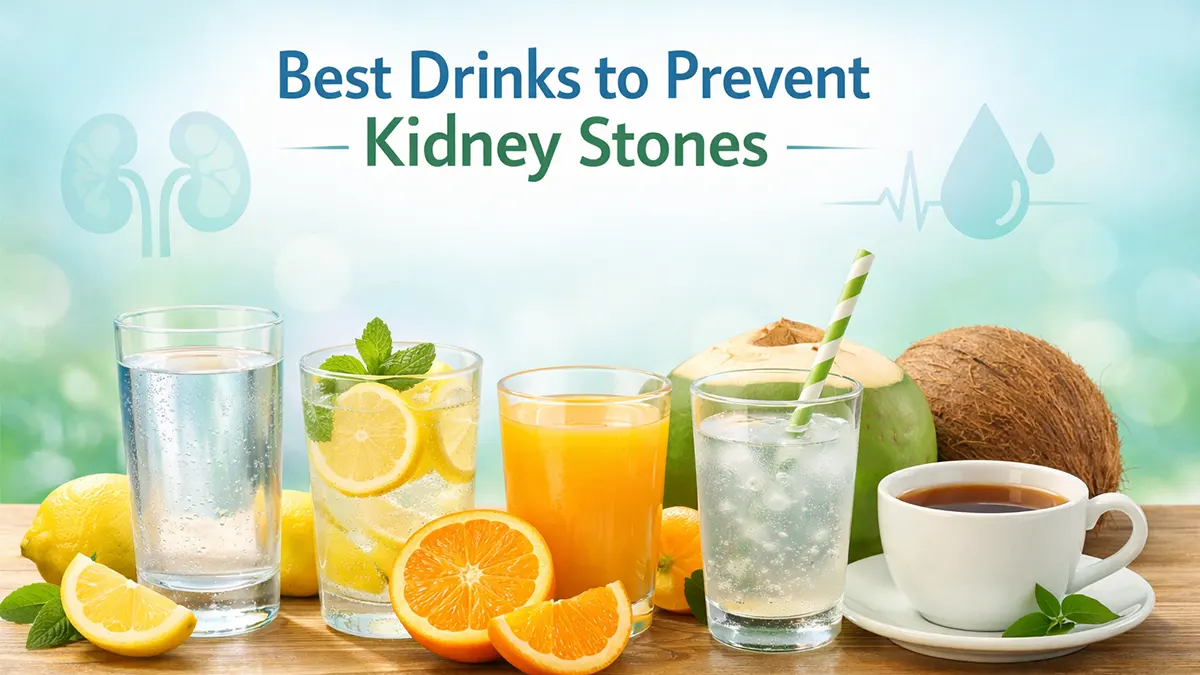
The best drink to prevent kidney stones is water. Drinking enough fluid dilutes urine, making it less likely that stone-forming minerals will crystallize. Unsweetened lemon water is another useful option, while other beverages have different benefits and limitations. The right plan also depends on the type of stone you form.
Quick answer: Make water your everyday default. Add lemon or lime for flavor and citrate; enjoy unsweetened tea or coffee if you tolerate them; treat juice as an occasional beverage rather than a replacement for water. People with kidney disease, heart failure, or a prescribed fluid restriction should ask their clinician how much to drink.
Table of Contents
Best Drinks to Prevent Kidney Stones: Quick Comparison
| Drink | What to know | Practical choice |
|---|---|---|
| Water | Best-supported first choice for increasing urine volume | Drink regularly throughout the day |
| Unsweetened lemon or lime water | Adds fluid and citrate; benefit varies by amount and individual | Use instead of sugary drinks |
| Unsweetened coffee or tea | Can count toward daily fluid intake; observational findings are not proof of prevention | Keep added sugar low |
| Orange juice | Provides citrate but also natural sugar and calories | Small portions, not a daily requirement |
| Coconut water | Hydrates but has no strong evidence of preventing stones; can be high in potassium | Not necessary, especially if potassium is restricted |
| Plain buttermilk | Provides fluid; some products contain substantial sodium | Choose unsalted or lower-sodium varieties |
Why Hydration Matters for Kidney Stone Prevention
Kidney stones can form when substances such as calcium, oxalate, or uric acid become concentrated in urine. Higher urine volume helps dilute these substances. For many people with recurrent stones, clinicians recommend enough fluid to produce at least 2.5 liters (about 85 fluid ounces) of urine per day. The amount you need to drink can be higher than that, especially when you sweat.
Do not treat 2.5 liters as a universal drinking prescription. Urine output is not the same as fluid intake, and people with fluid restrictions need individualized advice. Pale-yellow urine can be a useful everyday hydration clue, but it is not a precise measurement.
1. Water: The Best Everyday Choice
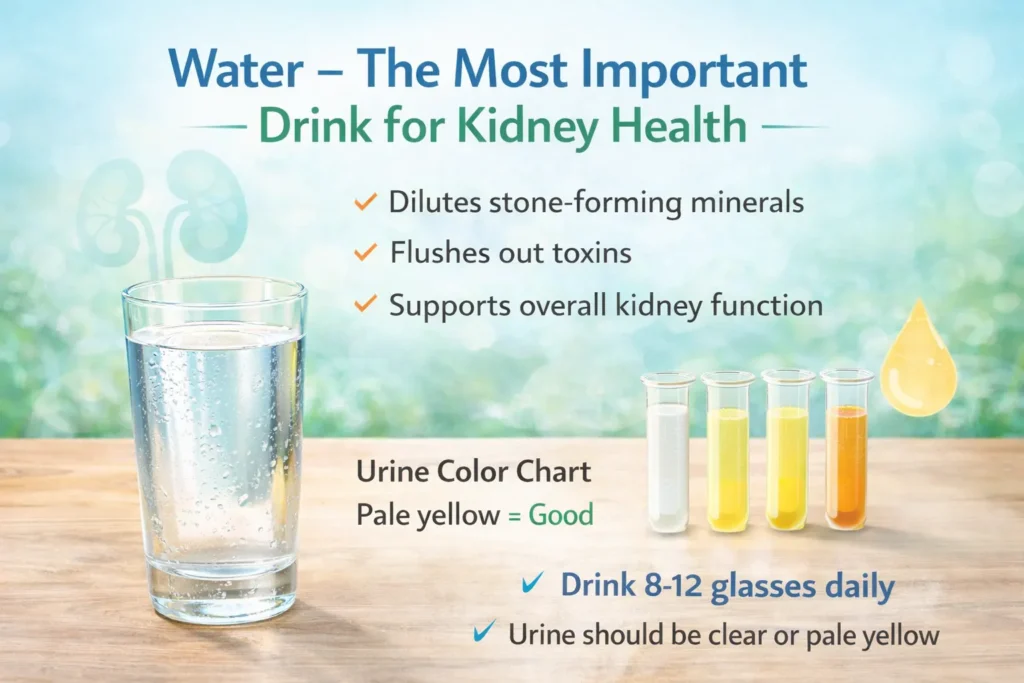
Plain water is inexpensive, calorie-free, and the simplest way to raise urine volume. Keep a refillable bottle nearby, drink with meals, and spread fluids across the day instead of drinking a large amount at once. You may need extra fluid during exercise or hot weather.
2. Lemon Water: Hydration Plus Citrate
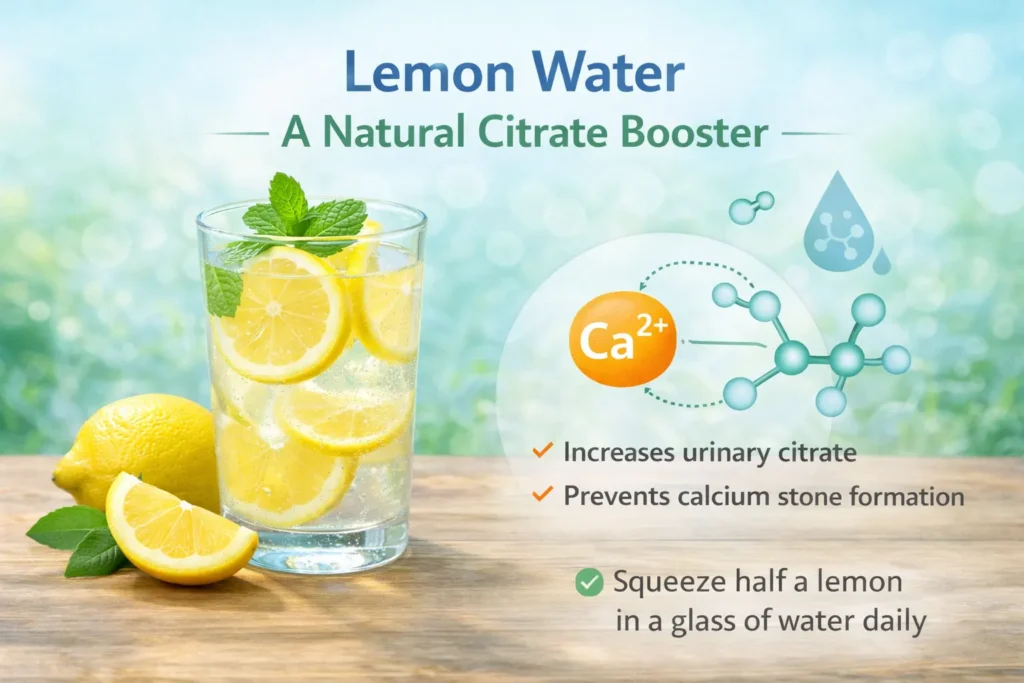
Lemon and lime juice contain citrate. Citrate can inhibit the formation of some calcium stones, but the effect of lemon water on urinary citrate and future stone events varies. It is not a substitute for prescribed potassium citrate or other treatment.
Try squeezing fresh lemon into a glass or bottle of water without adding sugar. If acidic drinks bother your teeth or stomach, dilute them and rinse your mouth with plain water afterward.
3. Orange Juice: Possible Benefits, Important Trade-offs
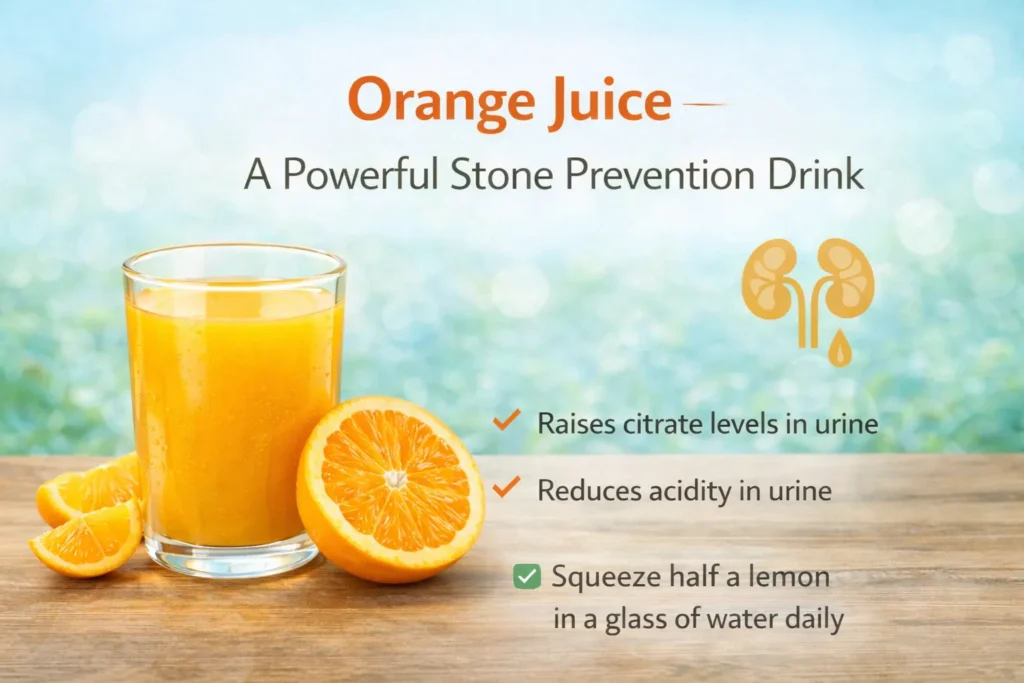
Orange juice may increase urinary citrate and urine pH in some people. However, it also contains natural sugars and calories, and regular large servings are not necessary for stone prevention. Whole fruit and water are often better everyday choices. If you have diabetes or need to limit potassium, discuss juice intake with your clinician.
4. Unsweetened Coffee and Tea
Coffee and tea contribute to fluid intake. Some observational studies associate them with lower kidney stone risk, but this does not prove they prevent stones. Choose unsweetened versions and consider caffeine sensitivity, sleep, and other medical conditions. If you have calcium oxalate stones, discuss unusually high intake of high-oxalate beverages with your clinician.
5. Coconut Water and Buttermilk
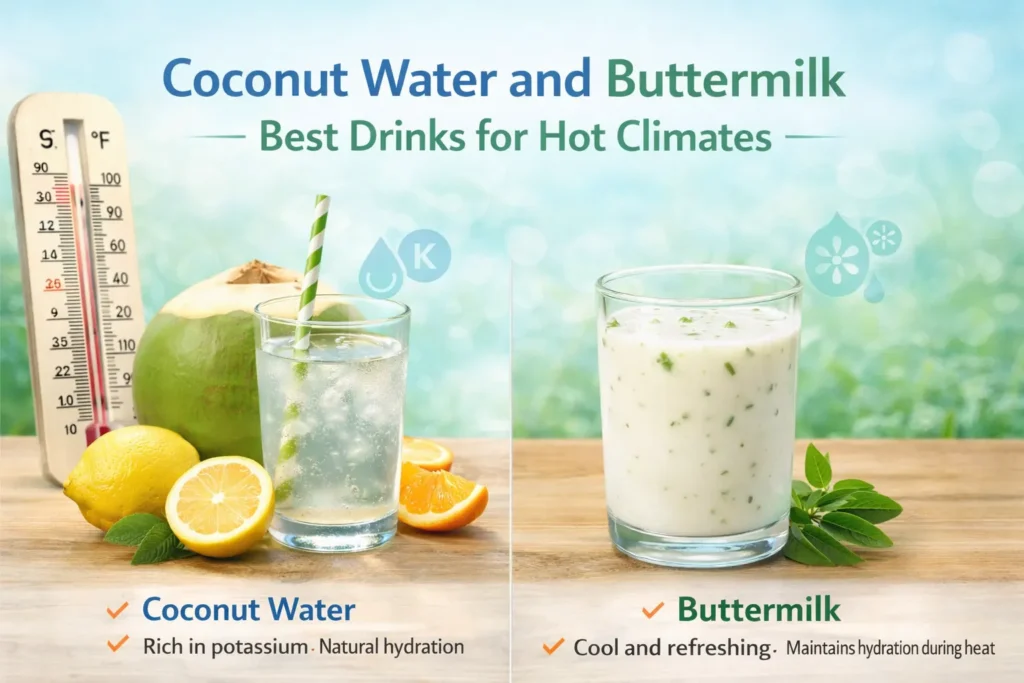
Coconut water and plain buttermilk can contribute to hydration, but neither has strong clinical evidence as a special kidney-stone prevention treatment. Coconut water can contain significant potassium, which may be unsuitable for people with reduced kidney function or potassium restrictions. Packaged or salted buttermilk can add sodium; compare labels.
Drinks to Limit if You Form Kidney Stones
- Sugar-sweetened soda and other sugary drinks: Frequent intake is associated with higher stone risk in some studies.
- Large amounts of fruit juice: Even 100% juice can add considerable sugar and calories.
- Very salty packaged drinks: Excess sodium can increase urinary calcium in some stone formers.
- Frequent spinach-heavy smoothies: Spinach is high in oxalate and may be a concern for people with calcium oxalate stones.
There is no need to assume that every dark-colored beverage causes stones. Focus on the overall drink pattern, added sugar, sodium, and your stone type. Alcohol is not a kidney-stone prevention treatment.
How Much Should You Drink Each Day?
Many stone-prevention guidelines recommend a daily urine output of at least 2.5 liters for adults who form stones. The volume of drinks required varies with sweating, diet, body size, and climate. Your healthcare professional may recommend a 24-hour urine collection to personalize the plan. Do not increase fluids against medical advice if you have heart failure, advanced kidney disease, or another fluid-restricted condition.
Other Habits That Matter as Much as Beverage Choice
- Limit excess sodium; high salt intake can raise urinary calcium.
- Get normal dietary calcium with meals rather than eliminating calcium without medical advice.
- Match oxalate and animal-protein advice to your stone type and test results.
- Ask about stone analysis and a 24-hour urine test if you have recurrent stones.
- Use prescribed prevention medicines when recommended; drinks alone may not be enough.
Related reading: Best Water for Kidney Stones, What Should I Drink to Prevent Kidney Stones?, and Kidney Stone Diet Plan.
Frequently Asked Questions
What is the number one drink for preventing kidney stones?
Water is the best everyday choice because increasing urine volume helps dilute stone-forming substances.
Does lemon water dissolve existing kidney stones?
No. Lemon water does not reliably dissolve existing stones. Citrate may help prevent certain stones from forming, but treatment depends on stone type and size.
Is orange juice better than water for kidney stones?
No. Orange juice can provide citrate, but water is the preferred routine beverage because it hydrates without added calories or sugar.
Can I drink coffee or tea if I have kidney stones?
Usually yes, in moderation. Unsweetened coffee and tea count toward fluid intake, but individual advice may differ.
Is coconut water safe for everyone?
No. Its potassium content can be problematic for people who must restrict potassium, including some people with kidney disease.
How do I know if I am drinking enough?
For recurrent stone prevention, a clinician may recommend a target urine output and a 24-hour urine test. Urine color alone is not a reliable measurement.
When to Seek Medical Care
Seek urgent medical evaluation if you have severe flank pain with fever or chills, vomiting that prevents fluid intake, difficulty passing urine, or signs of dehydration. A stone with infection can be an emergency.
Key Takeaway
Choose water first. Lemon water can be a pleasant, low-sugar alternative; other drinks may fit your diet but are not proven replacements for adequate hydration. For recurrent stones, prevention should be tailored to your stone type and urine test results.
Medical Sources
- NIDDK: Eating, Diet, & Nutrition for Kidney Stones
- NIDDK: Kidney Stones
- NHS: Preventing Kidney Stones
- European Association of Urology: Metabolic Evaluation and Recurrence Prevention
Author
Yamanandan Reddy — Health Content Writer & Frontend Developer. This article is educational and uses publicly available medical guidance; it has not been represented as individually reviewed by a clinician.
Disclaimer
This article is for educational purposes and is not a substitute for individualized medical advice, diagnosis, or treatment. Consult a qualified healthcare professional about your stone type, fluid target, and dietary restrictions.
9 thoughts on “The Best Drinks to Prevent Kidney Stones in 2026: A Science-Backed Guide”