
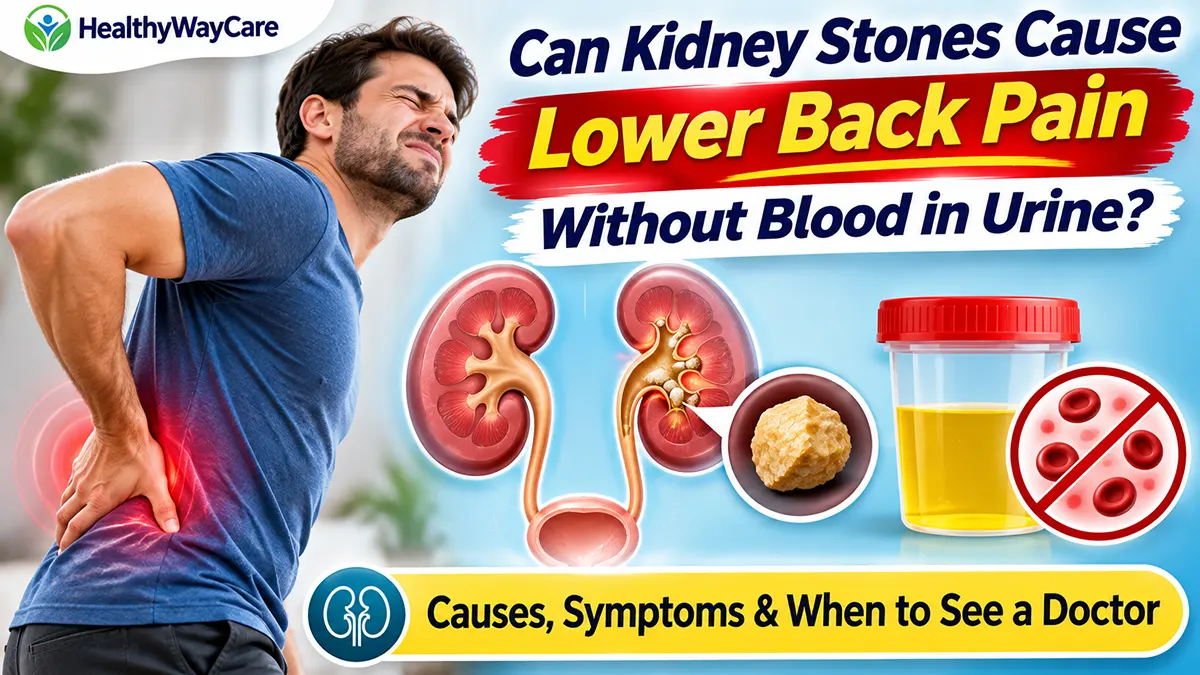
Quick answer: Yes. A kidney stone can cause pain in the back or side even when urine looks completely normal. Some people have microscopic blood that is visible only on a urine test, while others have no detectable blood at the time they are tested. The absence of blood does not rule out a stone. However, lower back pain is common and can come from muscles, the spine, or other conditions, so symptoms alone cannot establish the cause.
Get urgent medical help if possible stone pain occurs with fever or chills, inability to urinate, repeated vomiting, or severe pain that cannot be controlled. A blocked urinary tract with infection is an emergency. This article explains the patterns to watch for and how clinicians distinguish stones from other causes.
Table of Contents
Can Kidney Stones Cause Back Pain Without Blood in Urine?
Kidney stones are hardened deposits that develop when substances in urine become concentrated. Many remain in the kidney without causing symptoms. Pain often begins when a stone moves into the ureter, the narrow tube that carries urine from the kidney to the bladder. A stone can irritate the ureter or interrupt urine drainage, producing pressure and muscle spasms. The resulting discomfort is sometimes described as back pain, although its typical starting point is the flank—the side of the torso between the ribs and hip.
Blood in urine, called hematuria, is one possible clue, not a required symptom. A person may notice red, pink, or brown urine, but many episodes of bleeding are microscopic and cannot be seen without testing. Even a urine test without red blood cells does not conclusively exclude a stone. The important question is not whether blood is visible, but whether the overall symptom pattern, examination, and tests suggest a stone or another condition.
Where Is Kidney Stone Back Pain Usually Felt?
Stone pain often begins on one side of the back or flank, beneath the rib cage. It may travel toward the lower abdomen, pelvis, or groin as the stone moves. People sometimes call this lower back pain because the discomfort is behind the waist, but it is not always located in the central lower back where muscular strain is common. The exact location varies with stone position, anatomy, and other conditions.
Classic renal colic tends to come in waves. During an episode, pain can intensify quickly, ease somewhat, and return. A person may feel restless and struggle to find a comfortable position. Nausea or vomiting can accompany severe attacks. Not every stone follows the textbook pattern: small stones may pass with mild symptoms, and some stones found on imaging are incidental rather than the cause of a person’s back pain.
Why Might There Be No Visible Blood?
1. Bleeding may be microscopic
A urine sample can contain red blood cells even when it looks pale yellow and clear. The amount may be too small to change urine color. Urinalysis can detect this, although results must be interpreted with symptoms and the timing of the sample. A normal-looking toilet bowl is not a reliable test for hematuria.
2. Bleeding may not occur continuously
Urinary irritation and bleeding can vary as a stone changes position. One sample may show red blood cells and another may not. This is one reason clinicians do not use a single urine result as the only basis for deciding whether a stone is present.
3. Some stones do not cause measurable bleeding
A stone can be present without red blood cells being found in the urine at a particular time. Conversely, blood in urine can result from infections, vigorous exercise, kidney disease, or other urinary tract problems. Neither a positive nor a negative urine test makes the diagnosis by itself.
4. The stone may be unrelated to the pain
Imaging sometimes reveals a stone that is not obstructing urine flow. A person with an incidental stone can still have back pain from a muscle strain or spinal condition. Clinicians consider whether the stone’s size, position, and associated findings match the pain pattern before attributing symptoms to it.
Kidney Stone Pain vs Muscle Back Pain: Key Differences
A pulled muscle and a kidney stone can both cause discomfort near the waist. The differences below are useful clues, not a home diagnostic test. Pain patterns overlap, and serious conditions can look unusual.
| Feature | Possible kidney stone | Possible muscle or mechanical back pain |
|---|---|---|
| Typical location | One-sided flank or back; may move toward groin | Lower back, often near spine or muscle groups |
| Pain pattern | May surge in waves and become intense | Often linked to movement, lifting, or posture |
| Changing position | May not reliably relieve pain | Often changes with bending, twisting, or rest |
| Urinary symptoms | Sometimes urgency, burning, or blood | Usually absent |
| Nausea or vomiting | Can occur with severe stone pain | Less typical |
| Confirming cause | Clinical assessment, urine testing, imaging when indicated | History and physical exam; imaging only when appropriate |
For example, pain that starts after lifting furniture and worsens when twisting may suggest a mechanical cause. Sudden, severe one-sided flank pain that radiates to the groin may raise concern for a ureteral stone. Neither pattern is certain. Persistent or unexplained pain deserves assessment, particularly when urinary symptoms or systemic illness are present.
Other Conditions That Can Mimic Kidney Stone Pain
Muscle strain and spinal problems
Strained muscles, facet joint irritation, and disc-related problems can cause pain near the kidneys. The pain may spread to the buttock or leg and sometimes worsens with specific movements. Numbness, tingling, or shooting pain down a leg suggests a possible nerve problem, though the cause still needs clinical assessment.
Urinary tract or kidney infection
A kidney infection may cause back or flank pain, fever, chills, nausea, and urinary symptoms. Burning urination may be absent. This matters because infection plus a blocked ureter can rapidly become dangerous. A person who feels feverish or very unwell should not assume that pain is only from a stone.
Other abdominal or pelvic conditions
Appendicitis, gallbladder problems, gynecologic conditions, and other abdominal disorders can sometimes cause pain that seems to come from the back or side. In some cases, vascular emergencies can also present with sudden severe back or abdominal pain. Clinicians consider the full history, examination, and associated symptoms rather than relying on pain location alone.
What Symptoms Make a Kidney Stone More Likely?
- Sharp or severe pain on one side of the back or flank, often below the ribs
- Pain that moves toward the lower abdomen or groin
- Episodes that rise and fall in intensity
- Nausea or vomiting during a pain episode
- A frequent urge to urinate or passing small amounts
- Burning when urinating or visible blood, although neither is required
- A previous history of kidney stones, which increases the likelihood of recurrence
These signs may increase suspicion, but they are not proof. Some people with stones have very little pain, and other illnesses can cause the same symptoms. A negative home urine dipstick is not a substitute for a clinician’s assessment when pain is severe, persistent, or concerning.
Does the Side of the Pain Matter?
A stone can affect either kidney or ureter, so pain may occur on the right or left. Pain on one side is a useful detail to share with a clinician, but it does not determine stone type or size. A stone near the kidney may cause flank discomfort; a stone farther down the ureter can produce pain nearer the lower abdomen or groin. The location of pain alone cannot reliably tell you where the stone is.
Some people feel discomfort on both sides, but bilateral pain also raises the possibility of muscle, spinal, or other problems. If you have one functioning kidney, known kidney disease, or difficulty passing urine, seek prompt medical advice rather than waiting to see whether symptoms change.
How Doctors Diagnose a Kidney Stone Without Visible Blood
Medical history and physical examination
A healthcare professional asks when pain started, whether it comes in waves, where it travels, and whether there are urinary symptoms, fever, or vomiting. They may ask about previous stones, medicines, pregnancy, kidney disease, and recent injuries. The examination checks for tenderness and signs that another diagnosis may be more likely.
Urinalysis and urine culture
A urine test may detect microscopic blood, crystals, white blood cells, or findings that suggest infection. A urine culture may be ordered if bacterial infection is suspected. A normal urinalysis does not definitively exclude a stone, and an abnormal result does not by itself prove that a stone is causing the pain. Test results must be combined with clinical findings.
Blood tests
Blood tests may assess kidney function, electrolytes, and signs of infection. They can also help identify factors associated with stone formation. Blood testing does not locate a stone, but it can influence how urgently a person needs treatment, especially when there may be obstruction or dehydration.
Ultrasound
Ultrasound uses sound waves rather than ionizing radiation. It can identify some kidney stones and signs of urine backing up into the kidney, called hydronephrosis. However, small stones in the ureter may be difficult to see. Ultrasound is often particularly useful when radiation exposure is a concern, including during pregnancy, though the exact approach is individualized.
Noncontrast CT scan
A noncontrast CT scan is commonly used when a clinician needs a detailed look for urinary stones. It can show stone size, location, and possible blockage and may reveal other explanations for the pain. CT exposes patients to radiation, so the choice between CT, ultrasound, and observation depends on the situation. Ask whether low-dose CT is appropriate if imaging is needed.
Tests at a Glance
| Test | What it helps assess | Important limitation |
|---|---|---|
| Urinalysis | Blood and possible infection markers | No blood does not rule out stones |
| Urine culture | Bacterial infection when suspected | Does not locate a stone |
| Blood tests | Kidney function and related problems | Cannot confirm stone location |
| Ultrasound | Some stones and urinary blockage | May miss smaller ureteral stones |
| Noncontrast CT | Stone size, location, obstruction, alternatives | Radiation exposure; not needed in every case |
When Is Kidney Stone Back Pain an Emergency?
Seek emergency care now for possible kidney stone symptoms accompanied by fever or shaking chills, inability to pass urine, uncontrolled severe pain, repeated vomiting that prevents drinking, fainting, confusion, or marked illness. Infection trapped behind an obstructing stone can lead to sepsis and requires urgent treatment. Do not wait for blood to appear in the urine before getting help.
Also seek prompt assessment if you are pregnant, have a single functioning kidney, have significant kidney disease, or have a weakened immune system. Sudden severe back or abdominal pain with collapse, new neurologic deficits, or other alarming symptoms needs emergency evaluation for causes beyond stones as well.
How Are Kidney Stones Treated?
Small stones that may pass
Some small stones pass without a procedure, but the likelihood depends on their size, location, and whether urine is draining normally. A clinician may recommend pain management, monitoring, and follow-up. In selected patients with ureteral stones, a prescription medicine such as an alpha blocker may be considered to support passage. Do not take someone else’s prescription or assume every stone will pass on its own.
Stones that require a procedure
A urologist may recommend ureteroscopy, shock-wave lithotripsy, or another procedure for stones that are unlikely to pass, cause persistent symptoms, threaten kidney function, or block urine flow. The decision depends on stone characteristics, patient health, and local expertise. A blocked infected urinary system may need urgent drainage before definitive stone treatment.
Pain relief and hydration
Pain medicines should be selected with attention to kidney function, other health conditions, and medication interactions. Some people can use anti-inflammatory medicines, while others should avoid them. Drink fluids regularly if you can and have no fluid restriction, but do not force large quantities of water during severe pain or suspected blockage. Excess water does not reliably push a stuck stone through the ureter.
What You Can Safely Do While Waiting for an Appointment
- Record when the pain began, where it is felt, and whether it moves.
- Note fever, urinary changes, nausea, vomiting, or trouble urinating.
- Drink normal amounts of fluid if you can tolerate them and have no fluid restriction.
- Use only pain medicines that are safe for your medical history and medications.
- Avoid strenuous activity if you feel dizzy, weak, or severely uncomfortable.
- If instructed by a clinician, strain urine to collect a passed stone for analysis.
- Arrange follow-up to confirm that symptoms and any obstruction have resolved.
Do not rely on a heating pad, herbal product, or internet remedy as a substitute for evaluation. Gentle warmth may ease muscular discomfort, but it does not treat a urinary obstruction or infection. If symptoms worsen, seek medical care rather than waiting for a planned appointment.
Can You Prevent Another Kidney Stone?
Prevention is more specific when the stone type is known. A clinician may recommend stone analysis, blood tests, or a 24-hour urine collection, particularly after recurrent stones. Adequate hydration is important for many patients, but the right amount depends on kidney function, heart health, and other medical conditions. Sodium reduction is often useful; advice about calcium, oxalate, and animal protein depends on the type of stone and individual risk factors.
For a practical overview of beverage choices, read what to drink to help prevent kidney stones. Hydration supports prevention, but it should not be confused with emergency treatment for a blocked stone. If you also have urinary burning, our guide to kidney stone burning urination without a UTI explains why similar symptoms can have different causes.
Physical activity can support general health, but there is limited evidence that a particular exercise reliably makes an existing stone pass faster. If you are considering activity while recovering, see our discussion of exercise and kidney stones and follow your clinician’s advice. Severe pain, fever, vomiting, or suspected obstruction are reasons to seek care rather than exercise.
Frequently Asked Questions
Can I have a kidney stone with completely clear urine?
Yes. Urine may look clear even when a stone is present. Some people have microscopic blood that only testing can detect, while others have no blood detected at the time of testing. Urine appearance cannot confirm or exclude a kidney stone.
Can a urine test be negative and I still have a kidney stone?
Yes. A urine test without blood does not conclusively rule out a stone. If symptoms suggest a stone or another serious condition, a clinician may recommend imaging and other tests based on the overall assessment.
Is kidney stone pain always on one side?
Often it is felt on one side of the flank or back, but pain location varies. It can move toward the lower abdomen or groin. Pain on both sides or in the center of the back may have other explanations and should not be self-diagnosed.
How can I tell kidney stone pain from a pulled muscle?
A pulled muscle often hurts more with certain movements or pressure, while stone pain may come in intense waves and radiate toward the groin. These patterns overlap, so persistent or severe pain needs professional evaluation.
Can a small kidney stone cause severe back pain?
Yes. Pain intensity does not reliably reveal stone size. Even a relatively small stone can cause significant discomfort if it obstructs or irritates the ureter. Conversely, some larger stones in the kidney may cause few symptoms.
Can kidney stones cause lower back pain without urinary symptoms?
Yes. Some people have back or flank pain without burning, frequency, or visible blood. But many non-urinary conditions also cause back pain, so symptoms alone cannot establish that a stone is responsible.
Should I get an ultrasound or CT scan for suspected stones?
The best imaging test depends on your symptoms, examination, pregnancy status, prior imaging, and radiation considerations. Ultrasound avoids radiation but may miss some ureteral stones; noncontrast CT can show stones and obstruction in greater detail.
When should I go to the ER for possible kidney stone pain?
Seek emergency care for fever or chills with possible stone symptoms, inability to urinate, severe uncontrolled pain, persistent vomiting, or feeling seriously unwell. A stone that blocks urine while infection is present can be life-threatening.
Key Takeaways
- Kidney stones can cause back or flank pain even without visible blood in urine.
- A normal-looking urine sample—or even a urine test without blood—does not rule out a stone.
- Stone pain often begins on one side and may radiate to the groin, but symptoms overlap with muscle and other conditions.
- Urine testing, examination, and sometimes ultrasound or CT help clinicians identify the cause.
- Fever, inability to urinate, uncontrolled pain, or repeated vomiting with possible stone symptoms requires emergency evaluation.
Medical References
- NIDDK: Symptoms & Causes of Kidney Stones
- NIDDK: Diagnosis of Kidney Stones
- NIDDK: Treatment for Kidney Stones
- NIDDK: Hematuria (Blood in the Urine)
- Mayo Clinic: Kidney Stones Symptoms and Causes
Medical Disclaimer
This article is general educational information, not a diagnosis or a substitute for medical advice. Kidney stone symptoms can resemble other urgent conditions. Seek individualized care from a qualified healthcare professional and do not delay emergency treatment for warning signs. No independent clinician review is claimed for this draft.