
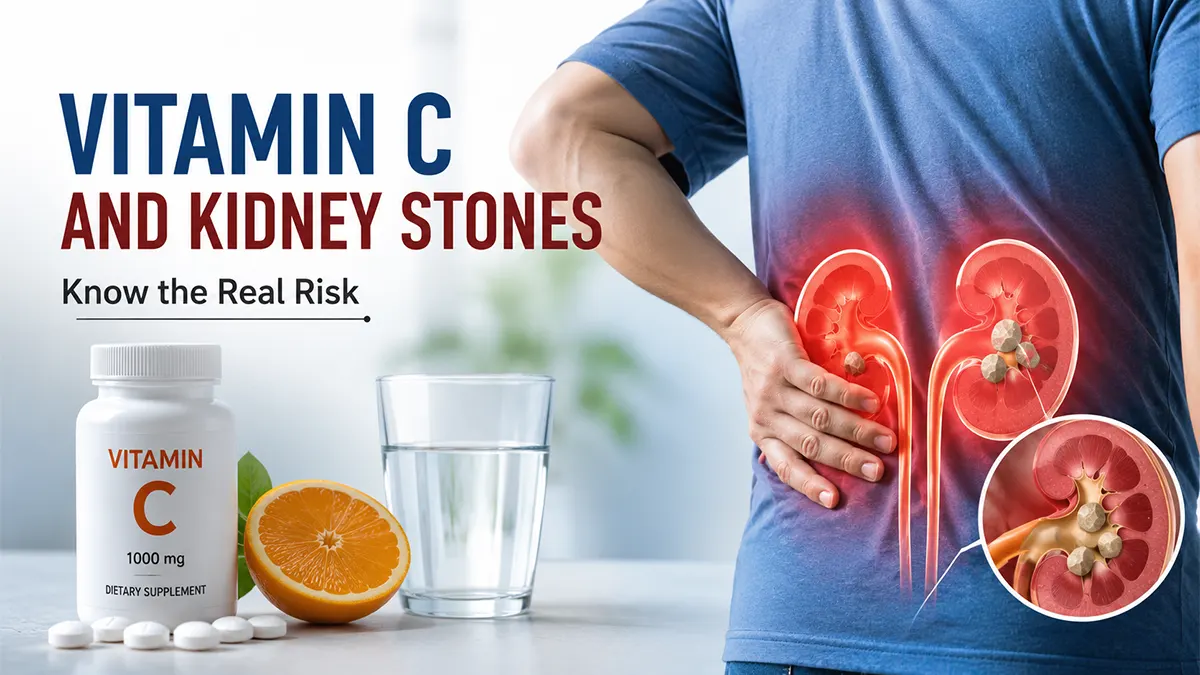
Vitamin C and kidney stones are increasingly being discussed because high-dose vitamin C supplements may increase the risk of calcium oxalate kidney stones in some people. While vitamin C from fruits and vegetables is generally considered safe, taking large supplemental doses every day can increase urinary oxalate levels in susceptible individuals. If you regularly take vitamin C for immunity or overall health, it’s important to understand who is at risk, how much is too much, and what current medical research says.
Vitamin C is one of the world’s most popular supplements. Many people take it every day to support immunity, improve skin health, or recover from illness. But there’s a growing question doctors hear in clinic:
“Does vitamin C cause kidney stones?”
The answer isn’t as simple as yes or no.
For most healthy people, getting vitamin C from fruits and vegetables is considered safe. However, high-dose vitamin C supplements can increase the amount of oxalate in the urine—a key ingredient in the most common type of kidney stone.
If you regularly take 1,000 mg, 2,000 mg, or more of vitamin C daily, this guide explains what current evidence says, who should be cautious, and how to reduce your kidney stone risk.
Table of Contents
What Is the Link Between Vitamin C and Kidney Stones?
Vitamin C (ascorbic acid) is a water-soluble vitamin that supports collagen production, immune function, wound healing, and antioxidant defense.
However, after the body uses what it needs, part of the remaining vitamin C is naturally broken down into oxalate.
Oxalate combines with calcium in urine to form calcium oxalate stones, the most common kidney stone type.
5 Silent Warning Signs a Kidney Stone is Forming (Don’t Ignore #3)
How Does Vitamin C Turn Into Oxalate?
Body Process
Vitamin C Supplement
↓
Absorption
↓
Metabolism
↓
Some Vitamin C converts into Oxalate
↓
Oxalate enters urine
↓
Higher urinary oxalate
↓
Increased calcium oxalate stone risk
This conversion explains why high-dose vitamin C kidney stones have been studied extensively.
Is Gatorade Good for Kidney Stones? Complete Medical Guide
Does Vitamin C Cause Kidney Stones?
The answer depends on:
✅ Dose
✅ Personal risk factors
✅ Hydration
✅ Previous stone history
Current Evidence
Research shows:
• Normal dietary vitamin C has not consistently been linked to kidney stones.
• High-dose supplements (particularly above 1,000 mg/day) may increase urinary oxalate in susceptible individuals.
• People with previous calcium oxalate stones should discuss supplement use with their healthcare professional.
Why Do Kidney Stones Keep Coming Back? Causes, Prevention & Treatment
Who Is Most at Risk?
People with:
- Previous kidney stones
- Calcium oxalate stones
- Family history
- Chronic dehydration
- Obesity
- Diabetes
- High sodium intake
- Low urine citrate
- Bariatric surgery
- Chronic bowel disease
Are Walnuts High in Oxalates? A Kidney Stone Patient’s Guide
How Much Vitamin C Is Too Much?
| Daily Intake | Risk |
|---|---|
| 75–90 mg | Recommended dietary intake |
| 200 mg | Safe for most adults |
| 500 mg | Usually well tolerated |
| 1,000 mg | May increase urinary oxalate in some individuals |
| 2,000 mg | Tolerable Upper Intake Level for adults, but gastrointestinal side effects and higher oxalate exposure become more likely |
Dietary Vitamin C vs Supplements
| Food Sources | Supplements |
|---|---|
| Slower absorption | Rapid absorption |
| Balanced nutrition | Concentrated dose |
| Lower kidney stone concern | Higher doses may increase risk in susceptible individuals |
| Rich in fiber | No fiber |
Symptoms of Kidney Stones
- Severe side pain
- Blood in urine
- Frequent urination
- Burning urination
- Nausea
- Vomiting
- Cloudy urine
Kidney Stone Symptoms in Men – Early Warning Signs You Should Never Ignore
Kidney Stone Symptoms in Women – Early Warning Signs You Should Never Ignore
Diagnosis
Doctors may recommend:
- Urinalysis
- Blood tests
- Kidney ultrasound
- CT KUB
- Stone analysis
- 24-hour urine collection
Treatment
Depends on stone size.
Small stones
- Fluids
- Pain medicines
- Medical expulsive therapy (when appropriate)
Large stones
- ESWL
- Ureteroscopy
- Laser Lithotripsy
- PCNL
Latest Kidney Stone Treatment Options in 2026 (USA Guide)
Prevention Tips
✔ Stay hydrated
✔ Avoid unnecessary megadoses of vitamin C
✔ Eat balanced calcium
✔ Reduce sodium
✔ Limit sugary drinks
✔ Maintain healthy weight
✔ Discuss supplements with your doctor if you have a history of stones
Best Fruits for Kidney Stone Prevention (2026 Science-Backed Guide)
Myths vs Facts
| Myth | Fact |
|---|---|
| Vitamin C always causes kidney stones. | Most people can safely obtain vitamin C from foods. Higher-dose supplements may increase risk in susceptible individuals. |
| Fruits high in vitamin C should be avoided. | Most vitamin C-rich fruits are healthy and are not generally linked to increased kidney stone risk. |
| More vitamin C always means better immunity. | Once daily needs are met, extra vitamin C offers limited additional benefit for most people. |
| Liposomal vitamin C cannot cause kidney stones. | Evidence is limited. High doses of any vitamin C formulation may still contribute to increased urinary oxalate. |
| Stopping vitamin C instantly dissolves stones. | Existing kidney stones do not dissolve simply by stopping supplements. Appropriate medical evaluation and treatment are important. |
Real Patient Insights
At My Health Hospitals, urologists occasionally evaluate patients who have been taking high-dose vitamin C supplements for extended periods and later develop calcium oxalate kidney stones. While vitamin C is rarely the only contributing factor, it is often considered alongside hydration status, diet, metabolic conditions, and family history. A personalized assessment helps determine whether supplement use should be modified as part of an overall prevention plan.
When to See a Doctor
Seek medical care if you develop:
- Blood in urine
- Severe flank pain
- Fever
- Vomiting
- Difficulty urinating
- Recurrent kidney stones
FAQs
1. Does vitamin C cause kidney stones?
High-dose vitamin C supplements may increase the risk of calcium oxalate kidney stones in some people because excess vitamin C can be converted into oxalate. However, vitamin C obtained from fruits and vegetables is generally considered safe for most healthy individuals.
2. How much vitamin C is too much for kidney stone risk?
The recommended daily intake for most adults is 75–90 mg, while the tolerable upper intake level is 2,000 mg per day. Research suggests that taking 1,000 mg or more daily may increase urinary oxalate levels in susceptible individuals, particularly those with a history of kidney stones.
3. Can taking vitamin C every day cause kidney stones?
Taking vitamin C every day does not automatically cause kidney stones. The risk is mainly associated with long-term, high-dose vitamin C supplements, especially in people who have recurrent calcium oxalate kidney stones or other risk factors.
4. Is vitamin C from fruits safer than supplements?
Yes. Vitamin C from fruits and vegetables is absorbed naturally along with fiber and other nutrients and has not consistently been linked to kidney stone formation. High-dose supplements provide concentrated amounts that may increase urinary oxalate in some people.
5. Does Emergen-C or other vitamin C drinks increase kidney stone risk?
Vitamin C drinks such as Emergen-C contain varying amounts of vitamin C. Occasional use is unlikely to cause kidney stones in healthy individuals, but frequent use of high-dose products may contribute to urinary oxalate levels in susceptible people. Always follow the product label and consult your healthcare provider if you have a history of kidney stones.
6. What type of kidney stones are linked to vitamin C?
Vitamin C is primarily associated with calcium oxalate kidney stones, the most common type of kidney stone. Excess vitamin C may be metabolized into oxalate, which can combine with calcium in the urine to form crystals.
7. Can I take vitamin C if I’ve had kidney stones before?
If you’ve previously had calcium oxalate kidney stones, speak with your doctor before taking high-dose vitamin C supplements. Your healthcare provider may recommend limiting supplement doses, improving hydration, or performing a 24-hour urine test to assess your individual risk.
8. Does liposomal vitamin C reduce kidney stone risk?
There is currently limited scientific evidence showing that liposomal vitamin C eliminates the risk of kidney stones. Even though absorption differs, high doses of vitamin C may still increase urinary oxalate in some individuals.
9. How can I reduce my risk of kidney stones while taking vitamin C?
Drink plenty of water, avoid unnecessary high-dose vitamin C supplements, maintain a balanced diet with adequate calcium, reduce excess sodium intake, and follow your doctor’s recommendations. People with recurrent kidney stones should discuss supplement use with a healthcare professional.
10. When should I see a doctor about vitamin C and kidney stones?
Seek medical attention if you experience severe flank pain, blood in the urine, fever, chills, persistent vomiting, difficulty urinating, or recurrent kidney stones. Early evaluation by a urologist can help identify the cause and determine the most appropriate treatment.
Key Takeaways
- High-dose vitamin C supplements may increase urinary oxalate in some people.
- Most healthy individuals can safely consume vitamin C from foods.
- People with a history of calcium oxalate kidney stones should discuss supplement doses with their healthcare provider.
- Staying hydrated, limiting unnecessary megadoses, and following a balanced diet can help reduce stone risk.
- Persistent urinary symptoms or severe flank pain require prompt medical evaluation.
Conclusion
The relationship between vitamin C and kidney stones is influenced by dose, individual risk factors, and overall health. For most people, vitamin C obtained from fruits and vegetables is safe and beneficial. However, long-term use of high-dose vitamin C supplements, particularly above 1,000 mg per day, may increase urinary oxalate and the risk of calcium oxalate stones in susceptible individuals. If you have a history of kidney stones or chronic kidney disease, speak with your healthcare provider before taking high-dose vitamin C supplements. A personalized approach to supplementation, hydration, and diet is the best way to support both immune function and kidney health.
Medical Expert Review
Dr. Jayanth Reddy
Consultant Urologist | My Health Hospitals, Hyderabad
This content has undergone medical review to ensure it reflects current clinical evidence, accepted urological practices, and patient-centered healthcare guidance.
Author
Yamanandan Reddy
Health Content Writer & Frontend Developer
Yamanandan Reddy is a health content writer and frontend developer with over 4 years of experience in website design and digital content creation. He writes research-based health articles to help readers understand symptoms, causes, treatments, and prevention methods related to common health conditions.
His articles are written using information from trusted medical sources such as the World Health Organization (WHO), Mayo Clinic, and the Centers for Disease Control and Prevention (CDC).
Sources
The information in this article is researched and verified using trusted medical resources, including:
• World Health Organization (WHO)
• Mayo Clinic
• National Institutes of Health (NIH)
• Centers for Disease Control and Prevention
⚠️ Medical Disclaimer
This content is for informational purposes only and does not replace professional medical advice. Always consult a qualified healthcare provider for diagnosis and treatment.