
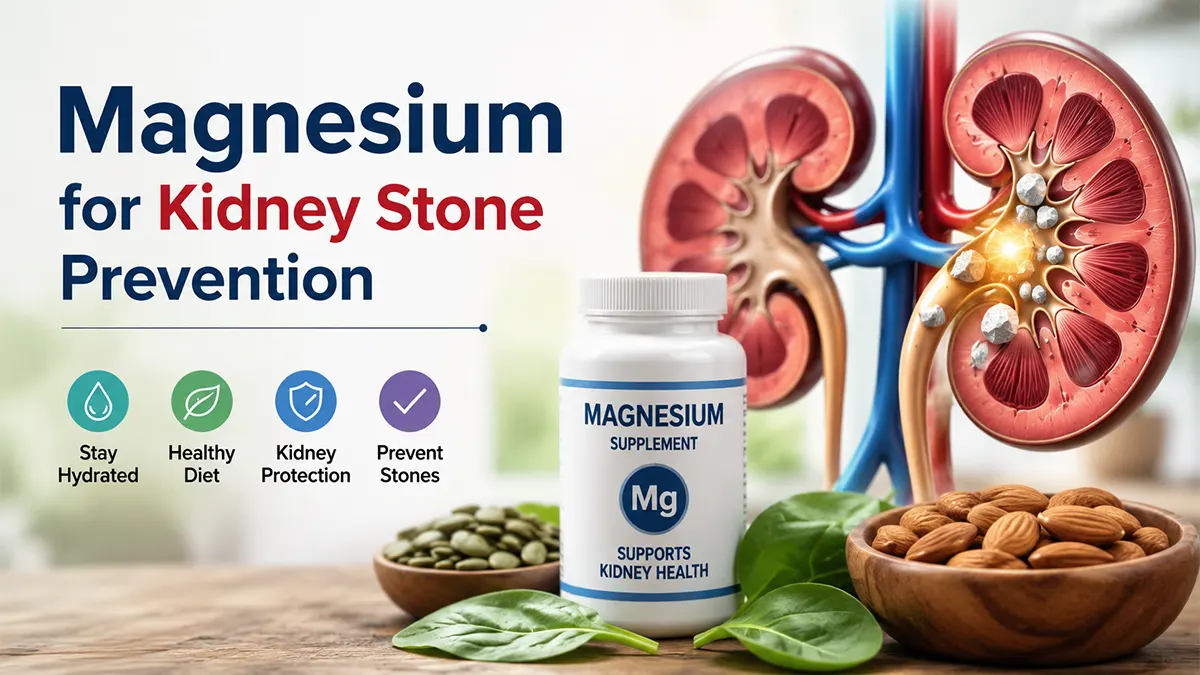
Kidney stones affect millions of people worldwide, and unfortunately, they often recur. Nearly half of people who develop one kidney stone may experience another within several years if preventive measures are not taken. Among the many dietary and medical strategies available, magnesium for kidney stone prevention has gained increasing attention because of its role in reducing calcium oxalate crystal formation.
Magnesium is an essential mineral involved in more than 300 enzymatic reactions in the body. It supports muscle and nerve function, heart health, bone metabolism, and importantly, urinary health. Researchers have found that magnesium may lower the likelihood of calcium oxalate stones by binding to oxalate before crystals develop.
Many patients ask:
- Does magnesium prevent kidney stones?
- What is the best magnesium for kidney stones?
- Can magnesium citrate dissolve kidney stones?
- How much magnesium should I take?
- Is magnesium deficiency linked to kidney stones?
This comprehensive guide explains the latest medical evidence, different magnesium supplements, appropriate dosage, safety considerations, and lifestyle strategies that can help reduce the risk of kidney stone recurrence.
Table of Contents
What Is Magnesium?
Magnesium is a naturally occurring mineral found in foods such as leafy green vegetables, nuts, seeds, beans, and whole grains. Approximately 50–60% of the body’s magnesium is stored in bones, while the remainder supports muscles, nerves, and internal organs.
For kidney stone prevention, magnesium plays several important roles:
- Reduces oxalate absorption
- Helps prevent calcium oxalate crystal formation
- Supports healthy urine chemistry
- May improve urinary citrate levels in some individuals
- Promotes normal kidney function
Because calcium oxalate stones account for nearly 80% of kidney stones, maintaining adequate magnesium intake may be beneficial for people at risk.
Is Black Coffee Bad for Kidney Stones? Everything You Need to Know
What Are Kidney Stones?
Kidney stones are hard mineral deposits that form inside the kidneys when minerals become highly concentrated in urine and crystallize.
Common Types of Kidney Stones
| Stone Type | Percentage | Main Cause |
|---|---|---|
| Calcium Oxalate | 70–80% | High oxalate, low urine volume, excess calcium in urine |
| Calcium Phosphate | 10–15% | Alkaline urine, metabolic disorders |
| Uric Acid | 5–10% | High uric acid, acidic urine |
| Struvite | 5–10% | Urinary tract infections |
| Cystine | Rare | Genetic disorder |
Among these, magnesium and calcium oxalate stones have the strongest scientific relationship, making magnesium an area of active research in kidney stone prevention.
Can I Eat Dark Chocolate With Kidney Stones? Everything You Need to Know
How Does Magnesium for Kidney Stone Prevention Work?
Magnesium helps reduce kidney stone formation through several biological mechanisms.
1. Magnesium Binds with Oxalate
One of magnesium’s most important functions is binding to oxalate in the digestive tract.
When magnesium combines with oxalate, less free oxalate is absorbed into the bloodstream. As a result, less oxalate reaches the urine, reducing the chance of calcium oxalate crystal formation.
This mechanism explains why researchers continue studying does magnesium bind to oxalate and how does magnesium prevent kidney stones.
2. Reduces Calcium Oxalate Crystal Formation
Inside urine, calcium and oxalate can combine to form microscopic crystals.
Magnesium competes with calcium for oxalate binding, helping reduce crystal growth and aggregation.
This may lower the likelihood of stones enlarging over time.
3. Acts as a Natural Crystal Inhibitor
Healthy urine naturally contains substances that slow stone formation.
Magnesium is considered one of these natural inhibitors because it helps prevent crystals from sticking together.
Other natural inhibitors include:
- Citrate
- Adequate hydration
- Normal urinary pH
- Certain urinary proteins
4. Supports Healthy Urinary Chemistry
Low urinary magnesium has been associated with an increased risk of recurrent kidney stones in some individuals.
Maintaining adequate magnesium levels may contribute to a healthier balance of minerals in urine, reducing conditions that favor crystal formation.
5. May Complement Citrate Therapy
Patients with recurrent calcium oxalate stones are sometimes prescribed potassium citrate.
Magnesium—particularly magnesium citrate—may complement other preventive measures when recommended by a healthcare professional.
However, magnesium should not replace prescribed medical treatments.
Why Magnesium Deficiency May Increase Kidney Stone Risk
A magnesium deficiency may contribute to kidney stone formation by disrupting the balance of minerals involved in crystal development.
Possible effects include:
- Increased oxalate absorption
- Reduced inhibition of calcium oxalate crystals
- Higher urinary calcium concentration in some people
- Greater likelihood of recurrent stone formation
Magnesium deficiency may occur due to:
- Poor dietary intake
- Chronic diarrhea
- Gastrointestinal disorders (such as Crohn’s disease or celiac disease)
- Long-term use of certain medications (e.g., some diuretics or proton pump inhibitors)
- Alcohol misuse
- Poorly controlled diabetes
If a deficiency is suspected, your healthcare provider may recommend blood tests or a more detailed metabolic evaluation.
Does Cranberry Juice Cause Kidney Stones? Everything You Need to Know
Symptoms of Kidney Stones
Symptoms depend on the stone’s size and location. Small stones may pass unnoticed, while larger stones can block urine flow and cause severe pain.
Common symptoms include:
- Sudden severe pain in the side or back
- Pain radiating toward the groin
- Blood in the urine (hematuria)
- Burning during urination
- Frequent urge to urinate
- Nausea and vomiting
- Cloudy or foul-smelling urine
- Fever and chills if an infection is present
Seek urgent medical attention if severe pain is accompanied by fever, chills, or difficulty passing urine.
Is Almond Milk Bad for Kidney Stones? A Complete Medical Guide (2026)
Risk Factors for Kidney Stones
Several factors increase the likelihood of developing kidney stones, regardless of magnesium intake.
Lifestyle Factors
- Low water intake
- High sodium diet
- Excess animal protein consumption
- High-oxalate diet
- Obesity
- Sedentary lifestyle
Medical Conditions
- Recurrent urinary tract infections
- Hyperparathyroidism
- Gout
- Diabetes
- Chronic kidney disease
- Inflammatory bowel disease
- Bariatric surgery history
Family and Personal History
People are more likely to develop kidney stones if they have:
- A previous kidney stone
- A family history of kidney stones
- Recurrent dehydration
- Metabolic disorders affecting calcium or oxalate metabolism
Conditions Where Magnesium May Be Helpful
Magnesium may be considered as part of a prevention strategy in selected patients, particularly those with:
- Recurrent calcium oxalate kidney stones
- Low urinary magnesium (hypomagnesuria)
- Low dietary magnesium intake
- High urinary oxalate levels (hyperoxaluria)
- Certain metabolic risk factors identified during a 24-hour urine evaluation
The decision to use magnesium supplements should be individualized and based on a healthcare provider’s assessment.
Comparison Table: Types of Magnesium for Kidney Stone Prevention
| Magnesium Type | Best For | Evidence for Kidney Stone Prevention | Common Side Effects |
|---|---|---|---|
| Magnesium Citrate | Calcium oxalate stone prevention | Strongest evidence among magnesium forms; may help reduce calcium oxalate crystallization | Diarrhea, loose stools |
| Magnesium Glycinate | People needing magnesium with better gastrointestinal tolerance | Limited direct evidence for stone prevention; useful for correcting magnesium deficiency | Mild stomach upset (less common) |
| Magnesium Oxide | General magnesium supplementation | Lower absorption; limited evidence specifically for kidney stone prevention | Constipation or gastrointestinal discomfort |
| Magnesium Malate | Muscle health and correcting deficiency | Limited research for kidney stones | Mild digestive symptoms |
Clinical Note: Among available supplements, magnesium citrate is the form most commonly studied for magnesium for kidney stone prevention, especially in individuals with recurrent calcium oxalate stones. However, supplement selection should consider overall health, kidney function, and individual tolerance.
Key Points So Far
- Magnesium may help reduce the risk of calcium oxalate kidney stones, but it does not dissolve established stones or guarantee prevention.
- Its main benefit comes from binding to oxalate and reducing crystal formation.
- Maintaining adequate magnesium intake through diet—and supplements when medically indicated—may be part of a comprehensive stone prevention plan.
- Hydration, dietary changes, and evaluation by a healthcare professional remain essential components of kidney stone prevention.
Diagnosis of Kidney Stones
Diagnosing kidney stones involves confirming the presence of a stone, determining its size and location, and identifying why it formed. For patients with recurrent stones, doctors also investigate metabolic factors such as low urinary magnesium, high urinary calcium, or excess oxalate.
Medical History
Your healthcare provider may ask about:
- Previous kidney stones
- Family history of kidney stones
- Daily water intake
- Dietary habits
- Current medications and supplements
- Medical conditions such as gout, diabetes, or bowel disease
Physical Examination
A physical examination may include checking for:
- Tenderness over the kidneys (flank tenderness)
- Fever indicating infection
- Signs of dehydration
- Blood pressure and general health assessment
Laboratory Tests
Common laboratory investigations include:
| Test | Purpose |
|---|---|
| Urinalysis | Detects blood, infection, crystals, and urine pH |
| Urine Culture | Identifies bacterial infection |
| Blood Tests | Measures kidney function, calcium, uric acid, magnesium, and electrolytes |
| 24-Hour Urine Test | Measures calcium, oxalate, citrate, sodium, uric acid, magnesium, and urine volume |
A 24-hour urine analysis is particularly valuable for patients with recurrent kidney stones because it helps personalize prevention strategies.
Imaging Tests
Doctors may recommend:
- Non-contrast CT scan (gold standard)
- Kidney ultrasound
- KUB X-ray (Kidney-Ureter-Bladder)
- Low-dose CT for follow-up when appropriate
Treatment Options
Treatment depends on:
- Stone size
- Stone location
- Symptoms
- Infection
- Kidney function
Small Stones (Usually Under 5 mm)
Most small stones pass naturally with conservative management.
Treatment may include:
- Drinking enough water
- Pain relief medication
- Alpha-blockers (such as tamsulosin) when appropriate
- Monitoring with follow-up imaging
Larger Stones
Larger stones may require intervention.
Common treatments include:
- Shock Wave Lithotripsy (SWL)
- Ureteroscopy (URS)
- Percutaneous Nephrolithotomy (PCNL)
- Rarely, laparoscopic or open surgery
Does Magnesium Treat Existing Kidney Stones?
This is one of the most searched questions online.
Quick Answer
No. Magnesium does not dissolve or remove existing kidney stones.
Current medical evidence suggests magnesium may help prevent future calcium oxalate stones, but it should not be considered a treatment for stones that are already causing symptoms or obstruction.
If a stone causes:
- Severe pain
- Fever
- Persistent vomiting
- Blocked urine flow
Immediate medical care is necessary.
Best Magnesium for Kidney Stones
Many magnesium supplements are available, but they are not all equally absorbed or studied.
Magnesium Citrate
Best Overall Choice
Magnesium citrate is the most commonly recommended form for individuals at risk of calcium oxalate kidney stones.
Potential benefits include:
- Better absorption than magnesium oxide
- May reduce oxalate availability
- May increase urinary citrate in some individuals
- Helps correct magnesium deficiency
Best suited for:
- Recurrent calcium oxalate stones
- Mild constipation
- Patients with documented low magnesium intake
Possible side effects:
- Loose stools
- Diarrhea
- Abdominal cramping
Magnesium Glycinate
Magnesium glycinate is highly bioavailable and generally well tolerated.
Benefits:
- Gentle on the stomach
- Less likely to cause diarrhea
- Good option for long-term magnesium replacement
Limitations:
Research specifically supporting magnesium glycinate for kidney stones is limited compared with magnesium citrate.
Magnesium Oxide
Magnesium oxide contains a high amount of elemental magnesium but is absorbed less efficiently.
Pros:
- Widely available
- Lower cost
Cons:
- Lower absorption
- Limited evidence for kidney stone prevention
- More gastrointestinal side effects in some people
Magnesium Malate
Magnesium malate is commonly used for muscle health and correcting deficiency.
Current evidence supporting its role in kidney stone prevention is limited.
Magnesium Oxide vs Citrate for Kidney Stones
| Feature | Magnesium Citrate | Magnesium Oxide |
|---|---|---|
| Absorption | High | Lower |
| Kidney Stone Research | Better studied | Limited |
| Oxalate Binding | Better supported | Less evidence |
| Digestive Tolerance | May cause diarrhea | Can cause stomach upset |
| Overall Choice | Preferred in many stone-formers | Usually not first choice |
For most patients requiring supplementation, healthcare professionals often favor magnesium citrate because of its better absorption and stronger evidence in calcium oxalate stone prevention.
Magnesium and Vitamin B6 for Kidney Stones
Vitamin B6 (pyridoxine) plays an important role in oxalate metabolism.
Some earlier studies suggested that combining:
- Magnesium
- Vitamin B6
may reduce urinary oxalate in certain patients.
Potential advantages include:
- Reduced oxalate production
- Improved magnesium utilization
- Lower risk of recurrent calcium oxalate stones in selected individuals
However, more high-quality clinical research is needed, and this combination should only be used under medical guidance.
How Much Magnesium for Kidney Stones?
One of the most common questions patients ask is:
“How much magnesium should I take to prevent kidney stones?”
The answer depends on:
- Age
- Sex
- Kidney function
- Dietary intake
- 24-hour urine results
- Other medical conditions
Recommended Dietary Allowance (RDA)
| Group | Daily Requirement |
|---|---|
| Adult Men | 400–420 mg/day |
| Adult Women | 310–320 mg/day |
| Pregnancy | 350–360 mg/day |
| Breastfeeding | 310–320 mg/day |
Most people should aim to meet these needs primarily through food. If supplements are considered, the dosage and formulation should be individualized by a healthcare professional.
Supplement Dosage
Clinical studies have used varying magnesium doses, so there is no universal supplement dose recommended solely for kidney stone prevention.
Supplementation should only be started after medical evaluation, especially in people with:
- Chronic kidney disease
- Reduced kidney function
- Heart disease
- Certain gastrointestinal disorders
Can Too Much Magnesium Cause Problems?
Yes.
Although magnesium from food is generally safe, excessive supplemental magnesium may cause:
- Diarrhea
- Nausea
- Abdominal cramps
- Low blood pressure
- Muscle weakness
- Irregular heartbeat (rare)
- Magnesium toxicity in advanced kidney disease
Patients with impaired kidney function should never self-medicate with high-dose magnesium supplements without medical supervision.
Is Gatorade Good for Kidney Stones? Complete Medical Guide
Magnesium-Rich Foods for Kidney Stone Prevention
Dietary magnesium is the safest way for most healthy adults to support adequate intake.
Best Magnesium-Rich Foods
| Food | Approximate Magnesium (mg per serving) |
|---|---|
| Pumpkin seeds | 150–170 mg |
| Almonds | 75–80 mg |
| Cashews | 70–75 mg |
| Spinach (cooked) | 75–80 mg |
| Black beans | 60–65 mg |
| Edamame | 90–100 mg |
| Brown rice | 80–85 mg |
| Oatmeal | 55–60 mg |
| Avocado | 40–45 mg |
| Banana | 30–35 mg |
Note: Some magnesium-rich foods (such as spinach) are also high in oxalate. If you have recurrent calcium oxalate stones, consult a dietitian or urologist before making major dietary changes.
Foods That Help Reduce Kidney Stone Risk
A balanced diet can work alongside magnesium to lower stone risk.
Include More Of:
- Citrus fruits (natural citrate)
- Adequate low-fat dairy (unless advised otherwise)
- Fresh fruits
- Vegetables
- Whole grains
- Water throughout the day
Limit:
- Excess salt
- Sugary soft drinks
- Processed foods
- Excess animal protein
- Very high-oxalate foods if recommended by your healthcare provider
Prevention Tips
Preventing kidney stones requires more than taking a supplement.
1. Stay Well Hydrated
Drink enough fluids to produce at least 2–2.5 liters of urine per day, unless your healthcare provider advises otherwise.
2. Eat Enough Dietary Calcium
Adequate dietary calcium helps bind oxalate in the intestine, reducing its absorption. Avoid restricting calcium without medical advice.
3. Reduce Sodium Intake
High sodium intake increases urinary calcium, raising the risk of stone formation.
Aim for less than 2,300 mg of sodium daily, or lower if recommended.
4. Moderate Animal Protein
Large amounts of red meat, organ meat, and some seafood can increase stone-forming substances in urine.
5. Maintain a Healthy Weight
Obesity and metabolic syndrome are associated with a higher risk of kidney stones.
6. Manage Underlying Medical Conditions
Proper control of diabetes, gout, inflammatory bowel disease, and hyperparathyroidism can help reduce recurrence.
7. Take Supplements Only When Needed
Do not assume all supplements are beneficial. Magnesium, calcium, vitamin D, and vitamin C should be used only according to medical advice, particularly if you have a history of kidney stones.
Real Patient Insights from My Health Hospitals
At My Health Hospitals, our urologists and nephrologists frequently counsel patients who have experienced recurrent calcium oxalate kidney stones. One common observation is that many individuals focus on supplements alone while overlooking essential lifestyle measures.
Patients who consistently follow a comprehensive prevention plan—including adequate hydration, dietary adjustments, metabolic evaluation, and appropriate treatment of underlying conditions—often report fewer recurrences and improved quality of life. For selected patients with low dietary magnesium or documented metabolic abnormalities, magnesium supplementation may be recommended as part of an individualized prevention strategy after careful clinical assessment.
When to See a Doctor
Seek medical evaluation if you experience:
- Severe or persistent pain in the back, side, or groin
- Blood in the urine
- Fever or chills with urinary symptoms
- Difficulty passing urine or inability to urinate
- Recurrent kidney stones
- A single functioning kidney with stone symptoms
- Persistent nausea or vomiting
- Suspected magnesium deficiency or concerns about taking supplements
5 Silent Warning Signs a Kidney Stone is Forming (Don’t Ignore #3)
Frequently Asked Questions (FAQs)
1. Does magnesium prevent kidney stones?
Yes, magnesium for kidney stone prevention may help lower the risk of developing calcium oxalate kidney stones, the most common type of kidney stone. Magnesium binds with oxalate in the digestive tract and urine, reducing calcium oxalate crystal formation. However, magnesium alone does not guarantee prevention and should be combined with adequate hydration, dietary changes, and medical guidance.
2. What is the best magnesium for kidney stones?
Among commonly available supplements, magnesium citrate has the strongest evidence for kidney stone prevention because it is well absorbed and may help reduce calcium oxalate crystal formation. Other forms, such as magnesium glycinate, may be better tolerated by some people but have less research specifically related to kidney stones.
3. Can magnesium citrate dissolve existing kidney stones?
No. Current evidence does not show that magnesium citrate can dissolve existing kidney stones. Magnesium citrate may help reduce the risk of forming new calcium oxalate stones, but stones already present may require hydration, medications, or procedures such as ureteroscopy or shock wave lithotripsy depending on their size and location.
4. How much magnesium should I take for kidney stone prevention?
There is no single magnesium dose recommended solely for kidney stone prevention. Most adults should aim to meet the Recommended Dietary Allowance (RDA) through food. If supplements are considered, the dosage should be based on your age, kidney function, diet, and 24-hour urine test results, under the guidance of a healthcare professional.
5. Does magnesium bind to oxalate?
Yes. Magnesium can bind to oxalate in the digestive tract, reducing the amount of oxalate absorbed into the bloodstream. Less oxalate reaches the urine, which may decrease the formation of calcium oxalate crystals. This is one reason magnesium is considered a supportive nutrient in kidney stone prevention.
6. Can too much magnesium cause kidney problems?
Magnesium obtained from food is generally safe for healthy individuals. However, excessive magnesium supplements may cause diarrhea, nausea, abdominal cramps, low blood pressure, and, in severe cases, magnesium toxicity—particularly in people with chronic kidney disease. Always consult a healthcare provider before taking high-dose supplements.
7. Is magnesium deficiency linked to kidney stones?
A magnesium deficiency may contribute to a higher risk of calcium oxalate kidney stones because lower magnesium levels reduce the body’s natural ability to inhibit crystal formation. While deficiency is not the only cause of kidney stones, correcting low magnesium intake may be part of a broader prevention strategy.
8. Does magnesium and vitamin B6 work better for kidney stones?
Some studies suggest that combining magnesium with vitamin B6 (pyridoxine) may help reduce urinary oxalate in selected individuals. However, evidence remains mixed, and this combination is not routinely recommended for everyone. Treatment should be individualized based on a healthcare provider’s evaluation.
9. What foods are naturally high in magnesium?
Excellent dietary sources of magnesium include pumpkin seeds, almonds, cashews, black beans, edamame, oatmeal, brown rice, avocados, bananas, and leafy green vegetables. People with calcium oxalate stones should discuss high-oxalate foods such as spinach with their healthcare provider or a registered dietitian.
10. Can magnesium stop kidney stones from coming back?
Magnesium may help reduce the recurrence of calcium oxalate kidney stones in some people, particularly those with low dietary magnesium or low urinary magnesium. However, the best prevention strategy combines adequate fluid intake, a balanced diet, sodium reduction, appropriate calcium intake, and treatment of any underlying medical conditions.
Taking Vitamin C Every Day? You Might Be Growing a Kidney Stone
Key Takeaways
✅ Magnesium for kidney stone prevention may help reduce the risk of calcium oxalate kidney stones by binding with oxalate and reducing crystal formation.
✅ Magnesium citrate is the most studied form for kidney stone prevention.
✅ Magnesium does not dissolve existing kidney stones.
✅ Dietary magnesium is preferred for most people, while supplements should be used only under medical supervision.
✅ Drinking enough water remains the most effective lifestyle measure to reduce kidney stone recurrence.
✅ Limiting sodium, maintaining a healthy weight, and following a balanced diet further support kidney health.
✅ Patients with recurrent kidney stones should undergo a metabolic evaluation, including a 24-hour urine test when appropriate.
Conclusion
Magnesium for kidney stone prevention is a promising part of a comprehensive strategy to reduce the risk of recurrent calcium oxalate kidney stones. Research suggests that magnesium may help by binding to oxalate, limiting crystal formation, and supporting healthier urinary chemistry. However, magnesium is not a cure, and it should not replace proven preventive measures such as adequate hydration, appropriate dietary calcium intake, reduced sodium consumption, and personalized medical care.
If you have experienced recurrent kidney stones, persistent urinary symptoms, or are considering a magnesium supplement for kidney stones, consult a qualified urologist or nephrologist. A personalized assessment can identify the underlying cause and help develop an evidence-based prevention plan tailored to your needs.
Medical Expert Review
Dr. Jayanth Reddy
Consultant Urologist | My Health Hospitals, Hyderabad
This content has undergone medical review to ensure it reflects current clinical evidence, accepted urological practices, and patient-centered healthcare guidance.
Author
Yamanandan Reddy
Health Content Writer & Frontend Developer
Yamanandan Reddy is a health content writer and frontend developer with over 4 years of experience in website design and digital content creation. He writes research-based health articles to help readers understand symptoms, causes, treatments, and prevention methods related to common health conditions.
His articles are written using information from trusted medical sources such as the World Health Organization (WHO), Mayo Clinic, and the Centers for Disease Control and Prevention (CDC).
Sources
The information in this article is researched and verified using trusted medical resources, including:
• World Health Organization (WHO)
• Mayo Clinic
• National Institutes of Health (NIH)
• Centers for Disease Control and Prevention
⚠️ Medical Disclaimer
This content is for informational purposes only and does not replace professional medical advice. Always consult a qualified healthcare provider for diagnosis and treatment.
1 thought on “Magnesium for Kidney Stone Prevention: Does Magnesium Really Help? (2026 Guide)”