
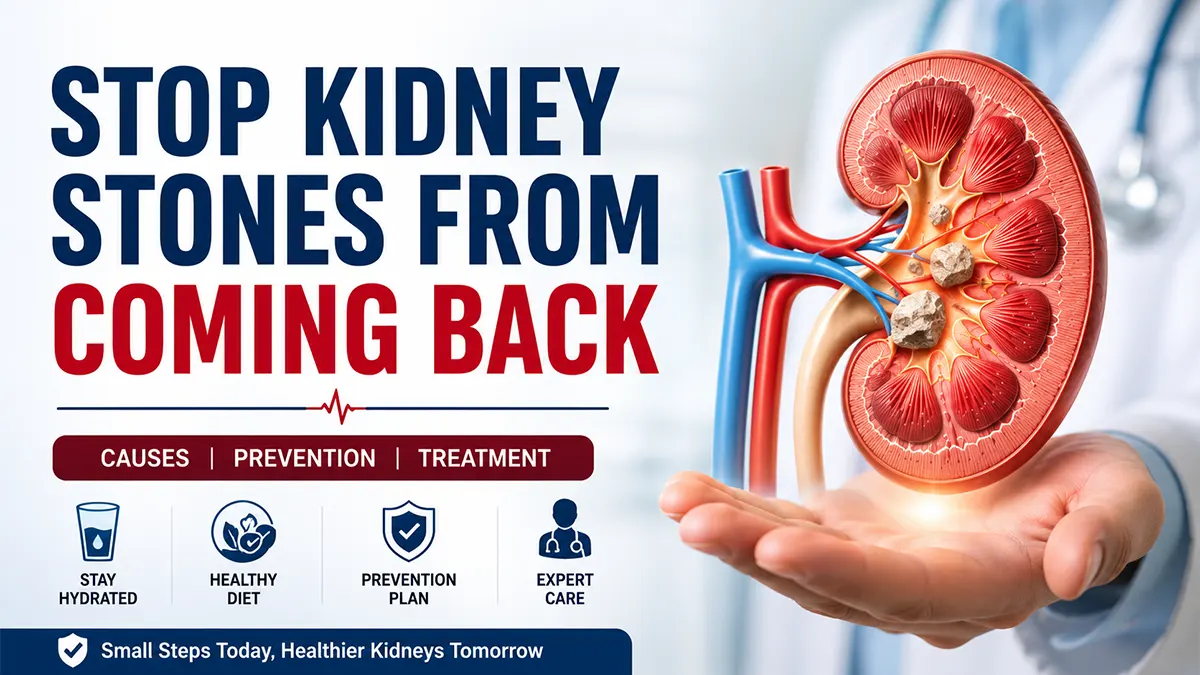
Why do kidney stones keep coming back? Recurrent kidney stones are one of the most common concerns among patients who have already experienced the severe pain of passing a stone. Simply removing a kidney stone does not eliminate the underlying condition that caused it. In many cases, persistent dehydration, dietary habits, inherited metabolic disorders, or untreated medical conditions continue to promote crystal formation inside the kidneys. Understanding the causes of recurrent kidney stones is the first step toward preventing future episodes and protecting long-term kidney health.
Table of Contents
What Are Recurrent Kidney Stones?
Recurrent kidney stones refer to two or more episodes of kidney stones occurring over time.
Most recurrent stones are:
- Calcium oxalate stones
- Uric acid stones
- Calcium phosphate stones
- Struvite stones
- Cystine stones
Finding out which type of stone you produce is essential because prevention strategies differ for each type.
Are Walnuts High in Oxalates? A Kidney Stone Patient’s Guide
Why Do Kidney Stones Keep Coming Back?
Kidney stones usually recur because the conditions that caused the first stone remain unchanged.
The most common causes include:
- Chronic dehydration
- High sodium intake
- High-oxalate diet
- Low dietary calcium
- Obesity
- Type 2 diabetes
- Family history
- Metabolic abnormalities
- Certain medications
- Incomplete medical evaluation
Most recurrent kidney stones can be prevented once the underlying cause is identified.
Is Peanut Butter Bad for Kidney Stones? Everything You Need to Know
9 Proven Causes of Recurrent Kidney Stones
1. Chronic Dehydration
Not drinking enough water causes urine to become concentrated, allowing minerals to crystallize.
Signs include:
- Dark urine
- Infrequent urination
- Strong-smelling urine
Adequate hydration is the single most effective prevention strategy.
Can Energy Drinks Cause Kidney Stones? Everything You Need to Know
2. High Sodium Diet
Too much salt increases calcium excretion into the urine.
Common sources include:
- Packaged foods
- Restaurant meals
- Processed meats
- Chips
- Instant noodles
Reducing sodium lowers calcium stone risk.
3. Excess Dietary Oxalates
Eating large amounts of:
- Spinach
- Almonds
- Beets
- Rhubarb
- Dark chocolate
may increase calcium oxalate stone formation in susceptible individuals.
4. Low Dietary Calcium
Many people mistakenly avoid calcium after developing kidney stones.
In reality, adequate dietary calcium helps bind oxalates in the intestine, reducing oxalate absorption.
5. Hypercalciuria
Hypercalciuria means too much calcium is excreted into the urine, even when blood calcium levels are normal.
It is one of the most common metabolic causes of recurrent calcium oxalate stones.
6. Obesity and Diabetes
People with obesity or Type 2 diabetes have an increased risk of:
- Calcium oxalate stones
- Uric acid stones
Healthy weight management helps reduce recurrence.
7. Genetics
Some families naturally produce kidney stones more frequently.
Inherited disorders include:
- Cystinuria
- Primary hyperoxaluria
- Renal tubular disorders
These require specialist evaluation.
Is Green Tea Good for Kidney Stones? Everything You Need to Know
8. Certain Medications
Some medications increase kidney stone risk, including:
- High-dose vitamin C supplements
- Certain diuretics
- Topiramate
- Protease inhibitors
- Calcium supplements (when not medically supervised)
Never stop prescribed medications without consulting your healthcare provider.
9. Incomplete Evaluation
Many patients never undergo:
- Stone analysis
- 24-hour urine testing
- Metabolic evaluation
Without identifying the underlying cause, stones often return.
Is Black Coffee Bad for Kidney Stones? Everything You Need to Know
Symptoms of Recurrent Kidney Stones
Symptoms are similar to the first episode and may include:
- Severe flank pain
- Pain radiating to the groin
- Blood in the urine
- Burning while urinating
- Frequent urination
- Nausea and vomiting
- Fever if infection develops
Kidney Stone Symptoms in Men and Women – Early Warning Signs
Risk Factors
You are more likely to develop recurrent kidney stones if you have:
- Previous kidney stones
- Family history
- Poor hydration
- High sodium diet
- High animal protein intake
- High oxalate intake
- Obesity
- Diabetes
- Digestive disorders
- Metabolic abnormalities
Diagnosis
A thorough evaluation helps identify why stones continue to recur.
Medical History
Your healthcare provider reviews:
- Previous stone episodes
- Diet
- Fluid intake
- Medications
- Family history
Blood Tests
These evaluate:
- Kidney function
- Calcium
- Uric acid
- Electrolytes
- Parathyroid hormone (when indicated)
Urine Testing
A 24-hour urine collection measures:
- Calcium
- Oxalate
- Citrate
- Sodium
- Uric acid
- Urine volume
- Urine pH
This test is one of the most valuable tools for preventing recurrent kidney stones.
Imaging
Doctors may recommend:
- CT scan
- Kidney ultrasound
- KUB X-ray
Stone Analysis
If you pass a stone, laboratory analysis identifies whether it is:
- Calcium oxalate
- Calcium phosphate
- Uric acid
- Struvite
- Cystine
The results guide long-term prevention.
Treatment Options
Treatment depends on:
- Stone size
- Stone location
- Symptoms
- Stone type
- Underlying metabolic abnormalities
Conservative Treatment
Small stones often pass with:
- Increased fluid intake
- Pain medications
- Alpha-blockers (when prescribed)
- Activity
- Follow-up imaging
Surgical Treatment
If necessary, treatment may include:
- ESWL
- Ureteroscopy (URS)
- Retrograde Intrarenal Surgery (RIRS)
- Percutaneous Nephrolithotomy (PCNL)
Medical Prevention
Depending on your stone type, your healthcare provider may recommend:
- Potassium citrate
- Thiazide diuretics
- Allopurinol
- Dietary modifications
- Regular follow-up
- Personalized hydration goals
Kidney Stone Recurrence Rate
Kidney stones are known for their high recurrence rate. Without proper prevention, many people experience another stone within a few years.
| After First Kidney Stone | Estimated Risk of Another Stone |
|---|---|
| Within 5 years | Up to 50% |
| Within 10 years | Up to 80% in high-risk individuals |
| With a prevention plan | Risk can be significantly reduced |
Key Takeaway: Identifying the underlying cause and following a personalized prevention plan greatly lowers the chance of future kidney stones.
Why Calcium Oxalate Stones Keep Coming Back
Approximately 70–80% of kidney stones are calcium oxalate stones.
They often recur because of:
- Chronic dehydration
- High sodium intake
- Excess dietary oxalates
- Low urinary citrate
- Hypercalciuria (high urinary calcium)
- Obesity
- Type 2 diabetes
- Poor long-term follow-up
Simply removing a stone does not prevent another one from forming if these risk factors continue.
What Is a 24-Hour Urine Test?
A 24-hour urine collection is one of the most important tests for people with recurrent kidney stones.
It measures:
- Urine volume
- Calcium
- Oxalate
- Citrate
- Sodium
- Uric acid
- Urine pH
The results help your healthcare provider create a personalized kidney stone prevention plan.
Foods to Eat vs Foods to Limit
| Eat More | Limit |
|---|---|
| 💧 Water | High-sodium foods |
| 🍋 Lemon water | Processed foods |
| 🥛 Low-fat dairy | Sugary soft drinks |
| 🥦 Low-oxalate vegetables | Excess spinach |
| 🍎 Fruits | Large amounts of almonds |
| 🌾 Whole grains | Excess animal protein |
Personalized Kidney Stone Prevention Plan
If you keep getting kidney stones, consider these long-term prevention steps:
1. Stay Hydrated
Aim to produce at least 2–2.5 liters of urine daily unless your healthcare provider recommends otherwise.
2. Reduce Sodium
Limit processed foods and restaurant meals.
High sodium increases urinary calcium.
3. Eat Adequate Calcium
Obtain calcium from foods rather than supplements unless prescribed.
Good sources include:
- Milk
- Yogurt
- Cheese
4. Limit High-Oxalate Foods
If you have calcium oxalate stones, moderate intake of:
- Spinach
- Rhubarb
- Almonds
- Beets
- Dark chocolate
Avoid eliminating all oxalate-containing foods without professional guidance.
5. Maintain a Healthy Weight
Obesity increases the risk of recurrent kidney stones.
6. Follow Your Medication Plan
Depending on your stone type, your healthcare provider may prescribe:
- Potassium citrate
- Thiazide diuretics
- Allopurinol
Never stop medications without medical advice.
Real Patient Insights
Many patients believe that removing a kidney stone permanently solves the problem. However, healthcare providers frequently see people return with another stone because the underlying cause—such as dehydration, excess sodium intake, or a metabolic disorder—was never addressed. Patients who complete a metabolic evaluation, stay hydrated, and follow individualized dietary recommendations often experience fewer recurrences and better long-term kidney health.
Common Mistakes
Avoid these common mistakes:
- ❌ Drinking too little water.
- ❌ Skipping follow-up appointments.
- ❌ Ignoring stone analysis results.
- ❌ Assuming all kidney stones are the same.
- ❌ Taking excessive vitamin C supplements.
- ❌ Following restrictive diets without professional advice.
- ❌ Stopping prescribed preventive medications.
Myth vs Fact
| Myth | Fact |
|---|---|
| Once a kidney stone is removed, it won’t come back. | ❌ Kidney stones often recur if the underlying cause is not treated. |
| Everyone should avoid calcium after kidney stones. | ❌ Adequate dietary calcium helps reduce oxalate absorption. |
| Drinking more water alone prevents every kidney stone. | ❌ Hydration is essential, but diet, medications, and metabolic factors also matter. |
| All kidney stones are the same. | ❌ Different stone types require different prevention strategies. |
| A metabolic evaluation isn’t necessary. | ❌ A 24-hour urine test can identify risk factors and guide personalized treatment. |
Prevention Tips
Protect yourself from recurrent kidney stones by:
- 💧 Drinking enough fluids every day.
- 🧂 Limiting sodium intake.
- 🥛 Eating adequate dietary calcium.
- 🥗 Following a balanced kidney stone-friendly diet.
- ⚖️ Maintaining a healthy weight.
- 🚶 Staying physically active.
- 🧪 Completing recommended metabolic testing.
- 👨⚕️ Attending regular follow-up appointments.
When to See a Doctor
Seek medical attention immediately if you experience:
- 🚨 Severe side or back pain.
- 🌡️ Fever or chills.
- 🩸 Blood in the urine.
- 🚽 Difficulty passing urine.
- 🤢 Persistent nausea or vomiting.
- 🔁 Recurrent kidney stones.
- Symptoms that do not improve with treatment.
Key Takeaways
- Recurrent kidney stones are common but often preventable.
- Dehydration is one of the leading causes of recurrence.
- A 24-hour urine test helps identify personalized risk factors.
- Calcium oxalate stones are the most common recurrent stone type.
- Diet, hydration, medications, and regular follow-up all play important roles in prevention.
- Early evaluation and individualized treatment can significantly reduce recurrence.
Conclusion
Why do kidney stones keep coming back? In most cases, recurrent kidney stones develop because the underlying causes—such as dehydration, excess sodium intake, metabolic abnormalities, obesity, diabetes, or high urinary calcium and oxalate levels—remain untreated. Identifying your stone type, completing a metabolic evaluation, and following a personalized prevention plan can dramatically reduce the risk of future stones. If you continue to develop kidney stones despite lifestyle changes, consult a urologist or nephrologist for a comprehensive assessment and long-term management strategy.
Frequently Asked Questions (FAQs)
1. Why do kidney stones keep coming back?
Kidney stones often recur because the underlying cause, such as dehydration, dietary habits, metabolic disorders, or genetics, has not been identified or managed.
2. How common are recurrent kidney stones?
Without preventive treatment, many people develop another kidney stone within 5–10 years. A personalized prevention plan can significantly reduce recurrence.
3. What is the most common cause of recurrent kidney stones?
Chronic dehydration is one of the most common causes. Other factors include excess sodium intake, metabolic disorders, obesity, and calcium oxalate stone disease.
4. What is a 24-hour urine test?
A 24-hour urine collection measures substances such as calcium, oxalate, citrate, sodium, uric acid, urine pH, and urine volume to identify risk factors for recurrent kidney stones.
5. Can diet cause recurrent kidney stones?
Yes. High sodium intake, excessive animal protein, and consuming too many high-oxalate foods may increase the risk of recurrent kidney stones in susceptible individuals.
6. Can medications help prevent kidney stones?
Yes. Depending on the stone type and metabolic evaluation, healthcare providers may prescribe medications such as potassium citrate, thiazide diuretics, or allopurinol.
7. Are recurrent kidney stones hereditary?
They can be. A family history and certain inherited disorders, such as cystinuria or primary hyperoxaluria, increase the risk of recurrent kidney stones.
8. Can diabetes increase kidney stone risk?
Yes. People with type 2 diabetes have a higher risk of developing certain types of kidney stones, especially uric acid stones.
9. How can I stop kidney stones from coming back?
Drink plenty of water, reduce sodium intake, maintain adequate dietary calcium, follow a balanced diet, complete metabolic testing, and follow your healthcare provider’s recommendations.
10. When should I see a doctor?
Seek immediate medical attention if you have severe pain, fever, chills, blood in the urine, difficulty urinating, persistent vomiting, or recurrent kidney stone episodes.
Medical Expert Review
Dr. Jayanth Reddy
Consultant Urologist | My Health Hospitals, Hyderabad
This content has undergone medical review to ensure it reflects current clinical evidence, accepted urological practices, and patient-centered healthcare guidance.
Author
Yamanandan Reddy
Health Content Writer & Frontend Developer
Yamanandan Reddy is a health content writer and frontend developer with over 4 years of experience in website design and digital content creation. He writes research-based health articles to help readers understand symptoms, causes, treatments, and prevention methods related to common health conditions.
His articles are written using information from trusted medical sources such as the World Health Organization (WHO), Mayo Clinic, and the Centers for Disease Control and Prevention (CDC).
Sources
The information in this article is researched and verified using trusted medical resources, including:
• World Health Organization (WHO)
• Mayo Clinic
• National Institutes of Health (NIH)
• Centers for Disease Control and Prevention
⚠️ Medical Disclaimer
This content is for informational purposes only and does not replace professional medical advice. Always consult a qualified healthcare provider for diagnosis and treatment.
3 thoughts on “Why Do Kidney Stones Keep Coming Back? Causes, Prevention & Treatment”