
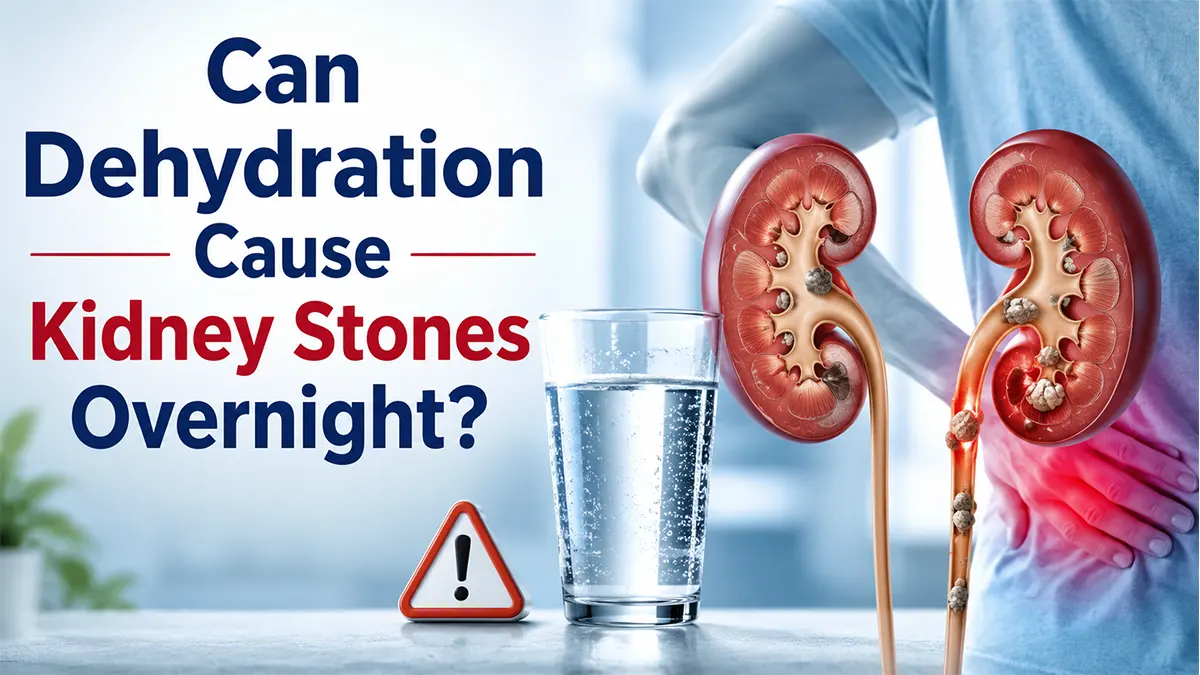
You wake up with sudden back pain, burning urine, or nausea after a hot summer day. Is it just dehydration — or the beginning of a kidney stone?
Can dehydration cause kidney stones overnight? Doctors say dehydration may not create a large kidney stone in just one night, but it can quickly trigger pain and symptoms from tiny crystals already forming inside the kidneys.
Doctors say many people ignore the early signs of kidney stone symptoms until the pain becomes unbearable. In 2026, rising temperatures, low water intake, energy drinks, and unhealthy diets are making kidney stones more common — even in young adults.
Table of Contents
A Real-Life Situation Many People Ignore
Imagine this:
After a busy workday, you barely drink water. The next morning, you feel:
- Mild pain in your lower back
- Burning while urinating
- Dark yellow urine
- Nausea or stomach discomfort
Most people think it is simple dehydration. But sometimes, these are the early signs of stone in kidney that your body is warning you about.
Learn the complete kidney stone symptoms in men and women.
Can Dehydration Cause Kidney Stones Overnight?
Dehydration alone may not create a kidney stone in one night, but it can quickly trigger symptoms from tiny crystals already forming inside the kidneys.
When your body lacks water:
- Urine becomes concentrated
- Minerals like calcium and oxalate stick together
- Crystals begin forming in the kidneys
- Small stones can grow faster
Doctors explain that hot weather, sweating, low water intake, and excessive caffeine can increase this risk significantly.
In many cases, dehydration acts as the “trigger” that makes hidden kidney stones suddenly painful.
Read more about the difference between UTI and kidney stones.
What Are Kidney Stones?
Kidney stones are hard mineral deposits that form inside the kidneys. They can vary from tiny grains to larger stones that block urine flow.
Common Types of Kidney Stones
- Calcium stones (most common)
- Uric acid stones
- Struvite stones
- Cystine stones
Early Signs of Kidney Stone Symptoms You Should Never Ignore
Many people wait until severe pain starts. But the body often gives warning signs much earlier.
Early Warning Signs of Kidney Diseases and Kidney Stones
1. Mild Back or Side Pain
Pain may begin slowly around:
- Lower back
- Side of abdomen
- Below the ribs
It may come and go initially.
2. Burning Sensation While Urinating
A sharp or uncomfortable feeling while passing urine can be an early sign.
3. Frequent Urination
Feeling the need to urinate repeatedly, even with little urine output.
4. Cloudy or Dark Urine
Dehydration plus mineral buildup can change urine color.
5. Blood in Urine
Even small pink or red discoloration should never be ignored.
6. Nausea and Vomiting
Kidney stones can affect nearby nerves and digestive function.
7. Fever or Chills
This may indicate infection and requires urgent medical attention.
Discover the best foods to prevent kidney stones naturally
Early Symptoms of Kidney Stones in Female
Women sometimes mistake kidney stone symptoms for:
- Urinary tract infection (UTI)
- Menstrual cramps
- Pelvic pain
Common Symptoms in Females
- Pelvic discomfort
- Burning urination
- Frequent urge to urinate
- Lower abdominal pain
- Nausea
- Back pain near one side
Doctors advise women not to ignore persistent urinary symptoms.
Early Signs of Renal Stones vs Simple Dehydration
| Symptom | Dehydration | Kidney Stones |
|---|---|---|
| Dark urine | Common | Common |
| Back pain | Mild muscle ache | Sharp side pain |
| Burning urine | Rare | Common |
| Blood in urine | Uncommon | Possible |
| Nausea | Sometimes | Common |
| Fever | Rare | Possible with infection |
What Causes Kidney Stones?
Several factors increase the risk of kidney stones.
Common Causes
- Drinking less water
- Excess salt intake
- High-protein diets
- Too much soda or energy drinks
- Family history
- Obesity
- Recurrent urinary infections
- Certain medications
2026 Lifestyle Trend Doctors Are Warning About
Doctors are seeing more kidney stone cases linked to:
- Long screen hours without hydration
- Gym supplements
- High-protein diets
- Summer dehydration
- Fast food consumption
How Doctors Diagnose Kidney Stones
If symptoms continue, doctors may recommend:
Tests Include
- Urine analysis
- Ultrasound
- CT scan
- Blood tests
- Kidney function tests
Early diagnosis can prevent complications.
Treatment for Kidney Stones
Treatment depends on the size and location of the stone.
Small Stones
Doctors may recommend:
- Drinking more water
- Pain relief medicines
- Medications to help pass the stone
Large Stones
Advanced treatments include:
- Laser stone removal
- Shock wave therapy (ESWL)
- Ureteroscopy
- PCNL surgery for larger stones
When Should You See a Doctor Immediately?
Seek medical care if you have:
- Severe back or abdominal pain
- Blood in urine
- Fever with chills
- Vomiting
- Difficulty passing urine
- Persistent burning urination
Ignoring symptoms can lead to kidney infection or kidney damage.
How to Prevent Kidney Stones Naturally
Simple Prevention Tips
- Drink 2.5–3 liters of water daily
- Reduce excess salt
- Avoid sugary soft drinks
- Eat balanced meals
- Limit processed foods
- Stay hydrated during summer
- Avoid holding urine for long periods
Doctors also suggest adding citrus fruits like lemon to the diet because citrate may help reduce stone formation.
Can dehydration cause kidney stones overnight?
Dehydration may not form a kidney stone overnight, but it can quickly worsen or trigger symptoms from existing kidney crystals. Concentrated urine allows minerals to stick together, increasing the risk of kidney stone pain and blockage.
1. What are the first early signs of kidney stone symptoms?
The earliest signs often include mild back pain, burning urination, cloudy urine, nausea, and frequent urination.
2. Can drinking less water cause kidney stones?
Yes. Low water intake concentrates minerals in urine, increasing the risk of stone formation.
3. What are the early symptoms of kidney stones in female patients?
Women may experience pelvic pain, burning urination, nausea, lower abdominal discomfort, and frequent urination.
4. Can kidney stone pain come and go?
Yes. Pain may appear suddenly, disappear temporarily, and return as the stone moves.
5. Is dark urine always a sign of kidney stones?
Not always. Dark urine can happen with dehydration, but if combined with pain or burning, medical evaluation is important.
Related Articles
- Kidney Stone Symptoms in Men and Women
- Best Foods to Prevent Kidney Stones Naturally
- Difference Between UTI and Kidney Stones
- How Much Water Should You Drink Daily for Kidney Health?
Conclusion
Kidney stones rarely appear “out of nowhere.” Your body usually gives early warning signs first.
If you notice burning urine, side pain, nausea, or dark urine — especially during dehydration — do not ignore them. Early treatment can prevent severe pain and serious kidney complications.
Staying hydrated remains one of the simplest and most powerful ways to protect your kidneys in 2026.
If symptoms continue, consult a qualified urologist for proper evaluation and treatment.
Dr. Jayanth Reddy – Consultant Urologist
My Health Hospitals, Hyderabad
This content has been medically reviewed for accuracy and reliability based on current urology treatment guidelines.
According to the kidney stone symptoms NHS guide, severe flank pain can worsen during rest or nighttime.
Author
Yamanandan Reddy
Health Content Writer & Frontend Developer
Yamanandan Reddy is a health content writer and frontend developer with over 4 years of experience in website design and digital content creation. He writes research-based health articles to help readers understand symptoms, causes, treatments, and prevention methods related to common health conditions.
His articles are written using information from trusted medical sources such as the World Health Organization (WHO), Mayo Clinic, and the Centers for Disease Control and Prevention (CDC).
Sources
The information in this article is researched and verified using trusted medical resources, including:
• World Health Organization (WHO)
• Mayo Clinic
• National Institutes of Health (NIH)
• Centers for Disease Control and Prevention
⚠️ Medical Disclaimer
This content is for informational purposes only and does not replace professional medical advice. Always consult a qualified healthcare provider for diagnosis and treatment.