
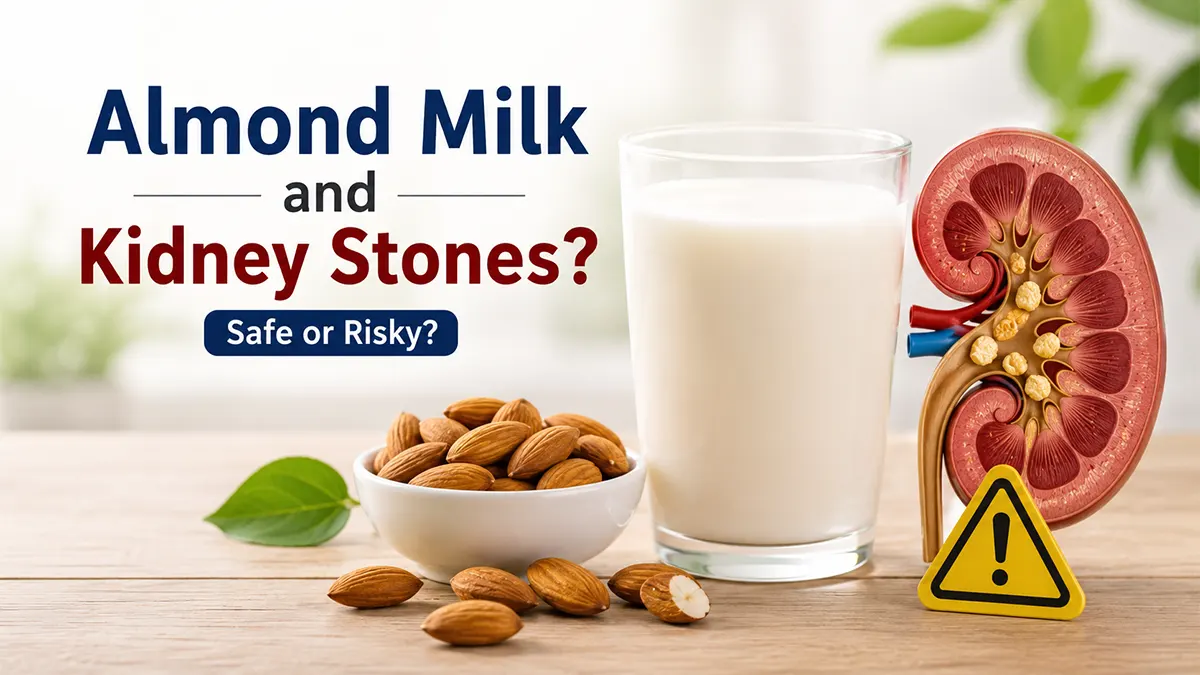
If you’ve recently been diagnosed with kidney stones, you’ve probably started paying closer attention to your diet. One common question patients ask is:
“Is almond milk bad for kidney stones?”
The answer isn’t as straightforward as yes or no.
Almond milk has become one of the most popular dairy alternatives because it’s lactose-free, vegan, and low in calories. However, almonds naturally contain oxalates, compounds that can contribute to the formation of calcium oxalate kidney stones, the most common type of kidney stone.
If you have a history of calcium oxalate stones, cow’s milk, oat milk, or low-oxalate plant-based alternatives are often better choices. Always discuss dietary changes with your urologist or renal dietitian.
Understanding how almond milk affects kidney stone risk can help you make safer dietary choices while still enjoying healthy beverages.
Table of Contents
What Are Kidney Stones?
Kidney stones are hard mineral deposits that develop inside the kidneys when minerals and salts become concentrated in urine.
The major types include:
| Stone Type | Percentage | Main Cause |
|---|---|---|
| Calcium oxalate | 75–80% | High oxalate + calcium imbalance |
| Calcium phosphate | 10–15% | High urine pH |
| Uric acid | 5–10% | High uric acid levels |
| Struvite | Less common | Urinary tract infection |
| Cystine | Rare | Genetic disorder |
Most concerns regarding almond milk and kidney stones relate specifically to calcium oxalate stones.
Silent Kidney Stones: Symptoms Without Pain You Shouldn’t Ignore (2026 Guide)
What Are Oxalates?
Oxalates (oxalic acid) are natural compounds found in many healthy foods, including:
- Almonds
- Spinach
- Beets
- Rhubarb
- Swiss chard
- Dark chocolate
- Sweet potatoes
Normally, oxalates bind with calcium inside the intestines and leave the body in stool.
However, when excess oxalates reach the urine, they may combine with calcium and form crystals that grow into kidney stones.
Oxalate-Rich Foods List: What to Avoid if You Have Calcium Oxalate Stones
Is Almond Milk High in Oxalates?
The answer depends on the brand and processing method.
Commercial almond milk generally contains fewer almonds than whole almonds, but oxalate levels can still be significant.
Approximate Comparison
| Beverage | Oxalate Level | Kidney Stone Friendly? |
|---|---|---|
| Cow’s milk | Very low | ✅ Excellent |
| Almond milk | Moderate to High | ⚠ Use cautiously |
| Oat milk | Low to Moderate | ✅ Usually better |
| Rice milk | Low | ✅ Good option |
| Coconut milk beverage | Low | ✅ Good option |
| Soy milk | Moderate | Use carefully |
People with recurrent calcium oxalate stones should discuss almond milk intake with their healthcare provider.
Does Almond Milk Cause Kidney Stones?
Almond milk alone does not directly cause kidney stones.
Instead, kidney stones usually develop due to multiple risk factors working together, including:
- High dietary oxalate intake
- Low calcium intake
- Inadequate hydration
- High sodium consumption
- Excess animal protein
- Obesity
- Diabetes
- Family history
- Certain digestive disorders
Drinking almond milk occasionally is unlikely to cause kidney stones in healthy individuals.
However, regular consumption alongside a high-oxalate diet may increase risk in susceptible people.
Almond Milk and Calcium Oxalate Stones
Calcium oxalate stones account for nearly 80% of kidney stones.
Ironically, adequate dietary calcium actually helps prevent these stones because calcium binds oxalates in the intestines before they enter the bloodstream.
This means:
✔ Low calcium diets can increase stone risk.
✔ Calcium-rich foods are usually protective.
Fortified almond milk contains calcium, but the natural oxalate content of almonds still deserves consideration.
Symptoms of Kidney Stones
Symptoms include:
- Severe pain in the back or side
- Pain radiating to the groin
- Burning while urinating
- Blood in urine
- Nausea
- Vomiting
- Frequent urination
- Fever (if infection develops)
Seek immediate medical attention if pain is severe or accompanied by fever.
Kidney Stones: Symptoms, Causes, Diagnosis & Treatment Options (2026 Guide)
Risk Factors
You may have a higher risk if you:
- Previously had kidney stones
- Have calcium oxalate stones
- Eat many high-oxalate foods
- Drink too little water
- Consume excessive salt
- Have obesity
- Have type 2 diabetes
- Have inflammatory bowel disease
- Have undergone bariatric surgery
- Have a family history of kidney stones
Diagnosis
Doctors diagnose kidney stones using:
- Medical history
- Physical examination
- Urinalysis
- Blood tests
- Stone analysis
- 24-hour urine testing
- Ultrasound
- CT scan
A metabolic evaluation helps identify dietary causes and prevent recurrence.
Treatment Options
Treatment depends on stone size and location.
Small stones may pass naturally with:
- Increased fluid intake
- Pain medications
- Alpha-blockers
Larger stones may require:
- Shock wave lithotripsy (ESWL)
- Ureteroscopy
- Laser stone removal
- Percutaneous nephrolithotomy (PCNL)
Dietary counseling is an essential part of preventing future stones.
Latest Kidney Stone Treatment Options in 2026 (USA Guide)
Best Milk Options for Kidney Stone Patients
| Milk | Oxalate | Calcium | Recommendation |
|---|---|---|---|
| Cow’s milk | Low | High | ⭐ Best choice |
| Low-fat dairy | Low | High | ⭐ Excellent |
| Oat milk | Lower | Fortified | Good |
| Rice milk | Low | Fortified | Good |
| Coconut milk beverage | Low | Moderate | Good |
| Almond milk | Moderate | Fortified | Limit if recurrent stones |
| Soy milk | Moderate | High | Discuss with doctor |
How to Reduce Oxalates in Your Diet
If you have calcium oxalate stones:
Do
- Drink 2.5–3 liters of water daily
- Consume recommended calcium with meals
- Eat fruits and vegetables
- Limit sodium
- Maintain healthy body weight
- Eat citrus fruits
Avoid Excess
- Spinach
- Almonds
- Almond flour
- Large amounts of almond milk
- Beets
- Rhubarb
- Chocolate
Prevention Tips
Preventing kidney stones involves healthy daily habits.
✔ Stay hydrated
✔ Eat enough dietary calcium
✔ Reduce salt intake
✔ Limit excessive oxalate-rich foods
✔ Maintain healthy weight
✔ Control diabetes
✔ Reduce sugary drinks
✔ Follow your doctor’s individualized diet plan
Calcium Oxalate Kidney Stones – Causes & Prevention (2026 US Guide)
Real Patient Insight from My Health Hospitals
Many patients visiting our urology department are surprised to learn that healthy foods are not always healthy for every medical condition.
One common example is switching from dairy to almond milk for perceived health benefits. During dietary counseling, our kidney stone specialists often review each patient’s 24-hour urine test and dietary habits. In patients with recurrent calcium oxalate stones, reducing high-oxalate foods—including frequent almond-based products—while ensuring adequate calcium intake and hydration has helped lower the risk of stone recurrence as part of a comprehensive prevention plan.
When to See a Doctor
Consult a urologist if you experience:
- Severe flank pain
- Blood in urine
- Fever with urinary symptoms
- Recurrent kidney stones
- Persistent nausea or vomiting
- Difficulty passing urine
- Kidney stone symptoms lasting more than a few hours
Early evaluation can prevent complications and identify the specific stone type.
Comparison: Almond Milk vs Cow’s Milk
| Feature | Almond Milk | Cow’s Milk |
|---|---|---|
| Oxalates | Moderate | Very low |
| Calcium | Fortified | Naturally high |
| Protein | Low | High |
| Kidney Stone Risk | Higher for susceptible patients | Lower |
| Lactose | None | Present |
| Best for Calcium Oxalate Stones | Limited | Recommended |
1. Is almond milk bad for kidney stones?
It can be for people who form calcium oxalate kidney stones because almond milk contains oxalates. Occasional consumption may be acceptable, but frequent intake should be discussed with your healthcare provider.
2. Does almond milk cause kidney stones?
No. Almond milk does not directly cause kidney stones. However, when combined with other risk factors like dehydration, low calcium intake, and a high-oxalate diet, it may contribute to calcium oxalate stone formation.
3. Is almond milk high in oxalates?
Compared with cow’s milk, almond milk contains more oxalates. The exact amount varies by brand and formulation.
4. Can I drink almond milk if I already have kidney stones?
It depends on the type of stone. Patients with calcium oxalate stones should ask their urologist or renal dietitian whether almond milk fits into their personalized meal plan.
5. What is the best milk for kidney stone patients?
Cow’s milk and other low-fat dairy products are generally recommended because they provide calcium with very low oxalate content. Oat milk and rice milk may also be suitable alternatives for some individuals.
6. Is oat milk better than almond milk for kidney stones?
In many cases, yes. Oat milk generally contains lower oxalate levels than almond milk, making it a preferred plant-based option for some people with calcium oxalate stones.
7. Should I avoid all nuts if I have kidney stones?
Not necessarily. Portion size, stone type, and overall diet matter. Some nuts are higher in oxalates than others, so individualized dietary guidance is recommended.
8. Can drinking more water reduce kidney stone risk?
Yes. Drinking enough fluids to produce at least 2–2.5 liters of urine daily is one of the most effective ways to reduce kidney stone recurrence.
9. Does almond milk cause kidney pain?
Almond milk itself does not cause kidney pain. However, if recurrent calcium oxalate stones develop, they can cause severe flank pain and urinary symptoms.
10. Can dietary calcium prevent kidney stones?
Yes. Adequate dietary calcium helps bind oxalates in the intestines, reducing oxalate absorption and lowering the risk of calcium oxalate stone formation.
Key Takeaways
- Almond milk contains more oxalates than cow’s milk.
- Almond milk does not directly cause kidney stones.
- People with calcium oxalate stones should consume almond milk cautiously.
- Adequate dietary calcium helps reduce stone risk.
- Staying hydrated remains the most effective preventive strategy.
- Personalized dietary advice is essential for recurrent kidney stone patients.
Conclusion
Is almond milk bad for kidney stones? The answer depends on your individual risk factors and the type of kidney stone you have. For people with calcium oxalate stones, frequent consumption of almond milk may increase oxalate intake and should be limited, especially if other high-oxalate foods are part of the diet. Choosing low-oxalate milk options, staying well hydrated, maintaining adequate dietary calcium, and working with a urologist or renal dietitian are the best ways to reduce almond milk kidney stone risk and support long-term kidney health.
Medical Expert Review
Dr. Jayanth Reddy
Consultant Urologist | My Health Hospitals, Hyderabad
This content has undergone medical review to ensure it reflects current clinical evidence, accepted urological practices, and patient-centered healthcare guidance.
Author
Yamanandan Reddy
Health Content Writer & Frontend Developer
Yamanandan Reddy is a health content writer and frontend developer with over 4 years of experience in website design and digital content creation. He writes research-based health articles to help readers understand symptoms, causes, treatments, and prevention methods related to common health conditions.
His articles are written using information from trusted medical sources such as the World Health Organization (WHO), Mayo Clinic, and the Centers for Disease Control and Prevention (CDC).
Sources
The information in this article is researched and verified using trusted medical resources, including:
• World Health Organization (WHO)
• Mayo Clinic
• National Institutes of Health (NIH)
• Centers for Disease Control and Prevention
⚠️ Medical Disclaimer
This content is for informational purposes only and does not replace professional medical advice. Always consult a qualified healthcare provider for diagnosis and treatment.
4 thoughts on “Is Almond Milk Bad for Kidney Stones? A Complete Medical Guide (2026)”