
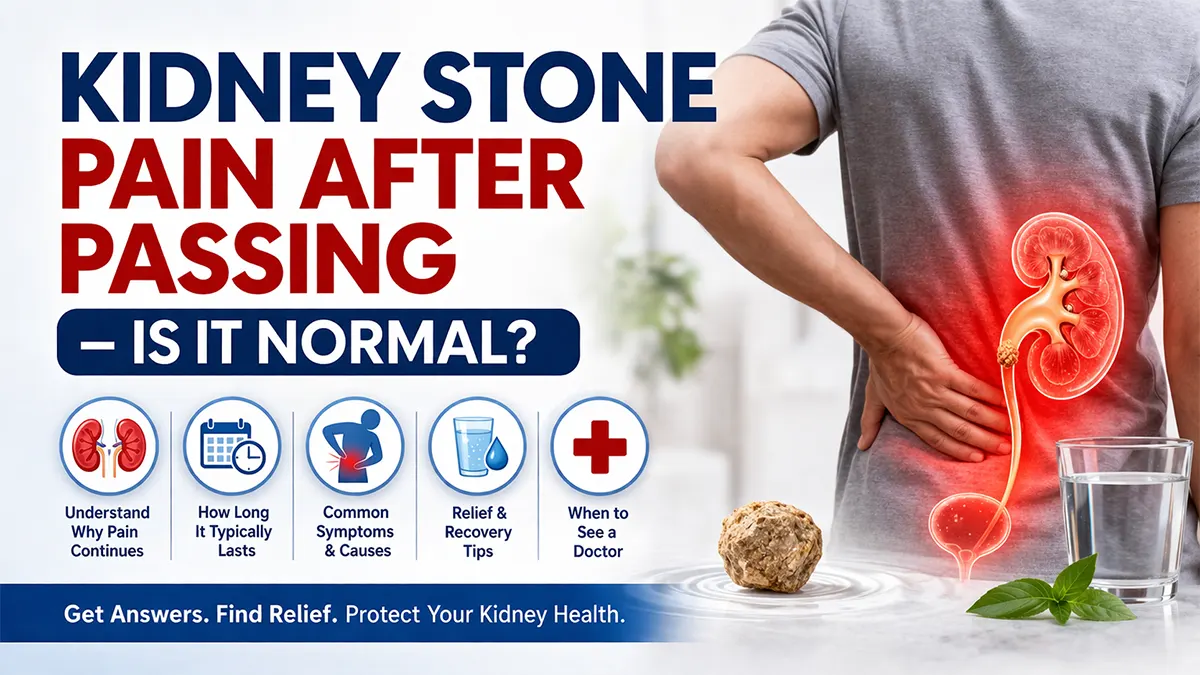
Pain often improves once a kidney stone reaches the bladder or leaves the body. But kidney stone pain after passing can sometimes linger. Mild soreness may reflect irritation; persistent or worsening pain may mean the stone has not fully passed, another stone remains, or an infection or blockage needs treatment.
Quick answer: There is no reliable fixed number of days that pain should last after a stone passes. Improving mild discomfort may be temporary, but do not assume ongoing pain is normal—especially if stone passage was not confirmed. Fever, chills, inability to urinate, or severe pain require urgent medical attention.
Table of Contents
Why Pain Can Continue After a Kidney Stone Passes
The ureter (the tube from kidney to bladder) can remain irritated after a stone moves through it. Other explanations must also be considered, particularly when the stone was not actually seen or collected.
- Temporary irritation: discomfort can remain after a stone travels through the urinary tract.
- Remaining stone or fragments: pain may recur if another stone is still moving or blocking urine.
- Urinary tract infection: burning, frequent urination or fever can indicate infection rather than simple healing.
- Another cause: back, abdominal or pelvic pain may be unrelated to stones.
See our related guide to kidney stone symptoms in men and women.
How Long Does Pain Last After Passing a Kidney Stone?
Pain often eases when the obstruction is relieved. Some people notice residual soreness or burning, but the duration varies with stone location, irritation, infection and whether passage is complete. A specific “1–7 days” or “up to 2 weeks” rule cannot safely determine whether symptoms are harmless.
Contact a clinician if pain persists, returns or does not steadily improve, even if you believe the stone passed. Follow-up imaging or urine testing may be needed. Read more about kidney stone pain stages.
Types of Pain After Passing a Kidney Stone
Flank or Lower Back Pain
An ache in the side or back may be residual irritation, but recurrent waves of flank pain can suggest an ongoing obstruction. Musculoskeletal pain is another possibility.
Bladder Pressure and Frequent Urination
Pressure or urgency may occur when a stone is near the bladder. A urinary infection can cause similar symptoms.
Burning or Urethral Pain
Mild irritation is possible, but burning during urination can also signal a UTI; seek assessment if it persists or is accompanied by fever.
Groin, Pelvic or Testicular Pain
Pain can radiate toward the groin while a stone moves down the ureter. New or severe testicular pain needs prompt medical assessment.
Kidney Stone Pain Before vs. After Passing
| Situation | Possible experience |
|---|---|
| Stone moving through ureter | Severe, wave-like side or back pain, sometimes radiating to groin |
| Obstruction relieved | Pain may decrease substantially |
| After presumed passage | Some soreness may persist; worsening or recurrent pain needs evaluation |
When Pain After a Kidney Stone Is an Emergency
Seek urgent medical care now for any of these symptoms, even if you think the stone has passed:
- Fever or shaking chills, particularly with flank pain (possible infected obstruction).
- Unable to urinate, or very little urine with significant pain.
- Severe, worsening or uncontrolled pain.
- Persistent vomiting or inability to keep fluids down.
- Heavy bleeding, blood clots, fainting or marked weakness.
An infected, obstructed urinary system can be a medical emergency. Do not wait two weeks before seeking help for concerning symptoms.
What if Pain Gets Worse or Comes Back?
Worsening or returning pain is not something to label “phantom pain” without evaluation. It can occur if a stone remains in the ureter, another stone moves, infection develops, or a different condition is responsible. A clinician may recommend urinalysis, urine culture, ultrasound or CT depending on the situation.
Safe Ways to Manage Mild Discomfort
- Drink fluids regularly unless a clinician has restricted your fluid intake; avoid forcing several liters of water at once.
- Use pain medicine only as appropriate for you and according to a clinician or pharmacist. NSAIDs are not suitable for everyone, including some people with kidney disease, ulcers, pregnancy or certain medicines.
- A warm compress may provide temporary comfort; avoid burns.
- If you catch the stone, ask about sending it for laboratory analysis.
- Arrange follow-up if stone passage is uncertain or symptoms do not improve.
Water supports stone prevention, but it does not reliably “flush out” a blocked stone or treat an infection. See drinks for kidney stone prevention.
Preventing Future Kidney Stones
Prevention depends on stone composition and your medical history. Many people benefit from sufficient fluids, lower sodium intake, normal dietary calcium and individualized dietary advice. Do not automatically avoid all oxalate-rich foods without knowing your stone type.
Learn about a kidney stone prevention diet.
Frequently Asked Questions
Is kidney stone pain after passing normal?
Mild, improving soreness can occur, but persistent or worsening pain should not be assumed normal. Confirming that the stone passed may require medical follow-up.
How long does pain last after passing a kidney stone?
There is no dependable universal timeline. Pain often improves when blockage resolves; continuing pain deserves medical advice rather than waiting for a fixed number of days.
Why do I still have flank pain after passing a stone?
Irritation is one possibility, but a remaining stone, obstruction, infection or another condition can cause flank pain.
Does burning urination mean the urinary tract is healing?
Not necessarily. Burning can reflect irritation or a urinary tract infection, especially with urgency, cloudy urine or fever.
Can kidney stone pain come back after passing?
Yes. Recurrent pain can indicate another stone, remaining fragments or a different problem. Seek assessment if pain returns.
When should I seek emergency care?
Get urgent help for fever or chills with stone symptoms, inability to urinate, severe worsening pain, persistent vomiting or significant bleeding.
Key Takeaway
After a kidney stone passes, pain often improves. Mild residual discomfort can occur, but it is important not to dismiss new, persistent or worsening symptoms. If you have fever, trouble urinating or severe pain, seek urgent medical care.
Author
Yamanandan Reddy
Health Content Writer & Frontend Developer. This educational article is based on publicly available medical guidance and has not been represented as physician-reviewed.
Medical Sources
Medical Disclaimer
This article provides general educational information, not a diagnosis or individualized medical advice. A healthcare professional should evaluate persistent symptoms or possible complications.
1 thought on “Kidney Stone Pain After Passing – Is It Normal?”