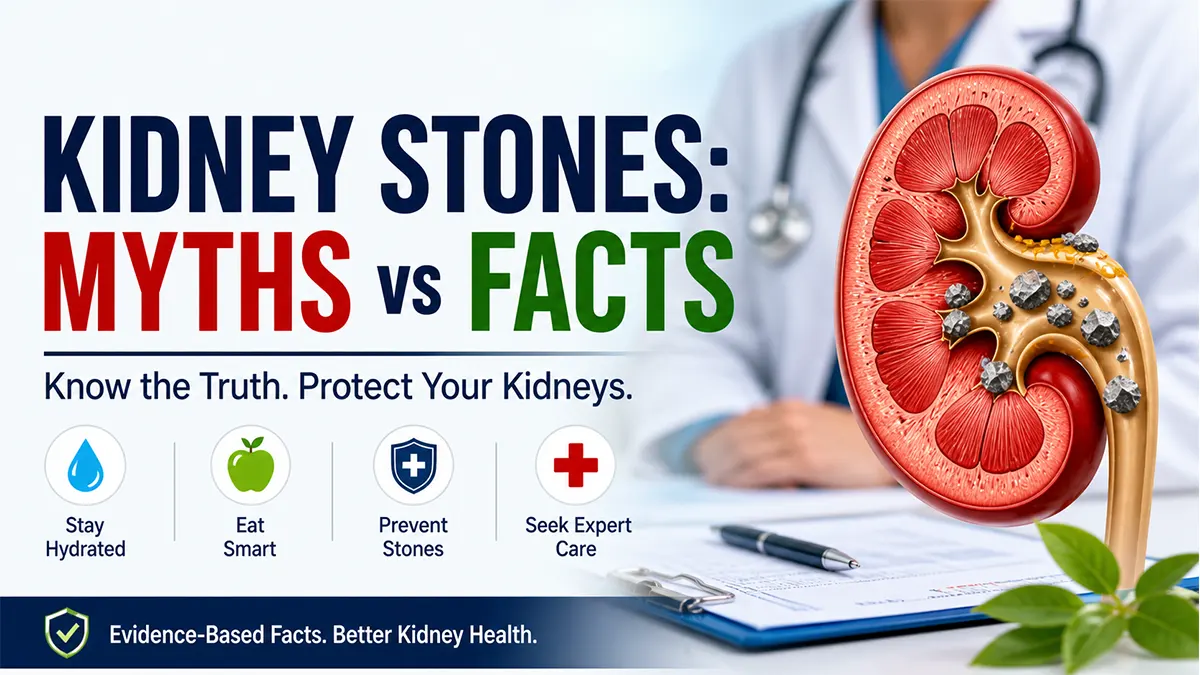
Kidney stones are common—and so is misinformation. From “beer can flush stones” to “only men get stones,” myths can delay proper care and even make things worse.
Understanding kidney stone myths vs facts is essential in 2026, as misinformation can lead to incorrect treatment and increased risk of recurrence.
This guide separates kidney stone myths vs facts with clear, evidence-based explanations, so you can make smarter decisions about prevention and treatment.
Table of Contents
🧠 What Are Kidney Stones?
Kidney stones are hard mineral deposits that form in the kidneys when urine becomes concentrated. The most common type is calcium oxalate, but uric acid and other types also occur.
Read Also : complete guide to kidney stones causes symptoms and treatment
⚔️ Kidney Stone Myths vs Facts
| Myth | Fact |
|---|---|
| Only men get kidney stones | Women also develop stones, and rates are rising |
| Drinking beer helps pass stones | Alcohol can dehydrate and worsen risk |
| All stones need surgery | Many small stones pass naturally |
| Calcium causes stones | Low calcium diets can increase risk |
| Pain always means emergency | Some pain is normal; certain signs are emergencies |
🚫 Myth 1: Only Men Get Kidney Stones
✅ Fact:
Women are increasingly affected—especially in the USA, UK, and Canada—due to diet changes, obesity, and dehydration.
👉 Don’t ignore symptoms just because of gender.
👉 Read Also: kidney stone formation process explained step by step
🍺 Myth 2: Beer Helps Flush Kidney Stones
❌ Myth
“Drink beer and the stone will pass.”
✅ Fact
Alcohol can dehydrate the body, which increases stone formation risk.
👉 Better option: water + citrus fluids (natural citrate support).
🏥 Myth 3: All Kidney Stones Require Surgery
✅ Fact:
- Small stones (<5 mm) often pass naturally
- Medicines and hydration can help
👉 Surgery is needed only when:
- Stone is large
- Severe blockage
- Infection present
👉 Read Also: hydration schedule to avoid kidney stones
🥛 Myth 4: Calcium Causes Kidney Stones
❌ Myth
Avoid calcium completely.
✅ Fact
Low dietary calcium can actually increase stone risk by allowing more oxalate absorption.
👉 Balanced calcium intake is important.
⚡ Myth 5: Pain Means It’s an Emergency
✅ Fact:
Kidney stone pain (renal colic) is severe—but not always an emergency.
🚨 Emergency signs include:
- Fever + chills
- Unable to urinate
- Heavy blood in urine
👉 Read Also: best fruits for kidney stone prevention
☕ Myth 6: Coffee Always Causes Kidney Stones
❌ Myth
Coffee is harmful for kidneys.
✅ Fact
Moderate coffee intake may actually reduce risk due to increased urine output.
👉 Excess caffeine, however, can cause dehydration.
🍓 Myth 7: All Fruits Are Safe for Kidney Stones
❌ Myth
“All fruits are good.”
✅ Fact
Some fruits are high in oxalates (like certain berries), while others like citrus fruits help prevent stones.
💧 Myth 8: Drinking Water Occasionally Is Enough
❌ Myth
“Just drink water when thirsty.”
✅ Fact
You need consistent hydration (2.5–3 liters daily) to prevent stones effectively.
🧬 Myth 9: Kidney Stones Are Only Caused by Diet
✅ Fact:
Other causes include:
- Genetics
- Medical conditions
- Medications
👉 Diet is important—but not the only factor.
🧠 Myth 10: Once Treated, Stones Won’t Come Back
❌ Myth
“One-time problem.”
✅ Fact
Kidney stones have a high recurrence rate (up to 50%) without lifestyle changes.
🌍 Why Myths Are Dangerous
Believing myths can lead to:
❌ Delayed treatment
❌ Increased pain
❌ Higher complication risk
👉 Always rely on medical guidance.
💡 Expert Tips (2026)
✔ Drink enough water daily
✔ Maintain balanced diet
✔ Don’t avoid calcium completely
✔ Seek help for severe symptoms
✔ Follow doctor’s advice
❓ what are the most common kidney stone myths vs facts people should know in 2026
Many people believe myths like “only men get kidney stones” or “beer helps flush stones,” but facts show both men and women are affected, and proper hydration—not alcohol—is key for prevention.
❓ does drinking beer or alcohol really help pass kidney stones faster naturally
No, alcohol can dehydrate the body and increase kidney stone risk. Drinking water and citrate-rich fluids is a safer and more effective method.
❓ is it true that calcium intake causes kidney stones in adults
This is a myth. Adequate dietary calcium actually helps reduce stone formation by binding oxalates and preventing absorption.
❓ can kidney stones go away without surgery or medical procedures
Yes, small kidney stones often pass naturally with hydration and medication, while larger stones may require medical treatment.
❓ are all kidney stone symptoms considered an emergency condition
No, common pain is normal, but symptoms like fever, inability to urinate, or heavy bleeding indicate an emergency.
❓ does drinking more water really prevent kidney stones effectively
Yes, drinking 2.5–3 liters of water daily helps dilute urine and reduces the risk of stone formation.
❓ is coffee bad for kidney stones or does it increase the risk
Moderate coffee intake may reduce risk by increasing urine flow, but excessive caffeine can lead to dehydration.
❓ can eating fruits alone prevent kidney stones completely
Not all fruits help; some are high in oxalates. Citrus fruits are beneficial, but a balanced diet is necessary.
❓ are kidney stones only caused by diet or are there other factors involved
Kidney stones can also be caused by genetics, medical conditions, medications, and lifestyle—not just diet.
❓ do kidney stones come back after treatment or are they permanently cured
Kidney stones can recur in up to 50% of cases if lifestyle changes are not followed, so prevention is ongoing.
📌 Key Takeaways
✔ Not all stones need surgery
✔ Hydration is the most important factor
✔ Calcium is not the enemy
✔ Myths can delay treatment
✔ Prevention is ongoing
🚀 Final Thoughts
Kidney stones are manageable—but only if you follow the right information.
👉 Don’t fall for myths.
👉 Trust facts, science, and expert advice.
Your kidney health depends on it.
In conclusion, understanding kidney stone myths vs facts helps you avoid dangerous misinformation and make better health decisions.
Dr. Jayanth Reddy – Consultant Urologist
My Health Hospitals, Hyderabad
This content has been medically reviewed for accuracy and reliability based on current urology treatment guidelines.
According to the kidney stone symptoms NHS guide, severe flank pain can worsen during rest or nighttime.
Author
Yamanandan Reddy
Health Content Writer & Frontend Developer
Yamanandan Reddy is a health content writer and frontend developer with over 4 years of experience in website design and digital content creation. He writes research-based health articles to help readers understand symptoms, causes, treatments, and prevention methods related to common health conditions.
His articles are written using information from trusted medical sources such as the World Health Organization (WHO), Mayo Clinic, and the Centers for Disease Control and Prevention (CDC).
Sources
The information in this article is researched and verified using trusted medical resources, including:
• World Health Organization (WHO)
• Mayo Clinic
• National Institutes of Health (NIH)
• Centers for Disease Control and Prevention
⚠️ Medical Disclaimer
This content is for informational purposes only and does not replace professional medical advice. Always consult a qualified healthcare provider for diagnosis and treatment.