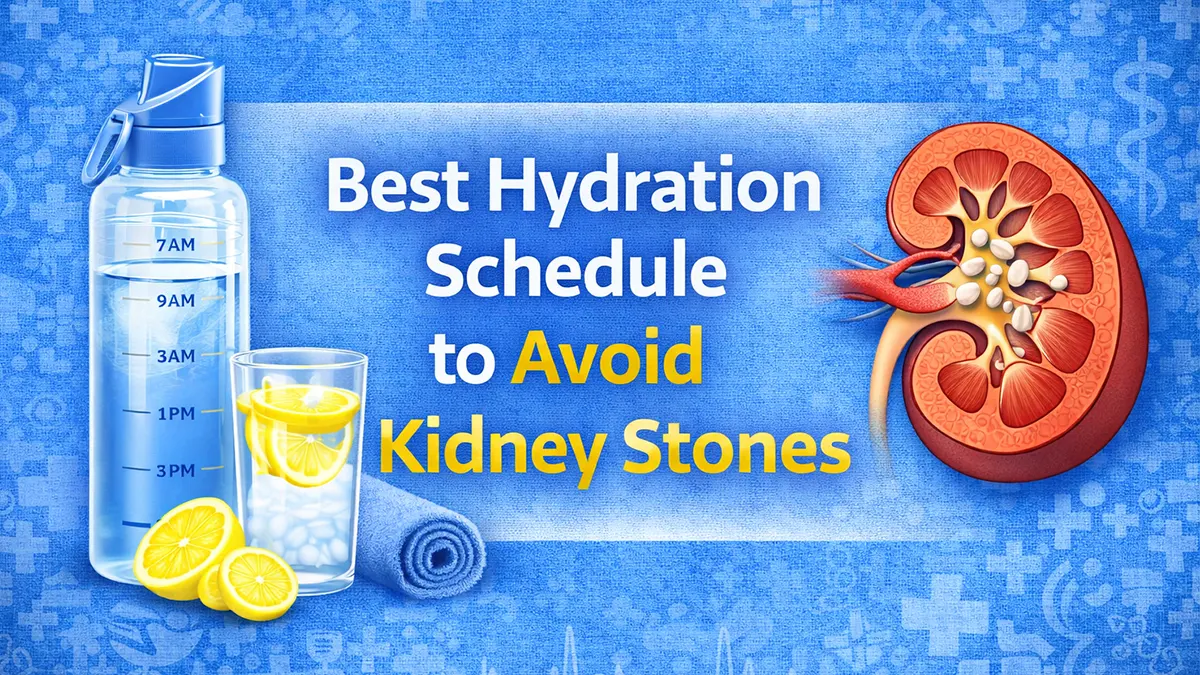
Following an ultimate hydration schedule to avoid kidney stones is the most effective way to reduce stone risk. This ultimate hydration schedule to avoid kidney stones focuses on consistent water intake, proper timing, and maintaining 80–100 oz daily hydration for optimal kidney health.
If you’ve searched for how many ounces of water to prevent kidney stones daily or kidney stone hydration schedule for 2026, this guide gives you a step-by-step, science-backed plan to hit your hydration goals without feeling overwhelmed.
Table of Contents
💧 Why Hydration Matters for Kidney Stones
Kidney stones form when urine becomes concentrated with minerals like calcium, oxalate, and uric acid.
👉 When you drink enough water:
- Urine becomes diluted
- Crystals cannot form easily
- Existing particles flush out naturally
💡 Goal: Produce at least 2.5 liters of urine daily
👉 That equals roughly 80–100 ounces of water intake
👉kidney stone formation process explained
📊 How Many Ounces of Water to Prevent Kidney Stones Daily?
This is the most searched question in the USA.
👉 Recommended Intake:
- 80–100 ounces per day (10–12 cups)
- More if you sweat, exercise, or live in hot climates
💡 Calculating fluid intake based on 2.5 liter urine goal:
- Drink slightly more than output
- Aim for clear or light yellow urine
Start your hydration schedule to avoid kidney stones with 16–20 oz of water after waking
👉 daily routine to prevent kidney stones naturally
🕒 Best Hydration Schedule to Avoid Kidney Stones (80–100 oz Plan)
✔ Best Hourly Hydration Plan for Chronic Stone Formers
| Time | Goal (Ounces) | Tip |
|---|---|---|
| 7:00 AM | 16 oz | Add lemon to break overnight dehydration |
| 10:00 AM | 12 oz | Keep a bottle at your desk |
| 1:00 PM | 12 oz | Drink with a low-sodium lunch |
| 4:00 PM | 12 oz | Hydrate before fatigue hits |
| 7:00 PM | 10 oz | Avoid sugary drinks |
| Bedtime | 8 oz | Prevent overnight concentration |
👉 Total: ~80–90 oz daily
🧠 The PUSH Trial Insight
Recent research like the PUSH (Prevention of Urinary Stones with Hydration) trial highlights:
👉 Consistent hydration is more important than occasional high intake
💡 Key takeaway:
- Smart tools help
- But daily habits matter more
👉 calcium oxalate kidney stones guide
📱 Smart Hydration Tools (2026 Trends)
👉 Best Smart Water Bottle for Kidney Stone Tracking 2026
- Tracks intake automatically
- Sends reminders
- Syncs with apps
👉 Apps to Track Urine Volume
- Helps monitor hydration goals
- Tracks urine frequency and color
💡 These tools support precision hydration targets for kidney health
🏢 How to Maintain High Fluid Intake at Work
Many people struggle with how to maintain high fluid intake at work for kidney stones
✔ Practical Tips:
- Keep a 1-liter bottle on desk
- Set hourly reminders
- Drink during meetings
👉 Small sips throughout the day = better than large amounts at once
🌙 Overnight Hydration Habits (Critical)
👉 Overnight Hydration Habits to Prevent Concentrated Urine
During sleep:
- No water intake for 6–8 hours
- Urine becomes concentrated
✔ Solution:
- Drink 8–10 oz before bed
- Drink 16 oz immediately after waking
👉 This reduces morning stone formation risk
🥤 Best Drinks to Prevent Kidney Stones (Besides Water)
✔ Best Options:
- Lemon water (citrate boost)
- Coconut water
- Herbal teas
- Diluted fruit juices
🚫 Avoid:
- Sugary sodas (high fructose corn syrup)
- Energy drinks
⚠️ Is Hard Water Linked to Kidney Stones in USA?
This is a trending question in 2026.
👉 Hard water contains calcium and magnesium.
💡 Current evidence suggests:
- Hard water alone is not a direct cause
- But may contribute if diet is already high in minerals
✔ Best practice:
- Use filtered water if concerned
- Focus on overall hydration, not just water type
🧘 How to Reach High Fluid Intake Without Feeling Bloated
Many people ask:
👉 How to reach a 100 ounce hydration goal daily without discomfort?
✔ Smart Strategies:
- Drink small amounts frequently
- Avoid drinking large amounts at once
- Add lemon or flavor for taste
- Use room temperature water
🔄 Behavioral Hydration Routine (Daily Habit System)
✔ Morning
- 16–20 oz water (lemon optional)
✔ Afternoon
- 30–40 oz spread across hours
✔ Evening
- 20–25 oz
✔ Night
- 8–10 oz
👉 This creates a balanced hydration cycle
Want to understand why hydration matters?
👉 Read: https://healthywaycare.com/kidney-stone-formation-process-2026/
📌 Key Takeaways
- Drink 80–100 oz daily
- Follow a structured hydration schedule
- Stay consistent (not occasional)
- Use smart tools if needed
- Avoid sugary drinks
❓ Frequently Asked Questions About Hydration Schedule to Avoid Kidney Stones
🔹 How many ounces of water should I drink daily to prevent kidney stones?
To follow an effective hydration schedule to avoid kidney stones, most experts recommend drinking 80–100 ounces of water daily (about 10–12 cups). This helps dilute urine and prevents crystal formation. Your goal should be to produce at least 2.5 liters of urine per day.
🔹 What is the best hourly hydration schedule for kidney stones?
The best hydration schedule to avoid kidney stones includes drinking water consistently throughout the day. Start with 16–20 oz in the morning, then drink 10–12 oz every 2–3 hours, and finish with 8–10 oz before bedtime to prevent overnight dehydration.
🔹 How can I reach a 100 ounce hydration goal daily without feeling bloated?
To reach a 100 ounce hydration goal daily, drink small amounts frequently instead of large quantities at once. Spread your intake across the day, use lemon or natural flavors, and maintain a steady hydration schedule to avoid kidney stones to prevent bloating.
🔹 Does drinking water on an empty stomach help prevent kidney stones?
Yes, drinking 16–20 oz of water on an empty stomach supports your hydration schedule to avoid kidney stones. It helps flush toxins, reduces urine concentration, and lowers the risk of stone formation early in the day.
🔹 Are there drinks better than water for preventing kidney stones?
Yes, along with water, drinks like lemon water, coconut water, and herbal teas can support a hydration schedule to avoid kidney stones. Lemon water is especially beneficial because it contains citrate, which helps prevent calcium stone formation.
🔹 Is hard water linked to kidney stones in the USA?
Hard water contains minerals like calcium and magnesium, but it is not a direct cause of kidney stones. However, if your diet is already high in minerals, it may contribute slightly. The most important factor is maintaining a proper hydration schedule to avoid kidney stones.
🔹 What are the best overnight hydration habits to prevent kidney stones?
To prevent overnight stone formation, include 8–10 oz of water before bed and drink water immediately after waking. This keeps urine diluted and supports your overall hydration schedule to avoid kidney stones.
🚀 Final Thoughts
Hydration is simple—but consistency is powerful.
If you follow this ultimate hydration schedule to avoid kidney stones, you can significantly reduce your risk, improve kidney function, and avoid painful complications.
👉 Start today with one step:
Drink your first glass of water.
Dr. Jayanth Reddy – Consultant Urologist
My Health Hospitals, Hyderabad
This content has been medically reviewed for accuracy and reliability based on current urology treatment guidelines.
According to the kidney stone symptoms NHS guide, severe flank pain can worsen during rest or nighttime.
Author
Yamanandan Reddy
Health Content Writer & Frontend Developer
Yamanandan Reddy is a health content writer and frontend developer with over 4 years of experience in website design and digital content creation. He writes research-based health articles to help readers understand symptoms, causes, treatments, and prevention methods related to common health conditions.
His articles are written using information from trusted medical sources such as the World Health Organization (WHO), Mayo Clinic, and the Centers for Disease Control and Prevention (CDC).
Sources
The information in this article is researched and verified using trusted medical resources, including:
• World Health Organization (WHO)
• Mayo Clinic
• National Institutes of Health (NIH)
• Centers for Disease Control and Prevention
⚠️ Medical Disclaimer
This content is for informational purposes only and does not replace professional medical advice. Always consult a qualified healthcare provider for diagnosis and treatment.
2 thoughts on “Ultimate Hydration Schedule to Avoid Kidney Stones (2026 Expert Guide)”