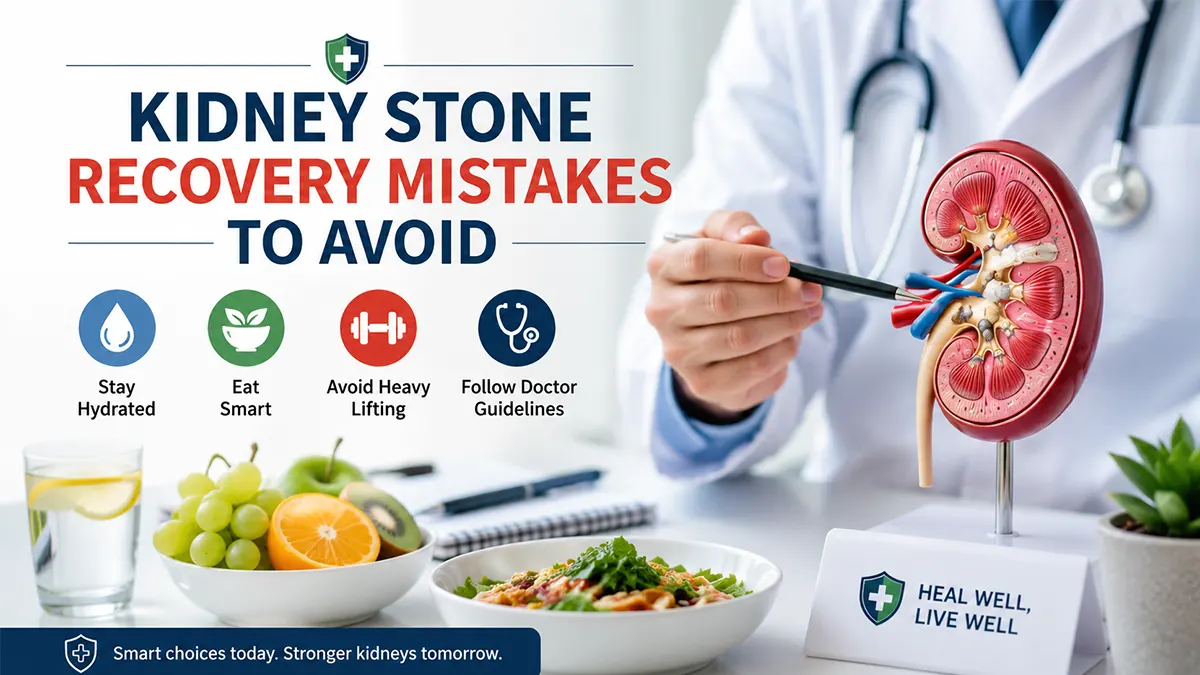
Kidney stone recovery mistakes to avoid can make the difference between a smooth recovery and another painful trip to the emergency room.
Many people feel better after lithotripsy, ureteroscopy, or laser kidney stone removal and assume the hardest part is over. But small mistakes—such as not drinking enough water, ignoring fever, or going back to work too soon—can delay healing and increase the risk of infection or another stone.
This doctor-reviewed guide explains the most common kidney stone recovery mistakes and how to avoid them.
Table of Contents
1. Not Drinking Enough Water After Kidney Stone Surgery
One of the biggest kidney stone recovery mistakes to avoid is dehydration.
What Happens If You Don’t Drink Enough Water After Kidney Stone Surgery?
Poor hydration can:
- Slow stone fragment passage
- Increase burning urination
- Raise infection risk
- Trigger new stone formation
General Fluid Goal
Most adults are advised to drink enough to keep urine pale yellow.
Follow this guide on foods to eat after kidney stone surgery.
2. Ignoring Fever After Kidney Stone Removal
A fever after surgery is never something to ignore.
Warning Signs of Infection
- Fever or chills
- Severe pain
- Foul-smelling urine
- Nausea or vomiting
Infection after stone surgery can become serious quickly.
3. Pulling Out a Kidney Stone Stent String Too Early
Some stents have a visible string for later removal.
Removing it too early may:
- Cause severe pain
- Lead to ureter swelling
- Require another procedure
Only remove the stent if your doctor specifically instructs you.
4. Not Straining Your Urine After Lithotripsy
Straining urine helps collect stone fragments for analysis.
Stone analysis tells your doctor whether you formed:
- Calcium oxalate stones
- Uric acid stones
- Other types
This information guides long-term prevention.
5. Lifting Heavy Weights Too Soon
Heavy lifting can worsen pain and bleeding.
Avoid:
- Gym workouts
- Weight lifting
- Moving heavy objects
Follow your surgeon’s activity restrictions.
Understand the normal kidney stone pain stages during healing.
6. Drinking the Wrong Fluids During Recovery
Some beverages may worsen dehydration or bladder irritation.
Drinks to Limit
- Sugary sodas
- Energy drinks
- Excess tea
- Alcohol
Better Choices
- Water
- Lemon water
- Coconut water
- Herbal tea
7. Holding Your Urine With a Kidney Stone Stent
A stent can cause urgency and bladder pressure.
Holding urine too long may worsen:
- Burning
- Bladder spasms
- Discomfort
Urinate when you feel the urge.
Know the signs a kidney stone is stuck in the ureter
8. Eating Too Much Salt Too Soon
Salt increases calcium excretion in the urine and may raise the risk of new stones.
Avoid:
- Chips
- Pickles
- Processed foods
- Fast food
9. Going Back to Work Too Soon
Returning to work too early can worsen fatigue and pain.
Recovery time depends on:
- Procedure type
- Stent presence
- Job demands
Desk jobs may resume sooner than physically demanding work.
10. Relying Only on Home Remedies
Lemon water and dietary changes may help, but they do not replace medical care.
Seek professional evaluation if symptoms persist.
11. Skipping Your Follow-Up Scan
Your doctor may recommend:
- Ultrasound
- X-ray
- CT scan
These tests confirm that no significant fragments remain.
12. Ignoring Severe Pain or Heavy Bleeding
Seek urgent medical care if you have:
- Severe uncontrolled pain
- Large blood clots
- Inability to urinate
- Fever or chills
Learn why kidney stone pain changes position.
What Are the Worst Foods to Eat During Kidney Stone Recovery?
Avoid:
- Salty foods
- Sugary drinks
- Highly processed snacks
- Excess spinach if you form calcium oxalate stones
When to Go to the ER
Go to the ER if you develop:
- Fever
- Persistent vomiting
- Severe pain
- Inability to urinate
When to Go to A&E
Visit A&E or call 111 if you have the same warning signs.
When to Seek Urgent Care in India
Contact your urologist or go to the nearest emergency hospital if symptoms worsen.
Why Kidney Stone Recovery Mistakes to Avoid Matter More Than You Think
Doctors emphasize that understanding kidney stone recovery mistakes to avoid is just as important as knowing what medications to take. Even one mistake—such as dehydration, skipping follow-up appointments, or eating too much salt—can delay recovery and increase the chance of another painful stone episode.
The most common kidney stone recovery mistakes to avoid include:
- Not drinking enough water
- Ignoring fever or chills
- Pulling out a stent too early
- Going back to work too soon
- Relying only on home remedies
- Skipping your follow-up ultrasound
By avoiding these kidney stone recovery mistakes to avoid, most patients recover faster and reduce the risk of complications.
Quick Recovery Checklist
- Drink plenty of water
- Take medications as prescribed
- Avoid heavy lifting
- Strain urine if advised
- Attend follow-up appointments
- Eat a low-salt diet
Discover the best foods to prevent kidney stones naturally.
What happens if you don’t drink enough water after kidney stone surgery?
Recovery may be slower, urine may become concentrated, and stone fragments may not pass easily.
Is it a mistake to hold your urine with a kidney stone stent?
Yes. Holding urine can worsen bladder discomfort and urgency.
Can eating too much salt cause another kidney stone right away?
High sodium intake increases stone risk, especially in susceptible individuals.
Why is resting important after laser lithotripsy?
Rest supports healing and reduces bleeding and discomfort.
What are the worst foods to eat during kidney stone recovery?
Highly salty, processed, and sugary foods are best avoided.
Link to:
- Foods to Eat After Kidney Stone Surgery
- Signs a Kidney Stone Is Stuck in the Ureter
- Why Kidney Stone Pain Changes Position
- Best Foods to Prevent Kidney Stones Naturally
- Can Dehydration Cause Kidney Stones Overnight?
Conclusion
Knowing the most important kidney stone recovery mistakes to avoid can help you heal faster, feel better, and reduce the risk of future kidney stones. Simple steps such as staying hydrated, eating kidney-friendly foods, resting adequately, and attending follow-up appointments can make a major difference in your recovery.
If you remember one thing from this guide, let it be this: the best way to avoid complications is to understand the key kidney stone recovery mistakes to avoid and act early if you develop fever, severe pain, vomiting, or difficulty urinating. When in doubt, contact your urologist promptly.
Dr. Jayanth Reddy – Consultant Urologist
My Health Hospitals, Hyderabad
This content has been medically reviewed for accuracy and reliability based on current urology treatment guidelines.
According to the kidney stone symptoms NHS guide, severe flank pain can worsen during rest or nighttime.
Author
Yamanandan Reddy
Health Content Writer & Frontend Developer
Yamanandan Reddy is a health content writer and frontend developer with over 4 years of experience in website design and digital content creation. He writes research-based health articles to help readers understand symptoms, causes, treatments, and prevention methods related to common health conditions.
His articles are written using information from trusted medical sources such as the World Health Organization (WHO), Mayo Clinic, and the Centers for Disease Control and Prevention (CDC).
Sources
The information in this article is researched and verified using trusted medical resources, including:
• World Health Organization (WHO)
• Mayo Clinic
• National Institutes of Health (NIH)
• Centers for Disease Control and Prevention
⚠️ Medical Disclaimer
This content is for informational purposes only and does not replace professional medical advice. Always consult a qualified healthcare provider for diagnosis and treatment.
1 thought on “Kidney Stone Recovery Mistakes to Avoid After Surgery or Passing a Stone”