
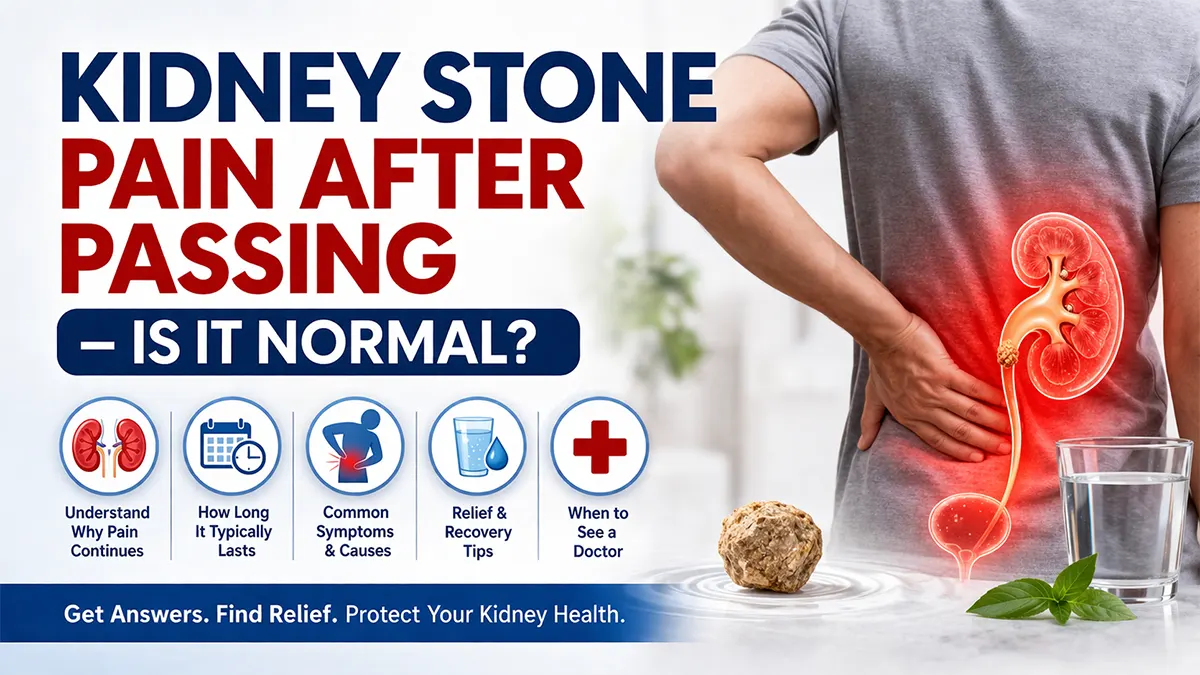
Kidney stone pain after passing can feel confusing and even frightening. Many people expect instant relief once the stone is out, but instead experience lingering discomfort, burning urination, or mild back pain. This raises a common question: is there pain after passing a kidney stone, and how long does it last?
The truth is — yes, pain after passing a kidney stone is normal in many cases. However, understanding the reasons behind this pain and knowing when to seek medical help is essential for safe recovery.
Kidney stone pain after passing can still occur due to irritation and healing of the urinary tract.
Table of Contents
Why Does Pain Continue After Passing a Kidney Stone?
Even after the stone leaves your body, the urinary tract may still be affected.
Common causes of lingering pain after passing a kidney stone:
- Ureter inflammation from stone movement
- Residual back pain after passing kidney stone
- Small stone fragments left behind
- Urinary tract irritation
- Muscle spasms in the ureter
- Mild infection or UTI
This explains why many patients report kidney pain after passing kidney stone or even burning pain after passing kidney stone.
If you’re still unsure whether your pain is normal, understanding the early warning signs can help. Read our detailed guide on kidney stone symptoms to know what your body is trying to tell you.
How Long Does Pain Last After Passing a Kidney Stone?
One of the most searched questions is:
👉 How long does pain last after passing a kidney stone?
Typical timeline:
- Mild pain → 24–72 hours
- Residual discomfort → 3–7 days
- Lingering pain → Up to 2 weeks
In some cases, patients may experience:
- Kidney pain days after passing stone
- Kidney pain a week after passing stone
- Rarely, kidney pain weeks after passing stone
If pain continues beyond 2 weeks, medical evaluation is recommended.
Pain doesn’t always end immediately after the stone passes. To understand how pain develops and changes, explore the full breakdown of kidney stone pain stages and what each phase feels like.
Types of Pain After Passing a Kidney Stone
1️⃣ Flank Pain After Passing Kidney Stone
This is the most common type.
- Dull ache in the back or side
- Caused by inflammation or swelling
👉 Known as flank pain after passing kidney stone
Even after relief, some people notice that kidney stone pain after passing can linger, making them worry if something is wrong.
2️⃣ Bladder Pain After Passing a Kidney Stone
Some patients feel:
- Pressure in lower abdomen
- Frequent urination
- Burning sensation
This happens when the bladder lining is irritated.
3️⃣ Urethra Pain After Passing Kidney Stone
Pain during urination may include:
- Burning sensation
- Sharp discomfort
- Pain while passing urine
👉 Common in kidney stone pain passing urine
4️⃣ Groin or Pelvic Pain After Passing Kidney Stone
Pain may radiate to:
- Groin
- Pelvic area
- Testicles (in men)
This explains:
👉 groin pain after passing kidney stone
👉 testicle pain after passing kidney stone
5️⃣ Lower Back Pain After Passing Kidney Stone
Some people continue to feel:
- Lower back pain after passing kidney stone
- Muscle soreness
This is often due to muscle strain during pain episodes.
Many people find relief through natural methods during recovery. Discover safe and effective kidney stone home remedies that may help ease lingering pain and support healing.
Kidney Stone Pain Before vs After Passing
| Stage | Pain Type |
|---|---|
| Before passing | Severe, sharp, wave-like pain |
| During passing | Extreme ureter pain |
| After passing | Mild, dull, or burning discomfort |
👉 Many people ask:
Does kidney stone pain go away after passing?
Answer: Pain reduces significantly but may not disappear immediately.
Is It Normal to Still Have Pain After Passing a Kidney Stone?
Yes.
👉 Can you still have pain after passing a kidney stone?
✔ Yes — this is common
👉 Do kidney stones hurt after they pass?
✔ Mild pain can continue
👉 Why does it still hurt after passing a kidney stone?
Because:
- Tissue irritation remains
- Healing process continues
- Urinary tract is sensitive
When Pain After Passing Kidney Stone Is NOT Normal
Seek medical help if you experience:
🚨 Severe or increasing pain
🚨 Fever or chills
🚨 Blood clots in urine
🚨 Vomiting
🚨 Pain lasting more than 2 weeks
These may indicate:
- Infection
- Blockage
- Remaining stones
Hydration plays a major role in reducing irritation after passing a stone. Find out the best water for kidney stones to flush your system and speed up recovery.
Can Kidney Stones Cause Pain After They Pass?
Yes.
👉 Can kidney stones cause pain after they pass?
✔ Yes — due to:
- Residual fragments
- Ureter damage
- Inflammation
Some patients even report:
👉 phantom pain after passing kidney stone
This is when pain continues even after the stone is gone.
Pain in Different Body Areas After Passing
Patients often search for:
- Side pain after passing kidney stone
- Hip pain after passing kidney stone
- Stomach pain after passing kidney stone
- Chest pain after passing kidney stone
These are usually due to:
✔ Nerve sensitivity
✔ Muscle strain
✔ Pain radiation
Why Pain Feels Worse After Passing Kidney Stone
Some patients feel:
👉 Pain worse after passing kidney stone
This may happen due to:
- Sudden inflammation
- Tissue sensitivity
- Urinary irritation
How to Relieve Pain After Passing Kidney Stone
✅ Effective relief tips
✔ Drink 3–4 liters of water daily
✔ Take prescribed medications
✔ Use warm compress on back
✔ Avoid heavy foods
✔ Rest and relax muscles
✔ Follow medical advice
These help reduce:
👉 lingering pain after passing kidney stone
Prevention of Future Pain Episodes
To avoid recurrence:
✔ Stay hydrated
✔ Follow kidney stone diet
✔ Reduce salt intake
✔ Limit oxalate foods
✔ Regular medical checkups
Is kidney stone pain after passing normal?
Yes, kidney stone pain after passing is normal in many cases. The urinary tract may still be irritated or inflamed, causing mild discomfort, burning, or back pain for a few days after the stone passes.
How long does pain last after passing a kidney stone?
Pain after passing a kidney stone usually lasts 1 to 7 days. Mild discomfort may continue for up to 2 weeks, depending on stone size, irritation, and hydration levels.
Why do I still have pain after passing a kidney stone?
You may still feel pain after passing a kidney stone due to ureter inflammation, small remaining fragments, or muscle spasms. Healing takes time, even after the stone exits.
Can you still have kidney pain after passing a kidney stone?
Yes, kidney pain after passing a kidney stone is common. The kidneys and ureter may remain sensitive, causing dull or lingering pain for a few days.
Does kidney stone pain go away immediately after passing?
No, kidney stone pain does not always go away immediately. While severe pain reduces quickly, mild soreness or burning during urination can continue temporarily.
Why does it hurt to urinate after passing a kidney stone?
Pain urinating after passing a kidney stone occurs due to urethral irritation and inflammation. This usually improves within a few days as the urinary tract heals.
Is flank pain after passing a kidney stone normal?
Yes, flank pain after passing a kidney stone is normal. It is often caused by residual inflammation or muscle strain from intense pain episodes.
Can kidney stone pain last for weeks after passing?
Kidney stone pain can last for weeks in rare cases. If pain continues beyond 2 weeks, it may indicate infection, blockage, or leftover stones and should be evaluated by a doctor.
Why is there bladder pain after passing a kidney stone?
Bladder pain after passing a kidney stone occurs due to irritation of the bladder lining. Frequent urination and pressure sensations are common symptoms.
Can kidney stone pain come back after passing?
Yes, kidney stone pain can return if small fragments remain or new stones begin forming. Proper hydration and follow-up care are important to prevent recurrence.
Is burning pain after passing a kidney stone normal?
Yes, burning pain after passing a kidney stone is common. It is usually caused by irritation of the urinary tract and improves within a few days.
When should I worry about pain after passing a kidney stone?
You should seek medical help if pain is severe, worsening, lasts more than 2 weeks, or is associated with fever, vomiting, or blood clots in urine.
Final Medical Insight
Kidney stone pain after passing is a normal part of the healing process in many cases. While the intense pain reduces significantly after the stone exits, mild to moderate discomfort can continue due to inflammation, irritation, or residual effects.
Understanding kidney stone pain after passing helps reduce fear and ensures proper recovery without complications.
Understanding why pain continues and how long it lasts helps reduce anxiety and ensures timely medical care when needed. For patients in the USA, UK, and India, awareness and prevention play a key role in long-term kidney health.
Medically Reviewed By:
Dr. Jayanth Reddy – Consultant Urologist
My Health Hospitals, Hyderabad
This content has been medically reviewed for accuracy and reliability based on current urology treatment guidelines.
According to the kidney stone symptoms NHS guide, severe flank pain can worsen during rest or nighttime.
Author
Yamanandan Reddy
Health Content Writer & Frontend Developer
Yamanandan Reddy is a health content writer and frontend developer with over 4 years of experience in website design and digital content creation. He writes research-based health articles to help readers understand symptoms, causes, treatments, and prevention methods related to common health conditions.
His articles are written using information from trusted medical sources such as the World Health Organization (WHO), Mayo Clinic, and the Centers for Disease Control and Prevention (CDC).
Sources
The information in this article is researched and verified using trusted medical resources, including:
• World Health Organization (WHO)
• Mayo Clinic
• National Institutes of Health (NIH)
• Centers for Disease Control and Prevention (CDC)
Disclaimer
The information provided on HealthyWayCare.com is for educational and informational purposes only. It should not be considered medical advice, diagnosis, or treatment. Always consult a qualified healthcare professional before making any medical decisions or starting any treatment.