
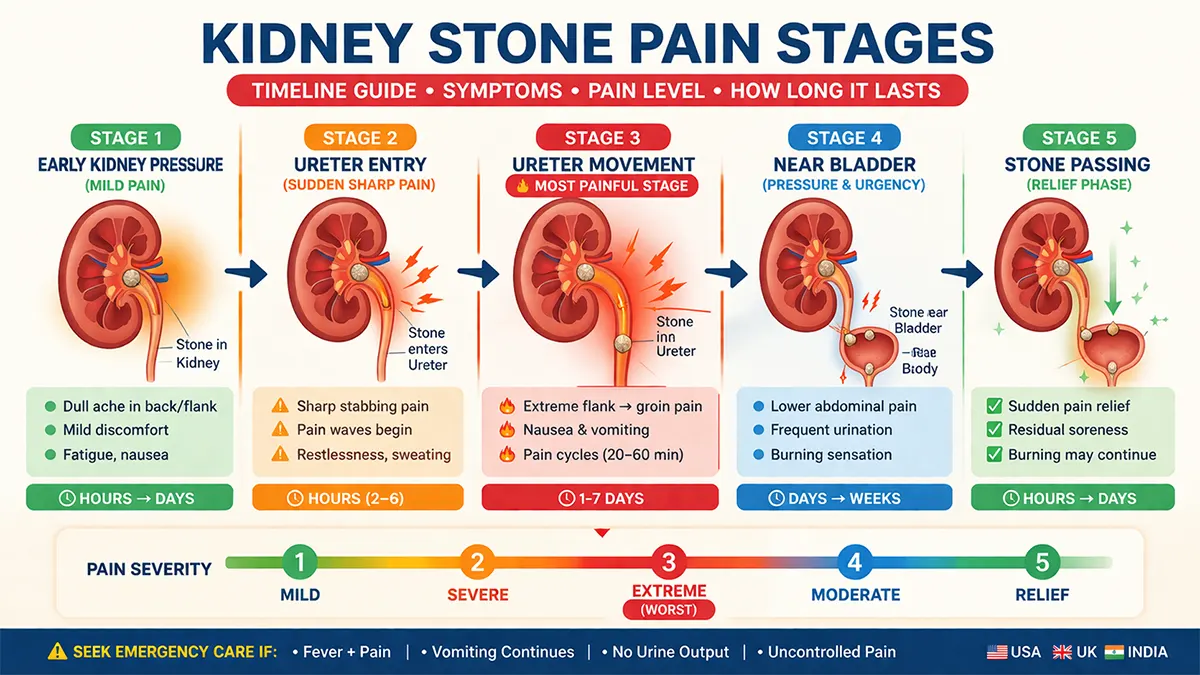
Kidney stone pain stages are not a fixed medical sequence. A stone may cause no symptoms while it remains in the kidney, then trigger sudden, wave-like flank pain if it moves into the ureter. Pain may travel toward the lower abdomen or groin, and urinary urgency may occur when a stone is near the bladder. Symptoms and timing vary widely.
This guide explains common pain patterns, what changes may mean, and when to seek medical care. Severe pain, fever, vomiting, or difficulty passing urine needs prompt assessment—do not wait for a supposed “next stage.”
Key Takeaways
- Kidney stones do not follow a reliable five-stage timeline.
- A stone obstructing the ureter may cause severe, wave-like pain called renal colic.
- Pain location alone cannot confirm that a stone has moved or passed.
- Symptoms can last hours or recur over days; persistent pain should be medically assessed.
- Fever or chills with suspected stone, inability to urinate, uncontrolled pain, or repeated vomiting warrants urgent care.
Table of Contents
Understanding Kidney Stone Pain
A kidney stone may remain silent in the kidney. Pain often starts when a stone enters or obstructs the ureter, the narrow tube carrying urine to the bladder. Obstruction can increase pressure in the urinary system and trigger ureteral contractions.
The severity of pain does not reliably tell you the stone size or whether it has passed. Symptoms can overlap with appendicitis, infections, and other conditions, so a clinician may recommend urine tests and imaging.
Related reading: Kidney stone symptoms in men and women.
Common Patterns as a Kidney Stone Moves
1. Stone in the kidney: sometimes no pain
Many kidney stones do not cause symptoms while they stay in the kidney. Others may be associated with discomfort or blood in the urine. Mild pain is not a required first stage.
2. Ureteral obstruction: sudden flank pain
When a stone blocks the ureter, pain may start suddenly in the side or back below the ribs. It can be severe and accompanied by nausea, vomiting, sweating, or restlessness. This pattern is called renal colic.
3. Pain may radiate toward the groin
As the location of irritation changes, pain may be felt in the lower abdomen, groin, or genital area. The exact site cannot establish the stone’s position without medical assessment.
4. Lower urinary tract symptoms may appear
A stone near the bladder can be associated with frequent urination, urgency, or discomfort when urinating. These symptoms can also occur with a urinary tract infection.
5. Relief or lingering discomfort
Pain often improves when obstruction resolves, sometimes before a stone is visibly passed. Persistent or recurrent symptoms may indicate remaining obstruction, another stone, infection, or a different cause and should be evaluated.
Related reading: Kidney stone pain location chart.
How Long Can Kidney Stone Pain Last?
There is no medically reliable duration for each pain “stage.” An episode of renal colic may last hours, and symptoms can return over days or longer. Passage depends on factors such as stone size and location, but symptom duration alone cannot confirm safe passage.
If pain lasts four days, one week, or longer, do not assume it is normal simply because a stone might be moving. Contact a healthcare professional for assessment and follow-up; a blocked kidney can be damaged even if pain temporarily eases.
A clinician may advise observation for a suitable small stone, with follow-up imaging when needed. Larger stones, ongoing obstruction, infection, or uncontrolled symptoms may require treatment.
Why Does Kidney Stone Pain Come in Waves?
Renal colic often comes in waves because pressure and ureteral contractions can change while urine flow is obstructed. The pain may intensify, ease, and return. Temporary relief does not prove the stone has passed.
What Does Pain Near the Bladder Feel Like?
When a stone is in the lower ureter, some people notice bladder pressure, urinary urgency, frequent urination, or pain radiating to the groin. However, these symptoms do not define a medically recognized “stage 4,” and they are not enough to diagnose a stone.
Burning urination, fever, or cloudy urine may suggest infection and requires medical evaluation.
Can Pain Continue After a Stone Passes?
Mild irritation may remain after a stone passes, but ongoing flank pain, fever, vomiting, or urinary problems should not be dismissed as routine healing. A residual fragment, another stone, obstruction, or infection may need assessment.
Related reading: Kidney stone pain after passing.
When to Seek Emergency Medical Care
Seek urgent medical care for any of these symptoms, especially if you suspect a kidney stone:
- Fever or chills, particularly with flank pain or urinary symptoms
- Inability to urinate or markedly reduced urine output
- Severe pain that is not controlled
- Repeated vomiting or inability to keep fluids down
- Symptoms in someone with a single functioning kidney, pregnancy, or significant kidney disease
A stone with an infected, obstructed urinary tract is a medical emergency. Visible blood in urine also warrants prompt medical assessment, even if pain is mild.
How Doctors Diagnose and Treat Kidney Stones
Doctors may use a medical history, examination, urinalysis, blood tests, and imaging such as ultrasound or CT when appropriate. Treatment depends on stone size, location, kidney function, infection risk, and symptoms.
Options can include prescribed pain relief, anti-nausea treatment, selected medications that may help some ureteral stones pass, observation with follow-up, or procedures to remove or break up a stone. Do not force large amounts of water during a painful attack as a substitute for care.
Related reading: Kidney stone home remedies: limits and precautions.
Preventing Future Kidney Stones
For prevention, staying adequately hydrated is important, but there is no universal requirement to drink 3–4 liters daily. People with recurrent stones may receive an individualized fluid goal based on urine volume, climate, activity, and health conditions.
Dietary changes depend on stone type. Clinicians may discuss sodium intake, normal dietary calcium, animal protein, and oxalate where relevant. A stone analysis and sometimes a 24-hour urine test can guide prevention. People with kidney failure, heart failure, or fluid restrictions should follow their clinician’s advice.
Related reading: Best water for kidney stones.
Frequently Asked Questions
What are the kidney stone pain stages?
There is no fixed clinical staging system for kidney stone pain. Common patterns include silent stones, sudden flank pain from ureteral obstruction, pain radiating toward the groin, urinary symptoms, and possible relief when obstruction resolves.
Which part is usually most painful?
A stone obstructing the ureter can cause intense renal colic. Pain intensity varies, and a person cannot identify the stone’s exact position from pain alone.
Can kidney stone pain last four hours, four days, or a week?
Yes, episodes can vary in duration and recur. However, persistent or recurrent pain needs medical assessment rather than being labeled a normal stage.
What is “stage 4” kidney stone pain?
“Stage 4” is not a standard medical diagnosis. Some online descriptions use it for lower ureter or bladder-area symptoms, but the actual stone location requires clinical evaluation.
Does pain stopping mean the stone passed?
Not necessarily. Pain can ease even when a stone remains. Follow the clinician’s plan for confirming passage or resolution of obstruction.
Why can pain continue after passing a stone?
Irritation is one possibility, but ongoing symptoms can also indicate a remaining stone, obstruction, or infection. Seek assessment if symptoms persist or worsen.
Bottom Line
Kidney stone pain is often unpredictable, not a step-by-step five-stage process. Severe flank pain, shifting discomfort, and urinary symptoms are possible patterns—not proof of a particular stage. Persistent pain or signs of infection require timely medical care.
Author
Yamanandan Reddy
Health Content Writer & Frontend Developer
Sources
- NIDDK — Symptoms & Causes of Kidney Stones
- NIDDK — Diagnosis of Kidney Stones
- NIDDK — Treatment for Kidney Stones
- NIDDK — Eating, Diet & Nutrition for Kidney Stones
Medical Disclaimer
This article provides general educational information and is not a diagnosis or substitute for advice from a qualified healthcare professional. Seek urgent care for fever with suspected kidney stone, inability to urinate, uncontrolled pain, or persistent vomiting.
15 thoughts on “Kidney Stone Pain Stages Explained (Timeline Guide)”