
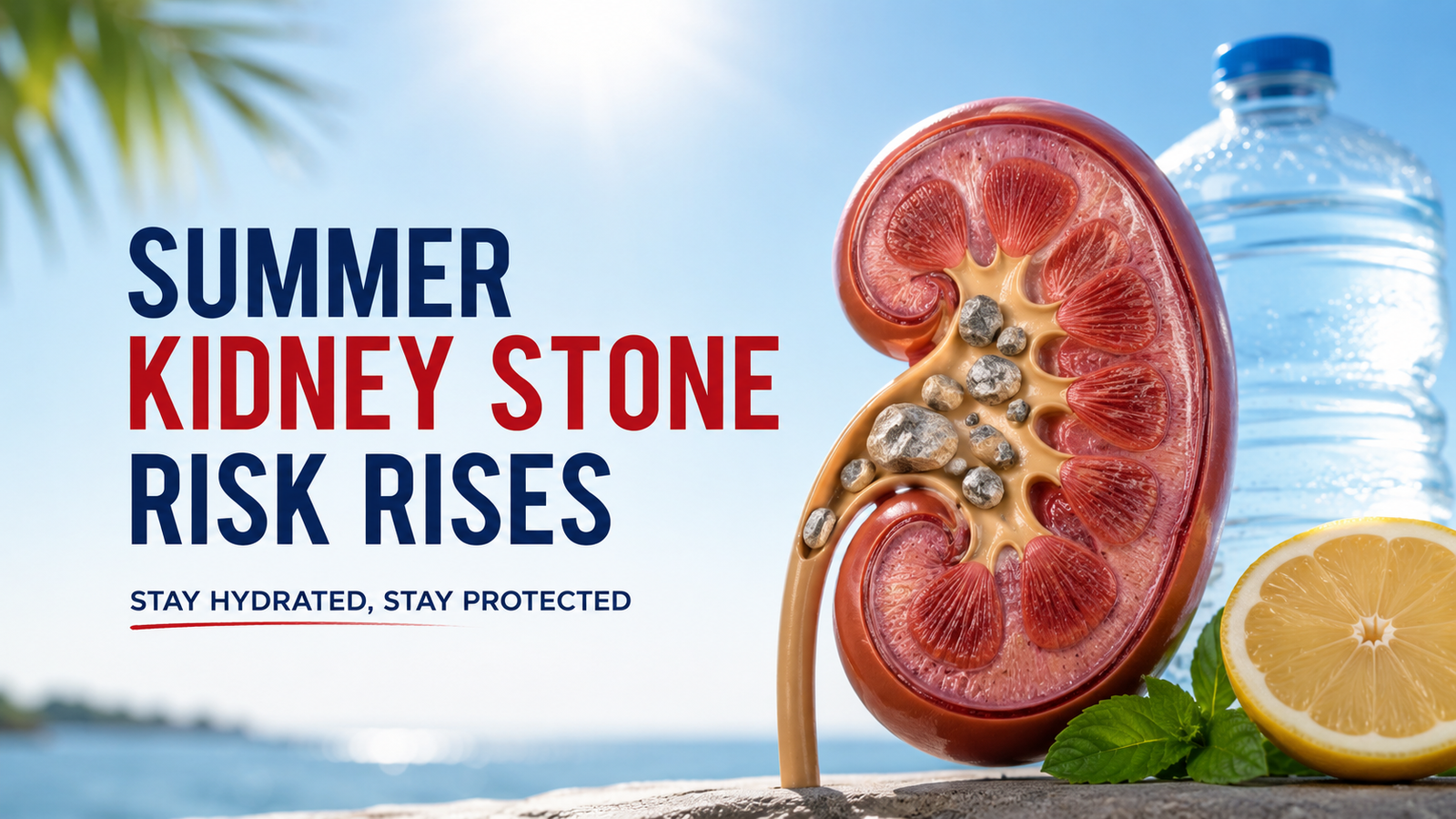
Every summer, emergency rooms and urology clinics see the same pattern.
More people arrive doubled over with severe back pain, nausea, and blood in the urine.
The culprit? Kidney stones.
Doctors have long observed that summer kidney stone risk rises sharply during hot weather. When temperatures soar, your body loses more water through sweat. If you do not replace those fluids, your urine becomes concentrated—creating the perfect conditions for crystals to form.
In other words, summer heat can turn mild dehydration into one of the most painful conditions in medicine.
The good news is that most summer-related kidney stones are preventable.
Table of Contents
What Are Kidney Stones?
Kidney stones are hard deposits made of minerals and salts that form inside the kidneys.
Think of your urine like a glass of water with dissolved sugar.
When there is too little water and too much dissolved material, crystals start to appear.
Over time, those crystals can grow into stones.
kidney stone symptoms when discussing flank pain, nausea, and blood in the urine.
Why Does Hot Weather Cause Kidney Stones?
The answer is simple: dehydration.
How Dehydration in Summer Leads to Kidney Stones
When you sweat:
- You lose water.
- You produce less urine.
- Your urine becomes more concentrated.
- Minerals such as calcium, oxalate, and uric acid crystallize.
This explains why hot weather causes kidney stones and does sweating a lot cause kidney stones.
Why Urologists See More Kidney Stones in the Summer
Urologists consistently report a rise in stone cases from late spring through early fall.
Research also suggests that warming global temperatures may expand the U.S. “kidney stone belt,” where hot climates are associated with higher stone rates.
[Clinical citation placeholder: American Urological Association, National Kidney Foundation, climate-health studies]
Hidden Summer Risks Most People Overlook
Air Conditioning Can Cause Hidden Dehydration
Many people assume they are safe indoors.
But air conditioning dries the air, and cooler temperatures can reduce your thirst.
This explains the growing interest in hidden dehydration from air conditioning and kidney stones.
Outdoor Work and Exercise
Construction workers, delivery drivers, landscapers, and athletes can lose large amounts of fluid through sweat.
This is why people ask, does working outside in the heat cause kidney stones?
Yes—especially if fluids and electrolytes are not replaced.
Summer Travel
Flights, beach vacations, and long road trips often disrupt hydration.
Holiday dehydration is a common trigger for kidney stones.
kidney stone diet plan in the section about summer diet tips to prevent calcium oxalate stones.
Summer Kidney Stone Risk is much higher than many people realize. Urologists see a clear increase in emergency visits every year as temperatures rise. The main reason is dehydration. When you sweat more and drink less, your urine becomes concentrated, making Summer Kidney Stone Risk significantly higher.
Signs of Kidney Stones During a Heatwave
Common symptoms include:
- Sudden severe pain in the back or side
- Pain that moves to the groin
- Blood in the urine
- Burning with urination
- Frequent urination
- Nausea and vomiting
- Cloudy or foul-smelling urine
These are classic signs of kidney stones during a heatwave.
How Fast Can a Kidney Stone Form From Severe Summer Dehydration?
Stone formation is usually a gradual process, but severe dehydration can accelerate crystal formation within hours to days in people who are already at risk.
If you have had kidney stones before, even a single hot weekend with poor hydration may trigger symptoms.
best water for kidney stones when discussing how much water to drink in summer.
Summer Diet Tips to Prevent Calcium Oxalate Stones
Calcium oxalate stones are the most common type of kidney stone.
Eat More Of:
- Water
- Lemon water
- Oranges and citrus fruits
- Calcium-rich foods
- Vegetables
Limit:
- Excess salt
- Sugary drinks
- Large amounts of spinach, beets, and nuts if advised by your doctor
- Too much animal protein
These are practical summer diet tips to prevent calcium oxalate stones.
kidney stone treatment options in the section explaining what to do if you suspect a kidney stone.
Does Drinking Iced Tea in Summer Cause Kidney Stones?
Tea contains oxalates, but moderate intake is usually safe for most people.
Problems arise when iced tea replaces water or is consumed in very large amounts.
Lemon Water for Summer Kidney Stone Prevention
Lemon juice contains citrate, a natural substance that helps prevent stones.
Adding fresh lemon to water is a simple and effective strategy.
This is why many urologists recommend lemon water for summer kidney stone prevention.
Does Adding Salt to Summer Drinks Cause Kidney Stones?
Popular summer drinks like sports drinks, salted buttermilk, and shikanji can be refreshing.
But too much salt increases urinary calcium, which may raise stone risk.
Moderation is key.
How Much Water Should You Drink in Summer to Prevent Kidney Stones?
The goal is not just a fixed number of glasses.
Your goal is to produce pale yellow urine.
Many adults need about 2.5 to 3.5 liters of fluid daily in hot weather, and more if they sweat heavily.
Some people ask about drinking a gallon of water a day in summer for kidney stones. This may be appropriate for some adults, but individual needs vary.
Best Drinks for Kidney Stone Prevention
Choose:
- Plain water
- Lemon water
- Unsweetened citrus-infused water
- Low-sugar electrolyte drinks when sweating heavily
Limit:
- Sugary sodas
- Energy drinks
- Excess sweet tea
Who Is Most at Risk?
Your summer kidney stone risk is higher if you:
- Have had kidney stones before
- Work outdoors
- Exercise intensely
- Drink little water
- Eat a high-salt diet
- Have obesity
- Have diabetes
- Take certain medications
What to Do if You Think You Have a Kidney Stone
- Start drinking water if you are not vomiting.
- Rest in a cool environment.
- Use pain medication if approved by your doctor.
- Strain your urine if instructed.
- Seek urgent care if pain is severe.
When to See a Doctor Immediately
Get emergency care if you have:
- Fever or chills
- Severe pain
- Repeated vomiting
- Trouble urinating
- Blood in the urine
- Pain with a single kidney
- Signs of dehydration such as dizziness or confusion
Practical Summer Kidney Stone Prevention Tips
- Carry a reusable water bottle.
- Set hydration reminders.
- Drink before you feel thirsty.
- Limit excess salt.
- Add lemon to your water.
- Take breaks from the heat.
- Monitor urine color.
The good news is that Summer Kidney Stone Risk can often be prevented with simple habits. Drinking enough water, limiting salt, and adding lemon to your water can help reduce your chances of developing painful kidney stones during hot weather.
People Also Ask (FAQ)
Why do urologists see more kidney stones in the summer?
Hot weather increases sweating and dehydration, which concentrates urine and promotes crystal formation.
Can air conditioning cause dehydration and kidney stones?
Indirectly, yes. Air conditioning can dry the air and reduce thirst, leading to lower fluid intake.
How much water should you drink in summer to prevent kidney stones?
Enough to keep your urine pale yellow. Many adults need 2.5 to 3.5 liters or more during hot weather.
How fast can a kidney stone form from severe dehydration?
Crystals can form quickly in susceptible individuals, especially if they are already prone to stones.
Final Takeaway
Summer kidney stone risk rises because heat increases sweating and dehydration.
The solution is simple but powerful: drink enough water, limit excess salt, and pay attention to early symptoms.
A few extra glasses of water today may spare you one of the most painful experiences of your life.
Understanding Summer Kidney Stone Risk gives you the power to protect your kidneys. If you stay hydrated and recognize early warning signs, you can lower your risk and enjoy the summer with confidence.
Dr. Jayanth Reddy – Consultant Urologist
My Health Hospitals, Hyderabad
This content has been medically reviewed for accuracy and reliability based on current urology treatment guidelines.
According to the kidney stone symptoms NHS guide, severe flank pain can worsen during rest or nighttime.
Author
Yamanandan Reddy
Health Content Writer & Frontend Developer
Yamanandan Reddy is a health content writer and frontend developer with over 4 years of experience in website design and digital content creation. He writes research-based health articles to help readers understand symptoms, causes, treatments, and prevention methods related to common health conditions.
His articles are written using information from trusted medical sources such as the World Health Organization (WHO), Mayo Clinic, and the Centers for Disease Control and Prevention (CDC).
Sources
The information in this article is researched and verified using trusted medical resources, including:
• World Health Organization (WHO)
• Mayo Clinic
• National Institutes of Health (NIH)
• Centers for Disease Control and Prevention
⚠️ Medical Disclaimer
This content is for informational purposes only and does not replace professional medical advice. Always consult a qualified healthcare provider for diagnosis and treatment.