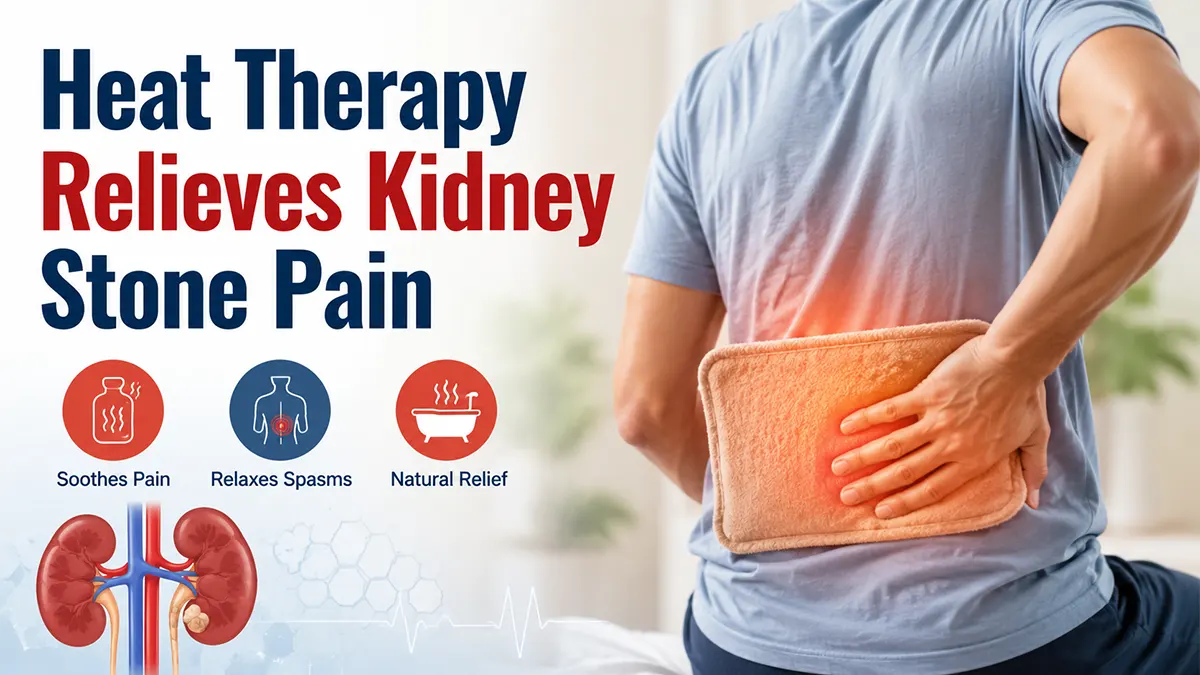
Kidney stones are one of the most painful urinary tract conditions. The pain usually occurs when a stone moves from the kidney into the ureter, the narrow tube that carries urine to the bladder. As the stone travels, it can trigger intense muscle contractions and spasms, leading to severe flank pain.
Many patients ask, does heat help kidney stone pain? The answer is often yes. Heat therapy has long been used as a supportive, non-drug approach for pain management. Whether you use a heating pad for kidney stones, a warm compress, a hot water bottle, a hot shower, or a hot bath, heat may help relax muscles and reduce discomfort.
While heat therapy cannot make a stone disappear, it can be an effective part of kidney stone pain management at home when used safely and alongside medical advice.
Table of Contents
What Is Heat Therapy?
Heat therapy involves applying warmth to painful areas of the body to improve comfort and reduce muscle tension.
Common forms include:
- Heating pads
- Electric heating blankets
- Warm compresses
- Hot water bottles
- Warm baths
- Hot showers
For kidney stone sufferers, heat is usually applied to the lower back, side, abdomen, or flank area where pain is most noticeable.
Is the Pain of Passing a Kidney Stone Worse for Men Than Women?
How Heat Therapy for Kidney Stone Pain Works
Relaxs Ureteral and Muscle Spasms
One of the main reasons heat therapy to relieve kidney stone spasms works is that warmth helps relax smooth muscles surrounding the urinary tract.
When a stone irritates the ureter, the muscles may contract forcefully. These contractions contribute significantly to pain.
Heat can help:
- Reduce muscle tension
- Ease ureteral spasms naturally
- Improve comfort during stone passage
- Reduce cramping sensations
Improves Blood Circulation
Applying heat increases blood flow to the affected area.
Improved circulation may:
- Deliver oxygen to tissues
- Reduce muscle stiffness
- Promote relaxation
- Help decrease pain perception
Interrupts Pain Signals
Heat stimulates sensory receptors in the skin, which can help reduce the transmission of pain signals to the brain.
This mechanism is similar to why warm compresses are used for muscle strains and menstrual cramps.
Provides Comfort During Stone Passage
Patients often report that a warm bath or heating pad makes severe episodes more manageable while waiting for medication to work or while the stone progresses through the urinary tract.
Stone Anxiety: Coping With the Fear of Your Next Kidney Stone Attack
Causes of Kidney Stone Pain
Kidney stone pain develops because of:
- Blocked urine flow
- Stretching of the kidney
- Ureteral spasms
- Inflammation
- Pressure buildup inside the urinary tract
Pain often fluctuates in waves, known as renal colic.
Symptoms Associated With Kidney Stone Pain
Common symptoms include:
- Severe flank pain
- Lower back pain
- Pain radiating to the groin
- Burning during urination
- Frequent urination
- Blood in urine
- Nausea and vomiting
- Restlessness
- Sweating
If fever develops, immediate medical evaluation is necessary.
Does a Heating Pad Help Flank Pain?
In many cases, yes.
A kidney stone pain relief heating pad may reduce discomfort by relaxing muscles and reducing tension around the affected area.
Where to Place Heating Pad for Kidney Stone Pain
The best location depends on where symptoms occur.
Lower Back or Flank
Place the heating pad on:
- The painful side
- Lower back
- Area below the ribs
Lower Abdomen
If pain has moved downward as the stone progresses, applying warmth to the lower abdomen may provide relief.
Groin Area
Some patients experience pain radiating toward the groin. Heat may help ease associated muscle tension.
Best Sleeping Position for Kidney Stones
How to Use a Heating Pad for Kidney Stones Safely
Step 1: Choose Moderate Heat
Use a low-to-medium temperature setting.
Avoid excessive heat that may cause burns.
Step 2: Limit Session Length
Apply heat for:
- 15 to 20 minutes at a time
- Repeat as needed throughout the day
Step 3: Use a Barrier
Place a thin cloth between the heating pad and skin.
Step 4: Monitor Skin
Stop immediately if redness, irritation, or burns occur.
Can Kidney Stones Cause High Blood Pressure?
Hot Bath for Kidney Stone Pain
Many patients find a hot bath for kidney stone pain particularly soothing.
Benefits may include:
- Full-body muscle relaxation
- Reduced stress and anxiety
- Relief from ureter spasms
- Temporary pain reduction
Does a Hot Bath Help Pass a Kidney Stone?
A hot bath does not directly push a stone out.
However, by relaxing muscles and reducing spasms, it may make the passage process more comfortable.
Warm baths should be viewed as supportive symptom management rather than a treatment that removes the stone.
Hot Shower for Kidney Stone Pain
A hot shower may be helpful when a bath is not available.
Directing warm water toward the painful side can:
- Relax muscles
- Improve circulation
- Reduce tension
- Provide temporary pain relief
Heat or Ice for Kidney Stone Pain?
| Feature | Heat Therapy | Ice Therapy |
|---|---|---|
| Muscle relaxation | Excellent | Limited |
| Ureter spasm relief | Helpful | Less effective |
| Blood flow | Increases | Decreases |
| Comfort during stone passage | Often beneficial | Usually less preferred |
| Chronic flank discomfort | Helpful | Variable |
For most kidney stone patients, heat is generally preferred because spasms and muscle tension contribute significantly to symptoms.
Risk Factors for Kidney Stones
People are more likely to develop kidney stones if they have:
- Dehydration
- Family history
- Obesity
- High sodium intake
- High oxalate diet
- Recurrent urinary tract infections
- Gout
- Hyperparathyroidism
- Diabetes
Diagnosis
A healthcare professional may recommend:
Urinalysis
Checks for blood, crystals, and infection.
Blood Tests
Evaluate kidney function and metabolic causes.
CT Scan
Often considered the most accurate imaging test.
Ultrasound
Frequently used in children and pregnant women.
Stone Analysis
Determines stone composition after passage.
Treatment Options
Heat therapy should complement—not replace—appropriate medical care.
Conservative Management
For smaller stones:
- Hydration
- Pain medications
- Medical expulsive therapy
- Activity as tolerated
- Heat therapy
Advanced Treatment
Larger stones may require:
- Shock Wave Lithotripsy (SWL)
- Ureteroscopy
- Laser lithotripsy
- Percutaneous Nephrolithotomy (PCNL)
These treatments are commonly performed by urologists.
Real Patient Insights
Patients treated for kidney stones frequently report that heat therapy provides meaningful temporary relief between medication doses.
Common experiences include:
- Better sleep after using a heating pad
- Reduced flank tightness
- Less discomfort during stone movement
- Improved ability to sit or rest comfortably
Individual responses vary, and severe pain still requires medical evaluation.
Prevention Tips
Preventing future stones is equally important.
Stay Hydrated
Aim for adequate fluid intake throughout the day.
Reduce Excess Salt
High sodium increases stone risk.
Maintain Healthy Weight
Obesity increases recurrence risk.
Follow Stone-Specific Diet Recommendations
Dietary advice depends on stone type.
Seek Regular Medical Follow-Up
Especially after recurrent stones.
When to See a Doctor
Heat therapy is not enough if you experience:
- Fever or chills
- Persistent vomiting
- Severe uncontrolled pain
- Difficulty urinating
- Reduced urine output
- Blood clots in urine
- Pregnancy with kidney stone symptoms
- Single functioning kidney
These situations require prompt medical assessment.
External Medical References
Trusted health information sources:
- World Health Organization (WHO)
- Centers for Disease Control and Prevention (CDC)
- National Institutes of Health (NIH)
- Mayo Clinic
- National Health Service (NHS)
- National Institute of Diabetes and Digestive and Kidney Diseases (NIDDK)
1. Does heat help kidney stone pain?
Yes. Heat can relax muscles, reduce ureter spasms, improve blood circulation, and decrease pain perception. While it does not remove the stone, it often provides temporary relief from flank pain and discomfort.
2. Where should I place a heating pad for kidney stones?
Most patients place the heating pad over the painful flank or lower back. If pain moves downward, applying heat to the lower abdomen may also provide relief.
3. How long should I use a heating pad for kidney stone pain?
Use a heating pad for 15–20 minutes at a time with a protective barrier between the device and skin. Repeat as needed while monitoring for skin irritation.
4. Does a hot bath help pass a kidney stone?
A hot bath does not directly pass the stone. However, it may relax muscles and reduce spasms, making symptoms more manageable during the passage process.
5. Is a hot water bottle good for kidney stone relief?
Yes. A hot water bottle can function similarly to a heating pad by providing localized warmth and helping reduce muscle tension around painful areas.
6. Heat or ice for kidney stone pain—which is better?
Heat is generally preferred because kidney stone pain often involves muscle contractions and ureteral spasms. Warmth tends to provide greater comfort than ice for most patients.
7. Can I sleep with a heating pad on for kidney stone pain?
It is generally not recommended to sleep with an electric heating pad due to burn risks. Use timed settings or remove the pad before falling asleep.
8. How long does a kidney stone attack last?
Pain episodes can last from minutes to several hours and may recur as the stone moves through the urinary tract. Duration depends on stone size and location.
9. Are heating pads a replacement for pain medication?
No. Heating pads are supportive therapies. Severe pain may still require medications or medical intervention under professional supervision.
10. When should I seek emergency care for kidney stone pain?
Seek urgent medical attention if pain is severe, accompanied by fever, vomiting, inability to urinate, or signs of infection.
Key Takeaways
- Heat therapy for kidney stone pain can help reduce discomfort and ureteral spasms.
- A heating pad for kidney stones is one of the most commonly used home remedies.
- Warm baths, hot showers, and hot water bottles may provide temporary symptom relief.
- Heat does not dissolve or remove kidney stones.
- Severe symptoms require prompt medical evaluation.
- Hydration and medical follow-up remain essential for recovery and prevention.
Conclusion
For many patients, heat therapy for kidney stone pain offers a safe and practical way to manage symptoms at home. Whether using a heating pad for kidney stones, a warm compress, a hot shower, or a hot bath, warmth may help ease flank pain, reduce ureteral spasms, and improve comfort during stone passage. However, heat therapy should be viewed as supportive care rather than a cure. If pain is severe, persistent, or associated with fever, vomiting, or urinary problems, consult a urology specialist promptly for appropriate diagnosis and treatment.
Medical Expert Review
Dr. Jayanth Reddy
Consultant Urologist | My Health Hospitals, Hyderabad
This content has undergone medical review to ensure it reflects current clinical evidence, accepted urological practices, and patient-centered healthcare guidance.
Author
Yamanandan Reddy
Health Content Writer & Frontend Developer
Yamanandan Reddy is a health content writer and frontend developer with over 4 years of experience in website design and digital content creation. He writes research-based health articles to help readers understand symptoms, causes, treatments, and prevention methods related to common health conditions.
His articles are written using information from trusted medical sources such as the World Health Organization (WHO), Mayo Clinic, and the Centers for Disease Control and Prevention (CDC).
Sources
The information in this article is researched and verified using trusted medical resources, including:
• World Health Organization (WHO)
• Mayo Clinic
• National Institutes of Health (NIH)
• Centers for Disease Control and Prevention
⚠️ Medical Disclaimer
This content is for informational purposes only and does not replace professional medical advice. Always consult a qualified healthcare provider for diagnosis and treatment.
1 thought on “How Heat Therapy (Heating Pads and Hot Baths) Helps Manage Stone Pain”