
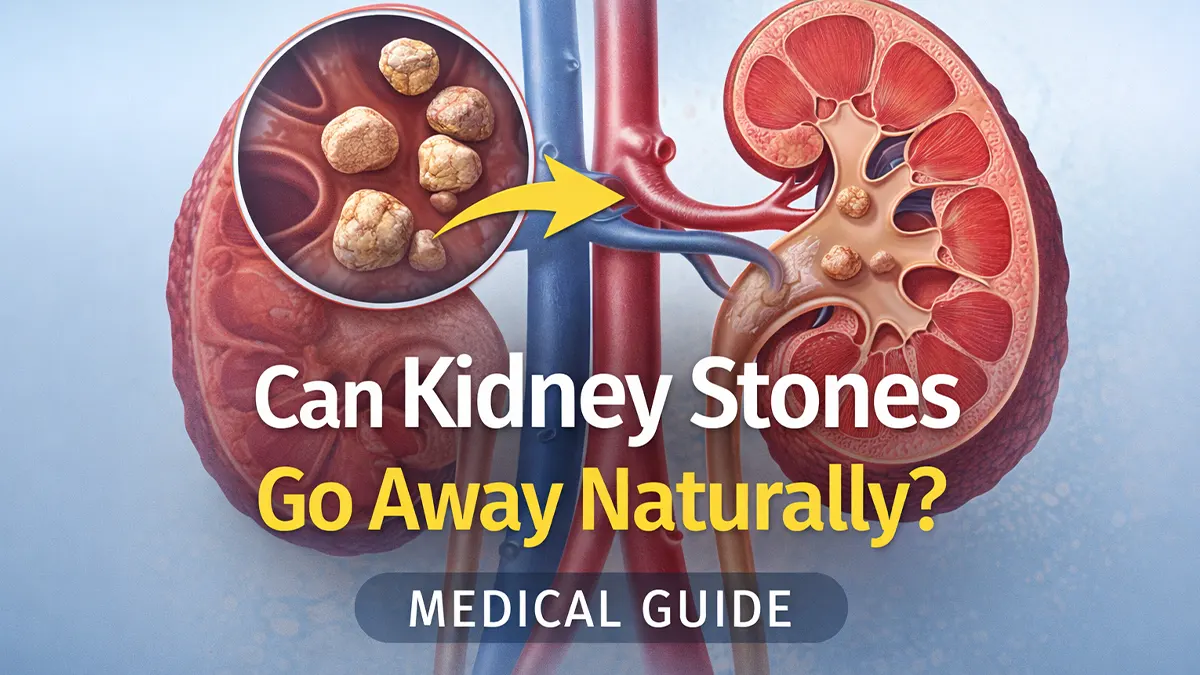
Can kidney stones go away naturally? Yes, many small kidney stones can pass on their own through the urinary tract with adequate hydration, pain management, and time. However, whether a kidney stone goes away naturally depends on its size, location, shape, and whether it blocks urine flow or causes complications. While stones smaller than 5 mm often pass without surgery, larger stones may require medical treatment. Understanding the warning signs and knowing when to seek medical care can help prevent complications and protect kidney function. This guide explains how kidney stones pass naturally, how long it usually takes, and when treatment becomes necessary.
Table of Contents
What Are Kidney Stones?
Kidney stones are hard, crystal-like deposits that form inside the kidneys when minerals and salts in the urine become highly concentrated. They are commonly made of calcium oxalate, but can also consist of uric acid, calcium phosphate, struvite, or cystine, depending on the underlying cause. Dehydration, certain medical conditions, dietary habits, and genetic factors can all increase the risk of stone formation.
As kidney stones move through the urinary tract, they may cause severe flank pain, blood in the urine, burning during urination, nausea, vomiting, or difficulty passing urine. Understanding how kidney stones form and recognizing early symptoms can help you seek timely treatment and reduce the risk of future stones through proper hydration and healthy lifestyle choices.
1. Can Kidney Stones Pass Naturally? (By Stone Size)
| Stone Size | Chance of Passing | Typical Time |
|---|---|---|
| <4 mm | Very High | 1–2 weeks |
| 4–6 mm | Moderate | 2–6 weeks |
| 6–8 mm | Low | Often needs treatment |
| >8 mm | Very Low | Usually surgery |
Kidney Stone Size Chart: What Are the Chances of Passing Naturally?
One of the most important factors that determines whether a kidney stone can pass naturally is its size. In general, smaller kidney stones have a much higher chance of passing without surgery, while larger stones are more likely to require medical treatment.
| Kidney Stone Size | Chance of Passing Naturally | Typical Time to Pass | Treatment May Be Needed? |
|---|---|---|---|
| 2 mm | Very High (90–95%) | A few days to 2 weeks | Rarely |
| 3 mm | Very High (80–90%) | 1–3 weeks | Usually No |
| 5 mm | Moderate (50–65%) | 2–6 weeks | Sometimes |
| 7 mm | Low (Less than 30%) | Unlikely to pass naturally | Often Yes |
2 mm Kidney Stone
A 2 mm kidney stone is very small and has an excellent chance of passing naturally. Drinking plenty of water, staying active, and following your doctor’s advice are often enough to help the stone pass without surgery.
3 mm Kidney Stone
A 3 mm kidney stone also has a high likelihood of passing on its own. While it may cause temporary pain or discomfort as it moves through the urinary tract, most people do not require surgical treatment.
5 mm Kidney Stone
A 5 mm kidney stone may still pass naturally, but it often takes longer and can cause more significant symptoms. Your doctor may prescribe medications, such as alpha-blockers, to help relax the ureter and improve the chances of passing the stone.
7 mm Kidney Stone
A 7 mm kidney stone is much less likely to pass naturally. Because of its larger size, it may become lodged in the urinary tract, causing severe pain or blockage. In many cases, treatments such as ESWL, Ureteroscopy (URS), Retrograde Intrarenal Surgery (RIRS), or Percutaneous Nephrolithotomy (PCNL) may be recommended to remove the stone safely.
Medical Tip: Kidney stone size is only one factor. The stone’s location, shape, composition, and whether it is causing urinary obstruction or infection also influence whether it can pass naturally or requires treatment. Always consult a healthcare professional for an individualized treatment plan.
What Does a Passing Kidney Stone Feel Like?
As a kidney stone travels through the urinary tract, the symptoms often change depending on its location. Many people notice that the pain moves downward as the stone gets closer to the bladder. Recognizing these signs can help you understand whether a kidney stone may be passing naturally.
Common Signs a Kidney Stone Is Passing
- 🔹 Pain moving downward: Pain usually starts in the back or side (flank) and gradually moves toward the lower abdomen, pelvis, or groin as the stone travels through the ureter.
- 🔥 Burning during urination: You may experience pain or a burning sensation while urinating, especially when the stone reaches the bladder or urethra.
- 🚽 Frequent or urgent urination: A constant urge to urinate or passing only small amounts of urine is common as the stone moves closer to the bladder.
- 🪨 Grit or tiny stone fragments in the urine: Some people notice small sand-like particles or tiny stone fragments in their urine, indicating that the stone is breaking apart or passing.
- 😌 Pain suddenly stopping: A sudden decrease or complete relief of pain often means the kidney stone has entered the bladder or has been passed successfully.
Other Symptoms You May Notice
- 🩸 Blood in the urine (pink, red, or brown urine)
- 🤢 Nausea or vomiting due to severe pain
- 💧 Mild discomfort while passing urine after the stone passes
Important: If you experience fever, chills, severe persistent pain, inability to urinate, or persistent vomiting, seek immediate medical attention. These symptoms may indicate a urinary tract obstruction or infection that requires urgent treatment.
What Happens If a Kidney Stone Doesn’t Pass?
While many small kidney stones pass naturally, some stones become stuck in the urinary tract and require medical treatment. A stone that remains lodged can block the flow of urine, increase pressure inside the kidney, and lead to serious complications if left untreated.
Possible Complications of an Untreated Kidney Stone
- ⚠️ Kidney swelling (Hydronephrosis): A blocked ureter can cause urine to back up into the kidney, leading to swelling, pain, and reduced kidney function.
- 🦠 Urinary tract infection (UTI): A trapped kidney stone can increase the risk of bacterial infection. If left untreated, the infection may spread to the kidneys or bloodstream and become life-threatening.
- 🩺 Kidney damage: Persistent urinary obstruction may reduce blood flow and damage kidney tissue. Although uncommon, prolonged blockage can lead to permanent loss of kidney function.
- 🚨 Medical emergency: Seek immediate medical care if a kidney stone causes severe pain, fever, chills, persistent vomiting, inability to pass urine, or heavy blood in the urine. These symptoms may indicate a blocked urinary tract or serious infection that requires urgent treatment.
When Is Treatment Needed?
Your urologist may recommend medical treatment if the kidney stone:
- Is larger than 6 mm or unlikely to pass naturally.
- Has not passed after 4–6 weeks of observation.
- Causes persistent or worsening pain despite medication.
- Blocks urine flow or reduces urine output.
- Leads to recurrent urinary tract infections or fever.
- Affects kidney function or causes hydronephrosis.
Early diagnosis and timely treatment with options such as ESWL, Ureteroscopy (URS), RIRS, or PCNL can help prevent complications and protect long-term kidney health.
Foods to Eat While Passing a Kidney Stone
Your diet plays an important role while waiting for a kidney stone to pass naturally. Choosing the right foods and drinks can help maintain hydration, support urinary health, and reduce the risk of the stone growing larger or new stones forming. The ideal diet may vary depending on the type of kidney stone, so always follow your healthcare provider’s recommendations.
| Eat More | Limit or Avoid |
|---|---|
| 💧 Water (stay well hydrated) | 🧂 High-sodium foods and excess salt |
| 🍋 Lemon water and other citrate-rich drinks | 🥤 Sugary soft drinks and cola beverages |
| 🍎 Fresh fruits (especially citrus fruits) | 🍔 Highly processed and packaged foods |
| 🥦 Vegetables (except high-oxalate vegetables if advised) | 🥩 Excess animal protein (red meat and processed meats) |
| 🥛 Calcium-rich foods in recommended amounts | 🍫 Large amounts of high-oxalate foods (spinach, almonds, beets, chocolate) |
| 🌾 Whole grains | 🍺 Excess alcohol and sugary energy drinks |
Diet Tips While Passing a Kidney Stone
- 💧 Drink enough fluids throughout the day to help increase urine output.
- 🍋 Include citrate-rich foods, such as lemons and oranges, which may help reduce the formation of certain kidney stones.
- 🥛 Get adequate dietary calcium from food unless your healthcare provider recommends otherwise.
- 🧂 Reduce sodium intake, as excess salt can increase calcium levels in the urine.
- ⚖️ Eat a balanced diet rich in fruits, vegetables, whole grains, and fiber.
- 👨⚕️ Follow a personalized kidney stone diet based on the type of stone you have, such as calcium oxalate, uric acid, or cystine stones.
Medical Tip: There is no one-size-fits-all kidney stone diet. Nutritional recommendations differ based on the stone’s composition, so consult your healthcare provider or a registered dietitian for individualized guidance.
Common Mistakes to Avoid While Waiting for a Kidney Stone to Pass
If your doctor has advised you to wait for a small kidney stone to pass naturally, avoiding certain mistakes can help reduce the risk of complications and improve your chances of passing the stone safely.
Common Mistakes
- ❌ Drinking too little water: Inadequate hydration can reduce urine flow, making it harder for the stone to move through the urinary tract. Drink enough fluids unless your doctor has advised otherwise.
- ❌ Ignoring fever or chills: A fever with kidney stone symptoms may indicate a urinary tract infection or kidney infection, which requires immediate medical attention.
- ❌ Holding your urine: Delaying urination may increase discomfort and is not recommended when trying to pass a kidney stone.
- ❌ Taking too many painkillers: Overusing pain medications, especially without medical supervision, can increase the risk of side effects and may mask symptoms that require urgent evaluation.
- ❌ Delaying medical review: If your pain worsens, you develop vomiting, difficulty passing urine, heavy blood in the urine, or the stone does not pass within the expected timeframe, consult a healthcare provider promptly.
Stay Safe While Waiting
To improve your chances of passing a kidney stone naturally:
- ✅ Stay well hydrated.
- ✅ Take medications exactly as prescribed.
- ✅ Strain your urine if your doctor recommends collecting the stone for analysis.
- ✅ Attend follow-up appointments and imaging tests to monitor the stone’s progress.
- ✅ Seek emergency care immediately if you develop fever, severe uncontrolled pain, inability to urinate, or persistent vomiting.
These simple precautions can help prevent complications and ensure you receive timely treatment if the kidney stone does not pass naturally.
Myth vs Fact: Can Kidney Stones Go Away Naturally?
There are many misconceptions about kidney stones and how they are treated. Understanding the facts can help you make informed decisions and avoid delays in seeking appropriate medical care.
| Myth | Fact |
|---|---|
| ❌ Every kidney stone requires surgery. | ✅ Many small kidney stones, especially those smaller than 5 mm, can pass naturally with hydration, time, and appropriate medical supervision. |
| ❌ Drinking more water will dissolve any kidney stone. | ✅ Drinking water helps some stones pass more easily, but most kidney stones do not dissolve. Some uric acid stones may dissolve with prescribed medication. |
| ❌ If the pain goes away, the kidney stone is completely gone. | ✅ Pain may decrease when the stone reaches the bladder or temporarily stops moving. Imaging tests may still be needed to confirm the stone has passed. |
| ❌ Only older adults develop kidney stones. | ✅ Kidney stones can affect adults of all ages, including young adults and, less commonly, children. |
| ❌ Avoiding all calcium prevents kidney stones. | ✅ Adequate dietary calcium can actually help reduce the risk of calcium oxalate kidney stones by limiting oxalate absorption in the intestines. |
| ❌ Kidney stones always cause severe pain. | ✅ Some kidney stones cause mild symptoms or no symptoms at all, especially if they remain in the kidney without blocking urine flow. |
| ❌ Once a kidney stone passes, it won’t come back. | ✅ People who have had one kidney stone have a higher risk of recurrence, making hydration, diet, and follow-up care essential for prevention. |
Expert Tip: Never rely on myths or home remedies alone. If you experience severe pain, fever, chills, difficulty urinating, or persistent vomiting, seek prompt medical evaluation. Early diagnosis and appropriate treatment can help prevent serious complications and protect kidney function.
Can Kidney Stones Go Away Naturally Without Treatment?
Yes, many kidney stones can go away naturally without surgery or invasive treatment, especially if they are small and not causing complications. Whether a kidney stone passes on its own depends on its size, location, shape, and whether it blocks the flow of urine.
Kidney Stones More Likely to Pass Naturally
The chances of natural passage are higher when the stone:
- ✅ Measures less than 5 mm in diameter.
- ✅ Has moved into the lower ureter, closer to the bladder.
- ✅ Has a smooth or rounded shape, making it easier to travel through the urinary tract.
- ✅ Does not completely block urine flow or cause severe symptoms.
- ✅ Occurs in a patient who stays well hydrated and follows their doctor’s recommendations.
Kidney Stones Less Likely to Pass Naturally
Medical treatment is more likely to be needed if the stone:
- ❌ Measures larger than 6 mm, making spontaneous passage less likely.
- ❌ Blocks the urinary tract, reducing or preventing urine flow.
- ❌ Causes severe, persistent pain that cannot be controlled with medication.
- ❌ Leads to fever, chills, or a urinary tract infection, which requires urgent medical attention.
- ❌ Causes kidney swelling or affects kidney function.
- ❌ Does not pass after several weeks of observation and conservative management.
While many small kidney stones pass naturally, regular medical follow-up is important to monitor progress and prevent complications. Your healthcare provider may recommend imaging tests to confirm whether the stone is moving or if additional treatment, such as ESWL, URS, RIRS, or PCNL, is needed.
Understanding kidney stone symptoms helps identify when stones may pass naturally.
How Long Does It Take for a Kidney Stone to Pass Naturally?
The time it takes for a kidney stone to pass naturally depends mainly on its size, location, shape, and whether it is blocking the urinary tract. While many small stones pass within a few weeks, larger stones may require medical treatment if they do not progress or cause complications.
| Kidney Stone Size | Typical Time to Pass | Chance of Passing Naturally |
|---|---|---|
| Less than 4 mm | 1–2 weeks | Very High |
| 4–6 mm | 2–6 weeks | Moderate |
| More than 6 mm | May not pass naturally | Lower |
Several factors can influence how quickly a kidney stone passes, including:
- 💧 Adequate hydration to increase urine flow.
- 🚶 Light physical activity, such as walking, which may help the stone move.
- 💊 Medications prescribed by your doctor, including alpha-blockers for selected patients.
- 📍 Stone location, as stones closer to the bladder often pass more easily than those higher in the urinary tract.
If your kidney stone has not passed within 4–6 weeks, or you develop severe pain, fever, vomiting, difficulty urinating, or signs of infection, seek prompt medical evaluation. Your urologist may recommend treatments such as ESWL, URS, RIRS, or PCNL depending on the stone’s size and location.
Knowing the kidney stone pain location helps track stone movement.
Drinking enough water increases the chances that kidney stones go away naturally, especially stones smaller than 5 mm.
Natural Ways to Help Kidney Stones Pass
If your doctor determines that your kidney stone is small enough to pass naturally, certain lifestyle measures may help support the process and reduce the risk of complications. These strategies should complement—not replace—medical advice.
Natural ways to help a kidney stone pass include:
- 💧 Drink plenty of water to help produce enough urine and encourage the stone to move through the urinary tract. Your doctor can advise you on the right fluid intake for your health.
- 🍋 Include citrate-rich beverages, such as lemon water, which may help reduce the formation of certain types of kidney stones.
- 🚶 Stay physically active with light activities like walking, as movement may help some small stones progress through the urinary tract.
- 🧂 Reduce sodium (salt) intake, since excess salt can increase calcium levels in the urine and raise the risk of stone formation.
- 🥬 Limit high-oxalate foods if you have calcium oxalate kidney stones, and combine them with calcium-rich foods during meals when appropriate.
- 🥛 Maintain adequate dietary calcium, as getting enough calcium from food may actually help reduce oxalate absorption in the intestines.
- 🍎 Eat a balanced diet rich in fruits, vegetables, and whole grains while limiting sugary drinks and excessive animal protein.
These healthy habits not only support the natural passage of some kidney stones but also help reduce the risk of future stone formation. Always consult a healthcare professional if your symptoms worsen or the stone does not pass.
Proper hydration with the best water for kidney stones supports natural stone passage.
Signs a Kidney Stone Is Passing Naturally
As a kidney stone moves through the urinary tract, you may notice symptoms that indicate it is progressing toward passing naturally. The intensity and duration of these symptoms can vary depending on the stone’s size and location.
Common signs a kidney stone is passing include:
- ✅ Pain that moves from the back or side toward the lower abdomen or groin, indicating the stone is traveling through the ureter.
- 🔥 Burning or discomfort while urinating, especially as the stone approaches the bladder or urethra.
- 🩸 Small amounts of blood in the urine (pink, red, or brown urine) caused by irritation of the urinary tract.
- 🚽 Frequent or urgent need to urinate, particularly when the stone is close to the bladder.
- 🤢 Nausea or vomiting, often triggered by severe pain.
- 🪨 Passing tiny stone fragments or grit in the urine, which may indicate the stone has broken up or is being expelled.
- 😌 Gradual relief of pain after the stone passes, with urinary symptoms improving over time.
If you develop fever, chills, severe persistent pain, or difficulty passing urine, seek immediate medical attention, as these symptoms may indicate complications requiring urgent treatment.
Doctors often recommend kidney stone treatment without surgery for small stones.
When Kidney Stones Do Not Go Away Naturally
Although many small kidney stones can pass on their own, some stones become too large or cause complications that require prompt medical treatment. Delaying care can increase the risk of infection, urinary obstruction, or kidney damage.
Seek immediate medical attention if you experience:
- ⚠ Severe or unbearable pain that does not improve with medication.
- 🌡️ Fever or chills along with urinary symptoms, which may indicate a kidney infection.
- 🤢 Persistent nausea or vomiting that prevents you from drinking fluids.
- 🚽 Difficulty passing urine or reduced urine output, suggesting a possible blockage.
- 🩸 Blood in the urine that is heavy or persistent.
- 🔁 Recurrent urinary tract infections or worsening urinary symptoms.
- ⏳ A kidney stone that has not passed after 4–6 weeks despite conservative treatment.
Early evaluation by a urologist can help determine whether medications, ESWL, ureteroscopy (URS), RIRS, or PCNL are needed to safely remove the stone and prevent serious complications.
Medical Treatments If Kidney Stones Don’t Pass Naturally
While many small kidney stones pass on their own, some stones require medical treatment if they are too large, cause severe symptoms, or block the flow of urine. Your urologist will recommend the most appropriate treatment based on the stone’s size, location, and your overall health.
Common treatment options include:
- 💊 Pain-relieving medications to manage discomfort while waiting for the stone to pass.
- 💊 Alpha-blockers (medical expulsive therapy) to relax the ureter and help certain stones pass more easily when appropriate.
- 🌊 Extracorporeal Shock Wave Lithotripsy (ESWL) to break smaller kidney stones into tiny fragments that can be passed naturally.
- 🔬 Ureteroscopy (URS) using a thin scope and laser to locate and remove or fragment stones in the ureter or kidney.
- 🩺 Retrograde Intrarenal Surgery (RIRS) for selected kidney stones using a flexible scope and laser through the urinary tract.
- 🏥 Percutaneous Nephrolithotomy (PCNL) for large, complex, or multiple kidney stones that cannot be treated effectively with less invasive procedures.
Early evaluation and timely treatment can help prevent complications such as persistent pain, urinary tract infections, kidney damage, or urinary obstruction. Your urologist will discuss the benefits, risks, and expected recovery for each treatment option to help you choose the most suitable approach.
Preventing Future Kidney Stones Naturally
Preventing kidney stones is often easier than treating them. If you’ve passed a kidney stone naturally, adopting healthy lifestyle habits can significantly lower your risk of developing another one.
Urologists commonly recommend:
- 💧 Drink enough water to produce at least 2–2.5 liters of urine daily.
- 🥛 Get adequate dietary calcium from food rather than restricting it, unless advised otherwise by your doctor.
- 🧂 Reduce sodium (salt) intake, as excess salt can increase calcium in the urine.
- 🥗 Limit high-oxalate foods if you have calcium oxalate stones, and pair them with calcium-rich foods during meals.
- 🍋 Include citrate-rich foods, such as lemons and oranges, which may help reduce stone formation.
- ⚖️ Maintain a healthy body weight through regular exercise and a balanced diet.
- 🚫 Limit sugary drinks and excessive animal protein, which may increase the risk of certain types of kidney stones.
- 👨⚕️ Schedule regular follow-ups if you’ve had recurrent kidney stones or have a family history of the condition.
Making these simple, sustainable lifestyle changes can greatly reduce the risk of kidney stone recurrence and support long-term kidney health. Consistency is key—even small daily improvements can have a lasting impact.
Following a proper kidney stone diet reduces recurrence risk.
Real Patient Insights from My Health Hospitals
At My Health Hospitals, our urology specialists frequently see patients who assume every kidney stone requires surgery. In reality, many patients diagnosed with small kidney stones (less than 5 mm) are successfully managed with adequate hydration, pain relief, medications when appropriate, and regular follow-up imaging. With careful monitoring and guidance from a urologist, many of these stones pass naturally without the need for an invasive procedure.
Our experience also shows that patients who increase their daily water intake, reduce excess sodium, follow a kidney stone-friendly diet, and attend scheduled follow-up appointments are more likely to prevent future stone episodes. Every kidney stone is different, so an individualized treatment plan based on the stone’s size, location, and symptoms is essential for the best outcome.
Frequently Asked Questions (FAQs)
1. Can kidney stones go away naturally?
Yes. Many small kidney stones, especially those smaller than 5 mm, can pass naturally through the urinary tract with adequate hydration, pain management, and time. Larger stones or those causing complications may require medical treatment.
2. What size kidney stone can pass naturally?
Kidney stones smaller than 5 mm usually have the highest chance of passing on their own. Stones between 5–10 mm may also pass naturally but often require closer monitoring or medication to help them pass.
3. How long does it take for a kidney stone to pass naturally?
Small kidney stones may pass within a few days to several weeks, depending on their size, location, and your hydration status. If a stone does not pass within 4–6 weeks, your doctor may recommend treatment.
4. Can I speed up passing a kidney stone naturally?
Drinking plenty of water, staying physically active, and taking medications prescribed by your doctor, such as alpha-blockers, may help a small kidney stone pass more easily. Always follow medical advice before starting any treatment.
5. Can kidney stones dissolve on their own?
Most common calcium oxalate kidney stones do not dissolve naturally. However, some uric acid stones may dissolve with medications that make the urine less acidic, under a doctor’s supervision.
6. Is lemon water helpful for kidney stones?
Yes. Lemon water contains citrate, which may help reduce the risk of forming certain kidney stones by preventing calcium crystals from sticking together. It should be used as part of an overall kidney stone prevention plan.
7. Should I exercise if I have kidney stones?
Light to moderate physical activity may help some small kidney stones move through the urinary tract. However, avoid strenuous exercise if you have severe pain, fever, or signs of infection, and consult your healthcare provider.
8. Can dehydration make kidney stones worse?
Yes. Dehydration concentrates minerals in the urine, increasing the risk of kidney stone formation and making existing stones more difficult to pass. Drinking enough fluids is one of the best ways to prevent kidney stones.
9. When should I see a doctor for a kidney stone?
Seek immediate medical care if you have severe pain, fever, chills, persistent vomiting, blood in the urine, difficulty passing urine, or symptoms lasting more than a few days. These may indicate complications requiring prompt treatment.
10. Can kidney stones come back after passing naturally?
Yes. People who have had one kidney stone are at higher risk of developing another. Staying well hydrated, following a kidney stone-friendly diet, and treating underlying medical conditions can help reduce the risk of recurrence.
Final Medical Insight
Kidney stones can go away naturally in many cases, particularly when they are small and detected early. Understanding symptoms, maintaining hydration, and following preventive strategies significantly improve outcomes.
However, persistent symptoms or complications should never be ignored, as early medical intervention can prevent serious kidney damage.
In many cases, kidney stones can go away naturally, but early diagnosis remains essential. Understanding when kidney stones go away naturally helps prevent complications and ensures timely treatment.
According to the National Institutes of Health (NIH) and Mayo Clinic, small kidney stones may pass naturally through the urinary tract without invasive treatment. Proper hydration, pain management, and medical monitoring are essential during this process. However, larger stones or persistent symptoms may require medical intervention to prevent complications such as infection or kidney damage.
Medical Expert Review
Dr. Jayanth Reddy
Consultant Urologist | My Health Hospitals, Hyderabad
This content has undergone medical review to ensure it reflects current clinical evidence, accepted urological practices, and patient-centered healthcare guidance.
Author
Yamanandan Reddy
Health Content Writer & Frontend Developer
Yamanandan Reddy is a health content writer and frontend developer with over 4 years of experience in website design and digital content creation. He writes research-based health articles to help readers understand symptoms, causes, treatments, and prevention methods related to common health conditions.
His articles are written using information from trusted medical sources such as the World Health Organization (WHO), Mayo Clinic, and the Centers for Disease Control and Prevention (CDC).
Sources
The information in this article is researched and verified using trusted medical resources, including:
• World Health Organization (WHO)
• Mayo Clinic
• National Institutes of Health (NIH)
• Centers for Disease Control and Prevention
⚠️ Medical Disclaimer
This content is for informational purposes only and does not replace professional medical advice. Always consult a qualified healthcare provider for diagnosis and treatment.