
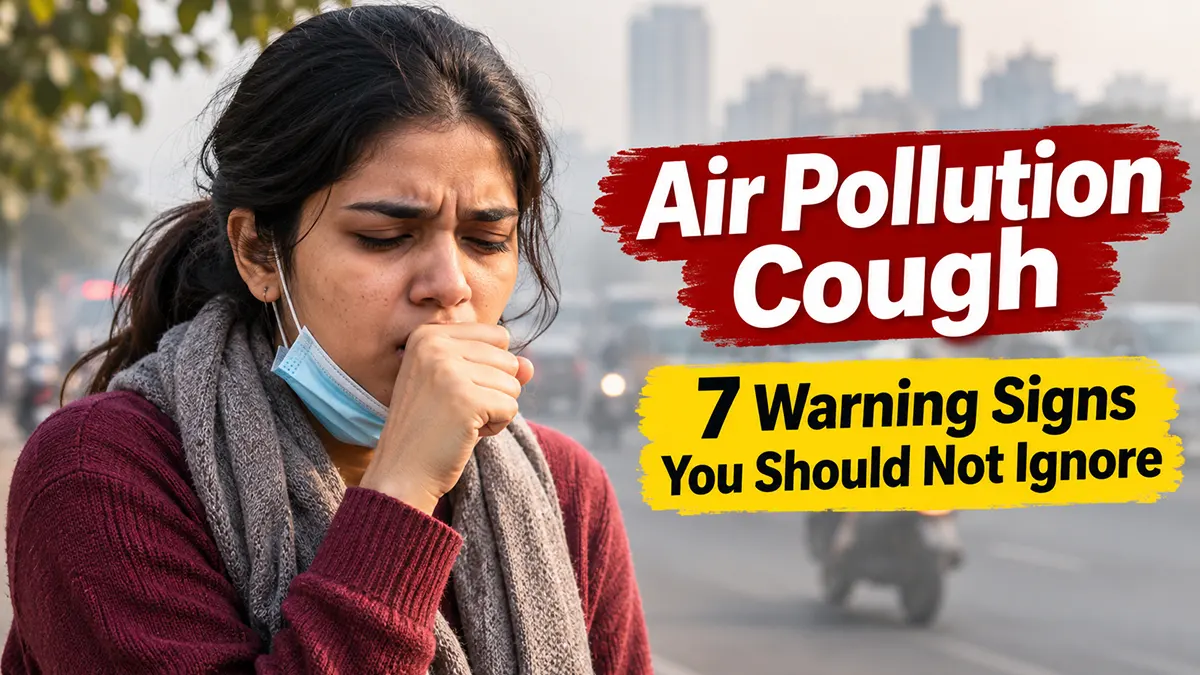
Quick Answer: Yes. Air pollution can irritate the airways and contribute to coughing, throat irritation, wheezing, chest tightness and breathing difficulties. Fine particulate matter (PM2.5), vehicle emissions, smoke, dust and indoor pollutants can affect respiratory health. People with asthma, COPD, children and older adults may be particularly vulnerable. A persistent cough should not automatically be blamed on pollution because infections, asthma, acid reflux and other conditions can cause similar symptoms.
Table of Contents
Why Does Air Pollution Cause Coughing?
Air pollution contains harmful particles and gases that can enter the respiratory system when you breathe.
Some pollutants, particularly fine particulate matter (PM2.5), are small enough to travel deep into the lungs. Exposure can irritate the respiratory tract and worsen existing lung conditions.
Common sources include:
- Vehicle exhaust and traffic emissions
- Construction dust and road dust
- Industrial emissions
- Cigarette and tobacco smoke
- Smoke from cooking and burning materials
- Indoor incense, mosquito coils and poorly ventilated cooking areas
- Dampness and mould inside buildings
The World Health Organization identifies both indoor and outdoor air pollution as important contributors to respiratory and other health problems.
Kidney Stone Analysis Results Explained: What Type of Stone Do You Have?
7 Warning Signs That Air Pollution May Be Affecting Your Respiratory Health
Air pollution does not produce exactly the same symptoms in everyone. However, these symptoms deserve attention, especially when they occur during periods of poor air quality.
1. Persistent Dry Cough
A dry cough without mucus may develop when airborne particles irritate the throat and airways.
You may notice that coughing becomes more frequent when travelling through busy roads, spending time outdoors or staying in poorly ventilated environments.
However, a dry cough can also result from viral infections, asthma, allergies or acid reflux.
2. Throat Irritation and Frequent Clearing
Polluted air may irritate the lining of your throat.
Possible symptoms include:
- A scratchy or dry throat
- Frequent throat clearing
- Mild burning or irritation
- Discomfort when breathing polluted air
Repeated symptoms should be evaluated rather than assumed to be harmless.
3. Wheezing While Breathing
Wheezing is a whistling sound that may occur when air moves through narrowed airways.
Air pollution can trigger or worsen symptoms in people with asthma and other respiratory conditions.
New or worsening wheezing requires medical assessment, particularly when accompanied by breathlessness.
4. Chest Tightness
Some people experience a feeling of pressure or tightness in their chest during periods of poor air quality.
This may occur when pollutants aggravate sensitive airways.
Chest tightness is not always caused by pollution. Sudden or severe chest discomfort, particularly with sweating, faintness or breathing difficulty, needs emergency medical attention.
5. Shortness of Breath During Physical Activity
Do you feel unusually breathless while climbing stairs or walking?
Air pollution can aggravate existing respiratory conditions and make physical activity more difficult.
However, unexplained breathlessness may also be associated with heart disease, anaemia or other medical conditions.
Do not assume that reduced exercise tolerance is simply due to poor air quality.
6. Increased Asthma Symptoms
People with asthma may notice more coughing, wheezing, chest tightness or breathlessness when exposed to polluted air.
Pollution can act as an asthma trigger, although individual responses vary.
Follow your prescribed asthma action plan and consult your healthcare professional if symptoms become more frequent.
7. Eye and Nose Irritation Along With Cough
Polluted air can affect more than the lungs.
Some people experience:
- Watery or irritated eyes
- Sneezing
- Nasal congestion
- Runny nose
- Throat irritation and coughing
These symptoms may also be caused by seasonal allergies or respiratory infections.
How to Catch a Kidney Stone in Urine: Step-by-Step Guide
Can Indoor Air Pollution Cause a Persistent Cough?
Yes. Staying indoors does not automatically protect you from air pollution.
Indoor pollutants may come from several everyday sources:
| Indoor pollution source | Possible health concern |
|---|---|
| Cigarette smoke | Airway irritation and respiratory disease |
| Mosquito coils | Smoke and fine particle exposure |
| Incense sticks | Combustion-related indoor pollutants |
| Cooking fumes | Respiratory irritation |
| Dust and mould | Allergic and respiratory symptoms |
| Poor ventilation | Accumulation of indoor pollutants |
The WHO identifies household smoke, tobacco smoke, dampness and mould as important indoor air pollution concerns.
Improving indoor air quality can help reduce exposure.
Flomax for Kidney Stones: Does Tamsulosin Help Stones Pass?
How to Protect Your Lungs During Poor Air Quality Days
You cannot eliminate all exposure to air pollution, but you can take practical steps to reduce it.
1. Check the Air Quality Index (AQI)
Check your local AQI before planning outdoor activities.
India’s Central Pollution Control Board provides air quality information through its official portal:
When air quality is poor, consider reducing prolonged outdoor exertion.
2. Avoid High-Traffic Areas
Try to avoid walking, running or exercising near busy roads during periods of high pollution.
Choose cleaner routes when possible.
3. Consider a Properly Sized Air Purifier
A portable air cleaner with an appropriately sized HEPA filter may reduce airborne particles in an indoor room.
Choose a unit suitable for the room size and maintain its filters according to the manufacturer’s instructions.
Avoid ozone-generating air cleaners because ozone can irritate the lungs.
An air purifier does not eliminate every indoor pollutant or replace good ventilation and source control.
4. Reduce Indoor Smoke
Avoid smoking indoors and limit unnecessary burning of incense sticks and mosquito coils in enclosed spaces.
Use properly ventilated cooking areas and reduce exposure to cooking fumes.
5. Wear a Well-Fitting Mask When Appropriate
During severe pollution episodes, a well-fitting N95 or N99 respirator can help reduce exposure to airborne particles.
A loose-fitting cloth mask should not be considered equivalent protection against fine particulate pollution.
6. Follow Your Prescribed Respiratory Treatment
If you have asthma or COPD, continue your prescribed treatment.
Do not stop inhalers or change medication doses without medical advice.
7. Seek Medical Advice for Persistent Symptoms
If coughing continues, becomes worse or repeatedly returns, consult a healthcare professional to identify the underlying cause.
When Should You See a Doctor for a Persistent Cough?
A cough can have many causes, including respiratory infections, asthma, allergies, acid reflux, medication side effects and air pollution.
Arrange a medical evaluation if:
- Your cough lasts more than three weeks.
- You experience repeated wheezing.
- You develop unexplained breathlessness.
- Your cough interferes with sleep or daily activities.
- You have recurrent respiratory symptoms.
- You cough up blood, even in small amounts.
Seek emergency medical attention if you experience severe breathing difficulty, significant chest pain, blue or grey lips, fainting or sudden confusion.
People with chronic lung or heart conditions should seek medical advice promptly if their symptoms worsen during periods of poor air quality.
Air Pollution Cough vs Common Cold: What Is the Difference?
Symptoms can overlap, so this comparison cannot establish a diagnosis.
| Feature | Possible pollution-related irritation | Common cold |
|---|---|---|
| Dry cough | Can occur | Can occur |
| Runny nose | Possible | Common |
| Sore throat | Possible | Common |
| Fever | Not typical of pollution irritation | Can occur |
| Wheezing | May occur, especially with asthma | Sometimes |
| Body aches | Not typical | Can occur |
| Exposure pattern | May worsen in polluted environments | Often follows viral exposure |
A person can also have a respiratory infection and experience worsening symptoms because of polluted air.
Frequently Asked Questions
1. Can air pollution cause a cough without a fever?
Yes. Air pollution can irritate the respiratory tract without causing fever. However, the absence of fever does not prove that pollution is responsible.
2. Can pollution cause a dry cough at night?
It can contribute to airway irritation, but nighttime coughing may also be associated with asthma, allergies, acid reflux or postnasal drip.
3. Can an air purifier stop pollution-related coughing?
An appropriate HEPA air purifier may reduce airborne particles indoors. It cannot guarantee that coughing will stop because coughs have many possible causes.
4. Is PM2.5 harmful to the lungs?
PM2.5 refers to fine particulate matter with a diameter of 2.5 micrometres or smaller. These particles can travel deep into the respiratory system and are associated with adverse health effects.
5. Can air pollution worsen asthma?
Yes. Exposure to polluted air can trigger or worsen asthma symptoms in some people.
6. How long does a pollution-related cough last?
There is no fixed duration. It depends on exposure, individual sensitivity and whether an underlying respiratory condition is present. A persistent cough needs medical evaluation.
7. When is a cough an emergency?
Severe difficulty breathing, significant chest pain, blue or grey lips, fainting or sudden confusion require immediate medical attention.
Final Takeaway
Air pollution can affect respiratory health, even when exposure occurs during everyday activities such as travelling, exercising or cooking.
A persistent cough, wheezing or unexplained breathlessness should not be ignored. Reducing exposure to polluted air, improving indoor air quality and seeking timely medical advice can help protect your respiratory health.
Medical Disclaimer: This article is for educational purposes only and does not replace professional medical advice, diagnosis or treatment.
Author: Yamanandan Reddy – Health & Wellness Writer
References:
- World Health Organization – Air Pollution: https://www.who.int/health-topics/air-pollution
- WHO – Air Pollution: Personal Interventions and Risk Communication: https://www.who.int/news-room/questions-and-answers/item/air-pollution-personal-interventions-and-risk-communication
- Ministry of Health and Family Welfare, India – Health Advisory on Air Pollution: https://ncdc.mohfw.gov.in/
- CDC – About Respiratory Illnesses: https://www.cdc.gov/respiratory-viruses/about/
- CDC – Common Cold Treatment and When to Seek Medical Care: https://www.cdc.gov/common-cold/treatment/