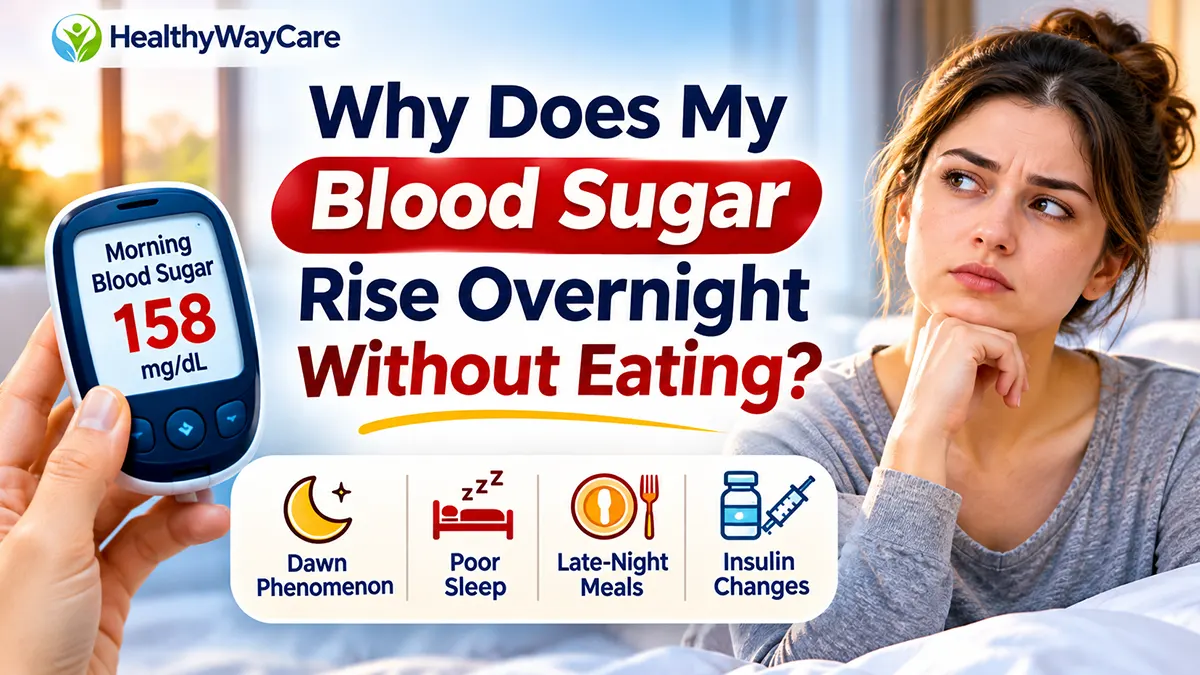
Blood sugar rises overnight without eating for several possible reasons. Your liver releases glucose even while you sleep. In people with diabetes, early-morning hormones, insufficient overnight insulin, and other factors can cause glucose to rise despite no food intake. A common reason is the dawn phenomenon, but a high morning reading does not prove that this is the cause.
If your glucose is repeatedly high on waking, the most useful next step is to look at the overnight pattern rather than change medication based on one number. A clinician can review your glucose readings, medications, meals, sleep, and symptoms.
Table of Contents
Why Blood Sugar Rises Overnight Without Eating: Quick Answer
- Your liver continues to make and release glucose between meals and overnight.
- Early-morning hormones can make insulin less effective, producing the dawn phenomenon.
- Background insulin or other diabetes medication may not provide enough coverage through the night.
- A late dinner, bedtime snack, illness, stress, poor sleep, or certain medicines can contribute.
- A less common proposed explanation is a rise following nighttime hypoglycemia; do not assume this without glucose data.
What Is the Dawn Phenomenon?
One reason blood sugar rises overnight without eating is the dawn phenomenon, a rise in blood glucose in the early morning, often around 4 a.m. to 8 a.m. Hormones such as cortisol and growth hormone help prepare the body to wake and can prompt the liver to release more glucose. Normally, insulin helps balance this effect. In diabetes, insulin production or action may not be sufficient, so blood sugar can rise before breakfast.
The dawn phenomenon is not caused by secretly eating overnight. It can happen in both type 1 and type 2 diabetes, but its timing and size vary. One high fasting glucose result alone cannot establish the cause.
7 Reasons Blood Sugar Rises Overnight Without Eating
1. Early-morning hormone changes
Cortisol, growth hormone, and other counter-regulatory hormones can increase the liver’s glucose output or reduce insulin sensitivity in the hours before waking. This is the classic dawn phenomenon.
2. Not enough background insulin overnight
For someone using insulin, a basal dose that is insufficient for their needs, insulin wearing off, or a pump-delivery problem can lead to rising overnight glucose. A pump problem may become urgent in type 1 diabetes because insulin interruption can increase the risk of diabetic ketoacidosis (DKA). Do not adjust basal doses or pump settings without an agreed diabetes care plan.
3. Late-evening food is still affecting glucose
Even if you do not eat after going to bed, a large dinner or carbohydrate-containing bedtime snack may affect glucose for hours. Fat-rich meals can sometimes delay the glucose rise. Note meal timing when reviewing your readings.
4. Poor sleep or sleep disruption
Insufficient sleep can reduce insulin sensitivity. If you have loud snoring, pauses in breathing during sleep, or persistent daytime sleepiness, discuss possible sleep apnea with your healthcare professional.
5. Stress, infection, or illness
Stress hormones released during emotional stress or illness can increase blood sugar. A cold, fever, or other infection may cause unexpected highs even when you eat less than usual.
6. Medication effects
Certain medicines, especially corticosteroids, may raise glucose. A change in diabetes medication timing or a missed dose may also affect morning levels. Review your full medication list with your care team; do not stop prescribed treatment on your own.
7. Nighttime low blood sugar followed by a high reading: a less certain explanation
The term Somogyi effect describes a proposed rebound rise after overnight hypoglycemia. Evidence for this as a common explanation is limited, and it is generally considered much less likely than dawn phenomenon or insufficient insulin. If you use insulin or medicines that can cause lows, a continuous glucose monitor (CGM) or clinician-directed overnight checks can help distinguish patterns. Never add bedtime insulin simply because the morning number is high.
Dawn Phenomenon vs. Insulin Wearing Off vs. Nighttime Low
| Possible pattern | What glucose readings may show | What it means |
|---|---|---|
| Dawn phenomenon | Near target at bedtime; glucose rises mainly toward early morning | Hormonal changes may be contributing |
| Insufficient overnight insulin | Glucose rises progressively through the night | Background insulin coverage may be inadequate |
| Late dinner or snack | Glucose is already elevated at bedtime or rises soon after eating | Evening food or medication timing may matter |
| Possible overnight hypoglycemia | CGM or overnight check documents a low before a later high | Needs prompt discussion of low-glucose prevention; do not assume rebound |
Important: These are illustrative patterns, not diagnostic rules. CGM readings can be inaccurate at times; confirm unexpected readings with a finger-stick meter according to your device instructions and treatment plan.
How to Find Out Why Your Morning Blood Sugar Is High
- Record your waking glucose: Track several mornings rather than judging a single result.
- Compare with bedtime readings: Write down dinner and snack times, physical activity, medicines, illness, and sleep.
- Review overnight data: If you use a CGM, inspect the graph with your diabetes team. If not, ask whether a temporary CGM or an occasional middle-of-the-night check is appropriate.
- Check your meter or sensor: Wash and dry your hands before finger-stick testing; repeat unexpected readings when appropriate.
- Discuss recurring highs: Your clinician can assess whether the issue is dawn phenomenon, medication coverage, or another cause.
What Is a Normal Morning Blood Sugar Level?
If blood sugar rises overnight without eating, compare your waking result with your personal target instead of assuming a diagnosis. Targets are individualized. For many nonpregnant adults with diabetes, a commonly used premeal target is 80–130 mg/dL, but your clinician may recommend a different range based on age, medications, pregnancy, other health conditions, and risk of low blood sugar. A fasting laboratory glucose test used to diagnose diabetes is not the same as a personal daily treatment target.
If you do not have a diabetes diagnosis and repeatedly see elevated fasting glucose, arrange a healthcare appointment for appropriate laboratory testing, such as fasting plasma glucose or A1C. Home meters alone should not be used to diagnose diabetes.
How to Reduce High Morning Blood Sugar Safely
Review evening food patterns
Consider whether late-night snacks or large carbohydrate portions correlate with higher bedtime or morning readings. Avoid skipping needed food to compensate, especially if you take insulin or medicines that can cause hypoglycemia.
Prioritize regular sleep and activity
Consistent sleep and regular physical activity can support glucose management. Some people benefit from a walk after dinner, but exercise close to bedtime can increase overnight low-glucose risk for people taking insulin or certain medications. Tailor activity to your care plan.
Review medication coverage with your clinician
A clinician may review medication type, dose, timing, insulin pump settings, or injection technique based on glucose trends. Do not increase insulin, double doses, or stop medicines on your own. Incorrect changes can cause dangerous nighttime hypoglycemia.
Have a sick-day plan
Illness may increase glucose even when appetite is poor. If you have diabetes, ask your care team when to test ketones, how often to check glucose, and when to call for help. People using SGLT2 inhibitors should know that ketoacidosis can sometimes occur without extremely high glucose.
When Is High Overnight Blood Sugar an Emergency?
Seek emergency medical care for symptoms suggesting DKA or severe illness, including vomiting with inability to keep fluids down, deep or difficult breathing, fruity-smelling breath, confusion, or marked drowsiness. High ketones are an emergency warning sign. The CDC also advises emergency evaluation when glucose stays at 300 mg/dL or higher, especially with concerning symptoms. Follow your individual emergency plan if your care team has provided one.
If you use insulin and glucose is unexpectedly high, follow your prescribed correction and ketone-testing plan; pump users should follow their pump-failure instructions. Do not wait for the next morning if you feel seriously unwell.
Frequently Asked Questions
Can blood sugar go up while fasting overnight?
Yes. The liver releases glucose between meals, and hormones can raise glucose even without eating. This is especially noticeable when insulin action is insufficient.
Why is my blood sugar normal at bedtime but high in the morning?
The dawn phenomenon or insufficient overnight medication coverage may be involved. Overnight CGM trends or clinician-guided checks can help clarify the pattern.
Does the dawn phenomenon happen every night?
Not necessarily. Its size and timing can vary with sleep, stress, illness, medicines, and other factors.
Can stress make blood sugar rise while sleeping?
Stress and illness can increase hormones that raise glucose. Sleep loss can also affect insulin sensitivity.
Should I eat a bedtime snack to prevent high morning blood sugar?
Not automatically. A snack may raise overnight glucose, while some people at risk of nighttime lows may need an individualized snack plan. Discuss this with your diabetes team.
Is 150 mg/dL fasting blood sugar dangerous?
A fasting reading of 150 mg/dL is above the usual premeal target for many adults with diabetes, but urgency depends on the whole situation, symptoms, and your personal targets. Repeated readings warrant medical review; emergency symptoms require urgent care regardless of the number.
Can I increase my nighttime insulin to fix the dawn phenomenon?
Do not change insulin dosing without your prescribed adjustment plan or clinician guidance. More overnight insulin can cause dangerous lows before the morning rise.
Can people without diabetes have high morning glucose?
Morning hormones affect everyone, but persistently elevated fasting glucose in someone without diagnosed diabetes should be evaluated with appropriate laboratory testing.
The Bottom Line
Blood sugar rises overnight without eating in some people because the body continues to produce glucose. The dawn phenomenon is a common reason for early-morning highs in diabetes, but insufficient overnight insulin, late meals, sleep disruption, illness, and medications may also contribute. The safest approach is to identify your overnight pattern and work with your healthcare professional on an individualized plan.
Related HealthyWayCare Guides
To interpret morning readings, see our normal blood sugar levels guide, which explains the difference between diagnostic ranges and daily targets.
If you are unsure whether a reading is high or low, read high blood sugar vs. low blood sugar. For meal-related patterns, explore why blood sugar spikes after meals.
Medical Sources and Further Reading
- American Diabetes Association: High Morning Blood Glucose
- Mayo Clinic: The Dawn Phenomenon
- CDC: Things That Can Spike Your Blood Sugar
- NIDDK: Continuous Glucose Monitoring
- CDC: Diabetic Ketoacidosis
Medical information notice: This article is for general education and does not replace personal medical advice, diagnosis, or treatment. It has not been represented as reviewed by a clinician. If you have diabetes, follow the plan provided by your healthcare team.