
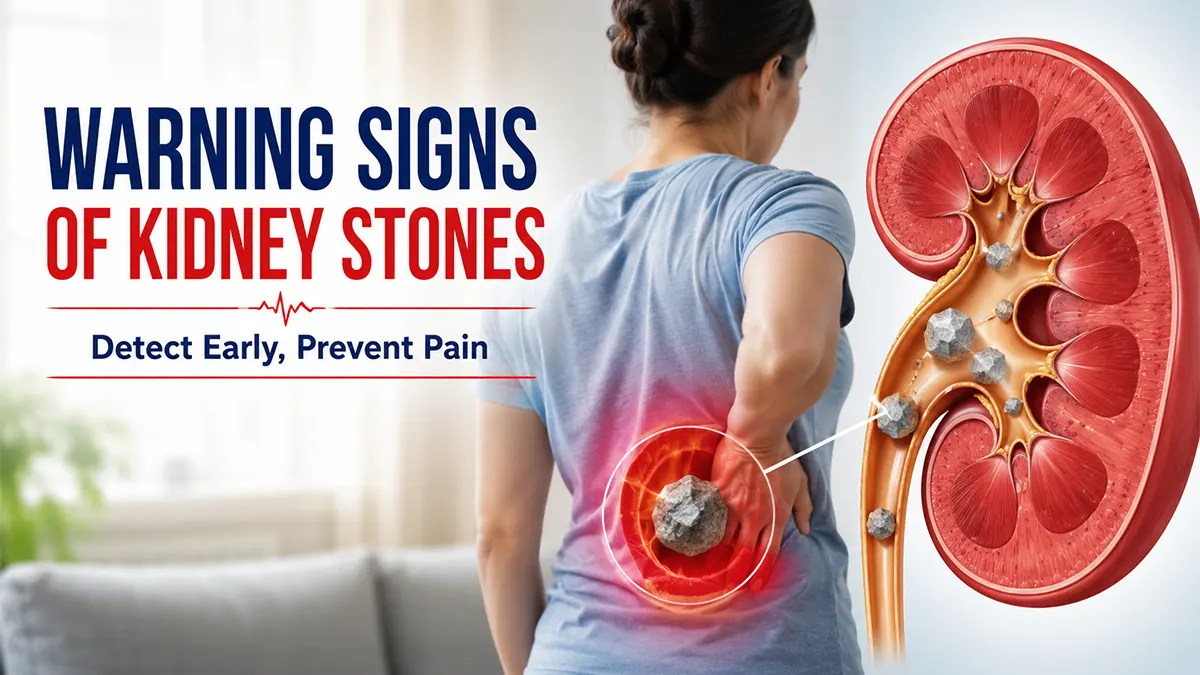
Many people believe kidney stones cause sudden, unbearable pain without warning. In reality, your body often gives subtle clues long before a stone blocks the urinary tract.
Knowing the early signs of a kidney stone can help you seek medical care before severe symptoms develop. Small stones may remain silent for weeks or months, while others cause mild urinary changes that are easy to ignore.
In this guide, you’ll learn the 5 silent warning signs of kidney stones, why they happen, who is at risk, how doctors diagnose them, and what you can do to reduce your risk.
Table of Contents
What Is a Kidney Stone?
A kidney stone is a hard deposit made from minerals and salts that forms inside the kidneys when urine becomes concentrated.
Common types include:
| Stone Type | Common Cause |
|---|---|
| Calcium Oxalate | Most common; dehydration, high oxalate foods |
| Uric Acid | High uric acid levels, gout |
| Struvite | Urinary tract infections |
| Cystine | Rare inherited disorder |
Many stones begin forming silently without causing immediate pain.
Is Gatorade Good for Kidney Stones? Complete Medical Guide
5 Silent Warning Signs of Kidney Stones
1. Mild Flank or Lower Back Pain
One of the earliest kidney stone warning signs is a dull ache in the lower back or side.
Unlike the classic severe kidney stone pain, this discomfort may:
- Come and go
- Feel like muscle strain
- Occur on one side
- Worsen after dehydration
Many patients mistake mild flank pain for back pain and delay evaluation.
What does early kidney stone pain feel like?
Patients often describe it as:
- Pressure
- Dull soreness
- Tightness
- Mild cramping
Why Do Kidney Stones Keep Coming Back? Causes, Prevention & Treatment
2. Changes in Urination
Another common silent kidney stone symptom is a noticeable change in urination.
Watch for:
- Frequent urination
- Urgent need to urinate
- Passing only small amounts
- Mild burning sensation
These symptoms occur because a small stone may begin irritating the urinary tract.
Even before pain starts, frequent urination kidney stones can be an important clue.
⭐ 3. Cloudy or Pink-Tinted Urine (Don’t Ignore This)
This is one of the most overlooked warning signs of kidney stones.
A forming stone can scratch delicate tissues inside the urinary tract, leading to:
- Cloudy urine
- Pink urine
- Rust-colored urine
- Tiny amounts of blood visible only under a microscope
You may also notice:
- Strong urine smell
- Dark urine despite drinking fluids
These are often symptoms of kidney stones before pain develops.
Never ignore blood in urine, even if you feel well.
Are Walnuts High in Oxalates? A Kidney Stone Patient’s Guide
4. Mild Nausea or Loss of Appetite
The kidneys and digestive system share nerve pathways.
As pressure builds inside the kidney, some people experience:
- Mild nausea
- Decreased appetite
- Feeling “off”
- Occasional stomach discomfort
Although these symptoms have many causes, when combined with urinary changes they may suggest early indicators of kidney stones.
5. Intermittent Groin or Side Discomfort
As a stone begins moving, discomfort may spread toward:
- Lower abdomen
- Groin
- Pelvis
- Inner thigh
This pain is usually:
- Mild
- Short-lasting
- Intermittent
Many patients report these sensations days before experiencing severe renal colic.
Is Peanut Butter Bad for Kidney Stones? Everything You Need to Know
Why Kidney Stones Form
Kidney stones develop when urine contains excessive minerals that crystallize.
Common causes include:
- Dehydration
- High salt intake
- Too much animal protein
- Obesity
- Diabetes
- Family history
- Low citrate levels
- Certain medications
Can Energy Drinks Cause Kidney Stones? Everything You Need to Know
Risk Factors
You may have a higher risk if you:
- Drink less than 2 liters of water daily
- Live in hot climates
- Have recurrent urinary infections
- Eat a high-sodium diet
- Have gout
- Have inflammatory bowel disease
- Are overweight
- Previously passed kidney stones
Symptoms That Develop Later
As the stone grows or moves, symptoms usually become more obvious.
These include:
- Severe flank pain
- Waves of intense pain
- Blood in urine
- Vomiting
- Fever (medical emergency)
- Difficulty passing urine
Is Green Tea Good for Kidney Stones? Everything You Need to Know
Early vs Advanced Kidney Stone Symptoms
| Early Symptoms | Advanced Symptoms |
|---|---|
| Mild flank pain | Severe cramping pain |
| Frequent urination | Inability to urinate |
| Cloudy urine | Heavy blood in urine |
| Mild nausea | Persistent vomiting |
| Pink urine | Fever and chills |
| Slight groin discomfort | Severe abdominal pain |
Can You Have a Kidney Stone Without Knowing?
Yes.
Some asymptomatic kidney stones are discovered during:
- Ultrasound
- CT scan
- MRI
- Routine health checkups
Small stones may remain in the kidney for years without causing symptoms.
However, they can suddenly move and cause severe pain.
Diagnosis
Doctors diagnose kidney stones using:
Medical History
- Previous stones
- Family history
- Diet
- Fluid intake
Urine Tests
Checks for:
- Blood
- Infection
- Crystals
Blood Tests
Evaluates:
- Kidney function
- Calcium
- Uric acid
Imaging
Most accurate tests include:
- Non-contrast CT scan
- Ultrasound
- X-ray (selected cases)
Treatment Options
Treatment depends on:
- Stone size
- Location
- Symptoms
- Kidney function
Small Stones
Often managed with:
- Increased fluids
- Pain medication
- Alpha blockers (when appropriate)
- Observation
Larger Stones
May require:
- ESWL (Shock Wave Lithotripsy)
- Ureteroscopy with laser
- PCNL (Percutaneous Nephrolithotomy)
Your urologist will recommend the most appropriate option.
Prevention Tips
Preventing kidney stones is often easier than treating them.
Drink More Water
Aim for urine that is pale yellow.
Reduce Salt Intake
High sodium increases calcium in urine.
Eat More Citrus Fruits
Natural citrate helps prevent stone formation.
Maintain Healthy Weight
Obesity increases stone risk.
Moderate Animal Protein
Excess meat increases uric acid stones.
Don’t Ignore Recurrent UTIs
Prompt treatment reduces struvite stone risk.
When to See a Doctor
Seek immediate medical attention if you have:
- Fever with urinary symptoms
- Severe side pain
- Persistent vomiting
- Blood in urine
- Difficulty urinating
- Pain lasting more than several hours
Early evaluation can prevent kidney damage and serious infection.
Kidney Stone Myths vs Facts
Many misconceptions about kidney stones can delay diagnosis or lead to poor prevention habits. Here’s what medical evidence says.
| Myth | Fact |
|---|---|
| Myth 1: Kidney stones always cause severe pain. | Fact: Many silent kidney stone symptoms occur before severe pain develops. Small stones can remain asymptomatic or cause only mild flank discomfort, urinary changes, or microscopic blood in the urine. |
| Myth 2: If the pain goes away, the kidney stone is gone. | Fact: Pain may lessen if the stone changes position, but it may still be present. Imaging tests such as an ultrasound or CT scan are often needed to confirm whether the stone has passed. |
| Myth 3: Only older adults get kidney stones. | Fact: Kidney stones can affect adults of any age and are increasingly seen in younger adults due to dehydration, obesity, dietary habits, and metabolic conditions. |
| Myth 4: Drinking less water helps reduce urination and stone pain. | Fact: Inadequate hydration is one of the biggest risk factors for kidney stone formation. Unless your doctor advises otherwise, drinking enough water helps dilute urine and reduces the risk of new stones. |
| Myth 5: All kidney stones require surgery. | Fact: Many small stones pass naturally with increased fluid intake, pain management, and medical supervision. Larger stones or those causing blockage may require procedures such as ureteroscopy, shock wave lithotripsy (ESWL), or PCNL. |
| Myth 6: Once you’ve had a kidney stone, it won’t happen again. | Fact: Kidney stones commonly recur. Without lifestyle changes and preventive care, nearly half of affected individuals may develop another stone within several years. |
| Myth 7: Calcium-rich foods should always be avoided. | Fact: Most people should not eliminate dietary calcium. Normal calcium intake can actually help reduce calcium oxalate stone formation. Calcium supplements, however, should only be taken under medical guidance. |
| Myth 8: Herbal remedies can dissolve every kidney stone. | Fact: There is no high-quality scientific evidence that herbal remedies can reliably dissolve most kidney stones. Treatment depends on the stone’s size, location, and composition, and should be guided by a healthcare professional. |
Key Message
The warning signs of kidney stones are often subtle. Recognizing early symptoms of kidney stones, staying well hydrated, and seeking timely medical evaluation can help prevent complications and reduce the likelihood of emergency treatment.
Patient Insights from My Health Hospitals
At My Health Hospitals, urologists frequently see patients who ignored subtle urinary changes for weeks, assuming they were due to dehydration or muscle strain. Many later developed severe renal colic requiring emergency care.
Patients who sought evaluation when symptoms were still mild—such as cloudy urine, recurrent flank discomfort, or microscopic blood in urine—were often diagnosed earlier and, in appropriate cases, managed before complications developed. Early assessment can improve treatment options and reduce the risk of obstruction or infection.
How to Catch a Kidney Stone Early
If you notice silent signs of kidney stones, consider:
- Increasing water intake immediately
- Recording your symptoms
- Scheduling a consultation with a urologist
- Getting a urine test
- Undergoing imaging if advised
Early diagnosis often prevents emergency treatment.
Trusted Medical References
- World Health Organization (WHO)
- National Institutes of Health (NIH)
- National Institute of Diabetes and Digestive and Kidney Diseases (NIDDK)
- Mayo Clinic
- NHS (UK)
- American Urological Association (AUA)
Frequently Asked Questions
1. What are the first signs of a kidney stone?
Early signs may include mild flank pain, frequent urination, cloudy urine, pink urine, nausea, or changes in urine smell. These symptoms often appear before severe pain develops and should not be ignored.
2. Can you have a kidney stone without knowing it?
Yes. Many small kidney stones remain asymptomatic and are discovered incidentally during imaging studies performed for unrelated health concerns.
3. What does a forming kidney stone feel like?
A forming kidney stone may cause a dull ache in the side or lower back, intermittent groin discomfort, urinary urgency, or subtle pressure rather than the intense pain associated with larger stones.
4. How long does it take for a kidney stone to form?
Kidney stones can develop over weeks, months, or even years depending on hydration, diet, genetics, and underlying medical conditions.
5. When does a kidney stone start hurting?
Pain usually begins when the stone moves into the ureter or blocks urine flow, increasing pressure inside the kidney.
6. Can drinking more water stop a kidney stone from forming?
Good hydration may help prevent additional crystal formation and assist in passing very small stones, but it will not dissolve most established stones.
7. Is cloudy urine always a kidney stone?
No. Cloudy urine may also result from urinary tract infections, dehydration, or other conditions. Medical evaluation is recommended if it persists or is accompanied by pain or blood.
8. What foods increase kidney stone risk?
High sodium foods, excessive animal protein, sugary beverages, and foods high in oxalates can increase the risk in susceptible individuals.
9. When should I see a urologist?
See a urologist if you have recurrent urinary symptoms, blood in urine, persistent flank pain, repeated kidney stones, or imaging that shows a kidney stone.
10. Can kidney stones damage the kidneys?
Untreated stones that cause prolonged blockage or infection can impair kidney function. Prompt diagnosis and appropriate treatment help reduce this risk.
Medical Expert Review
Dr. Jayanth Reddy
Consultant Urologist | My Health Hospitals, Hyderabad
This content has undergone medical review to ensure it reflects current clinical evidence, accepted urological practices, and patient-centered healthcare guidance.
Author
Yamanandan Reddy
Health Content Writer & Frontend Developer
Yamanandan Reddy is a health content writer and frontend developer with over 4 years of experience in website design and digital content creation. He writes research-based health articles to help readers understand symptoms, causes, treatments, and prevention methods related to common health conditions.
His articles are written using information from trusted medical sources such as the World Health Organization (WHO), Mayo Clinic, and the Centers for Disease Control and Prevention (CDC).
Sources
The information in this article is researched and verified using trusted medical resources, including:
• World Health Organization (WHO)
• Mayo Clinic
• National Institutes of Health (NIH)
• Centers for Disease Control and Prevention
⚠️ Medical Disclaimer
This content is for informational purposes only and does not replace professional medical advice. Always consult a qualified healthcare provider for diagnosis and treatment.
1 thought on “5 Silent Warning Signs a Kidney Stone is Forming (Don’t Ignore #3)”