
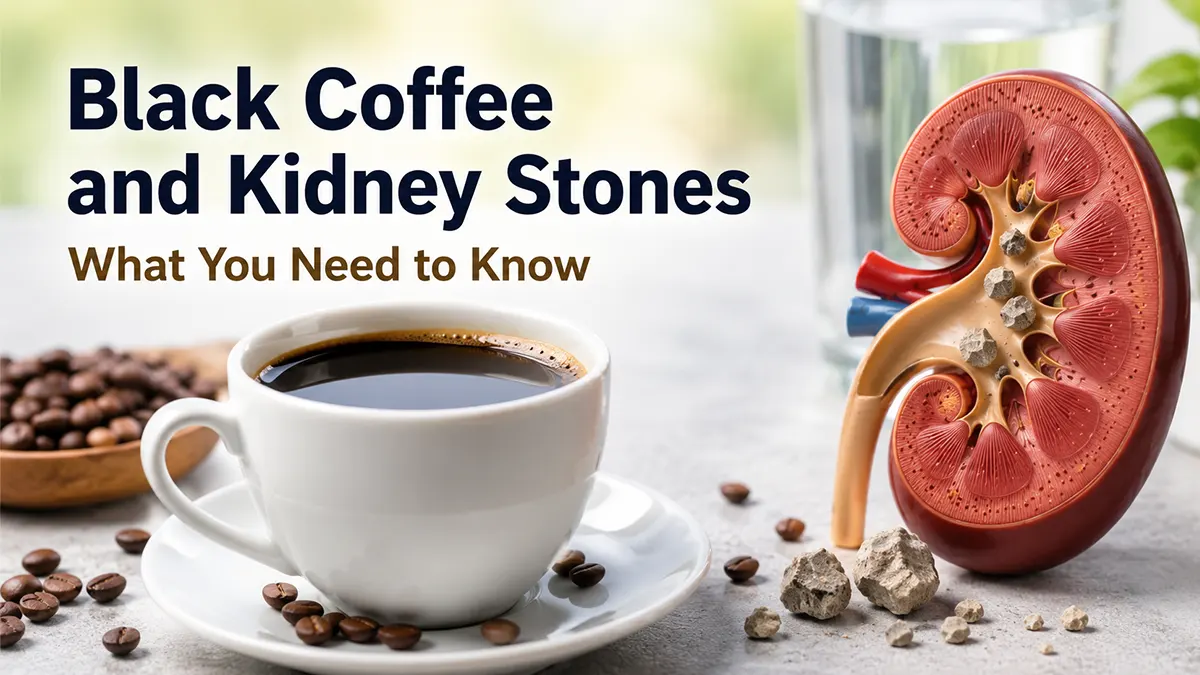
Is black coffee bad for kidney stones? Coffee is one of the world’s most popular beverages, yet many people with kidney stones worry that caffeine or coffee may worsen their condition. The good news is that black coffee itself is relatively low in oxalates and is not considered a direct cause of kidney stones for most people. In fact, several studies suggest that moderate coffee consumption may even be associated with a lower risk of kidney stone formation. This guide explains the relationship between black coffee and kidney stones, caffeine, hydration, oxalate content, and how to safely include coffee in a kidney stone-friendly diet.
Table of Contents
What Is Black Coffee?
Black coffee is brewed from roasted coffee beans without adding milk, cream, or sugar. It contains:
- Caffeine
- Antioxidants
- Polyphenols
- Small amounts of minerals
- Very low oxalate levels
Coffee has been widely studied for its effects on heart health, metabolism, liver health, and kidney stone risk.
Can I Eat Dark Chocolate With Kidney Stones? Everything You Need to Know
Is Black Coffee Bad for Kidney Stones?
For most people, no.
Current research suggests that moderate coffee intake is unlikely to increase kidney stone risk. In fact, several observational studies have found that people who drink coffee regularly may have a slightly lower risk of developing kidney stones, possibly because coffee increases urine volume.
However, this does not mean coffee prevents kidney stones or that unlimited coffee consumption is beneficial.
Your individual risk depends on:
- Type of kidney stone
- Daily water intake
- Total caffeine intake
- Overall diet
- Sodium intake
- Medical history
- Medications
Does Cranberry Juice Cause Kidney Stones? Everything You Need to Know
Does Black Coffee Cause Kidney Stones?
There is no strong evidence that black coffee directly causes kidney stones.
Instead, kidney stones usually develop because of:
- Dehydration
- Concentrated urine
- High sodium intake
- Excess animal protein
- High urinary calcium
- High urinary oxalate
- Genetic factors
- Metabolic disorders
Coffee alone rarely causes kidney stones.
Is Almond Milk Bad for Kidney Stones? A Complete Medical Guide (2026)
Black Coffee Oxalate Content
Many people avoid coffee because they believe it is high in oxalates.
Fortunately:
- Black coffee contains relatively low amounts of oxalates compared with foods such as spinach, almonds, beets, and dark chocolate.
- Coffee is generally not considered a major dietary source of oxalates.
- The total amount consumed throughout the day matters more than one cup of coffee.
Can I Eat Spinach Once a Week if I Have Kidney Stones? Expert Diet Guide (2026)
Causes of Kidney Stones
Kidney stones form when minerals become highly concentrated in urine and crystallize.
Common causes include:
- 💧 Dehydration
- 🧂 High sodium intake
- 🥩 Excess animal protein
- 🥜 High-oxalate diet
- 🥛 Low dietary calcium
- 🧬 Family history
- ⚖️ Obesity
- Diabetes
- Digestive disorders
- Certain medications
Are Tomatoes Bad for Kidney Stones? 7 Expert Facts (Seeds vs. No Seeds)
Symptoms
Common symptoms include:
- Severe side or back pain
- Pain radiating toward the groin
- Blood in urine
- Burning during urination
- Frequent urination
- Nausea
- Vomiting
- Fever if infection develops
Kidney Stone Emergency Symptoms (When to Go to ER Immediately)
Risk Factors
Risk factors include:
- Previous kidney stones
- Family history
- Low fluid intake
- Obesity
- Diabetes
- High sodium intake
- High animal protein intake
- High-oxalate diet
- Certain medications
- Metabolic disorders
Diagnosis
Doctors diagnose kidney stones using:
Medical History
Diet, hydration, symptoms, and previous stones.
Urine Tests
Measures:
- Calcium
- Oxalate
- Citrate
- Uric acid
- Infection
Blood Tests
Checks:
- Kidney function
- Calcium
- Uric acid
- Electrolytes
Imaging
- CT scan
- Ultrasound
- X-ray
Stone Analysis
Determines:
- Calcium oxalate
- Uric acid
- Struvite
- Calcium phosphate
- Cystine
Treatment Options
Treatment depends on stone size and symptoms.
Conservative Treatment
- Drink plenty of water.
- Pain medications.
- Alpha-blockers when prescribed.
- Follow-up imaging.
- Dietary modifications.
Latest Kidney Stone Treatment Options in 2026 (USA Guide)
Medical Procedures
- ESWL
- Ureteroscopy (URS)
- RIRS
- PCNL
Dietary Counseling
Healthcare providers commonly recommend:
- Staying hydrated.
- Drinking coffee in moderation.
- Limiting excess sodium.
- Maintaining adequate calcium intake.
- Following a personalized kidney stone diet.
- Avoiding relying on coffee as a treatment for kidney stones.
Black Coffee vs Tea vs Green Tea vs Decaf Coffee
Many people with kidney stones wonder which caffeinated beverage is the safest. While hydration remains the most important factor, different drinks contain varying amounts of caffeine and oxalates.
| Beverage | Oxalate Content | Caffeine | Kidney Stone Considerations |
|---|---|---|---|
| ☕ Black Coffee | Low | Moderate to High | Generally safe in moderation with adequate hydration |
| 🍵 Green Tea | Low to Moderate | Moderate | May fit into a balanced kidney stone diet when consumed in moderation |
| 🍂 Black Tea | Higher than coffee | Moderate | Frequent large amounts may increase oxalate intake in susceptible individuals |
| ☕ Decaf Coffee | Low | Very Low | Suitable for people limiting caffeine while still enjoying coffee |
Key Takeaway: For most people with kidney stones, moderate black coffee or decaf coffee is generally a better choice than drinking large amounts of black tea.
Coffee vs Water for Kidney Stones
Although coffee contributes to daily fluid intake, water remains the best drink for preventing kidney stones.
| Water | Black Coffee |
|---|---|
| Best for hydration | Can contribute to fluid intake |
| No caffeine | Contains caffeine |
| No calories | Almost calorie-free (plain) |
| No oxalates | Very low oxalates |
| Recommended throughout the day | Best enjoyed in moderation |
Bottom Line: Coffee should never replace water. Aim to drink enough fluids to produce clear or pale-yellow urine unless your healthcare provider advises otherwise.
Does Coffee Dehydrate You?
This is one of the biggest myths about coffee.
For most regular coffee drinkers:
- Moderate coffee intake does not cause significant dehydration.
- Coffee has a mild diuretic effect, but your body adapts to regular caffeine consumption.
- Coffee still contributes to your total daily fluid intake.
However, drinking excessive amounts of coffee while consuming very little water may increase the risk of dehydration, which is a known contributor to kidney stone formation.
Can Coffee Help Pass a Kidney Stone Faster?
No. Coffee does not dissolve kidney stones or help them pass faster.
Passing a kidney stone depends on:
- Stone size.
- Stone location.
- Urine flow.
- Hydration.
- Whether medications such as alpha-blockers are needed.
The most effective strategy is to stay well hydrated with water and follow your healthcare provider’s treatment plan.
Coffee and Calcium Oxalate Kidney Stones
People with calcium oxalate kidney stones often worry about drinking coffee.
The good news is:
- Black coffee contains very little oxalate compared with many foods.
- Moderate coffee intake is usually acceptable for many people.
- Overall dietary oxalate intake is more important than coffee alone.
Healthcare providers are more likely to recommend reducing foods such as:
- Spinach
- Almonds
- Beets
- Dark chocolate
than eliminating moderate coffee consumption.
Coffee and Uric Acid Kidney Stones
For uric acid kidney stones, coffee is generally not considered harmful.
However:
- Maintaining hydration remains the priority.
- Limiting sugary coffee drinks may help support overall metabolic health.
- Dietary recommendations should be individualized based on urine testing and stone analysis.
Is Decaf Coffee Better for Kidney Stones?
Decaf coffee contains much less caffeine but similar flavor.
It may be a reasonable choice for people who:
- Are sensitive to caffeine.
- Have trouble sleeping.
- Need to reduce caffeine intake for other medical conditions.
From a kidney stone perspective, both regular and decaf coffee are generally acceptable in moderation for most people.
Should You Add Milk to Coffee?
Adding a small amount of milk may offer an additional benefit for some people with calcium oxalate kidney stones.
Dietary calcium can bind to oxalates in the digestive tract, reducing oxalate absorption.
Choose:
- Low-fat milk
- Calcium-fortified milk alternatives (if appropriate)
- Unsweetened options when possible
Avoid excessive sugar or flavored syrups.
Drinks to Limit if You Have Kidney Stones
| Better Choices | Limit |
|---|---|
| 💧 Water | Sugary soft drinks |
| ☕ Black coffee (moderation) | Energy drinks |
| ☕ Decaf coffee | Excess sweetened coffee beverages |
| 🍋 Lemon water | Sugar-sweetened iced teas |
| 🥛 Milk | Excess alcohol |
Real Patient Insights
Many people stop drinking coffee completely after being diagnosed with kidney stones because they assume it is harmful. In clinical practice, healthcare providers usually focus on overall hydration, sodium intake, dietary oxalates, and stone type rather than eliminating moderate black coffee. Patients often achieve better long-term results by drinking enough water, following a balanced diet, and addressing their individual risk factors instead of avoiding coffee alone.
Common Mistakes
Avoid these common mistakes:
- ❌ Replacing water with coffee.
- ❌ Drinking multiple sugary coffee beverages daily.
- ❌ Assuming coffee dissolves kidney stones.
- ❌ Ignoring hydration.
- ❌ Adding excessive sugar and flavored syrups.
- ❌ Delaying medical care for severe symptoms.
Myth vs Fact
| Myth | Fact |
|---|---|
| Coffee causes kidney stones. | ❌ No strong evidence supports this for moderate black coffee intake. |
| Coffee is extremely high in oxalates. | ❌ Black coffee contains relatively low oxalate levels. |
| Coffee replaces water. | ❌ Water remains the best drink for kidney stone prevention. |
| Decaf coffee is always healthier. | ⚠️ Decaf may help reduce caffeine intake but is not required for everyone. |
| Hydration matters more than eliminating coffee. | ✅ Yes. Adequate fluid intake is one of the most important ways to reduce kidney stone risk. |
Prevention Tips
Reduce your kidney stone risk by:
- 💧 Drinking enough water every day.
- ☕ Limiting coffee to moderate amounts.
- 🧂 Reducing sodium intake.
- 🥛 Consuming adequate dietary calcium.
- 🥗 Eating a balanced diet rich in fruits and vegetables.
- ⚖️ Maintaining a healthy body weight.
- 🚶 Staying physically active.
- 👨⚕️ Following your healthcare provider’s recommendations.
When to See a Doctor
Seek medical attention if you develop:
- 🚨 Severe flank or back pain.
- 🌡️ Fever or chills.
- 🩸 Blood in the urine.
- 🚽 Difficulty urinating.
- 🤢 Persistent nausea or vomiting.
- 🔁 Recurrent kidney stones.
- Pain that continues despite treatment.
Key Takeaways
- Black coffee does not directly cause kidney stones.
- It contains very low amounts of oxalates.
- Moderate coffee consumption is generally safe for many people with kidney stones.
- Water remains the best beverage for kidney stone prevention.
- Coffee should not be used as a treatment for kidney stones.
- Personalized dietary advice is important for people with recurrent kidney stones.
Conclusion
Is black coffee bad for kidney stones? For most people, the answer is no. Moderate black coffee consumption is generally considered safe and is not a major cause of kidney stones. The greatest kidney stone risk comes from dehydration, high sodium intake, poor dietary habits, and underlying medical conditions, rather than coffee itself. If you have a history of recurrent kidney stones, enjoy coffee in moderation, drink plenty of water, and work with your healthcare provider to develop a diet plan tailored to your specific stone type.
Frequently Asked Questions (FAQs)
1. Is black coffee bad for kidney stones?
No. Moderate black coffee is generally considered safe for most people with kidney stones and is not a major cause of stone formation.
2. Does black coffee cause kidney stones?
Current evidence does not show that black coffee directly causes kidney stones. Overall hydration and diet play a much larger role.
3. Does coffee dehydrate you and increase kidney stone risk?
Moderate coffee intake does not usually cause significant dehydration in regular coffee drinkers. However, you should still drink plenty of water throughout the day.
4. Is black coffee high in oxalates?
No. Black coffee contains relatively low levels of oxalates compared with foods such as spinach, almonds, and dark chocolate.
5. Can coffee help pass a kidney stone?
No. Coffee does not dissolve or speed the passage of kidney stones. Adequate hydration and appropriate medical treatment are more important.
6. Is decaf coffee better for kidney stones?
Decaf coffee may be a good option if you need to reduce caffeine intake, but both regular and decaf coffee are generally acceptable in moderation.
7. Should I add milk to coffee if I have kidney stones?
Adding a small amount of milk may help some people with calcium oxalate kidney stones because dietary calcium can reduce oxalate absorption. Choose unsweetened options when possible.
8. What is the best drink for preventing kidney stones?
Water is the best drink for kidney stone prevention. Lemon water and other citrate-rich beverages may also be helpful for some people.
9. Which drinks should I avoid with kidney stones?
Limit sugary soft drinks, energy drinks, and excessive sweetened coffee beverages. Your healthcare provider may also recommend limiting high-oxalate drinks depending on your stone type.
10. When should I see a doctor?
Seek immediate medical care if you have severe pain, fever, chills, persistent vomiting, difficulty urinating, or blood in the urine.
Medical Expert Review
Dr. Jayanth Reddy
Consultant Urologist | My Health Hospitals, Hyderabad
This content has undergone medical review to ensure it reflects current clinical evidence, accepted urological practices, and patient-centered healthcare guidance.
Author
Yamanandan Reddy
Health Content Writer & Frontend Developer
Yamanandan Reddy is a health content writer and frontend developer with over 4 years of experience in website design and digital content creation. He writes research-based health articles to help readers understand symptoms, causes, treatments, and prevention methods related to common health conditions.
His articles are written using information from trusted medical sources such as the World Health Organization (WHO), Mayo Clinic, and the Centers for Disease Control and Prevention (CDC).
Sources
The information in this article is researched and verified using trusted medical resources, including:
• World Health Organization (WHO)
• Mayo Clinic
• National Institutes of Health (NIH)
• Centers for Disease Control and Prevention
⚠️ Medical Disclaimer
This content is for informational purposes only and does not replace professional medical advice. Always consult a qualified healthcare provider for diagnosis and treatment.
4 thoughts on “Is Black Coffee Bad for Kidney Stones? Everything You Need to Know”