
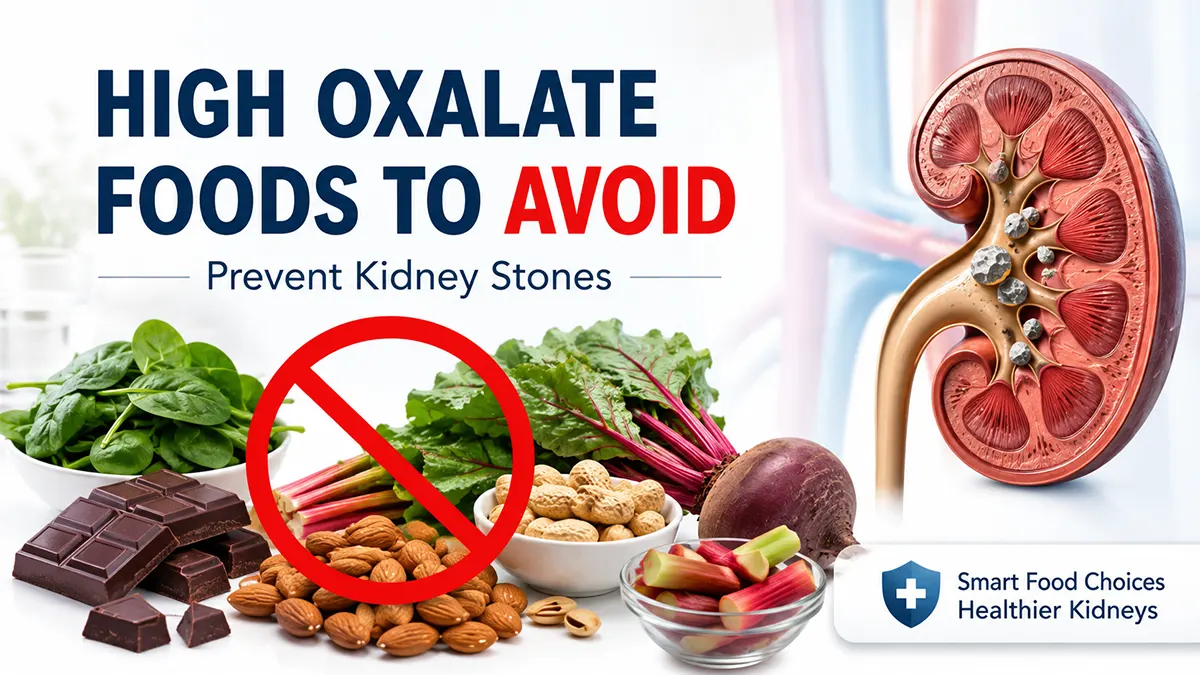
Kidney stones affect millions of people worldwide, and calcium oxalate stones are the most common type. If you’ve been diagnosed with calcium oxalate stones, your diet plays a major role in preventing future stone formation.
Understanding the oxalate rich foods list can help you make healthier choices and reduce your risk of recurrent kidney stones. While oxalates are naturally found in many healthy foods, consuming excessive amounts may contribute to stone formation in susceptible individuals.
This guide explains the foods to avoid with calcium oxalate stones, what causes these stones, and how to follow a low oxalate diet for kidney stones without sacrificing nutrition.
Table of Contents
What Are Calcium Oxalate Stones?
Calcium oxalate stones form when calcium combines with oxalate in the urine. When urine becomes concentrated, crystals can develop and gradually grow into stones.
Oxalate is a naturally occurring compound found in many plant-based foods. The body also produces oxalate during metabolism.
Common Symptoms of Calcium Oxalate Stones
- Severe pain in the back or side
- Pain during urination
- Blood in urine
- Frequent urge to urinate
- Nausea and vomiting
- Cloudy or foul-smelling urine
Calcium Oxalate Kidney Stones – Causes & Prevention (2026 US Guide)
Causes of Calcium Oxalate Kidney Stones
Several factors increase the likelihood of stone formation:
Dehydration
Insufficient water intake concentrates urine and promotes crystal formation.
High Oxalate Intake
Eating large amounts of high oxalate foods can increase urinary oxalate levels.
Excess Sodium Consumption
Too much salt increases calcium excretion in urine.
Low Dietary Calcium
Ironically, inadequate calcium intake may increase oxalate absorption from the intestines.
Medical Conditions
Certain diseases can increase stone risk:
- Inflammatory bowel disease
- Crohn’s disease
- Hyperparathyroidism
- Obesity
- Diabetes
- Recurrent urinary tract infections
Oxalate Rich Foods List: Foods to Avoid with Calcium Oxalate Stones
The following foods contain high amounts of oxalates and may need to be limited.
High Oxalate Vegetables
| Food | Oxalate Level |
|---|---|
| Spinach | Very High |
| Beet Greens | Very High |
| Swiss Chard | Very High |
| Okra | High |
| Sweet Potatoes | High |
| Beets | High |
Spinach and Kidney Stones
Spinach is among the highest oxalate-containing foods. Frequent consumption can significantly increase urinary oxalate levels in people prone to kidney stones.
High Oxalate Fruits
| Food | Oxalate Level |
| Rhubarb | Very High |
| Figs | High |
| Kiwi | Moderate-High |
| Star Fruit | High |
Nuts to Avoid for Kidney Stones
| Food | Oxalate Level |
| Almonds | Very High |
| Peanuts | High |
| Cashews | High |
| Nut Butters | High |
Chocolate and Cocoa Products
- Dark chocolate
- Cocoa powder
- Hot chocolate mixes
These products can contribute significantly to daily oxalate intake.
Grains and Legumes
- Wheat bran
- Soy products
- Soy flour
- Navy beans
Low Oxalate Diet for Kidney Stones
Following a low oxalate diet does not mean avoiding all healthy plant foods.
Better Low-Oxalate Alternatives
| High Oxalate Food | Lower Oxalate Alternative |
| Spinach | Kale |
| Almonds | Walnuts |
| Sweet Potato | White Potato |
| Beet Greens | Cabbage |
| Rhubarb | Apples |
| Swiss Chard | Lettuce |
These substitutions help maintain nutrition while lowering oxalate intake.
The Paradox of Calcium: Why You Shouldn’t Stop Dairy to Prevent Stones
Coffee and Oxalate Stones: Is Coffee Safe?
Many patients ask whether coffee causes kidney stones.
Current evidence suggests moderate coffee consumption is generally safe for most people with calcium oxalate stones. Coffee contains relatively low oxalate levels compared with foods such as spinach and almonds.
However:
- Avoid excessive sugar
- Maintain adequate hydration
- Follow your physician’s recommendations
Pairing Calcium with Oxalate Foods
One of the most effective dietary strategies is pairing calcium with oxalate-containing foods.
Why It Works
Calcium binds with oxalate inside the digestive tract before it reaches the kidneys. This reduces oxalate absorption and urinary excretion.
Examples
- Yogurt with berries
- Milk with cereal
- Cheese with vegetables
Good Calcium Sources
- Milk
- Yogurt
- Cheese
- Calcium-fortified foods
This approach is often recommended as part of a calcium oxalate stone diet.
Hidden Salt: How High Sodium Intake Triggers Kidney Stones
Risk Factors for Recurrent Calcium Oxalate Stones
You may be at higher risk if you:
- Have a family history of kidney stones
- Drink inadequate fluids
- Consume a high-sodium diet
- Eat excessive animal protein
- Have obesity
- Have digestive disorders
- Have previously passed kidney stones
Diagnosis
Healthcare providers may use:
Urinalysis
Detects crystals, blood, and infection.
Blood Tests
Measures calcium and other minerals.
24-Hour Urine Collection
Evaluates:
- Oxalate
- Calcium
- Citrate
- Uric acid
Imaging Tests
- Ultrasound
- CT scan
- X-rays
Treatment Options
Treatment depends on stone size and symptoms.
Conservative Management
- Increased water intake
- Pain management
- Dietary modifications
Medications
Your doctor may prescribe medications that:
- Reduce calcium excretion
- Increase citrate levels
- Help pass stones
Surgical Procedures
For larger stones:
- Ureteroscopy
- Shock Wave Lithotripsy (SWL)
- Percutaneous Nephrolithotomy (PCNL)
Consult a urologist for personalized treatment recommendations.
Prevention Tips
Drink More Water
Aim for enough fluids to produce at least 2 to 2.5 liters of urine daily.
Limit High Oxalate Foods
Follow the oxalate rich foods list carefully.
Reduce Salt Intake
Excess sodium increases urinary calcium.
Eat Adequate Calcium
Avoid unnecessarily restricting dietary calcium.
Moderate Animal Protein
Excessive meat intake may increase stone risk.
Maintain Healthy Weight
Obesity is associated with increased kidney stone formation.
When to See a Doctor
Seek medical attention if you experience:
- Severe flank pain
- Blood in urine
- Fever with urinary symptoms
- Difficulty urinating
- Persistent nausea or vomiting
Immediate medical evaluation is important if symptoms are severe.
Comparison Table: High vs Low Oxalate Foods
| Category | High Oxalate Foods to Avoid | Low Oxalate Alternatives |
| Leafy Greens | Spinach, Swiss Chard | Kale, Lettuce |
| Nuts | Almonds, Cashews | Walnuts, Macadamias |
| Vegetables | Beets, Okra | Cucumber, Cauliflower |
| Fruits | Rhubarb, Figs | Apples, Bananas |
| Snacks | Chocolate | Popcorn |
What foods cause calcium oxalate stones?
Foods high in oxalates such as spinach, beet greens, almonds, peanuts, rhubarb, and chocolate may contribute to calcium oxalate stone formation in susceptible individuals.
Is spinach bad for kidney stones?
Spinach contains very high oxalate levels. People with recurrent calcium oxalate stones are often advised to limit spinach consumption.
Can I eat nuts if I have kidney stones?
Some nuts, particularly almonds and cashews, are high in oxalates. Lower-oxalate alternatives may be better choices.
Does drinking water help prevent kidney stones?
Yes. Adequate hydration dilutes urine and reduces the concentration of stone-forming substances.
Is coffee harmful for calcium oxalate stones?
Moderate coffee intake is generally considered acceptable. Maintaining hydration remains important.
What is the best calcium oxalate stone diet?
A balanced diet that limits high oxalate foods, reduces sodium intake, includes adequate calcium, and promotes hydration is often recommended.
How can I reduce oxalates in my body naturally?
Increasing water intake, consuming calcium with meals, and limiting high oxalate foods can help reduce urinary oxalate levels.
Should I stop eating calcium if I have calcium stones?
No. Adequate dietary calcium may actually help prevent calcium oxalate stone formation by reducing oxalate absorption.
Are sweet potatoes high in oxalates?
Yes. Sweet potatoes contain relatively high oxalate levels and may need to be limited in susceptible individuals.
Which doctor treats kidney stones?
A urologist specializes in diagnosing, treating, and preventing kidney stones.
Key Takeaways
✅ Calcium oxalate stones are the most common kidney stones.
✅ Spinach, beet greens, almonds, peanuts, and rhubarb are among the highest oxalate foods.
✅ Adequate hydration is essential for prevention.
✅ Pairing calcium with oxalate foods may reduce absorption.
✅ A low oxalate diet for kidney stones can help lower recurrence risk.
✅ Consult a urologist for individualized dietary guidance.
Conclusion
Understanding the oxalate rich foods list is an important step in preventing recurrent calcium oxalate kidney stones. Limiting high oxalate foods to avoid, maintaining proper hydration, reducing sodium intake, and following a balanced calcium oxalate stone diet can significantly lower the risk of future stones. If you have recurrent kidney stones or persistent urinary symptoms, consult a healthcare professional or urologist for a personalized prevention plan.
Medical Expert Review
Dr. Jayanth Reddy
Consultant Urologist | My Health Hospitals, Hyderabad
This content has undergone medical review to ensure it reflects current clinical evidence, accepted urological practices, and patient-centered healthcare guidance.
Author
Yamanandan Reddy
Health Content Writer & Frontend Developer
Yamanandan Reddy is a health content writer and frontend developer with over 4 years of experience in website design and digital content creation. He writes research-based health articles to help readers understand symptoms, causes, treatments, and prevention methods related to common health conditions.
His articles are written using information from trusted medical sources such as the World Health Organization (WHO), Mayo Clinic, and the Centers for Disease Control and Prevention (CDC).
Sources
The information in this article is researched and verified using trusted medical resources, including:
• World Health Organization (WHO)
• Mayo Clinic
• National Institutes of Health (NIH)
• Centers for Disease Control and Prevention
⚠️ Medical Disclaimer
This content is for informational purposes only and does not replace professional medical advice. Always consult a qualified healthcare provider for diagnosis and treatment.