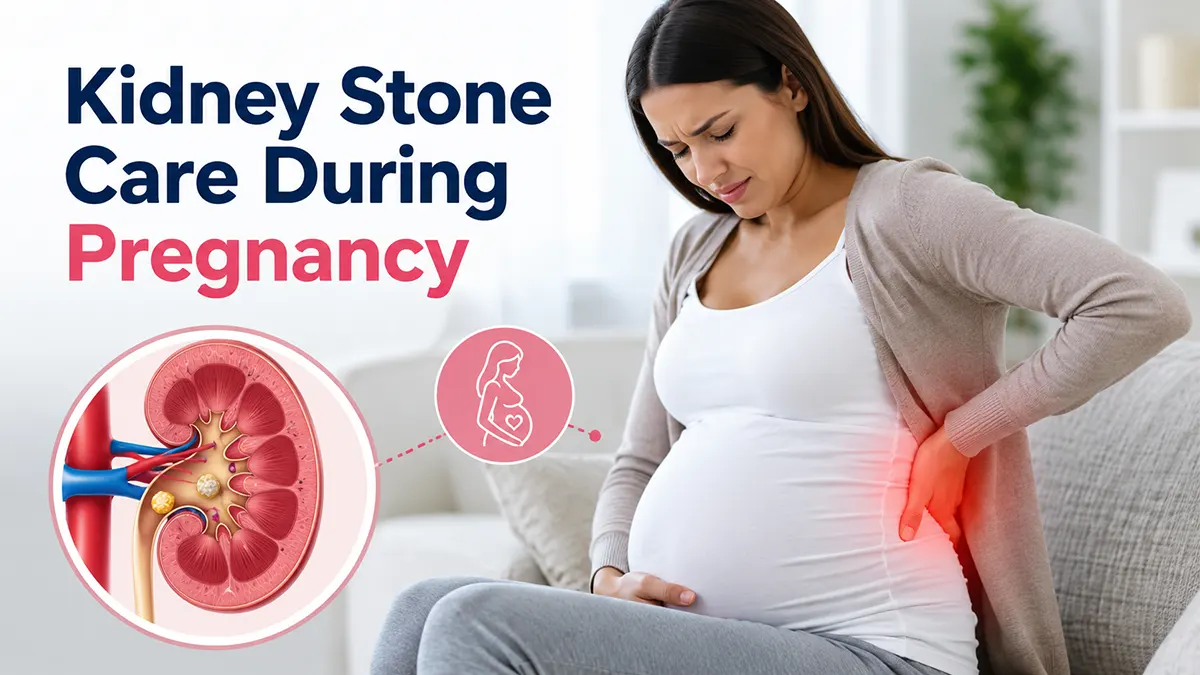
Kidney stones during pregnancy are uncommon but can be painful and stressful for expecting mothers. These hard mineral deposits form in the kidneys and may travel through the urinary tract, causing significant discomfort.
Being pregnant with kidney stones requires careful medical evaluation because treatment decisions must protect both the mother and the developing baby. Fortunately, many cases can be managed safely with conservative treatment and close monitoring.
Understanding the symptoms, causes, diagnosis, and available treatment options can help pregnant women seek timely care and reduce complications.
Table of Contents
What Are Kidney Stones?
Kidney stones are solid deposits made of minerals and salts that form inside the kidneys. They vary in size and may remain in the kidney or move into the ureter, the tube connecting the kidney to the bladder.
Common types include:
- Calcium oxalate stones
- Calcium phosphate stones
- Uric acid stones
- Struvite stones
- Cystine stones
During pregnancy, hormonal and physiological changes may influence stone formation and urinary flow.
Exercises to Pass Kidney Stone: Best Yoga Poses and Movements for Faster Relief
Causes of Kidney Stones During Pregnancy
Several factors contribute to causes of kidney stones during pregnancy.
Hormonal Changes
Increased progesterone levels relax the urinary tract muscles, slowing urine flow and increasing the risk of stone formation.
Urinary Stasis
Pregnancy causes the growing uterus to compress the ureters, leading to urine stagnation.
Increased Calcium Excretion
Pregnant women may excrete more calcium in urine, increasing the risk of calcium-based stones.
Dehydration
Insufficient fluid intake can concentrate urine and promote crystal formation.
Dietary Factors
High intake of:
- Sodium
- Animal protein
- Oxalate-rich foods
may contribute to stone development.
Previous History of Stones
Women with a prior history of kidney stones have a higher risk during pregnancy.
Is Black Tea or Green Tea Bad for Kidney Stones? The Daily Habit You Must Watch
Kidney Stone Symptoms in Pregnancy
Recognizing kidney stone symptoms in pregnancy is important because symptoms may resemble other pregnancy-related conditions.
Common symptoms include:
Severe Flank Pain
Pain typically occurs in the back or side below the ribs and may radiate toward the groin.
Blood in Urine
Microscopic or visible blood may appear in urine.
Frequent Urination
A constant urge to urinate can occur when stones irritate the urinary tract.
Painful Urination
Burning or discomfort during urination may develop.
Nausea and Vomiting
Pain from kidney stones can trigger gastrointestinal symptoms.
Fever and Chills
These may indicate a urinary tract infection requiring urgent care.
Can a Kidney Stone Cause Permanent Kidney Damage? The Hidden Risks
Risk Factors for Kidney Stones During Pregnancy
The following factors increase risk:
| Risk Factor | Effect |
|---|---|
| Previous kidney stones | Higher recurrence risk |
| Family history | Genetic predisposition |
| Low fluid intake | Concentrated urine |
| Obesity | Increased stone risk |
| High-sodium diet | More calcium excretion |
| Metabolic disorders | Increased mineral imbalance |
| Recurrent UTIs | Stone formation risk |
Diagnosis of Kidney Stones During Pregnancy
Accurate diagnosis is essential for safe management.
Medical History and Physical Examination
Doctors assess:
- Pain characteristics
- Urinary symptoms
- Previous stone history
- Pregnancy status
Urine Testing
Urinalysis can detect:
- Blood
- Infection
- Crystals
Blood Tests
These evaluate:
- Kidney function
- Electrolytes
- Infection markers
Ultrasound for Kidney Stones During Pregnancy
Ultrasound for kidney stones during pregnancy is the preferred imaging test because it avoids radiation exposure.
Benefits include:
- Safe for mother and baby
- Non-invasive
- Widely available
MRI
Magnetic Resonance Imaging may be used when ultrasound findings are unclear.
CT scans are generally avoided unless absolutely necessary.
Kidney Stone Pregnancy Treatment
The choice of kidney stone pregnancy treatment depends on stone size, location, symptoms, and overall maternal health.
Conservative Management
Most small stones pass naturally.
Treatment often includes:
- Increased hydration
- Rest
- Monitoring symptoms
- Regular follow-up
How to Pass a Kidney Stone While Pregnant
Many women ask how to pass a kidney stone while pregnant safely.
Recommended measures include:
- Drink adequate water as advised by your doctor.
- Monitor urine output.
- Follow dietary recommendations.
- Attend scheduled prenatal visits.
- Report worsening symptoms immediately.
Pregnancy Kidney Stone Pain Relief
Safe pregnancy kidney stone pain relief strategies include:
Hydration Therapy
Proper fluid intake can help flush the urinary tract.
Heat Therapy
Warm compresses may provide comfort but should not be excessively hot.
Position Changes
Gentle movement may help reduce discomfort.
Pain Medication for Kidney Stones in Pregnancy
Doctors may prescribe pregnancy-safe pain medications when needed.
Medication choice depends on:
- Pregnancy trimester
- Pain severity
- Maternal health conditions
Never self-medicate during pregnancy.
Medical Procedures When Necessary
Some cases require intervention.
Ureteral Stent Placement
A thin tube is inserted to bypass blockage and improve urine flow.
Percutaneous Nephrostomy
A drainage tube may be placed into the kidney when severe obstruction occurs.
Ureteroscopy
In selected patients, a specialist may remove or break the stone using minimally invasive techniques.
These procedures are typically performed by a urologist experienced in managing pregnant patients.
Is It Safe to Pass a Kidney Stone While Pregnant?
Many women wonder, is it safe to pass a kidney stone while pregnant?
In many cases, yes. Small stones can pass naturally without harming the pregnancy when monitored appropriately.
However, medical supervision is essential because untreated obstruction or infection may increase the risk of complications.
Can Kidney Stones Cause Miscarriage?
A common concern is: Can kidney stones cause miscarriage?
Kidney stones themselves do not directly cause miscarriage. However, severe infection, uncontrolled pain, dehydration, or untreated urinary obstruction may increase pregnancy-related risks.
Prompt evaluation and treatment help reduce complications.
Home Remedies for Kidney Stones While Pregnant
Safe home remedies for kidney stones while pregnant should always be discussed with a healthcare provider.
Potential supportive measures include:
- Staying adequately hydrated
- Following a balanced diet
- Limiting excessive salt intake
- Avoiding dehydration during hot weather
- Following prenatal nutrition advice
Avoid herbal remedies or supplements unless approved by your physician.
Natural Ways to Pass Kidney Stones While Pregnant
Safe natural ways to pass kidney stones while pregnant include:
- Drinking recommended amounts of water
- Remaining physically active as advised
- Following dietary guidance
- Managing nausea to maintain hydration
- Regular prenatal follow-up
Natural approaches should complement—not replace—medical care.
Preventing Kidney Stones During Pregnancy
Preventing kidney stones during pregnancy involves healthy lifestyle habits.
Stay Hydrated
Aim for adequate daily fluid intake as recommended by your healthcare provider.
Reduce Sodium Intake
Excess sodium increases urinary calcium levels.
Maintain Balanced Nutrition
Consume:
- Fruits
- Vegetables
- Whole grains
- Appropriate calcium sources
Follow Prenatal Care
Regular prenatal visits help identify potential problems early.
Manage Underlying Conditions
Proper control of metabolic disorders and recurrent infections reduces risk.
Comparison Table: Conservative vs Surgical Treatment
| Feature | Conservative Management | Surgical Intervention |
| Best for | Small stones | Large or obstructing stones |
| Hospital Stay | Usually not required | Sometimes required |
| Recovery | Minimal | Depends on procedure |
| Pregnancy Safety | Highly preferred | Used when necessary |
| Goal | Natural passage | Relieve obstruction |
When to See a Doctor
Seek immediate medical attention if you experience:
- Severe persistent pain
- Fever or chills
- Blood in urine
- Reduced urine output
- Persistent vomiting
- Signs of dehydration
- Contractions or pregnancy concerns
Consultation with a urologist and obstetrician is important for coordinated care.
1. What are the first signs of kidney stones during pregnancy?
Early symptoms may include flank pain, urinary discomfort, nausea, blood in urine, and frequent urination. Symptoms vary depending on stone size and location.
2. Can pregnancy increase the risk of kidney stones?
Yes. Hormonal changes, urinary stasis, and increased calcium excretion can contribute to stone formation during pregnancy.
3. Is ultrasound safe for diagnosing kidney stones in pregnancy?
Yes. Ultrasound is the preferred imaging method because it avoids radiation exposure and is considered safe for both mother and baby.
4. What pain medication is safe for kidney stones in pregnancy?
Only medications prescribed by a healthcare professional should be used. Treatment depends on gestational age and individual medical factors.
5. Can kidney stones harm my baby?
Most kidney stones do not directly harm the baby. However, untreated complications such as infection or severe obstruction require prompt treatment.
6. How long does it take to pass a kidney stone during pregnancy?
The timeline varies based on stone size and location. Small stones may pass within days or weeks under medical supervision.
7. Can dehydration worsen kidney stones?
Yes. Dehydration concentrates urine and can increase stone formation and symptoms.
8. Are kidney stones common during pregnancy?
They are relatively uncommon but represent one of the more frequent non-obstetric causes of hospital admission for severe pain during pregnancy.
9. Can I prevent kidney stones while pregnant?
Maintaining hydration, reducing sodium intake, following prenatal nutrition guidance, and attending regular prenatal appointments can reduce risk.
10. When should I visit the emergency room?
Seek urgent care if you develop fever, severe pain, vomiting, urinary obstruction symptoms, or signs of infection.
Key Takeaways
- Kidney stones during pregnancy require prompt medical evaluation.
- Ultrasound is the preferred diagnostic imaging test.
- Most small stones pass naturally with conservative treatment.
- Safe pain management and hydration are essential.
- Medical procedures may be necessary for severe obstruction.
- Early treatment reduces complications for mother and baby.
- Prevention focuses on hydration, diet, and prenatal care.
Conclusion
Kidney stones during pregnancy can be painful, but most cases can be managed safely with appropriate medical supervision. Conservative measures such as hydration, monitoring, and pregnancy kidney stone pain relief strategies are often effective. When necessary, specialized procedures can safely relieve obstruction and protect both maternal and fetal health. If you are pregnant with kidney stones, consult a healthcare professional promptly for personalized evaluation and treatment.
Medical Expert Review
Dr. Jayanth Reddy
Consultant Urologist | My Health Hospitals, Hyderabad
This content has undergone medical review to ensure it reflects current clinical evidence, accepted urological practices, and patient-centered healthcare guidance.
Author
Yamanandan Reddy
Health Content Writer & Frontend Developer
Yamanandan Reddy is a health content writer and frontend developer with over 4 years of experience in website design and digital content creation. He writes research-based health articles to help readers understand symptoms, causes, treatments, and prevention methods related to common health conditions.
His articles are written using information from trusted medical sources such as the World Health Organization (WHO), Mayo Clinic, and the Centers for Disease Control and Prevention (CDC).
Sources
The information in this article is researched and verified using trusted medical resources, including:
• World Health Organization (WHO)
• Mayo Clinic
• National Institutes of Health (NIH)
• Centers for Disease Control and Prevention
⚠️ Medical Disclaimer
This content is for informational purposes only and does not replace professional medical advice. Always consult a qualified healthcare provider for diagnosis and treatment.
1 thought on “Kidney Stones During Pregnancy: Safe Treatments and Pain Management”