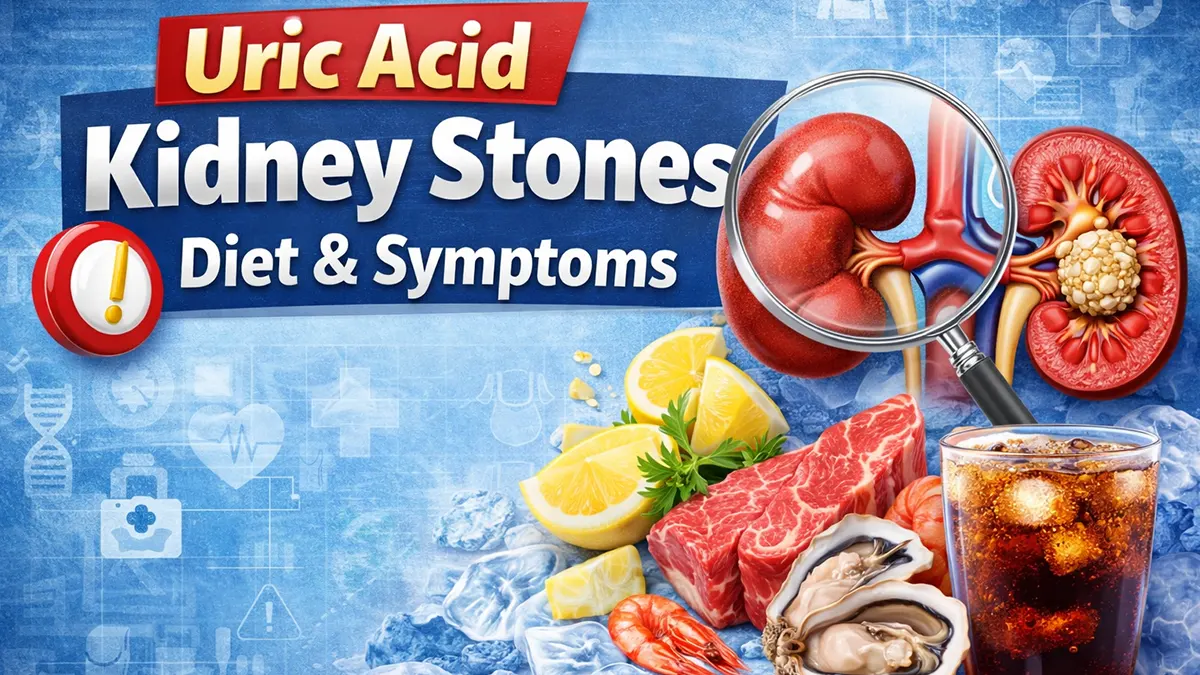
Uric acid kidney stones diet 2026 is one of the most searched health topics in the United States—and for good reason. With rising cases linked to modern diets, especially high sugar intake and processed foods, understanding prevention is critical. If you’re searching for low purine foods for kidney stones, or wondering about uric acid stone symptoms in men/women, this guide gives you a complete, expert-level breakdown.
Table of Contents
What Are Uric Acid Kidney Stones?
Uric acid kidney stones form when there is too much uric acid in the urine and the urine becomes too acidic. Unlike calcium stones, these are strongly linked to diet and lifestyle—making them highly preventable and even reversible in early stages.
A key medical term here is hyperuricosuria, which means excess uric acid in urine. This condition significantly increases the risk of stone formation.
Uric Acid Stone Symptoms in Men & Women
Common Symptoms
- Severe pain in the lower back or side
- Burning sensation during urination
- Frequent urge to urinate
- Blood in urine (pink or red color)
- Nausea and vomiting
Gender-Specific Symptoms (USA Search Trends)
In Men:
- Pain radiating to groin or testicles
- Higher association with high-protein diets
In Women:
- Pelvic discomfort
- Often mistaken for urinary tract infections
Ignoring early symptoms can lead to complications like infection or blockage.
If you’re unsure about different types of stones, read our complete guide to calcium oxalate kidney stones to understand how they differ.
What Causes Uric Acid Kidney Stones?
1. High Uric Acid Levels (Hyperuricosuria)
When your body produces too much uric acid or fails to eliminate it properly.
2. Acidic Urine
Low urine pH is the biggest trigger. This is where urinary alkalinization foods play a major role.
3. Diet High in Purines
Purines break down into uric acid. Foods like red meat and organ meats are major contributors.
4. High Fructose Corn Syrup (Major USA Risk)
One of the biggest modern triggers is high fructose corn syrup kidney stones risk. Found in:
- Soda
- Packaged juices
- Processed snacks
5. Dehydration
Low water intake concentrates urine, increasing stone formation risk.
6. Gout Connection
There is a strong link between gout and kidney stone connection. If you have gout, your risk is significantly higher.
Recognizing the early warning signs of kidney stones you shouldn’t ignore can help prevent complications.
How to Dissolve Uric Acid Stones Naturally
Good news: uric acid stones are one of the few types that can be dissolved without surgery.
1. Increase Urine pH (Alkalinization)
Focus on urinary alkalinization foods:
- Lemon water
- Citrus fruits
- Vegetables
2. Hydration (Most Important Rule)
Drink at least:
- 2.5 to 3 liters daily
3. Potassium Citrate Natural Sources
These help neutralize acidity:
- Bananas
- Coconut water
- Oranges
- Spinach
4. Reduce Purine Intake
Shift toward a low purine foods for kidney stones diet.
5. Limit Sugar & Processed Foods
Especially avoid high fructose corn syrup.
Uric Acid Kidney Stones Diet 2026 (USA-Focused)
Your diet is the most powerful tool for prevention.
✅ Foods to Eat (Uric Acid Friendly)
- Low-fat dairy (skim milk, yogurt)
- Cherries and citrus fruits
- Whole grains
- Plant-based proteins (tofu, lentils)
- Vegetables (kale, broccoli, spinach)
❌ Foods to Avoid
- Organ meats (liver, kidney)
- Game meats
- Shellfish
- Beer and grain alcohol
- Sugary sodas (especially HFCS-based)
Uric Acid Kidney Stones Diet Chart (USA 2026 Guide)
| Food Category | Foods to Avoid (High Purine) | Foods to Eat (Uric Acid Friendly) |
|---|---|---|
| Proteins | Red Meat, Bacon, Sardines | Eggs, Tofu, Lean Poultry (limited) |
| Vegetables | None (All generally safe) | Kale, Spinach, Broccoli |
| Beverages | Beer, Sugary Sodas, Sweet Tea | Water with Lemon, Black Coffee |
| Dairy | Full-fat Cream, Aged Cheeses | Non-fat Yogurt, Skim Milk |
Hyperuricosuria Diet Plan (Expert-Level Strategy)
To manage hyperuricosuria, follow this structured plan:
Morning
- Warm lemon water
- Oatmeal with fruits
Lunch
- Brown rice + vegetables
- Low-fat yogurt
Evening
- Green tea or black coffee
Dinner
- Grilled vegetables + tofu or lean protein
Daily Add-ons
- 1–2 servings of citrus fruits
- 2.5–3 liters water
Role of Lifestyle in Prevention
1. Maintain Healthy Weight
Obesity increases uric acid production.
2. Exercise Regularly
Helps regulate metabolism and reduces risk.
3. Avoid Crash Diets
Rapid weight loss increases uric acid levels.
When to See a Doctor
Seek medical help if:
- Pain is severe or persistent
- Blood in urine continues
- Fever or chills appear
Doctors may prescribe medications like potassium citrate or allopurinol if needed.
Key Takeaways (Save This)
- Uric acid stones are diet-related and preventable
- Hydration + alkalinization is the best strategy
- Avoid high fructose corn syrup and processed foods
- Follow a low purine foods for kidney stones plan
- Use potassium citrate natural sources for prevention
Final Thoughts
If you’re dealing with kidney stones or want to prevent them, focusing on a uric acid kidney stones diet 2026 is your best move. With the right dietary changes, hydration, and awareness, you can not only prevent stones but also dissolve them naturally.
Dr. Jayanth Reddy – Consultant Urologist
My Health Hospitals, Hyderabad
This content has been medically reviewed for accuracy and reliability based on current urology treatment guidelines.
According to the kidney stone symptoms NHS guide, severe flank pain can worsen during rest or nighttime.
Author
Yamanandan Reddy
Health Content Writer & Frontend Developer
Yamanandan Reddy is a health content writer and frontend developer with over 4 years of experience in website design and digital content creation. He writes research-based health articles to help readers understand symptoms, causes, treatments, and prevention methods related to common health conditions.
His articles are written using information from trusted medical sources such as the World Health Organization (WHO), Mayo Clinic, and the Centers for Disease Control and Prevention (CDC).
Sources
The information in this article is researched and verified using trusted medical resources, including:
• World Health Organization (WHO)
• Mayo Clinic
• National Institutes of Health (NIH)
• Centers for Disease Control and Prevention
⚠️ Medical Disclaimer
This content is for informational purposes only and does not replace professional medical advice. Always consult a qualified healthcare provider for diagnosis and treatment.
5 thoughts on “Uric Acid Kidney Stones – Symptoms & Diet (2026 USA Guide)”