
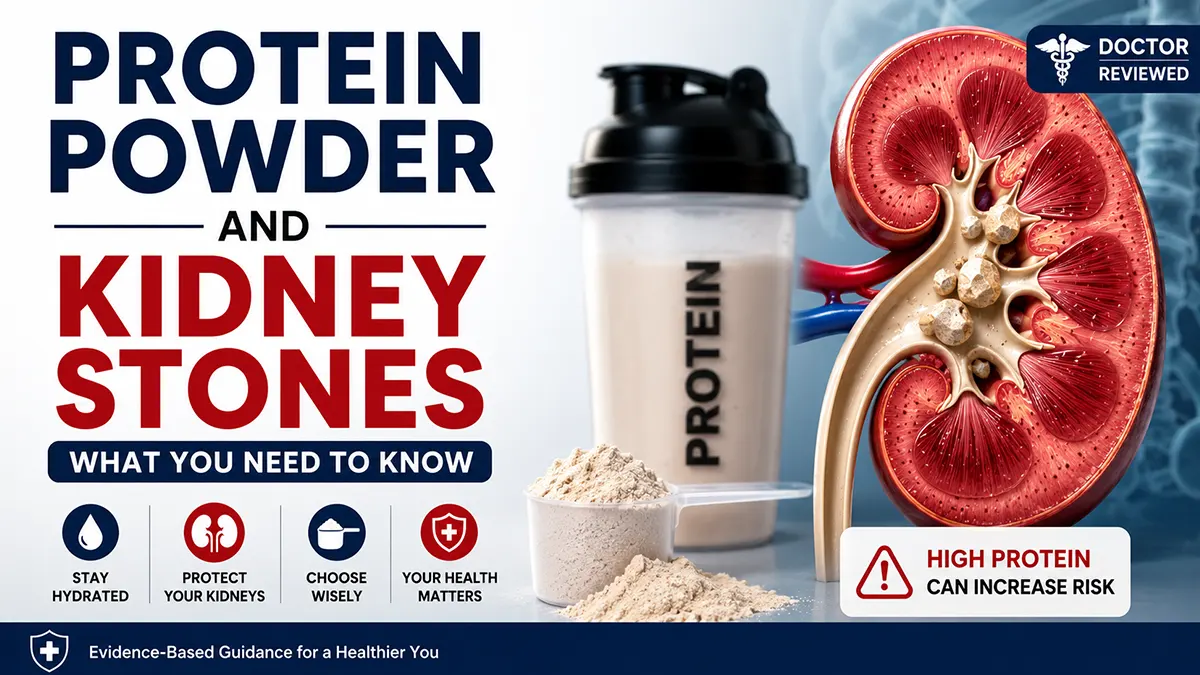
Does Protein Powder Increase Kidney Stone Risk? Yes, it can—especially if you use whey protein, creatine, and high-protein diets without drinking enough water. Protein powder does not directly cause kidney stones in everyone, but it may increase your risk if you are prone to stones.
If you started taking protein shakes and now feel sharp pain in your back or side, you are not alone. Many fitness enthusiasts in the U.S., Canada, UK, and India ask whether products like Optimum Nutrition Gold Standard 100% Whey, MuscleBlaze Whey Protein, Muscle Milk, or Big Muscles Nutrition Whey Protein can trigger kidney stones.
In this 2026 doctor-reviewed guide, you’ll learn how whey protein, plant protein, creatine, and dehydration affect stone risk—and which protein powders are safer if you have a history of stones.
Table of Contents
What Are Kidney Stones?
Kidney Stones are hard mineral deposits that form when substances like calcium, oxalate, and uric acid become highly concentrated in the urine.
Common types include:
- Calcium oxalate stones
- Uric acid stones
- Calcium phosphate stones
- Struvite stones
If you develop severe side pain, blood in urine, or nausea, these may be early signs of kidney stone symptoms.
Why Do Gym-Goers Worry About Protein Powder?
A typical fitness routine may include:
- 1–2 protein shakes daily
- Creatine
- Pre-workouts
- Low-carb or keto diet
- Intense sweating
This combination can:
- Reduce urine volume
- Increase uric acid
- Lower urinary citrate
- Increase calcium excretion
That creates an ideal environment for stones.
Read Also : uric acid kidney stones
Can Drinking Protein Shakes Every Day Cause Kidney Pain?
Protein shakes themselves usually do not cause pain. However, they may contribute to stone formation, which can lead to:
- Sharp flank pain
- Burning urination
- Blood in urine
- Nausea
If you develop these symptoms, medical evaluation is important.
Why Does a High-Protein Diet Cause Uric Acid Kidney Stones?
A high-protein diet increases acid production in the body.
This can:
- Lower urine pH
- Increase uric acid
- Reduce citrate (a natural stone inhibitor)
When urine becomes acidic, uric acid crystals form more easily.
Read Also : calcium oxalate kidney stones
Does Whey Protein Increase Calcium Oxalate in Urine?
Yes, whey protein may increase calcium excretion and lower citrate in some individuals.
This may raise the risk of calcium oxalate stones, especially when combined with:
- Low fluid intake
- High sodium diet
- Excess vitamin C
- Family history of stones
Does Whey Protein Isolate Cause Uric Acid Kidney Stones?
Whey protein isolate is highly concentrated and may contribute to uric acid stones if consumed in large amounts with inadequate hydration.
Risk is higher in people with:
- Gout
- Obesity
- Metabolic syndrome
- Prior uric acid stones
Does Plant-Based Protein Powder Cause Kidney Stones?
Plant-based protein powders are generally considered safer, but it depends on ingredients.
Some contain spinach, cacao, or nuts, which may be high in oxalates.
Look for low-oxalate options based on:
- Pea protein
- Rice protein
- Pumpkin seed protein
Plant-Based Protein vs Whey for Kidney Stone Prevention
| Feature | Plant-Based Protein | Whey Protein |
|---|---|---|
| Uric acid load | Lower | Higher |
| Calcium excretion | Lower | May increase |
| Oxalate content | Varies | Usually low |
| Best for stone formers | Often better | Use with caution |
Does Mixing Creatine and Protein Powder Cause Kidney Stones?
Creatine Monohydrate does not directly cause kidney stones in healthy people.
However, combining creatine and protein powder can increase risk if you:
- Do not drink enough water
- Train in hot weather
- Use very high doses
How Much Water Should You Drink With a Protein Shake to Prevent Stones?
Drink at least 500–750 mL of water with each shake.
Most stone-prone individuals should aim for enough fluids to produce 2–2.5 liters of urine daily.
In hot climates like India, you may need 3–4 liters of fluid per day.
Does Protein Powder Increase Kidney Stone Risk? Yes, especially when protein supplements are combined with dehydration, high sodium intake, and intense workouts. People with a history of kidney stones should choose their protein powder carefully and monitor their daily water intake.
Taking Protein Supplements Without Drinking Enough Water Causes Kidney Pain
Dehydration is one of the strongest risk factors for kidney stones.
This is especially important during:
- Summer workouts
- Outdoor sports
- Fasting diets
- Keto diets
Does MuscleBlaze Whey Protein Cause Kidney Stones?
MuscleBlaze Whey Protein does not directly cause stones, but overuse combined with poor hydration may increase risk.
Is Optimum Nutrition Whey Protein Safe for Kidney Stone Formers?
Optimum Nutrition Gold Standard 100% Whey is widely used and generally safe when consumed in moderation with adequate hydration.
Is Muscle Milk Bad for Kidney Stone Formers?
Muscle Milk contains protein plus added vitamins and minerals. Review the label for calcium and vitamin C content if you are prone to stones.
Are Big Muscles Supplements Safe for Kidney Health?
Big Muscles Nutrition Whey Protein is usually safe if taken as directed and paired with sufficient water intake.
Best Vegan Protein Powder for Calcium Oxalate Stones
Look for products that are:
- Low in oxalates
- Free from megadoses of vitamin C
- Moderate in calcium
Pea protein isolate is often a good option.
Low Oxalate Protein Powder Brands for Kidney Stone Sufferers
Features to look for:
- Pea or rice protein
- Minimal added vitamins
- No spinach or cocoa concentrates
- Low sodium
Keto Diet Protein Powder and Kidney Stone Risk
Keto diets may increase stone risk by:
- Lowering urine citrate
- Raising uric acid
- Causing dehydration
If you use keto protein powders, hydration is critical.
Drinking Sattu vs Whey Protein for Kidney Stones
Sattu is a traditional Indian protein source that is often lower in additives and may be easier on the kidneys than heavily fortified supplements.
Can Beginners Taking Protein Powder Get Kidney Stones?
Yes, beginners can develop stones if they:
- Start multiple supplements at once
- Drink too little water
- Follow very high-protein diets
Symptoms of Kidney Stones in Gym Users
- Severe back or side pain
- Burning urination
- Blood in urine
- Nausea or vomiting
- Frequent urination
Protein Powder Flank Pain: When to Go to Urgent Care
Seek urgent medical care if you have:
- Severe flank pain
- Fever or chills
- Vomiting
- Blood in urine
- Trouble urinating
Can You Still Drink Protein Shakes if You Have a Kidney Stone?
In many cases, yes—but your protein type and total intake may need adjustment.
A doctor or dietitian can help you choose a safer option.
Treatment if Protein Intake Contributed to Kidney Stones
Treatment may include:
- Increased hydration
- Pain medications
- Stone analysis
- 24-hour urine testing
- Dietary changes
Which Protein Powder Is Best for People with Kidney Stones?
A kidney-stone-friendly protein powder should be:
- Low in sodium
- Low in oxalates
- Free from megadose vitamins
- Moderate in protein per serving
Real-Life Example
A 29-year-old gym enthusiast in Hyderabad started using whey protein, creatine, and a keto diet during summer. After several weeks, he developed severe flank pain. Testing showed a 4 mm uric acid stone. Low fluid intake and high protein consumption were key contributors.
Frequently Asked Questions
Does protein powder increase kidney stone risk?
Yes, especially when combined with dehydration and very high protein intake.
Does whey protein cause kidney stones?
Whey protein may increase risk in susceptible individuals by lowering urinary citrate and increasing calcium excretion.
Is plant protein better for kidney stones?
Often yes, particularly low-oxalate formulations.
How much water should I drink with protein shakes?
At least 500–750 mL with each shake, and enough total fluids to maintain clear or pale yellow urine.
Can creatine and protein together cause stones?
They may increase risk indirectly if you become dehydrated.
Conclusion
Does Protein Powder Increase Kidney Stone Risk? It can—particularly if you consume large amounts of whey protein, follow a high-protein diet, and do not drink enough water.
The good news is that most people can use protein powder safely with the right hydration and smart supplement choices.
If you have a history of kidney stones, consider lower-risk options such as plant-based protein and speak with your doctor before starting new supplements.
Dr. Jayanth Reddy – Consultant Urologist
My Health Hospitals, Hyderabad
This content has been medically reviewed for accuracy and reliability based on current urology treatment guidelines.
According to the kidney stone symptoms NHS guide, severe flank pain can worsen during rest or nighttime.
Author
Yamanandan Reddy
Health Content Writer & Frontend Developer
Yamanandan Reddy is a health content writer and frontend developer with over 4 years of experience in website design and digital content creation. He writes research-based health articles to help readers understand symptoms, causes, treatments, and prevention methods related to common health conditions.
His articles are written using information from trusted medical sources such as the World Health Organization (WHO), Mayo Clinic, and the Centers for Disease Control and Prevention (CDC).
Sources
The information in this article is researched and verified using trusted medical resources, including:
• World Health Organization (WHO)
• Mayo Clinic
• National Institutes of Health (NIH)
• Centers for Disease Control and Prevention
⚠️ Medical Disclaimer
This content is for informational purposes only and does not replace professional medical advice. Always consult a qualified healthcare provider for diagnosis and treatment.
1 thought on “Does Protein Powder Increase Kidney Stone Risk? A Doctor-Reviewed 2026 Guide for Gym-Goers”