
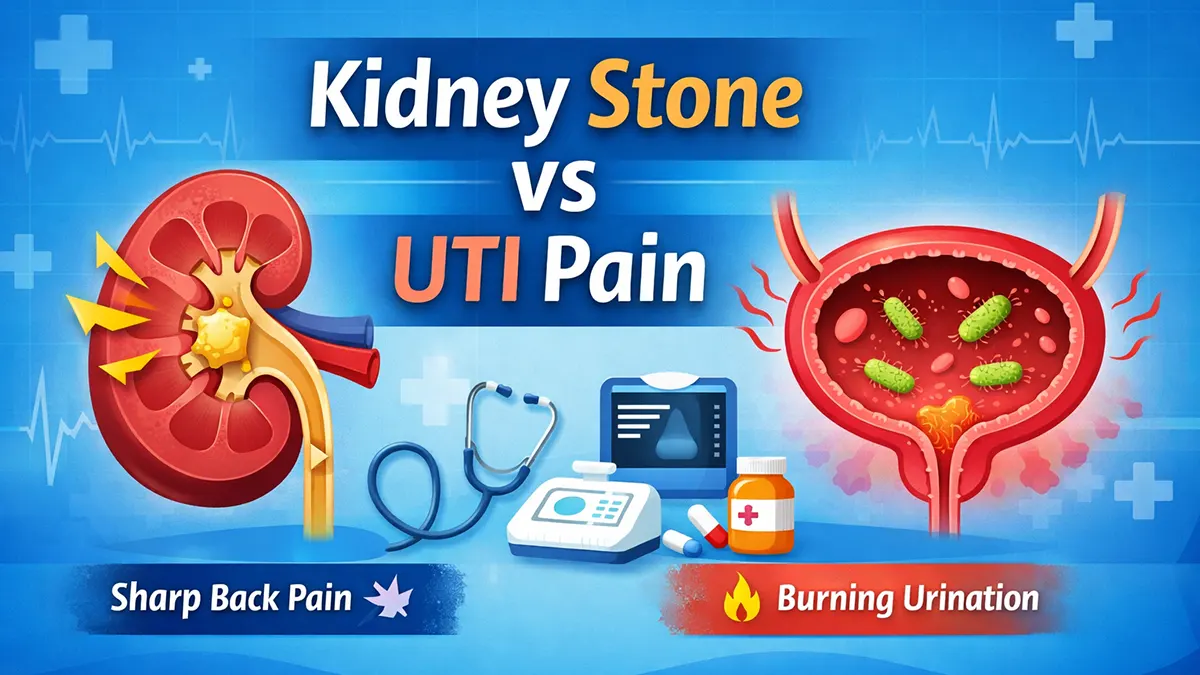
Sudden urinary pain can feel frightening and overwhelming. Knowing whether it’s kidney stones or a UTI can reduce anxiety, guide treatment, and protect your long-term kidney health.
Pain during urination or in the lower back can be frightening. Many people confuse kidney stone pain vs UTI pain because both conditions affect the urinary system and may share overlapping symptoms. However, understanding the difference is crucial for early diagnosis, proper treatment, and preventing serious complications.
This comprehensive guide explains kidney stone vs UTI symptoms, causes, pain patterns, and treatment approaches — with a clear comparison tailored for readers in the USA, UK, and Canada.
Table of Contents
Understanding Kidney Stones and UTIs
Kidney stones are hard mineral deposits that form inside the kidneys, while urinary tract infections (UTIs) are caused by bacterial infections in the urinary system.
Both conditions can cause urinary discomfort, but the pain origin, intensity, and progression differ significantly.
Doctors emphasize that distinguishing kidney stone symptoms vs UTI symptoms early can prevent complications such as kidney damage or bloodstream infections.
Understanding early kidney stone symptoms can reduce fear and help you seek timely medical care before pain becomes severe.
Kidney Stone vs UTI Pain: Key Differences
| Feature | Kidney Stone Pain | UTI Pain |
|---|---|---|
| Pain location | Severe flank or back pain | Lower abdomen or pelvic pain |
| Pain intensity | Sudden, sharp, wave-like | Burning, persistent discomfort |
| Urination symptoms | Blood in urine, urgency | Burning urination, frequent urge |
| Fever | Rare unless infection occurs | Common in advanced infection |
| Nausea/vomiting | Common | Rare |
| Pain movement | Pain radiates to groin | Usually localized discomfort |
| Onset | Sudden | Gradual |
| Cause | Mineral crystal blockage | Bacterial infection |
Understanding UTI vs kidney stone pain patterns helps clinicians make faster diagnostic decisions.
What Does Kidney Stone Pain Feel Like?
Kidney stone pain is often described as one of the most intense types of pain. It usually begins suddenly in the flank or lower back and may radiate toward the groin or abdomen.
Common characteristics include:
- Severe, sharp pain waves
- Pain shifting location as stone moves
- Blood in urine
- Nausea and vomiting
- Frequent urination
In men, kidney stone vs UTI symptoms in men may include testicular or groin discomfort due to nerve pathways.
Women may experience pelvic pressure similar to menstrual cramps.
Recognizing the exact kidney stone pain location helps patients understand what their body is signaling and avoid unnecessary anxiety.
What Does UTI Pain Feel Like?
UTI pain is usually more persistent but less severe than kidney stone pain.
Typical symptoms include:
- Burning sensation during urination
- Frequent urge to urinate
- Cloudy or foul-smelling urine
- Lower abdominal discomfort
- Mild back pain
- Fever or chills in severe cases
Unlike kidney stones, UTIs generally do not cause sudden extreme pain unless the infection spreads to the kidneys.
Kidney Stone Symptoms vs UTI Symptoms
| Symptom | Kidney Stones | UTI |
|---|---|---|
| Burning urination | Sometimes | Common |
| Blood in urine | Common | Possible |
| Fever | Rare | Common in severe cases |
| Severe flank pain | Very common | Less common |
| Urinary urgency | Yes | Yes |
| Pain radiating to groin | Yes | No |
| Fatigue | Possible | Common |
Recognizing kidney stone vs infection pain patterns is essential for proper treatment.
UTI vs Kidney Stone Back Pain
Back pain in kidney stones is typically sharp and severe, while UTI-related back pain is dull and persistent.
Kidney stone pain often occurs in waves due to ureteral spasms, whereas infection pain tends to worsen gradually.
If untreated, UTIs can progress to pyelonephritis (kidney infection), causing more severe back pain.
Simple lifestyle changes and natural kidney stone home remedies can offer relief, comfort, and hope during painful urinary episodes.
Kidney Stone Pain vs Pyelonephritis
| Feature | Kidney Stone | Kidney Infection (Pyelonephritis) |
|---|---|---|
| Pain type | Sharp, sudden | Deep, constant ache |
| Fever | Rare | High fever common |
| Urinary burning | Sometimes | Common |
| Nausea | Common | Common |
| Treatment urgency | Moderate | Emergency |
Medical professionals stress that kidney stone pain vs pyelonephritis symptoms should never be ignored.
Urinary Tract Pain After Passing Kidney Stone
Some individuals experience urinary discomfort even after passing a kidney stone.
Possible reasons include:
- Ureter irritation
- Residual inflammation
- Secondary infection
- Microscopic stone fragments
Doctors recommend follow-up imaging if urinary tract pain persists after stone passage.
Why People Confuse Kidney Stone vs UTI Pain
Several factors contribute to confusion:
- Both affect urinary system
- Similar symptoms like urgency and discomfort
- Overlapping pelvic or back pain
- Misleading online information
Online forums such as kidney stone pain vs UTI Reddit discussions often highlight how easily these conditions are confused.
However, self-diagnosis can delay proper treatment.
Causes of Kidney Stones
Common risk factors include:
- Dehydration
- High sodium or oxalate diet
- Genetic predisposition
- Obesity
- Certain medications
Lifestyle habits in developed countries like the USA, UK, and Canada contribute to rising kidney stone prevalence.
Causes of UTIs
UTIs occur due to bacterial entry into the urinary tract.
Risk factors include:
- Poor hydration
- Sexual activity
- Diabetes
- Hormonal changes
- Catheter use
Women are at higher risk due to anatomical differences.
Choosing the best water for kidney stones can improve hydration habits and significantly lower the risk of recurrence.
When to See a Doctor
Seek immediate medical care if you experience:
- Severe flank pain
- Fever with urinary symptoms
- Persistent vomiting
- Blood in urine
- Difficulty urinating
Early diagnosis helps distinguish kidney stone symptoms vs UTI symptoms and prevents complications.
Diagnosis Methods
Doctors use several tools:
- Urine analysis
- CT scan or ultrasound
- Blood tests
- Urine culture
Accurate diagnosis ensures appropriate treatment between kidney stone vs UTI conditions.
Treatment Approaches
Kidney Stones
- Hydration therapy
- Pain medications
- Alpha blockers
- Lithotripsy or surgery (for large stones)
UTIs
- Antibiotics
- Increased fluid intake
- Pain relief medications
- Probiotics support
Timely treatment reduces long-term kidney damage risk.
Prevention Strategies
Prevent Kidney Stones
- Drink 2.5–3 liters of water daily
- Reduce salt intake
- Maintain healthy weight
- Consume citrate-rich foods
Prevent UTIs
- Maintain hygiene
- Urinate after intercourse
- Stay hydrated
- Avoid holding urine
Preventive lifestyle changes are critical for urinary health.
Emotional Impact of Urinary Pain
Experiencing severe urinary pain can cause anxiety, sleep disruption, and reduced productivity.
Understanding whether symptoms indicate kidney stone vs UTI pain provides reassurance and encourages timely medical care.
Small daily hydration and hygiene habits significantly improve long-term kidney health.
Quick Summary: Kidney Stone vs UTI
- Kidney stone pain is sudden and severe
- UTI pain is burning and persistent
- Fever suggests infection rather than stones
- Imaging confirms kidney stones
- Urine culture confirms UTI
Recognizing differences improves treatment outcomes.
Kidney Stone vs UTI Pain
Kidney stone vs UTI pain can feel confusing and frightening. Kidney stone pain is usually sudden, sharp, and severe, while UTI pain is burning, persistent, and linked to infection symptoms.
Kidney Stone vs UTI
Kidney stones are hard mineral deposits causing blockage, while UTIs are bacterial infections affecting the urinary tract. Understanding the difference helps reduce anxiety and ensures timely treatment.
Kidney Stone Symptoms vs UTI
Kidney stone symptoms often include intense flank pain and nausea, whereas UTI symptoms commonly involve burning urination and frequent urges to urinate.
Kidney Stone vs UTI Symptoms in Men
In men, kidney stone pain may radiate to the groin or testicles, while UTI symptoms usually involve urinary discomfort and pelvic pressure.
Kidney Stone Pain vs UTI Reddit
Online discussions often show confusion between kidney stone pain and UTI symptoms. Medical diagnosis is essential to avoid delayed treatment or complications.
UTI vs Kidney Stone Pain
UTI pain is typically mild to moderate but persistent, while kidney stone pain is sudden, wave-like, and often extremely intense.
Urinary Tract Pain After Passing Kidney Stone
Some people feel lingering urinary tract pain after passing a kidney stone due to irritation or mild inflammation. Symptoms usually improve with hydration and rest.
Kidney Stone UTI Symptoms Reddit
Many people share experiences online about overlapping symptoms. However, professional evaluation is important for accurate diagnosis and safe treatment.
Kidney Stone vs Infection Pain
Kidney stone pain is mechanical and sharp, while infection pain is inflammatory and often accompanied by fever or fatigue.
UTI vs Kidney Stone Back Pain
Back pain from kidney stones is severe and radiates, while UTI-related back discomfort is dull and persistent.
Kidney Stone Pain vs Pyelonephritis
Kidney stone pain is sudden and intense, whereas pyelonephritis causes deep, constant pain with high fever and systemic illness.
Kidney Stone Symptoms vs UTI Symptoms
Kidney stone symptoms include severe flank pain and blood in urine, while UTI symptoms mainly involve burning urination and urinary urgency.
Kidney Stone Pain vs UTI
Understanding kidney stone pain vs UTI helps patients seek the right treatment early and avoid complications that may affect long-term kidney health.
Final Thoughts
Distinguishing kidney stone vs UTI pain is essential for early diagnosis and effective management. While both conditions are common in Western countries, timely medical evaluation and preventive lifestyle habits can reduce recurrence and improve overall urinary health.
If symptoms persist or worsen, consult a healthcare professional immediately.
According to the Mayo Clinic, both kidney stones and urinary tract infections can cause significant urinary discomfort, but early diagnosis and proper treatment help prevent serious kidney complications. Understanding the differences between kidney stone pain and UTI symptoms supports faster recovery and better long-term urinary health.
Author
Yamanandan Reddy
Health Content Writer & Frontend Developer
Yamanandan Reddy is a health content writer and frontend developer with over 4 years of experience in website design and digital content creation. He writes research-based health articles to help readers understand symptoms, causes, treatments, and prevention methods related to common health conditions.
His articles are written using information from trusted medical sources such as the World Health Organization (WHO), Mayo Clinic, and the Centers for Disease Control and Prevention (CDC).
Sources
The information in this article is researched and verified using trusted medical resources, including:
• World Health Organization (WHO)
• Mayo Clinic
• National Institutes of Health (NIH)
• Centers for Disease Control and Prevention (CDC)
Disclaimer
The information provided on HealthyWayCare.com is for educational and informational purposes only. It should not be considered medical advice, diagnosis, or treatment. Always consult a qualified healthcare professional before making any medical decisions or starting any treatment.
2 thoughts on “Kidney Stone vs UTI Pain: How to Tell the Difference (Symptoms, Causes & Treatment)”