
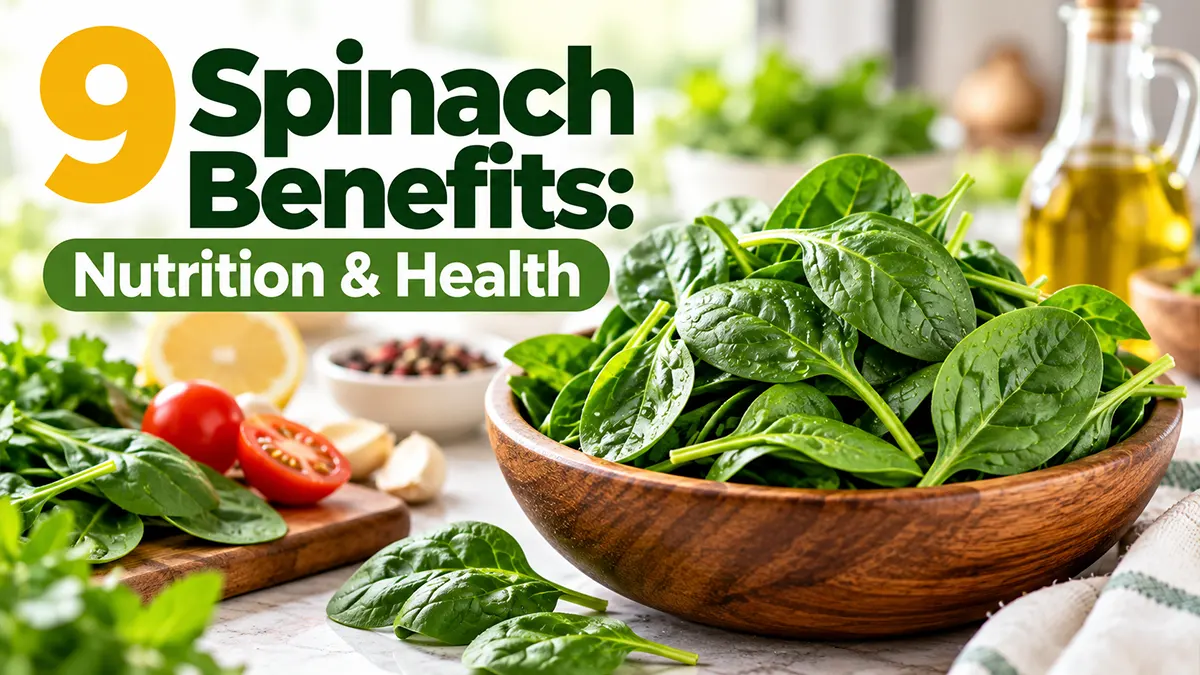
Spinach benefits come from its combination of nonheme iron, folate, vitamins A, C and K, minerals, fiber, and plant compounds. Spinach can support a nutrient-dense eating pattern, contribute to iron intake, and provide nutrients involved in immune function and cardiovascular health—but it should not be considered a treatment for anemia, infections, high cholesterol, or heart disease.
Spinach is a dark leafy green that can be eaten raw or cooked and can fit into many healthy eating patterns. However, people with certain types of kidney stones and those taking warfarin may need individualized dietary guidance.
Key Takeaways
- Spinach provides nonheme iron, but plant-based iron is less readily absorbed than heme iron from animal foods.
- Eating spinach with a vitamin C-rich food can improve absorption of nonheme iron.
- Spinach provides nutrients important for normal immune function, including vitamins A and C.
- Its nutrients can contribute to a heart-healthy dietary pattern, especially when spinach replaces less nutritious foods.
- Spinach is high in oxalate, which matters particularly for people with calcium oxalate kidney stones.
- Spinach is rich in vitamin K, so people taking warfarin should keep vitamin K intake consistent rather than suddenly increasing or eliminating spinach.
- There is no universal recommended daily amount of spinach that everyone needs to eat.
Table of Contents
Nutritional Value of Spinach
Spinach is a nutrient-dense leafy vegetable containing several vitamins and minerals.
Important nutrients found in spinach include:
- Iron – needed for hemoglobin and oxygen transport
- Vitamin C – supports immune function and improves absorption of nonheme iron
- Vitamin A – important for normal vision and immune function
- Vitamin K – important for normal blood clotting and bone health
- Folate – supports DNA synthesis and cell division
- Magnesium – involved in many metabolic processes
- Potassium – an important electrolyte
- Fiber – supports digestive health
- Plant compounds such as carotenoids and other antioxidants
The nutritional profile can vary depending on whether spinach is raw or cooked and how much is eaten.
Spinach should therefore be viewed as one useful part of a varied diet, rather than a single “superfood” that provides all the nutrients you need.
1. Spinach Benefits for Iron Levels
One of the commonly discussed spinach benefits is its contribution to dietary iron.
Spinach contains nonheme iron, the form of iron found in plant foods. The body generally absorbs nonheme iron less efficiently than heme iron found in meat and seafood.
How spinach can contribute to iron intake
- Provides dietary iron
- Can contribute to overall iron intake
- Works well in plant-based meals
- Can be paired with vitamin C-rich foods to improve nonheme iron absorption
Best way to eat spinach for iron
Try combining spinach with foods containing vitamin C, such as:
- Tomatoes
- Bell peppers
- Citrus fruits
- Strawberries
- Broccoli
- Lemon or lime
Vitamin C improves the absorption of nonheme iron from plant foods.
Does spinach treat anemia?
No.
Spinach can contribute iron to the diet, but eating spinach alone does not treat iron-deficiency anemia.
Anemia can have several causes, and confirmed iron deficiency may require blood tests and medical treatment. If you have persistent fatigue, weakness, shortness of breath, dizziness, or other symptoms of anemia, speak with a healthcare professional.
2. Spinach Benefits for Immune Health
Spinach provides nutrients involved in normal immune function.
Vitamin C supports the immune system and also functions as an antioxidant. Vitamin A is also important for maintaining normal immune function.
Immune-supporting nutrients in spinach
- Vitamin C
- Vitamin A
- Folate
- Vitamin K
- Various carotenoid and plant compounds
However, it is more accurate to say spinach supports normal immune function rather than claiming that it “boosts immunity” or prevents infections.
A healthy immune system depends on an overall pattern that includes adequate nutrition, sleep, physical activity, vaccinations where appropriate, and other healthy habits.
Cauliflower Health Benefits: Nutrition, Benefits, Risks & How to Eat It
3. Spinach Benefits for Heart Health
Spinach can be part of a heart-healthy dietary pattern because it provides vegetables, fiber, potassium and other nutrients while generally being low in calories.
The American Heart Association’s 2026 dietary guidance emphasizes overall eating patterns rich in vegetables, fruits, whole grains, healthy protein sources and unsaturated fats for cardiovascular health.
How spinach fits into a heart-healthy diet
Spinach can help you:
- Increase vegetable intake
- Add fiber and micronutrients to meals
- Replace some higher-calorie or highly processed foods
- Add variety to a plant-rich eating pattern
Spinach also contains naturally occurring nitrates, which have been studied for their effects on vascular function. However, it would be too strong to claim that eating spinach alone prevents heart disease or treats high blood pressure.
The overall dietary pattern matters more than any single food.
4. Is Spinach Good for Weight Management?
Spinach can be useful in a weight-management eating pattern because vegetables are generally nutrient-dense and relatively low in calories.
CDC guidance notes that vegetables and fruits provide vitamins, minerals, fiber and other substances important for health, and can help people feel full while keeping meals lower in calories.
Spinach can be added to:
- Omelets
- Salads
- Soups
- Lentils and beans
- Stir-fries
- Whole-grain dishes
- Sandwiches and wraps
- Vegetable-based meals
However, spinach itself does not directly cause weight loss. Overall calorie intake, dietary pattern, physical activity, sleep and other factors all matter.
Health Benefits of Carrots and Carrot Juice: Nutrition, Uses & Wellness Guide
5. Can People With Diabetes Eat Spinach?
Yes. Spinach is a non-starchy vegetable and can fit well into a diabetes-friendly eating pattern.
CDC diabetes meal-planning guidance specifically includes spinach among non-starchy vegetables that can be incorporated into meals.
A simple meal approach is to combine spinach with:
- A protein source
- Other non-starchy vegetables
- A suitable portion of carbohydrate-rich foods
- Healthy fats
Spinach does not cure or control diabetes by itself. The overall meal pattern and carbohydrate intake are more important.
6. Who Should Be Careful With Spinach?
Spinach is nutritious, but certain people may need to consider how much they eat.
Kidney Stone Patients
Spinach is relatively high in oxalate.
People who have had calcium oxalate kidney stones may be advised to reduce high-oxalate foods, including spinach, depending on their individual stone history and urine chemistry.
This does not mean everyone with kidney problems must completely avoid spinach.
Kidney-stone prevention should be individualized based on the type of stone and other dietary factors.
People Taking Warfarin
Spinach contains a substantial amount of vitamin K.
Vitamin K can interact with warfarin, an anticoagulant. The important issue is usually consistency, rather than completely eliminating spinach. Sudden large changes in vitamin K intake can affect warfarin treatment.
If you take warfarin, talk with your healthcare professional before making major changes to your intake of spinach or other vitamin-K-rich foods.
People With Digestive Sensitivity
A large amount of spinach may cause digestive discomfort in some people.
Possible symptoms include:
- Gas
- Bloating
- Abdominal discomfort
If this happens, smaller portions or cooked spinach may be easier to tolerate.
Sweet Potato Health Benefits for Gut, Diabetes, and Immunity
7. How Much Spinach Should You Eat Per Day?
There is no universal daily spinach requirement for healthy adults.
The previous recommendation of “1 cup cooked or 2 cups raw every day” should not be presented as a medically established safe daily dose.
Instead, think about spinach as one of many vegetables in a varied diet.
A practical approach is to:
- Vary your vegetables throughout the week
- Include different colors and types of vegetables
- Adjust portions to your overall diet
- Follow individualized dietary advice if you have kidney disease, kidney stones or medication-related restrictions
The CDC recommends a varied eating pattern that includes nutrient-dense vegetables rather than relying on one particular vegetable every day.
8. Raw vs. Cooked Spinach: Which Is Better?
Both raw and cooked spinach can be nutritious.
Raw spinach
Good options include:
- Salads
- Sandwiches
- Wraps
- Smoothies
Cooked spinach
You can add spinach to:
- Soups
- Dal
- Egg dishes
- Stir-fries
- Pasta
- Vegetable curries
Cooking changes the volume and nutrient availability of vegetables, so the best choice depends on the rest of your diet and personal preference.
For people concerned about oxalate intake, cooking methods such as boiling can reduce oxalate content, although the appropriate approach depends on the individual’s kidney-stone situation.
9. Best Ways to Eat Spinach
To make spinach part of a balanced diet:
Try:
- Spinach with tomatoes and beans
- Spinach omelets
- Spinach and lentil dishes
- Spinach soups
- Fresh spinach salads
- Spinach with whole grains and lean protein
- Cooked spinach with a small amount of healthy oil
For better iron absorption
Pair spinach with a source of vitamin C, such as tomatoes, bell peppers, citrus or broccoli.
Food safety tip
Wash fresh spinach and other leafy greens thoroughly before eating or cooking. CDC food-safety guidance recommends washing fresh produce and notes that cooked vegetables are generally the safer choice when food-safety concerns are present.
10. Potential Side Effects of Eating Too Much Spinach
Eating spinach as part of a varied diet is generally reasonable for most people, but large amounts may not be appropriate for everyone.
Potential concerns include:
- Oxalate exposure, particularly for people prone to calcium oxalate kidney stones
- Vitamin K intake, particularly for people taking warfarin
- Digestive discomfort, such as gas or bloating
- Dietary restrictions related to certain kidney conditions
There is no need for most healthy people to completely avoid spinach simply because it contains oxalates or vitamin K.
The appropriate amount depends on the person’s overall diet and health circumstances.
Is spinach good for anemia?
Spinach can contribute nonheme iron to the diet, but it does not treat anemia by itself. Vitamin C-rich foods can improve absorption of plant-based iron. If iron-deficiency anemia is suspected or diagnosed, the underlying cause and appropriate treatment should be discussed with a healthcare professional.
Is spinach high in iron?
Yes. Spinach contains nonheme iron. However, its iron is not absorbed as efficiently as heme iron from meat and seafood, and spinach also contains compounds that can reduce iron absorption.
Can kidney stone patients eat spinach?
People with calcium oxalate kidney stones may be advised to reduce spinach because it is high in oxalate. However, dietary recommendations should be based on the individual’s stone type and medical history.
Is spinach better cooked or raw?
Neither is universally better. Both raw and cooked spinach can contribute nutrients to the diet. Cooking can change nutrient availability and may reduce oxalate content depending on the cooking method.
Can spinach be eaten every day?
Many people can include spinach regularly, but there is no requirement to eat it every day. Variety is important, and people with kidney stones, kidney disease or certain medication interactions may need individualized advice.
Is spinach good for heart health?
Spinach can contribute to a heart-healthy eating pattern because it is a nutrient-dense vegetable containing fiber, minerals and plant compounds. However, no single food prevents or treats heart disease.
Can people with diabetes eat spinach?
Yes. Spinach is a non-starchy vegetable and can fit into many diabetes meal plans. The overall meal pattern and carbohydrate intake remain important for blood glucose management.
Conclusion
Spinach benefits come from its combination of iron, folate, vitamins A, C and K, fiber, minerals and plant compounds.
Spinach can contribute to iron intake, normal immune function and a heart-healthy eating pattern. It can also be a useful vegetable for weight-management and diabetes-friendly meals.
However, spinach is not a treatment for anemia, diabetes, high blood pressure or heart disease. People with calcium oxalate kidney stones and those taking warfarin should pay particular attention to their spinach intake and discuss significant dietary changes with a healthcare professional.
The best approach is to include spinach as part of a varied, balanced diet rather than relying on it as a single “superfood.”
Medical Disclaimer
This article is for educational purposes only and does not provide individual medical advice, diagnosis or treatment. Dietary needs vary by age, health conditions, medications and nutritional status. If you have anemia, kidney disease, kidney stones, or take warfarin or other medications affected by diet, speak with a qualified healthcare professional or registered dietitian before making major dietary changes.
References
- National Institutes of Health, Office of Dietary Supplements. Iron — Fact Sheet for Consumers.
- National Institutes of Health, Office of Dietary Supplements. Vitamin C — Fact Sheet for Consumers.
- National Institutes of Health, Office of Dietary Supplements. Vitamin K — Fact Sheet for Consumers.
- National Institute of Diabetes and Digestive and Kidney Diseases. Eating, Diet & Nutrition for Kidney Stones.
- Centers for Disease Control and Prevention. Diabetes Meal Planning.
- American Heart Association. Among leafy green powerhouses, spinach packs a wallop.
Recommended External Sources
- NIH Office of Dietary Supplements — Iron
- Supports: spinach as a source of iron, nonheme iron, and vitamin C improving plant-based iron absorption.
NIH: Iron Fact Sheet for Consumers
- Supports: spinach as a source of iron, nonheme iron, and vitamin C improving plant-based iron absorption.
- NIH Office of Dietary Supplements — Vitamin C
- Supports: vitamin C’s role in immune function and absorption of nonheme iron.
NIH: Vitamin C Fact Sheet
- Supports: vitamin C’s role in immune function and absorption of nonheme iron.
- NIH Office of Dietary Supplements — Vitamin K
- Supports: spinach as a major dietary source of vitamin K and the importance of consistent vitamin K intake with warfarin.
NIH: Vitamin K Fact Sheet
- Supports: spinach as a major dietary source of vitamin K and the importance of consistent vitamin K intake with warfarin.
- NIDDK — Eating, Diet & Nutrition for Kidney Stones
- Supports: spinach/oxalate considerations for people with calcium oxalate kidney stones.
NIDDK: Kidney Stones — Eating, Diet & Nutrition
- Supports: spinach/oxalate considerations for people with calcium oxalate kidney stones.
- CDC — Diabetes Meal Planning
- Supports: spinach as a non-starchy vegetable suitable for diabetes meal planning.
CDC: Diabetes Meal Planning
- Supports: spinach as a non-starchy vegetable suitable for diabetes meal planning.
- CDC — Carb Choices
- Supports: spinach classification as a non-starchy vegetable and serving guidance.
CDC: Carb Choices
- Supports: spinach classification as a non-starchy vegetable and serving guidance.
- American Heart Association — Spinach & Leafy Greens
- Useful for: spinach nutrition, fiber, lutein, oxalates and vitamin K considerations.
American Heart Association: Spinach & Leafy Greens
- Useful for: spinach nutrition, fiber, lutein, oxalates and vitamin K considerations.
- NIDDK — Healthy Eating & Physical Activity
- Supports: including dark leafy greens such as spinach in a healthy eating pattern and the oxalate consideration for people with kidney stones.
NIDDK: Healthy Eating & Physical Activity
- Supports: including dark leafy greens such as spinach in a healthy eating pattern and the oxalate consideration for people with kidney stones.
1 thought on “Spinach Benefits: Iron, Immunity, Heart Health, Nutrition & Risks”