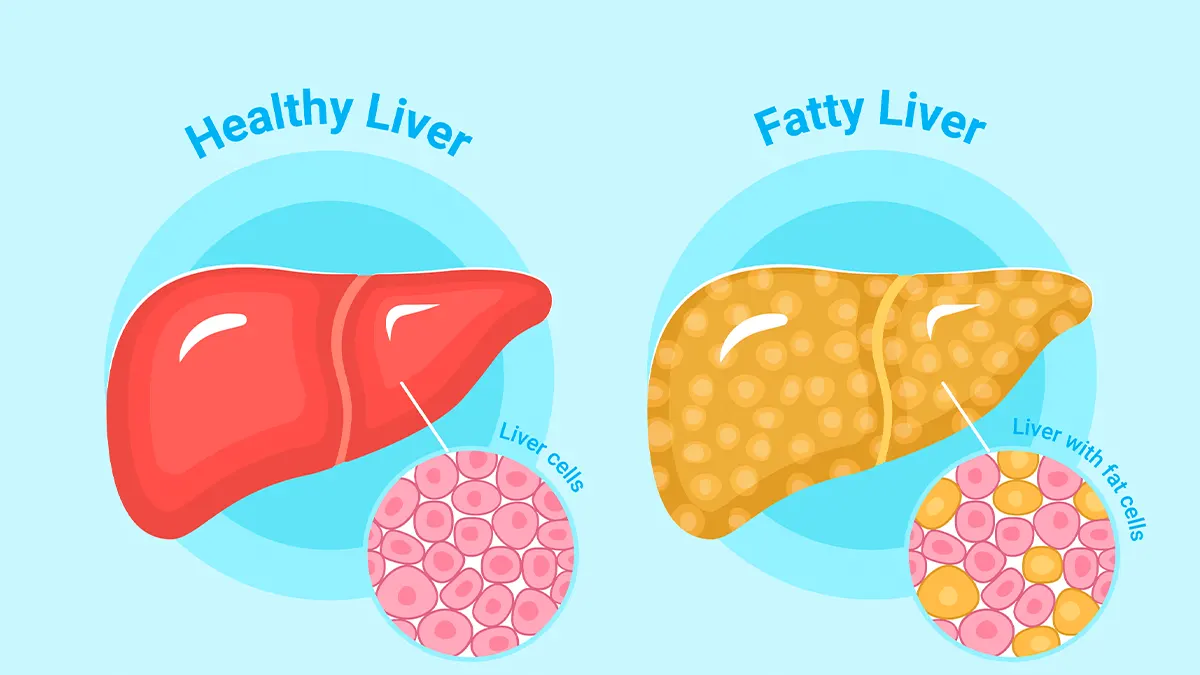
Fatty liver disease often has no noticeable symptoms. Someone may feel well while fat accumulates in the liver, and symptoms alone cannot tell whether inflammation or scarring is present. This guide explains possible signs, who may benefit from evaluation, how clinicians assess liver health, and practical ways to reduce risk without relying on unproven liver detoxes.
Table of Contents
What Is Fatty Liver Disease?
Fatty liver disease describes excess fat in the liver. The current term metabolic dysfunction-associated steatotic liver disease (MASLD) is commonly used when liver fat occurs alongside cardiometabolic risk factors; it replaces much of what was previously called NAFLD. Some people develop inflammation and liver-cell injury, called metabolic dysfunction-associated steatohepatitis (MASH) (previously NASH). Not everyone with liver fat develops cirrhosis. Alcohol intake and other causes of liver disease also matter when making a diagnosis.
Silent Symptoms of Fatty Liver Disease
1️⃣ Constant Fatigue and Low Energy
Some people with fatty liver report fatigue or reduced energy, but many have no symptoms. Tiredness has numerous possible causes, including sleep problems, anemia and thyroid conditions; it does not establish a fatty liver diagnosis. Persistent fatigue deserves an assessment based on your overall health.
Food choices matter more than any single spice. For general nutrition context, see our article on ginger and its potential benefits; ginger is not a proven treatment for MASLD.
2️⃣ Mild Discomfort in the Upper Right Abdomen
Occasionally, people report vague discomfort or fullness in the upper-right abdomen. This is nonspecific and may have other causes, including gallbladder or digestive conditions. Severe or persistent abdominal pain should not be assumed to be fatty liver.
3️⃣ Unexplained Weight Gain
Excess abdominal fat and weight gain can be risk factors for MASLD, rather than reliable symptoms caused by liver fat. MASLD can also occur in people who are not overweight. Changes in weight alone cannot confirm or exclude it.
4️⃣ Loss of Appetite and Nausea
Loss of appetite and nausea are not reliable early signs of uncomplicated fatty liver. They can occur for many reasons. If they persist, or accompany jaundice, abdominal swelling or marked weakness, seek medical evaluation.
5️⃣ Brain Fog and Poor Concentration
Ordinary forgetfulness or brain fog is not a specific early symptom of fatty liver. Severe liver disease can sometimes cause hepatic encephalopathy, with new confusion, unusual sleepiness or changes in behavior. Sudden confusion requires urgent medical attention.
6️⃣ Darkened Skin Patches
Dark, velvety skin around the neck or armpits may be acanthosis nigricans, a possible sign of insulin resistance. Insulin resistance is associated with MASLD, but skin changes do not diagnose liver disease. A clinician can assess the cause.
7️⃣ Elevated Liver Enzymes (Detected in Blood Tests)
Elevated ALT or AST may lead a clinician to investigate liver disease, but these tests are not symptoms and are not diagnostic by themselves. Importantly, liver enzymes can be normal even when MASLD or significant fibrosis is present. Further assessment depends on risk factors and clinical findings.
Who Is at Higher Risk?
You may be at higher risk if you:
- Have obesity or belly fat
- Have type 2 diabetes or prediabetes
- Eat a high-sugar or processed diet
- Have high cholesterol or triglycerides
- Live a sedentary lifestyle
Hepatitis and MASLD are different conditions. A clinician may consider viral hepatitis and other causes when evaluating abnormal liver tests.
How Doctors Diagnose Fatty Liver and Check for Fibrosis
A clinician may review metabolic risk factors, alcohol intake, medicines and possible alternative causes of liver disease. Blood tests can provide clues, while ultrasound or other imaging may show liver fat. Tests that detect fat do not necessarily measure inflammation or scarring.
Fibrosis risk matters: clinicians often use the FIB-4 score (which uses age, AST, ALT and platelet count) to identify who needs additional testing. Elastography, such as FibroScan, may help estimate liver stiffness. FIB-4 is less reliable in some age groups and settings; your clinician should interpret it, rather than relying on an online score alone.
How to Protect Your Liver Naturally
Protecting liver health starts with simple lifestyle changes:
- Choose a sustainable eating pattern rich in vegetables, fruit, whole grains, legumes and unsaturated fats; reduce sugary drinks and highly processed foods.
- Be physically active regularly, building toward about 150 minutes of moderate activity weekly if appropriate for your health.
- If you have excess weight, discuss gradual, sustainable weight reduction; even modest loss may improve liver fat.
- Manage diabetes, blood pressure and cholesterol with your healthcare team.
- Discuss alcohol use and medications with a clinician; do not stop prescribed medicines on your own or use unproven liver-cleansing supplements.
When Should You See a Doctor?
Discuss assessment with a healthcare professional if you have type 2 diabetes, several metabolic risk factors, unexplained abnormal liver tests or liver fat seen on imaging. Seek prompt care for yellow eyes or skin, new abdominal swelling, vomiting blood or black stools; new confusion is an emergency. Do not wait for symptoms before discussing risk if you have diabetes or other major risk factors.
❓ Frequently Asked Questions: Fatty Liver Disease (Silent Symptoms)
1️⃣ What are the early silent symptoms of fatty liver disease?
Often there are no early symptoms. Fatigue or vague upper-right abdominal discomfort may occur, but neither is specific. Risk factors, blood tests and appropriate imaging or fibrosis assessment are more useful than symptom-checking alone.
2️⃣ Can fatty liver disease exist without pain?
Yes. Many people with MASLD have no pain or other noticeable symptoms, even when liver injury is present.
3️⃣ Why is fatty liver disease called a “silent disease”?
It is called silent because symptoms appear only when liver damage progresses, often after significant fat accumulation or inflammation.
4️⃣ How does fatigue relate to fatty liver disease?
Fatigue is sometimes reported, but it is nonspecific and does not prove the liver is failing to clear toxins. Other common causes should also be considered.
5️⃣ Can fatty liver cause digestive problems?
Nausea and indigestion are not dependable signs of early MASLD. Persistent digestive symptoms deserve evaluation rather than being attributed to fatty liver without evidence.
6️⃣ Does fatty liver disease cause weight gain or belly fat?
Excess abdominal fat is a risk factor and commonly coexists with MASLD; it is not proof that the liver caused weight gain. People at lower body weights can also develop MASLD.
7️⃣ Can skin changes indicate fatty liver disease?
Dark, velvety patches may indicate insulin resistance, which is associated with MASLD. They are not a diagnostic sign of fatty liver. Itching or jaundice may require investigation for other or more advanced liver conditions.
8️⃣ Is fatty liver disease dangerous if untreated?
Many people do not progress to advanced disease, but some develop MASH, fibrosis and eventually cirrhosis. Cardiovascular risk is also important. Individual risk assessment and follow-up help guide care.
9️⃣ Can fatty liver disease affect blood sugar and cholesterol?
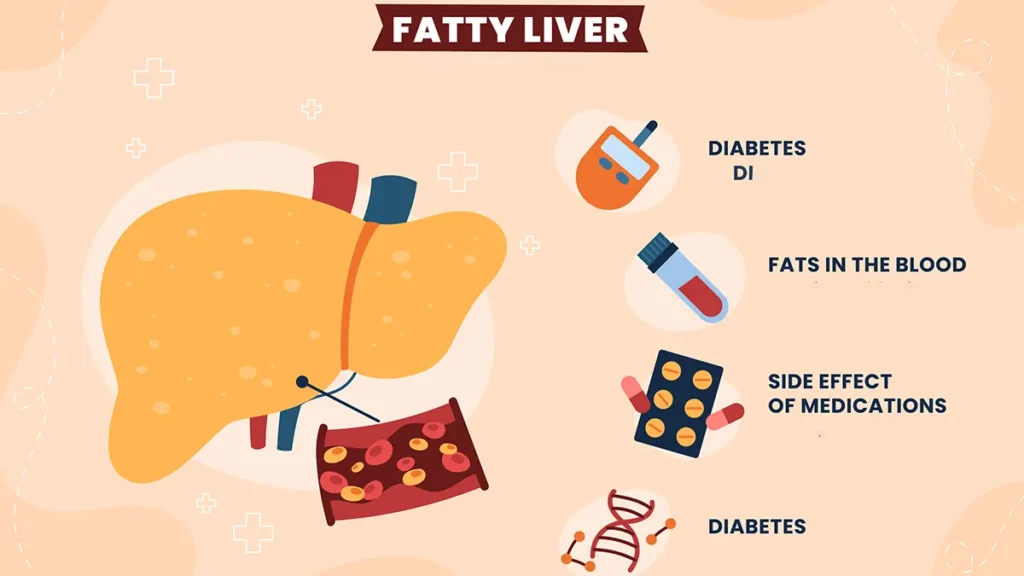
MASLD often coexists with insulin resistance, type 2 diabetes, high triglycerides and other metabolic risk factors. These associations do not mean every person has all of them.
🔟 How is fatty liver disease detected if symptoms are silent?
Fatty liver is usually detected through:
- Blood tests (liver enzymes)
- Ultrasound or imaging
- Routine health checkups
Evaluation is usually risk-based, not a recommendation for everyone to undergo routine ultrasound. People at higher risk may need noninvasive fibrosis assessment, such as FIB-4 followed by elastography when appropriate. A normal ALT level does not rule out fibrosis.
1️⃣1️⃣ Can non-alcoholic fatty liver disease occur in non-drinkers?
Yes. What was previously called NAFLD commonly occurs in people who do not drink much alcohol. The updated term MASLD focuses on liver fat with metabolic risk factors; clinicians also assess alcohol exposure and other causes.
1️⃣2️⃣ Can fatty liver disease be reversed naturally?
Liver fat and inflammation may improve with sustained nutrition, physical activity and, when appropriate, weight reduction. Established advanced scarring is harder to reverse and needs specialist follow-up. Avoid products marketed as liver detox cures.
🏁 Conclusion
The most important point about the silent symptoms of fatty liver disease is that many people have no symptoms at all. If you have diabetes, metabolic risk factors or an incidental finding of liver fat, ask a clinician whether liver assessment and fibrosis risk stratification are appropriate. Sustainable lifestyle changes can improve liver health, but individual follow-up matters.
Author and Editorial Transparency
Yamanandan Reddy — Health Content Writer & Frontend Developer. This article is educational content based on the medical references below; it is not presented as individually medically reviewed by a physician.
Medical Sources and Further Reading
NIDDK: NAFLD and NASH — symptoms, diagnosis and treatment; AASLD: New MASLD nomenclature — updated terminology; NIDDK: Diagnosis of NAFLD and NASH — blood tests, imaging and fibrosis assessment.
Medical Disclaimer
Content on HealthyWayCare is for informational purposes only and is not a substitute for professional medical advice. Always consult a qualified healthcare provider before making health-related decisions.