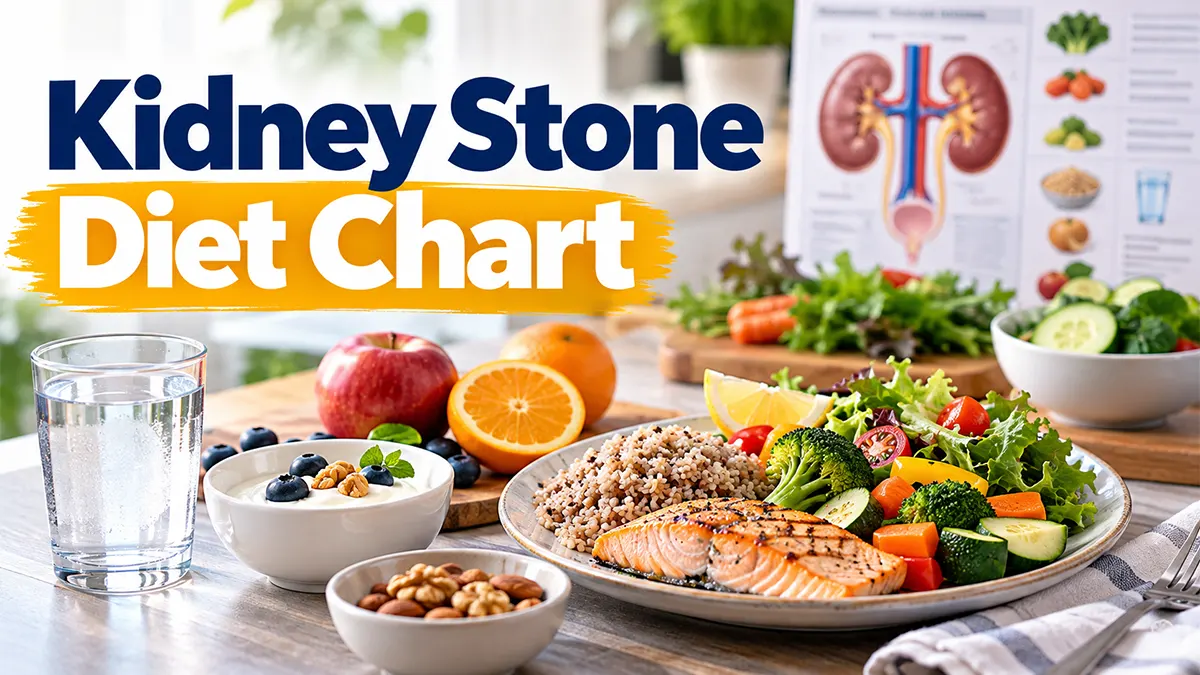
Looking for a practical kidney stone diet chart PDF you can save or print? This guide explains what to eat, what to limit, how calcium and oxalate work together, and how to build a kidney-stone-friendly meal plan using familiar foods from the USA, UK and India.
Important: Kidney stone prevention is not one-size-fits-all. Your ideal diet depends on the type of stone you formed, your urine chemistry, kidney function, medications and other health conditions. A 24-hour urine test can help identify factors such as urinary calcium, oxalate, citrate, uric acid and urine volume. NIDDK
Table of Contents
📥 Download the Free Kidney Stone Diet Chart PDF
Inside the printable PDF:
- 7-day USA meal plan
- 7-day UK meal plan
- 7-day Indian meal plan
- Low-oxalate food swaps
- Calcium-oxalate meal guidance
- Hydration tracker
- Kidney-stone shopping list
- Foods to limit
- Warning signs requiring medical attention
Download → Print → Keep it on your fridge
Note: Upload the PDF to your WordPress Media Library and replace the download button with the actual PDF URL. Do not use a Google search URL as the download link.
What Is the Best Diet for Kidney Stones?
There is no universal “kidney stone diet.”
The best eating pattern depends largely on what type of stone you have and why your urine is forming crystals.
The most common stones are calcium stones, particularly calcium oxalate stones. Other types include uric acid, struvite and cystine stones. National Kidney Foundation
For many people, the core prevention strategy includes:
- Drinking enough fluid
- Reducing excessive sodium
- Getting adequate calcium from food
- Avoiding excessive animal protein
- Eating plenty of fruits and vegetables
- Limiting very-high-oxalate foods when appropriate
- Following a plan based on urine and stone testing
NIDDK identifies fluids, sodium, animal protein, calcium and oxalate as important dietary factors that may need adjustment depending on stone type. NIDDK
The Most Important Kidney Stone Diet Rule: Don’t Automatically Cut Calcium
One of the biggest misconceptions about calcium kidney stones is:
“If the stone contains calcium, I should stop eating calcium.”
Usually, that’s not the right approach.
For people with calcium oxalate stones, adequate dietary calcium can actually help reduce oxalate absorption in the digestive tract. Calcium can bind with oxalate in the gut, reducing the amount of oxalate that reaches the urine.
The National Kidney Foundation notes that many people with calcium stones should get approximately 1,000–1,200 mg of calcium from food per day, although individual needs vary.
Better approach
Instead of eliminating:
- Milk
- Yogurt
- Curd
- Cheese
consider getting appropriate amounts of calcium-rich foods with meals, particularly meals containing oxalate.
Don’t start calcium supplements on your own
Calcium supplements are different from naturally calcium-rich foods, and the appropriate supplement strategy depends on your individual situation.
Speak with your doctor or dietitian before adding high-dose calcium supplements.
How Dehydration Affects Your Kidneys: 8 Important Risks & Warning Signs
Kidney Stone Diet Chart: Foods to Eat vs. Limit
| Food Category | Choose More Often | Limit or Discuss With Your Clinician |
|---|---|---|
| Fluids | Water, appropriate low-sugar fluids | Excess sugary drinks |
| Dairy/calcium | Milk, yogurt, curd, appropriate cheese | Unnecessary calcium restriction |
| Vegetables | Cabbage, lettuce, cauliflower, cucumber and varied vegetables | Very-high-oxalate vegetables if your urine oxalate is high |
| Fruit | Apples, berries, melons, oranges and other whole fruits | Excess sugary fruit drinks |
| Protein | Moderate portions of plant and animal protein | Large portions of red/processed meat |
| Grains | Oats, rice, whole grains as appropriate | Excessive wheat bran if oxalate is a concern |
| Nuts | Small portions depending on stone type | Almonds and other high-oxalate nuts when restriction is advised |
| Packaged foods | Low-sodium options | Processed foods high in sodium |
A strict low-oxalate diet is not necessary for everyone with calcium oxalate stones. The National Kidney Foundation recommends tailoring oxalate restriction to urine results and individual risk.
Low-Oxalate Food List: What Should You Limit?
If you have calcium oxalate stones and your urine oxalate is elevated, your clinician or dietitian may recommend reducing foods particularly high in oxalate.
Examples include:
- Spinach
- Swiss chard
- Rhubarb
- Almonds
- Beets
- Navy beans
- Some concentrated oxalate-containing supplements
NIDDK specifically lists foods such as nuts, peanuts, rhubarb, spinach and wheat bran among foods that may need to be limited for people with calcium oxalate stones. NIDDK
The key is targeted restriction—not eliminating every plant food.
Fruits and vegetables are an important part of a healthy eating pattern, and the National Kidney Foundation notes that strict oxalate restriction can unnecessarily reduce healthy foods.
Why Is My Urine Foamy? 8 Possible Causes and When to Worry
Low-Oxalate Food Swaps
| Instead of | Try |
|---|---|
| Spinach | Kale, cabbage or lettuce |
| Almonds | Yogurt or another appropriate calcium-rich snack |
| Beet greens | Cabbage or cauliflower |
| Rhubarb | Apple, melon or berries |
| Large handful of nuts | Fruit with yogurt |
| Wheat-bran-heavy breakfast | Oatmeal or another suitable whole-grain option |
These are general swaps, not medical prescriptions. Your individual stone type and urine results should determine whether a food actually needs to be restricted.
What Color Is Your Urine? 7 Colors and What They May Mean
Why Pairing Calcium With Oxalate Matters
For calcium oxalate stone prevention, timing can matter.
When calcium-containing food and oxalate-containing food are eaten together, calcium can bind oxalate in the digestive tract.
For example:
Meal:
Vegetables + appropriate calcium-containing food
rather than:
Meal:
Very low calcium + large amount of oxalate-rich food
This does not mean every oxalate-containing food requires dairy at the same meal. It means adequate dietary calcium should generally be maintained rather than unnecessarily eliminated.
Kidney Stone Hydration: How Much Water Should You Drink?
Hydration is one of the most important parts of kidney-stone prevention.
Water helps dilute urine and can reduce the concentration of substances that contribute to stone formation. National Kidney Foundation
For many recurrent stone-formers, clinicians use urine volume as an important target. A commonly used goal is approximately 2.5 liters of urine output per day, but the amount of fluid needed to reach that target varies with climate, activity, food intake, sweating and medical conditions.
Important
Do not force large amounts of water if you have:
- Kidney failure
- Heart failure
- A prescribed fluid restriction
- Severe urinary frequency
- Another condition affecting fluid balance
Your clinician should determine your appropriate fluid target.
Can Kidney Stones Cause a Kidney Infection?
Is Lemon Water Good for Kidney Stones?
It can be useful for some people, but lemon water is not a treatment for every type of kidney stone.
Citrus beverages contain citrate, which can help inhibit crystal formation in some situations. NIDDK notes that citrus drinks may help prevent kidney stones because of their citrate content. NIDDK
The National Kidney Foundation also notes that citrate therapy may be useful for people with low urinary citrate, but the right approach depends on urine pH and other risk factors.
Avoid assuming:
“Everyone with kidney stones should drink lots of lemon water.”
That’s too broad.
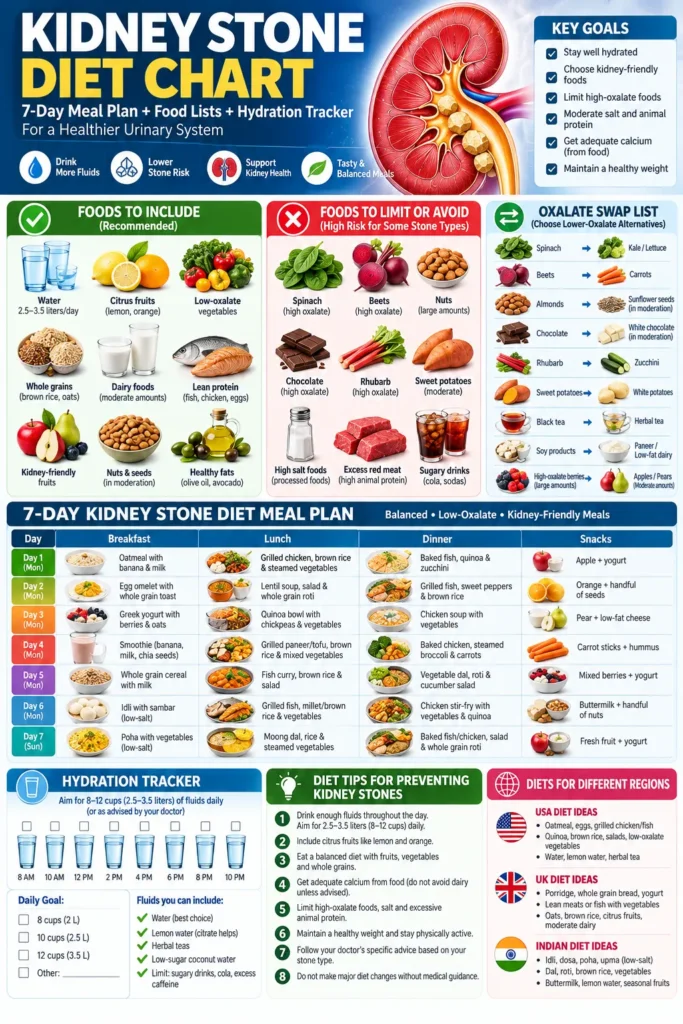
7-Day Kidney Stone Diet Plan — USA
Day 1
Breakfast: Oatmeal + banana + plain yogurt
Lunch: Grilled chicken + romaine salad + brown rice
Dinner: Baked salmon + cauliflower + rice
Snack: Apple + yogurt
Day 2
Breakfast: Whole-grain toast + egg + berries
Lunch: Low-sodium turkey sandwich + salad
Dinner: Chicken fajitas + peppers + rice
Snack: Pear + cheese
Day 3
Breakfast: Greek yogurt + oats + strawberries
Lunch: Lentil soup + whole-grain bread + salad
Dinner: Baked chicken + potatoes + green beans
Snack: Melon
Day 4
Breakfast: Oatmeal + apple + milk
Lunch: Tuna salad bowl + brown rice
Dinner: Turkey meatballs + pasta + salad
Snack: Yogurt
Day 5
Breakfast: Egg + whole-grain toast + fruit
Lunch: Chicken rice bowl + vegetables
Dinner: Bean chili + rice + cabbage salad
Snack: Apple + cheese
Day 6
Breakfast: Yogurt + berries + oats
Lunch: Grilled fish + quinoa + vegetables
Dinner: Chicken stir-fry + rice
Snack: Pear
Day 7
Breakfast: Oatmeal + pear + yogurt
Lunch: Chicken wrap + salad
Dinner: Vegetable pasta + moderate protein
Snack: Fruit + yogurt
7-Day Kidney Stone Diet Plan — UK
Day 1
Breakfast: Porridge + banana + milk
Lunch: Chicken salad + wholemeal roll
Dinner: Baked salmon + potatoes + broccoli
Day 2
Breakfast: Wholemeal toast + egg + berries
Lunch: Lentil soup + wholegrain bread
Dinner: Chicken + rice + vegetables
Day 3
Breakfast: Greek yogurt + oats + fruit
Lunch: Tuna jacket potato + salad
Dinner: Lean beef portion + pasta + vegetables
Day 4
Breakfast: Porridge + apple + milk
Lunch: Chicken wrap + salad
Dinner: Baked cod + potatoes + peas
Day 5
Breakfast: Egg + wholemeal toast + fruit
Lunch: Bean and vegetable soup
Dinner: Chicken curry + rice + cauliflower
Day 6
Breakfast: Porridge + berries + yogurt
Lunch: Salmon salad + wholegrain bread
Dinner: Vegetable pasta + moderate protein
Day 7
Breakfast: Yogurt + oats + banana
Lunch: Chicken and rice salad
Dinner: Roast chicken + potatoes + vegetables
UK note: “Renal stone diet” and “kidney stone diet” are sometimes used interchangeably online, but dietary advice should not be presented as an NHS-approved prescription unless it actually comes from the NHS.
7-Day Indian Kidney Stone Diet Chart
Indian meals can absolutely be adapted for kidney-stone prevention.
The important issue is not simply whether a food is “Indian” or “Western.” It is the combination of:
- Sodium
- Fluid intake
- Oxalate
- Calcium
- Animal protein
- Overall dietary pattern
- Stone type
Day 1
Breakfast: Idli + sambar + curd
Lunch: Rice + dal + lauki sabzi + cucumber
Dinner: Roti + chicken curry + cabbage
Snack: Guava + curd
Day 2
Breakfast: Dosa + sambar + curd
Lunch: Rice + moong dal + beans
Dinner: Roti + fish curry + cauliflower
Snack: Apple
Day 3
Breakfast: Vegetable poha + curd
Lunch: Rice + dal + bhindi + cucumber
Dinner: Roti + moderate paneer + mixed vegetables
Snack: Papaya
Day 4
Breakfast: Oats + milk + banana
Lunch: Rice + dal + lauki
Dinner: Roti + chicken + vegetables
Snack: Pear + curd
Day 5
Breakfast: Idli + sambar
Lunch: Rice + dal + cabbage/carrot
Dinner: Roti + fish/chicken + vegetables
Snack: Orange
Day 6
Breakfast: Upma + curd + fruit
Lunch: Rice + dal + pumpkin + salad
Dinner: Roti + mixed vegetables + moderate protein
Snack: Apple + curd
Day 7
Breakfast: Dosa + sambar + curd
Lunch: Rice + dal + vegetable curry
Dinner: Roti + chicken/beans + cauliflower
Snack: Melon
What About Palak and Tomatoes?
Can I Eat Palak If I Have Kidney Stones?
If you have calcium oxalate stones with elevated urine oxalate, spinach/palak may need to be limited because it is very high in oxalate. National Kidney Foundation
But that doesn’t mean everyone with a kidney stone must permanently eliminate spinach.
Your 24-hour urine results matter.
Can I Eat Tomatoes If I Have Kidney Stones?
Tomatoes are not automatically forbidden for people with kidney stones.
The overall meal pattern, portion size, sodium content and stone type matter more than simply labeling tomatoes as a “kidney stone food.”
If a particular food consistently appears to worsen your symptoms or your clinician has given you a specific restriction, follow that individualized advice.
Uric Acid Kidney Stone Diet
Uric acid stones are different from calcium oxalate stones.
They tend to form when urine is too acidic and concentrated with uric acid. National Kidney Foundation
Dietary strategies may include:
- Adequate hydration
- Reducing excessive animal protein
- Limiting high-purine foods
- Eating more fruits and vegetables
- Reducing sugar-sweetened foods and drinks
- Avoiding excessive alcohol
- Maintaining a healthy body weight
High-purine foods can include:
- Organ meats
- Some red meats
- Certain seafood
- Anchovies
- Sardines
- Meat-based gravies
The exact plan should be individualized.
Importantly, diet alone may not be enough for uric acid stones. Some people need medication such as potassium citrate to modify urine chemistry. National Kidney Foundation
The 3 Universal Kidney Stone Prevention Rules
Rule 1: Don’t Cut Calcium Without a Reason
For calcium oxalate stones, adequate dietary calcium can reduce intestinal oxalate absorption.
Think:
Calcium + appropriate meal balance → less oxalate absorption
rather than:
Calcium = kidney stone → eliminate calcium National Kidney Foundation
Rule 2: Control Sodium
High sodium intake can increase urinary calcium and may raise the risk of calcium-containing kidney stones.
NIDDK recommends that adults generally aim for less than 2,300 mg of sodium per day, although individual medical needs may differ. NIDDK
Watch for sodium in:
- Pickles
- Papad
- Namkeen
- Instant noodles
- Processed meats
- Fast food
- Canned soups
- Packaged snacks
- Salty sauces
- Restaurant foods
Rule 3: Maintain Appropriate Hydration
Don’t wait until you feel extremely thirsty.
Spread fluids throughout the day according to your medical team’s recommended target.
For recurrent stone-formers, a 24-hour urine collection can help determine whether urine volume is adequate.
Kidney Stone Diet Mistakes to Avoid
1. Completely eliminating calcium
This can be counterproductive for calcium oxalate stone prevention.
2. Following an extremely restrictive low-oxalate diet
Not everyone needs one.
3. Drinking huge amounts of water
More is not always better. Fluid needs must account for medical conditions.
4. Eating too much salt
High sodium can increase urinary calcium.
5. Eating very large portions of meat
Excess animal protein may contribute to stone risk in some people.
6. Assuming lemon water cures kidney stones
Citrate can be helpful in selected situations, but stone type and urine chemistry matter.
7. Using “kidney detox” products
Supplements and herbal products may contain ingredients that are inappropriate for people with kidney or urinary problems.
When Should You Get a 24-Hour Urine Test?
If you’ve had recurrent kidney stones, your doctor may recommend a 24-hour urine collection.
It can provide information about factors such as:
- Urine volume
- Calcium
- Oxalate
- Citrate
- Uric acid
- Sodium
- Other stone-forming risk factors
This information can make your diet plan much more precise than a generic Internet food list.
When Should You See a Doctor?
A kidney stone diet is for prevention. It should not replace medical evaluation when you have symptoms of an active stone.
Seek prompt medical attention for:
- Severe or persistent side/back pain
- Fever or chills
- Vomiting that prevents you from keeping fluids down
- Blood in the urine
- Difficulty urinating
- Very little urine
- Severe weakness
- Symptoms suggesting infection
Kidney stones can sometimes obstruct urine flow, and obstruction associated with infection requires urgent medical assessment. NIDDK
Can I download a free kidney stone diet chart PDF?
Yes. This guide includes a printable kidney stone diet chart PDF with 7-day USA, UK and Indian meal ideas, hydration guidance and food swaps. The PDF should be downloaded from the actual HealthyWayCare website rather than a third-party search URL.
What is the best diet for calcium oxalate kidney stones?
A balanced diet generally emphasizes adequate fluids, appropriate dietary calcium, lower sodium, moderate animal protein and targeted restriction of very-high-oxalate foods when urine oxalate is elevated.
Should I stop eating dairy if I have calcium stones?
Usually, no. Adequate calcium from food can help reduce oxalate absorption and may be beneficial for calcium oxalate stone prevention.
Can I eat spinach with kidney stones?
If you have calcium oxalate stones and high urine oxalate, spinach may need to be limited because it is very high in oxalate. Not everyone needs to eliminate it completely.
Can I eat tomatoes with kidney stones?
Tomatoes are not automatically prohibited. Your overall diet, stone type, portion sizes and urine chemistry are more important than labeling tomatoes as universally “good” or “bad.”
Is lemon water good for kidney stones?
Citrus beverages provide citrate and may help some people, particularly when urinary citrate is low. However, lemon water is not appropriate as a universal treatment for every stone type.
How much water should I drink to prevent kidney stones?
Many recurrent stone-formers are managed toward producing about 2.5 liters of urine per day, but the amount of fluid required varies. Your clinician may recommend a different target based on your health and stone type. National Kidney Foundation
Are almonds bad for kidney stones?
Almonds are relatively high in oxalate. If you have calcium oxalate stones with high urinary oxalate, your clinician may recommend limiting them. National Kidney Foundation
Is coconut water good for kidney stones?
Coconut water should not be considered a special kidney-stone treatment. Its mineral and potassium content may also matter for people with certain kidney conditions. Water remains the primary fluid choice for most people unless their clinician recommends otherwise.
Can kidney stone patients eat dal?
Dal and other legumes can be part of a balanced diet. Whether a particular amount should be limited depends on stone type, oxalate levels, protein needs and your overall diet.
Can I eat paneer if I have kidney stones?
Paneer provides calcium, but portion size and sodium content matter. For calcium oxalate stones, dietary calcium is generally not something to eliminate automatically.
Is milk good for calcium oxalate stones?
Milk can be a useful dietary calcium source. Adequate calcium intake can help reduce intestinal oxalate absorption. National Kidney Foundation
What foods should I avoid for uric acid stones?
People with uric acid stones may need to reduce excessive intake of high-purine foods such as organ meats, some red meats, certain seafood and alcohol.
Can kidney stones come back after treatment?
Yes. Kidney stones can recur, which is why identifying the stone type and underlying urine risk factors is important for prevention. National Kidney Foundation
Is a low-oxalate diet necessary for everyone?
No. A strict low-oxalate diet is not generally appropriate for everyone. Targeted restriction may be useful when urine oxalate is elevated, particularly in calcium oxalate stone-formers. National Kidney Foundation
Key Takeaways
The best kidney stone diet is personalized.
Remember these five points:
✅ Drink enough fluid to meet your individualized goal.
✅ Keep sodium intake under control.
✅ Don’t unnecessarily eliminate dietary calcium.
✅ Limit very-high-oxalate foods when your urine results indicate you need to.
✅ Moderate excessive animal protein, particularly if you have uric acid or certain calcium stones.
And most importantly:
A kidney stone diet chart is a starting point—not a substitute for knowing your stone type and urine chemistry.
Medical Disclaimer
This article is intended for general educational purposes and does not replace diagnosis or treatment from a qualified healthcare professional. Urine color can have many possible causes, and a medical evaluation may be necessary to determine the reason for a persistent or concerning change.
Last reviewed: October 2026
Medical Review
Dr. Jayanth Reddy – Consultant Urologist
My Health Hospitals, Hyderabad
This content has been medically reviewed for accuracy, safety, and reliability based on current urology treatment guidelines and patient education standards.
According to the National Health Service kidney stone symptoms guidance, severe flank pain may worsen during rest or nighttime and should never be ignored if accompanied by fever, vomiting, or difficulty urinating.
Author
Yamanandan Reddy
Health Content Writer & Frontend Developer
Yamanandan Reddy is a health content writer and frontend developer with over 4 years of experience in website design and digital content creation. He writes research-based health articles to help readers understand symptoms, causes, treatments, and prevention methods related to common health conditions.
His articles are written using information from trusted medical sources such as the World Health Organization (WHO), Mayo Clinic, and the Centers for Disease Control and Prevention (CDC).
Sources
The information in this article is researched and verified using trusted medical resources, including:
• World Health Organization (WHO)
• Mayo Clinic
• National Institutes of Health (NIH)
• Centers for Disease Control and Prevention