
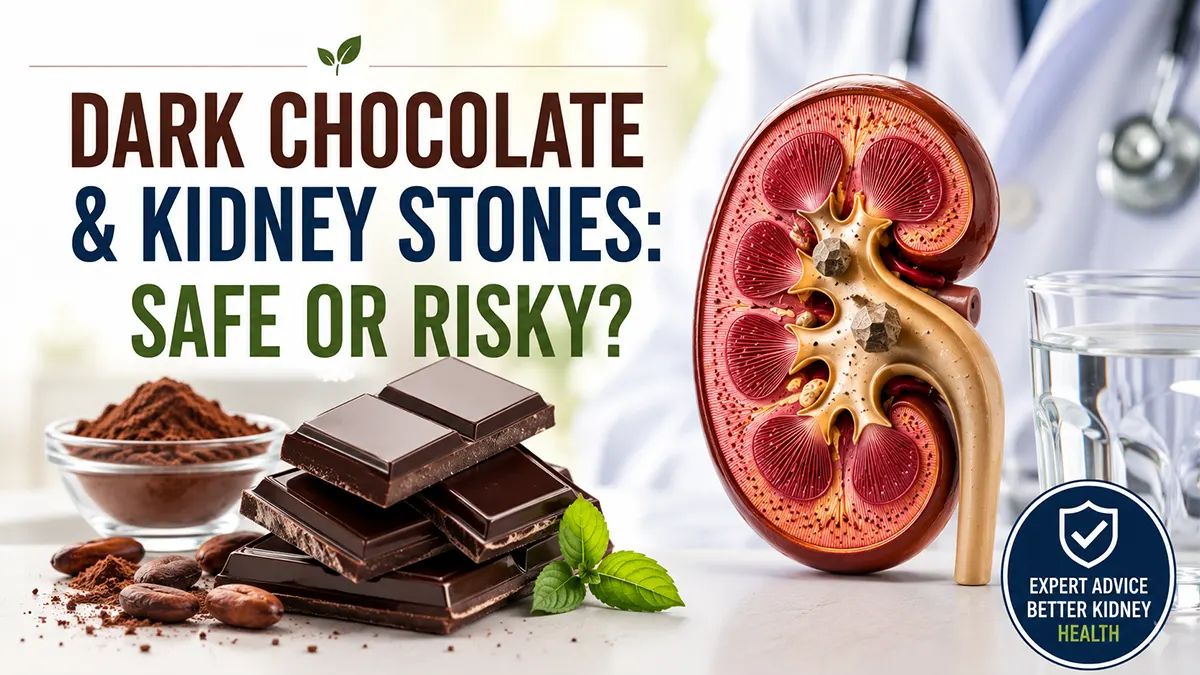
Can I eat dark chocolate with kidney stones? This is a common question for people trying to follow a kidney stone-friendly diet without giving up their favorite treats. Although dark chocolate contains beneficial antioxidants, it is also high in oxalates, naturally occurring compounds that may contribute to calcium oxalate kidney stones, the most common type of kidney stone. Whether dark chocolate is safe depends on your kidney stone type, portion size, overall diet, and individual risk factors. This medically reviewed guide explains the relationship between dark chocolate and kidney stones, compares different types of chocolate, and shares practical tips for enjoying chocolate while protecting your kidney health.
Table of Contents
What Is Dark Chocolate?
Dark chocolate is made from cocoa solids, cocoa butter, and a smaller amount of sugar than milk chocolate. It is rich in flavonoids, antioxidants, magnesium, iron, and other plant compounds that may support heart health when consumed in moderation.
However, cocoa solids are also naturally high in oxalates. Since most kidney stones are calcium oxalate stones, people with a history of recurrent kidney stones often wonder whether eating dark chocolate increases their risk.
Can I Eat Dark Chocolate With Kidney Stones?
Yes, but moderation is important. Dark chocolate is not prohibited for everyone with kidney stones, but people with recurrent calcium oxalate kidney stones may need to limit portion sizes because of its oxalate content.
Whether dark chocolate is appropriate depends on:
- The type of kidney stone.
- Your daily oxalate intake.
- Dietary calcium intake.
- Hydration habits.
- Family history.
- Underlying medical conditions.
- Advice from your healthcare provider.
For many people, occasional small servings are unlikely to significantly increase kidney stone risk when consumed as part of a balanced diet.
Why Does Dark Chocolate Affect Kidney Stones?
Dark chocolate contains oxalates, compounds that can bind with calcium in the urine and form calcium oxalate crystals. If urine becomes concentrated because of dehydration, these crystals may grow into kidney stones over time.
The risk is usually higher in people who:
- Have previously formed calcium oxalate stones.
- Eat multiple high-oxalate foods daily.
- Drink too little water.
- Consume excess sodium.
- Have certain digestive disorders.
Dark chocolate alone rarely causes kidney stones. Instead, it is one of many dietary factors that may contribute to stone formation.
Does Cranberry Juice Cause Kidney Stones? Everything You Need to Know
Causes of Kidney Stones
Kidney stones develop when minerals become concentrated in the urine and form crystals.
Common causes include:
- 💧 Inadequate water intake.
- 🍫 Frequent consumption of high-oxalate foods.
- 🧂 High sodium intake.
- 🥩 Excess animal protein.
- 🥛 Low dietary calcium.
- 🧬 Family history.
- ⚖️ Obesity.
- 🩺 Metabolic disorders.
- Certain medications.
- Digestive diseases that increase oxalate absorption.
Symptoms of Kidney Stones
Kidney stones often cause symptoms only when they move into the urinary tract.
Common symptoms include:
- Severe pain in the back or side.
- Pain radiating to the groin.
- Burning during urination.
- Blood in urine.
- Frequent urination.
- Nausea and vomiting.
- Fever and chills if infection develops.
- Difficulty passing urine.
Risk Factors
Your risk of kidney stones increases if you:
- Have had kidney stones before.
- Have a family history.
- Eat many high-oxalate foods.
- Frequently consume dark chocolate together with spinach, nuts, or beets.
- Drink too little water.
- Consume excess salt.
- Eat excessive animal protein.
- Are overweight.
- Have diabetes or metabolic syndrome.
- Have inflammatory bowel disease.
- Take certain medications.
Is Almond Milk Bad for Kidney Stones? A Complete Medical Guide (2026)
Diagnosis
Doctors diagnose kidney stones using:
Medical History
Evaluation of symptoms, diet, and previous stones.
Urine Tests
To measure:
- Oxalate
- Calcium
- Citrate
- Uric acid
- Infection
Blood Tests
To evaluate:
- Kidney function
- Calcium
- Uric acid
- Electrolytes
Imaging
- CT scan
- Ultrasound
- X-ray (KUB)
Stone Analysis
Determines whether stones are:
- Calcium oxalate
- Calcium phosphate
- Uric acid
- Struvite
- Cystine
Treatment Options
Treatment depends on stone size and symptoms.
Conservative Treatment
- Increase water intake.
- Pain medication.
- Alpha-blockers when appropriate.
- Physical activity.
- Follow-up imaging.
Medical Procedures
- ESWL
- Ureteroscopy (URS)
- RIRS
- PCNL
Dietary Counseling
Healthcare providers may recommend:
- Limiting excessive high-oxalate foods.
- Pairing oxalate-containing foods with calcium-rich foods.
- Drinking enough water daily.
- Reducing sodium.
- Eating a balanced diet rather than eliminating chocolate completely.
Can I Eat Spinach Once a Week if I Have Kidney Stones? Expert Diet Guide (2026)
Dark Chocolate vs Milk Chocolate vs White Chocolate
Not all types of chocolate contain the same amount of oxalates. The type of chocolate you choose can influence your kidney stone risk, especially if you have a history of calcium oxalate kidney stones.
| Type of Chocolate | Oxalate Content | Kidney Stone Risk | Best Choice for Calcium Oxalate Stones? |
|---|---|---|---|
| 🍫 Dark Chocolate | High | Higher if consumed frequently | Limit portions |
| 🍫 Milk Chocolate | Moderate | Lower than dark chocolate | Occasional small servings |
| 🤍 White Chocolate | Very Low | Lowest | Better option in moderation |
Key Takeaway: Dark chocolate generally contains more cocoa solids and therefore more oxalates than milk or white chocolate.
Dark Chocolate Oxalate Content Explained
Dark chocolate is naturally rich in cocoa solids, which contain higher amounts of oxalates. The higher the cocoa percentage, the higher the oxalate content is likely to be.
Examples include:
- 85–90% dark chocolate → Highest oxalates
- 70–80% dark chocolate → High oxalates
- Milk chocolate → Moderate oxalates
- White chocolate → Minimal oxalates
This does not mean you must avoid dark chocolate completely. Portion size and overall dietary balance are more important than one food alone.
Are Tomatoes Bad for Kidney Stones? 7 Expert Facts (Seeds vs. No Seeds)
Can Cocoa Cause Kidney Stones?
Cocoa itself does not directly cause kidney stones, but it contributes to your total daily oxalate intake.
People at greater risk include:
- Individuals with recurrent calcium oxalate stones.
- Those who frequently eat spinach, almonds, beets, and dark chocolate together.
- People who drink little water.
- Individuals following very high-cocoa diets.
How Much Dark Chocolate Is Safe With Kidney Stones?
There is no universal serving size that is safe for everyone because kidney stone risk depends on your overall diet, hydration, and stone type.
General guidance includes:
- 🍫 Enjoy small portions occasionally rather than daily.
- 💧 Drink plenty of water throughout the day.
- 🥛 Pair dark chocolate with calcium-rich foods, such as milk or yogurt, when appropriate. Dietary calcium can bind some oxalate in the intestine, reducing absorption.
- 🥗 Avoid combining several high-oxalate foods in the same meal.
If you have recurrent calcium oxalate kidney stones, ask your healthcare provider or dietitian for personalized advice.
Low-Oxalate Chocolate Alternatives
If you’re limiting oxalates, consider these alternatives:
| Enjoy More Often | Limit |
|---|---|
| White chocolate (occasionally) | Dark chocolate |
| Vanilla yogurt | Cocoa powder |
| Rice pudding | Chocolate syrup |
| Fresh fruit | Chocolate desserts with high cocoa content |
| Low-sugar custard | Hot chocolate made with cocoa |
Kidney Stone-Friendly Desserts
Having kidney stones doesn’t mean giving up dessert completely.
Healthier options include:
- 🍎 Fresh fruit salad
- 🍓 Greek yogurt with berries
- 🍌 Banana with yogurt
- 🍮 Low-sugar pudding
- 🥛 Milk-based desserts in moderation
- 🍐 Baked apples with cinnamon
Foods to Eat and Limit
| Choose More Often | Limit if You Have Calcium Oxalate Stones |
|---|---|
| 💧 Water | 🍫 Dark chocolate |
| 🥛 Calcium-rich foods | 🌿 Spinach |
| 🍋 Lemon water | 🥜 Almonds |
| 🍊 Citrus fruits | 🥬 Beet greens |
| 🥦 Low-oxalate vegetables | 🍠 Excess sweet potatoes |
| 🥣 Whole grains | ☕ Excess cocoa beverages |
Real Patient Insights
Many people believe they must completely eliminate chocolate after developing kidney stones. In clinical practice, healthcare providers usually focus on overall dietary patterns rather than a single food. Patients with calcium oxalate kidney stones often achieve better outcomes by increasing hydration, maintaining adequate dietary calcium, reducing sodium intake, and limiting multiple high-oxalate foods instead of eliminating occasional treats entirely. Personalized dietary counseling is often more effective than strict food avoidance.
Common Mistakes to Avoid
- ❌ Eliminating all chocolate without understanding your stone type.
- ❌ Eating several high-oxalate foods in the same meal.
- ❌ Drinking too little water.
- ❌ Avoiding dietary calcium unnecessarily.
- ❌ Consuming excessive salt.
- ❌ Ignoring follow-up with your healthcare provider.
Myth vs Fact
| Myth | Fact |
|---|---|
| Dark chocolate always causes kidney stones. | ❌ No. It may increase oxalate intake but does not directly cause stones by itself. |
| Everyone with kidney stones must avoid chocolate. | ❌ Recommendations depend on the type of kidney stone. |
| White chocolate contains the same oxalates as dark chocolate. | ❌ White chocolate contains much less oxalate. |
| Hydration is more important than avoiding one food. | ✅ Yes. Drinking enough water is one of the most effective preventive measures. |
| Pairing calcium-rich foods with oxalate-containing foods may help reduce oxalate absorption. | ✅ Yes, when appropriate as part of a balanced diet. |
Prevention Tips
Reduce your risk of kidney stones by:
- 💧 Drinking enough water every day.
- 🥛 Getting adequate calcium from food.
- 🧂 Limiting sodium intake.
- 🍫 Eating dark chocolate in moderation if advised.
- 🥗 Following a balanced kidney stone-friendly diet.
- ⚖️ Maintaining a healthy weight.
- 🚶 Staying physically active.
- 👨⚕️ Attending regular medical follow-ups if you have recurrent stones.
When to See a Doctor
Seek medical care if you have:
- 🚨 Severe back or side pain.
- 🌡️ Fever or chills.
- 🩸 Blood in the urine.
- 🚽 Difficulty passing urine.
- 🤢 Persistent nausea or vomiting.
- 🔁 Recurrent kidney stones.
- Pain that does not improve.
Key Takeaways
- Dark chocolate is high in oxalates.
- It does not directly cause kidney stones.
- People with calcium oxalate kidney stones should consume it in moderation.
- Hydration and adequate dietary calcium are more important than eliminating one food.
- White chocolate generally contains fewer oxalates than dark chocolate.
- Personalized dietary advice is recommended for recurrent kidney stone formers.
Conclusion
Can I eat dark chocolate with kidney stones? Yes, in moderation, but the answer depends on your kidney stone type and overall diet. Dark chocolate contains oxalates, which may increase the risk of calcium oxalate kidney stones in susceptible individuals when consumed in large amounts. Rather than avoiding chocolate completely, focus on adequate hydration, balanced nutrition, appropriate calcium intake, and moderation. If you have recurrent kidney stones or are unsure how much dark chocolate is appropriate, consult your healthcare provider or a registered dietitian for personalized guidance.
Frequently Asked Questions (FAQs)
1. Can I eat dark chocolate with kidney stones?
Yes. Most people can enjoy small amounts occasionally, but those with recurrent calcium oxalate kidney stones should limit intake because dark chocolate is high in oxalates.
2. Does dark chocolate cause kidney stones?
Dark chocolate does not directly cause kidney stones. However, its oxalate content may contribute to calcium oxalate stone formation in susceptible individuals.
3. Is dark chocolate high in oxalates?
Yes. Dark chocolate contains more oxalates than milk or white chocolate because it has a higher percentage of cocoa solids.
4. Is milk chocolate better than dark chocolate for kidney stones?
Milk chocolate generally contains fewer oxalates than dark chocolate, but it should still be enjoyed in moderation as part of a balanced diet.
5. Can I eat chocolate if I have calcium oxalate kidney stones?
Yes, but moderation is important. Your healthcare provider may recommend limiting high-oxalate foods while maintaining adequate dietary calcium and hydration.
6. Does cocoa powder increase kidney stone risk?
Cocoa powder is high in oxalates and can increase your total oxalate intake, especially when consumed frequently or in large amounts.
7. What desserts are kidney stone-friendly?
Fresh fruit, yogurt-based desserts, baked fruit, and other lower-oxalate sweets are generally better choices than high-cocoa desserts for people with calcium oxalate stones.
8. Should I avoid all chocolate after a kidney stone?
Not necessarily. Dietary recommendations depend on the type of kidney stone you have. Many people can enjoy chocolate occasionally while following a kidney stone-friendly diet.
9. Can drinking water reduce the risk from high-oxalate foods?
Yes. Staying well hydrated helps dilute urine and is one of the most effective ways to reduce the risk of kidney stone formation.
10. When should I consult a doctor?
Seek medical advice if you have recurrent kidney stones, severe pain, blood in the urine, fever, vomiting, or questions about the best diet for your specific stone type.
Medical Expert Review
Dr. Jayanth Reddy
Consultant Urologist | My Health Hospitals, Hyderabad
This content has undergone medical review to ensure it reflects current clinical evidence, accepted urological practices, and patient-centered healthcare guidance.
Author
Yamanandan Reddy
Health Content Writer & Frontend Developer
Yamanandan Reddy is a health content writer and frontend developer with over 4 years of experience in website design and digital content creation. He writes research-based health articles to help readers understand symptoms, causes, treatments, and prevention methods related to common health conditions.
His articles are written using information from trusted medical sources such as the World Health Organization (WHO), Mayo Clinic, and the Centers for Disease Control and Prevention (CDC).
Sources
The information in this article is researched and verified using trusted medical resources, including:
• World Health Organization (WHO)
• Mayo Clinic
• National Institutes of Health (NIH)
• Centers for Disease Control and Prevention
⚠️ Medical Disclaimer
This content is for informational purposes only and does not replace professional medical advice. Always consult a qualified healthcare provider for diagnosis and treatment.
4 thoughts on “Can I Eat Dark Chocolate With Kidney Stones? Everything You Need to Know”