
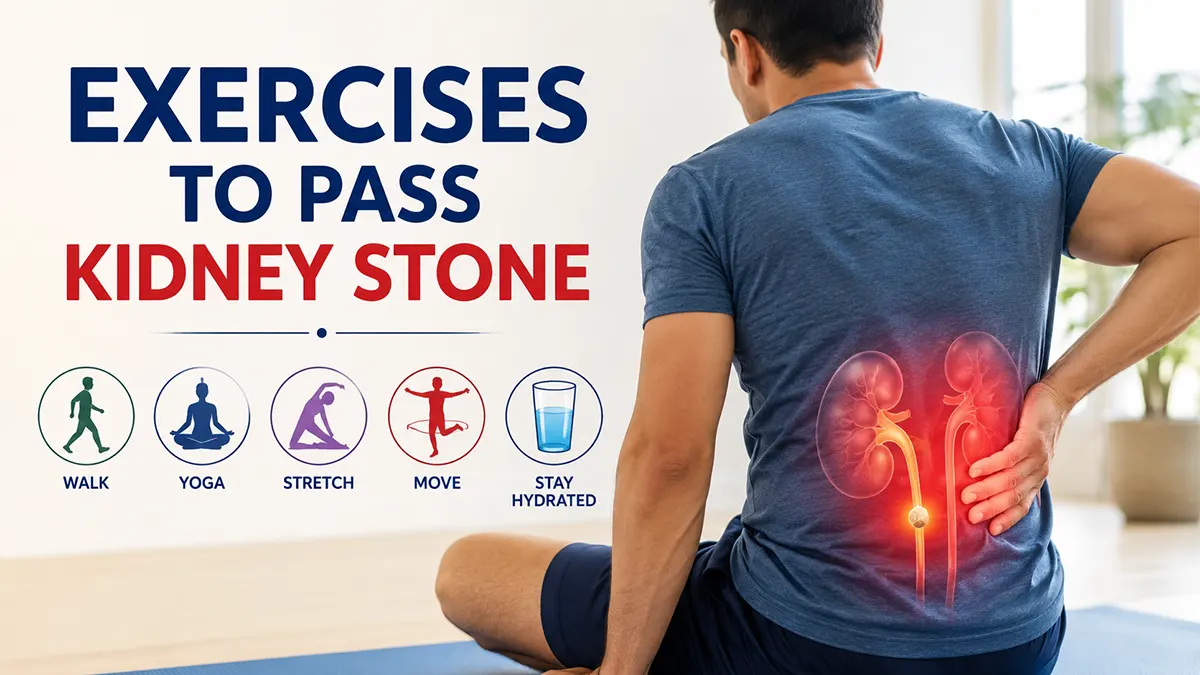
Best Exercises to pass kidney stone Faster may help small stones move through the urinary tract more efficiently when combined with proper hydration and medical guidance. Walking, yoga, stretching, and gentle physical activity are commonly recommended to support natural stone passage and reduce discomfort. If you’re looking for safe and effective ways to relieve kidney stone symptoms, understanding which movements may help—and when to seek medical care—is essential.
This article explains the safest and most effective yoga poses for kidney stones, stretches to pass kidney stones, and other natural ways to pass a kidney stone faster.
Table of Contents
What Is a Kidney Stone?
A kidney stone is a hard deposit made of minerals and salts that forms inside the kidneys.
Common types include:
- Calcium oxalate stones
- Calcium phosphate stones
- Uric acid stones
- Struvite stones
- Cystine stones
When stones travel from the kidney into the ureter, they may cause intense pain known as renal colic.
Can Exercise Help Pass a Kidney Stone?
Yes, exercise may help some kidney stones pass naturally.
Movement can:
- Increase urine flow
- Encourage stone migration
- Reduce urinary stagnation
- Improve circulation
- Support hydration habits
However, exercise is most helpful for:
- Small stones (typically less than 6 mm)
- Patients without infection
- Individuals without severe blockage
Large stones often require treatment from a urologist.
How Long Does It Take to Pass a 4mm, 5mm, or 6mm Kidney Stone? (Size Guide)
Symptoms of a Moving Kidney Stone
Common symptoms include:
- Sharp flank pain
- Pain radiating to the groin
- Burning during urination
- Blood in urine
- Frequent urination
- Nausea and vomiting
- Difficulty finding a comfortable position
These symptoms often worsen as the stone enters the ureter.
Kidney Stone Symptoms in Men and Women – Early Warning Signs
Causes of Kidney Stones
Several factors contribute to stone formation:
Dehydration
Insufficient water intake concentrates minerals in urine.
High-Sodium Diet
Excess salt increases calcium excretion.
Oxalate-Rich Foods
Examples include:
- Spinach
- Beets
- Nuts
- Chocolate
Obesity
Excess body weight increases stone risk.
Family History
Genetics can significantly influence kidney stone development.
Medical Conditions
- Hyperparathyroidism
- Gout
- Recurrent urinary tract infections
- Chronic kidney disease
Can a Kidney Stone Cause Permanent Kidney Damage? The Hidden Risks
7 Best Exercises to Pass Kidney Stone
1. Walking
Many patients ask: “Does walking help pass a kidney stone?”
The answer is yes.
Walking is one of the safest forms of physical activity for kidney stones.
Benefits:
- Promotes urine flow
- Encourages gravity-assisted stone movement
- Improves hydration awareness
How to Do It
- Walk 20–30 minutes daily
- Maintain moderate intensity
- Drink water before and after
2. Stair Climbing
Stair climbing creates gentle vertical movement that may help dislodge small stones.
Benefits:
- Encourages stone movement
- Improves circulation
- Supports urinary drainage
Perform:
- 5–10 minutes
- Slow and controlled pace
3. Light Jogging
Light jogging may help small stones move within the urinary tract.
Avoid if:
- Pain is severe
- You have dizziness
- Fever is present
4. Jumping Jacks
Many people search for jumping jacks to pass kidney stone.
The repetitive up-and-down movement may assist stone migration.
Perform:
- 10–20 repetitions
- Stop immediately if pain worsens
5. Pelvic Tilts
Pelvic tilts create gentle abdominal and lower back movement.
Steps:
- Lie on your back.
- Bend your knees.
- Tighten abdominal muscles.
- Tilt pelvis upward.
- Hold for 5 seconds.
Repeat 10–15 times.
6. Gentle Side Stretches
Side stretching can reduce muscle tension around the flank region.
Benefits:
- Improves flexibility
- Relieves discomfort
- Encourages mobility
7. Deep Breathing With Walking
Combining diaphragmatic breathing with walking promotes relaxation and comfort during stone passage.
Best Yoga Poses for Kidney Stones
Yoga is among the most effective natural ways to pass a kidney stone while reducing stress and improving flexibility.
1. Child’s Pose (Balasana)
Benefits:
- Relaxes lower back muscles
- Reduces flank discomfort
- Encourages relaxation
Hold for:
- 30–60 seconds
2. Cobra Pose (Bhujangasana)
Benefits:
- Improves abdominal circulation
- Stretches lower back
- Supports urinary tract mobility
3. Cat-Cow Stretch
One of the best stretches to pass kidney stones.
Benefits:
- Mobilizes spine
- Enhances circulation
- Relieves lower back tension
Perform:
- 10–15 repetitions
4. Supine Twist
Benefits:
- Gentle abdominal compression
- Improved mobility
- Reduced muscle stiffness
5. Bridge Pose
Benefits:
- Improves pelvic circulation
- Supports posture
- Relieves lower back tension
Comparison Table: Best Activities for Kidney Stone Relief
| Activity | Ease | Pain Relief | Helps Stone Movement |
|---|---|---|---|
| Walking | High | Moderate | High |
| Yoga | High | High | Moderate |
| Stair Climbing | Moderate | Low | High |
| Jumping Jacks | Moderate | Low | Moderate |
| Stretching | High | High | Moderate |
| Jogging | Moderate | Moderate | High |
Risk Factors
You may be more likely to develop kidney stones if you:
- Drink little water
- Eat excess salt
- Consume high oxalate foods
- Have obesity
- Have a family history
- Have recurrent urinary tract infections
Kidney Stone Emergency: 5 Signs to Go to the ER Now
Diagnosis
A healthcare provider may recommend:
- Urinalysis
- Blood tests
- Ultrasound
- CT scan
- Stone analysis
A CT scan is often the most accurate test for detecting stones.
Treatment Options
Treatment depends on stone size and location.
Small Stones
- Hydration
- Pain medication
- Medical expulsive therapy
- Observation
Larger Stones
- Shock Wave Lithotripsy (SWL)
- Ureteroscopy
- Laser lithotripsy
- Percutaneous nephrolithotomy (PCNL)
These procedures are commonly performed by a urologist.
Best Sleeping Position to Pass Kidney Stone
Studies suggest sleeping on the side where the stone is located may encourage stone movement.
Additional tips:
- Use a pillow between knees
- Stay hydrated
- Avoid sleeping flat if uncomfortable
Natural Ways to Pass a Kidney Stone
In addition to physical activity for kidney stones:
- Drink adequate water
- Follow prescribed medications
- Limit excess sodium
- Maintain healthy weight
- Stay physically active
- Follow dietary recommendations from your doctor
When to See a Doctor
Seek immediate medical attention if you experience:
- Fever
- Chills
- Severe vomiting
- Inability to urinate
- Persistent severe pain
- Blood clots in urine
- Signs of infection
These symptoms may indicate an emergency.
Does walking help pass a kidney stone?
Yes. Walking is one of the most recommended exercises to pass kidney stone because it increases movement, promotes urine flow, and may help small stones travel through the urinary tract more effectively.
Can exercise cause kidney stones to move?
Yes. Physical activity can cause kidney stones to shift position. While this may temporarily increase discomfort, it can also help facilitate stone passage in suitable patients.
How long does it take to pass a kidney stone?
Small stones may pass within a few days to several weeks. Stone size, location, hydration status, and anatomy all influence passage time.
Are jumping jacks effective for kidney stones?
Jumping jacks may help some small stones move because of repetitive vertical motion. However, they should only be performed if symptoms are mild and approved by a healthcare provider.
What is the best yoga pose for kidney stone pain?
Child’s Pose and Cat-Cow Stretch are among the most commonly recommended yoga poses for kidney stone pain because they gently stretch the lower back and promote relaxation.
Can yoga dissolve kidney stones?
No. Yoga cannot dissolve kidney stones. However, yoga may improve comfort, mobility, and circulation while supporting natural stone passage.
Which exercises should be avoided with kidney stones?
Avoid high-intensity exercise when experiencing severe pain, fever, vomiting, or significant urinary obstruction.
What size kidney stone usually passes naturally?
Many stones smaller than 5 mm pass without surgery, while larger stones may require medical intervention.
Can hydration and exercise work together?
Yes. Combining proper hydration with exercises to pass kidney stone may improve the likelihood of natural stone passage.
Should I see a urologist if pain continues?
Yes. Persistent pain, recurrent stones, or urinary blockage should be evaluated by a urologist promptly.
Safety Tips Before Trying Exercises to Pass Kidney Stone
While exercises to pass kidney stone may help some people, they are not appropriate for everyone. Consult a healthcare provider if you have fever, severe pain, vomiting, or difficulty urinating.
Key Takeaways
- Walking is among the best exercises to pass kidney stone naturally.
- Yoga poses for kidney stones may reduce discomfort and improve mobility.
- Jumping jacks, stair climbing, and stretching can encourage stone movement.
- Hydration remains the most important supportive strategy.
- Seek medical attention for fever, severe pain, or inability to urinate.
- Large stones often require treatment by a urologist.
Why Exercises to Pass Kidney Stone May Help
Many urologists recommend gentle movement because certain exercises to pass kidney stone can encourage stone migration through the urinary tract. Walking, stretching, and yoga may improve urine flow and support natural stone passage.
Best Exercises to Pass Kidney Stone Faster
The most effective exercises to pass kidney stone include walking, stair climbing, gentle jogging, pelvic tilts, and specific yoga poses. These activities may help small stones move more easily through the ureter.
Walking: One of the Best Exercises to Pass Kidney Stone
Walking remains one of the safest exercises to pass kidney stone because it promotes movement without excessive strain on the body.
Yoga and Exercises to Pass Kidney Stone
Several yoga poses can complement traditional exercises to pass kidney stone by improving flexibility, circulation, and relaxation.
Conclusion
The right exercises to pass kidney stone can support natural stone passage and reduce discomfort when combined with proper hydration and medical supervision. Walking, stretching, yoga poses for kidney stones, stair climbing, and gentle movement may help encourage stone migration through the urinary tract. While these approaches can be effective for smaller stones, persistent symptoms or complications should always be evaluated by a healthcare professional.
Medical Expert Review
Dr. Jayanth Reddy
Consultant Urologist | My Health Hospitals, Hyderabad
This content has undergone medical review to ensure it reflects current clinical evidence, accepted urological practices, and patient-centered healthcare guidance.
Author
Yamanandan Reddy
Health Content Writer & Frontend Developer
Yamanandan Reddy is a health content writer and frontend developer with over 4 years of experience in website design and digital content creation. He writes research-based health articles to help readers understand symptoms, causes, treatments, and prevention methods related to common health conditions.
His articles are written using information from trusted medical sources such as the World Health Organization (WHO), Mayo Clinic, and the Centers for Disease Control and Prevention (CDC).
Sources
The information in this article is researched and verified using trusted medical resources, including:
• World Health Organization (WHO)
• Mayo Clinic
• National Institutes of Health (NIH)
• Centers for Disease Control and Prevention
⚠️ Medical Disclaimer
This content is for informational purposes only and does not replace professional medical advice. Always consult a qualified healthcare provider for diagnosis and treatment.
2 thoughts on “Exercises to Pass Kidney Stone: Best Yoga Poses and Movements for Faster Relief”