
Feeling Anxious About Your DJ Stent? You’re Not Alone
If you’ve recently undergone kidney stone surgery, a DJ Stent After Surgery may have been placed inside your urinary tract to help your body heal properly. While this small tube plays an important role in recovery, many patients feel worried, uncomfortable, or even frightened when they learn a stent has been inserted. Questions about pain, daily activities, and the removal process are completely normal, and understanding the purpose of the stent can help ease your concerns.
Many patients ask questions like:
- “Why do I need this stent?”
- “Is the pain normal?”
- “When will it be removed?”
- “Will removal be painful?”
The good news is that a DJ stent is a temporary medical device designed to help your body heal safely after surgery. While it can cause some discomfort, most symptoms are expected and manageable.
This guide will help you understand the purpose of the DJ stent, what symptoms are normal, how to reduce discomfort at home, and what to expect during removal.
Table of Contents
What is a DJ Stent and Why is it Absolutely Necessary?
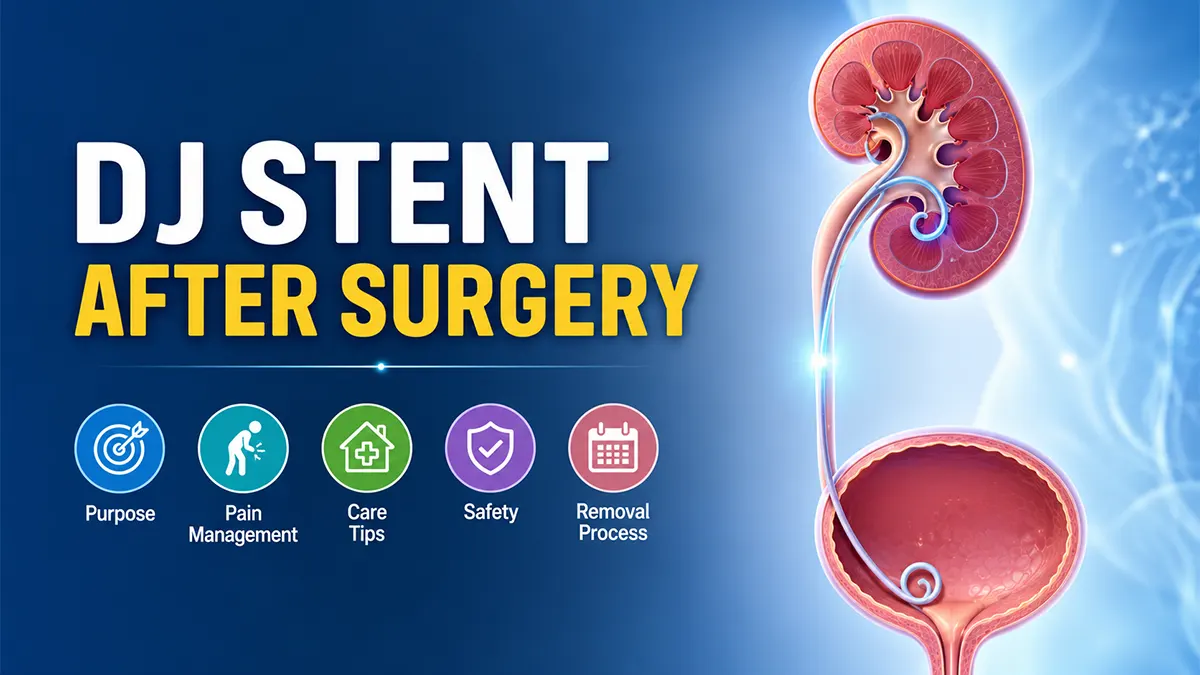
A Double J (DJ) stent is a thin, flexible plastic tube placed inside the urinary tract after kidney stone treatment.
The stent connects the kidney to the bladder and helps urine flow freely while the urinary system heals.
Understanding the Urinary Tract
To understand the role of a DJ stent, it helps to know two important structures:
Ureter
The ureter is a narrow tube that carries urine from the kidney to the bladder.
Bladder
The bladder is the organ that stores urine until you urinate.
After kidney stone surgery, the ureter can become swollen or irritated. This swelling may partially block urine flow.
Why Doctors Place a DJ Stent
A DJ stent helps by:
- Keeping the ureter open
- Allowing urine to drain properly
- Preventing blockage from swelling
- Helping small stone fragments pass
- Reducing the risk of kidney pressure and infection
- Promoting faster healing after surgery
The stent has a curled end in the kidney and another curled end in the bladder, giving it a “Double J” appearance and preventing it from moving out of place.
Think of It Like a Support Pipe
Imagine a road undergoing repairs. Traffic still needs a temporary route to keep moving.
Similarly, the DJ stent acts as a temporary passageway for urine while your urinary tract recovers.
How Long Does It Take to Pass a 4mm, 5mm, or 6mm Kidney Stone? (Size Guide)
What Symptoms Are Normal After DJ Stent Placement?
Many patients experience symptoms from the stent itself rather than from the surgery.
Knowing what is normal can reduce anxiety.
Mild Blood in the Urine
It is common to notice:
- Pink urine
- Light red urine
- Small amounts of blood after walking or physical activity
This usually improves with rest and adequate hydration.
Frequent Urination
You may feel the need to urinate more often than usual.
This happens because the lower end of the stent sits inside the bladder and can irritate its lining.
Sudden Urge to Urinate
Many patients feel an urgent need to use the bathroom, even when the bladder is not full.
This symptom is common and expected.
Burning During Urination
A mild burning sensation may occur, especially during the first few days after surgery.
Flank Pain While Urinating
Some patients feel discomfort in the side or back when passing urine.
This happens because urine can briefly flow backward toward the kidney during urination.
Bladder Spasms Explained Simply
Bladder spasms are sudden tightening or squeezing movements of the bladder muscle.
Patients often describe them as:
- A sudden cramp
- Pressure in the lower abdomen
- Sharp urges to urinate
- Brief discomfort after emptying the bladder
Although uncomfortable, bladder spasms are a common side effect of a DJ stent.
Many patients are surprised to learn that the symptoms they experience with a DJ Stent After Surgery are usually temporary and improve significantly once the stent is removed. Understanding these expected symptoms can help reduce unnecessary anxiety during recovery.
Kidney Stones in Young Adults: A Rising Crisis
When Should You Contact Your Doctor?
While mild discomfort is expected, certain symptoms require immediate medical attention.
Seek medical advice if you experience:
- High fever or chills
- Severe pain not relieved by medication
- Inability to pass urine
- Heavy bleeding with large clots
- Persistent vomiting
- Signs of urinary infection
- Sudden worsening of symptoms
Never ignore these warning signs.
Lemon Water for Kidney Stones: Myth or Real Help?
Practical Tips for Managing DJ Stent Pain at Home
Most patients can manage stent-related discomfort with simple measures.
Drink Plenty of Water
Staying hydrated helps:
- Dilute urine
- Reduce irritation
- Flush small stone fragments
- Minimize burning sensations
Unless your doctor has advised otherwise, drink water regularly throughout the day.
Take Prescribed Medications Correctly
Your urologist may prescribe:
- Pain relievers
- Medicines to relax the ureter
- Drugs that reduce bladder spasms
Take them exactly as directed.
Avoid Heavy Physical Activity
Activities such as:
- Running
- Jumping
- Lifting heavy objects
- Intense workouts
may worsen bleeding and discomfort.
Rest When Symptoms Increase
If symptoms become more noticeable after activity, resting for a few hours often helps.
Don’t Hold Your Urine
Empty your bladder when you feel the urge.
Holding urine may increase pressure and discomfort.
Use a Warm Compress
A warm heating pad or hot water bag placed over the lower abdomen may help reduce bladder spasms and pelvic discomfort.
Proper hydration and rest can make living with a DJ Stent After Surgery much more comfortable during the recovery period.
Kidney Stone Emergency: 5 Signs to Go to the ER Now
The Removal Process: Is DJ Stent Removal Painful?
This is probably the question patients ask most often.
The Reassuring Truth
DJ stent removal is usually quick, safe, and much easier than patients expect.
Most people report discomfort rather than severe pain.
How Is the Stent Removed?
The procedure is commonly performed in an outpatient setting.
A small camera called a cystoscope is gently passed through the urinary passage.
The doctor then:
- Locates the stent.
- Grasps it with a small instrument.
- Removes it carefully.
The process often takes only a few minutes.
Will I Need General Anesthesia?
In many cases, no.
A local anesthetic gel is commonly used to reduce discomfort.
Your doctor will determine the most appropriate approach based on your condition.
What Will I Feel?
Patients may experience:
- Mild pressure
- Brief burning sensation
- Temporary discomfort during removal
The sensation usually lasts only a short time.
What Happens After Removal?
Many patients notice immediate relief from:
- Urinary urgency
- Bladder irritation
- Pressure sensations
Mild burning or slight blood in urine may occur for a day or two afterward.
For most patients, concerns about a DJ Stent After Surgery decrease significantly once the stent is safely removed.
Hospital Insights: What We Commonly Observe in Patients with DJ Stents
Every patient’s experience is unique, but certain concerns and symptoms are commonly reported after DJ stent placement. Understanding these experiences can help reduce anxiety and improve recovery.
Common Patient Experiences We Observe
- Many patients worry that the stent has moved when they feel discomfort in the lower abdomen or back.
- Frequent urination and a sudden urge to pass urine are among the most commonly reported symptoms.
- Some patients notice mild blood in the urine, especially after prolonged walking or physical activity.
- A feeling of pressure or discomfort near the bladder is frequently experienced during the first few days.
- Most patients become significantly less anxious once they understand that these symptoms are usually temporary and expected.
Immediate Comfort Measures We Provide
- We educate patients and their families about normal stent-related symptoms before discharge.
- We encourage adequate hydration to help reduce urinary irritation and support healing.
- Prescribed medications are provided to manage pain, bladder spasms, and urinary discomfort.
- Patients receive guidance on avoiding heavy lifting and strenuous activities during recovery.
- Our team remains available to address concerns and reassure patients if symptoms cause anxiety.
Patient Feedback After Stent Removal
- Many patients say the removal process was much quicker and easier than they had imagined.
- A common response is, “I was worried for days, but the removal took only a few minutes.”
- Most patients experience noticeable relief from urinary urgency and bladder irritation within a short time.
- Patients often report improved comfort, better sleep, and greater confidence after stent removal.
- Many express surprise that the procedure caused far less discomfort than they expected.
Worst Foods to Eat During a Kidney Stone Attack
Frequently Asked Questions About DJ Stents
How long does a DJ stent stay inside?
The duration varies depending on the surgery and healing process. Most stents remain in place for a few days to several weeks.
Can I walk with a DJ stent?
Yes. Light walking is generally encouraged unless your doctor advises otherwise.
Can a DJ stent move inside the body?
Properly placed stents are designed to stay in position with curled ends that help prevent migration.
Can I work while having a DJ stent?
Many patients return to routine activities, but heavy physical work may worsen symptoms.
Is it dangerous to leave a stent in for too long?
Yes. Stents should be removed according to your doctor’s instructions. Delayed removal can increase the risk of complications.
Expert Urologist Perspective
Clinical Perspective on DJ Stents Following Kidney Stone Surgery
A Double J stent is an important part of post-operative care after many kidney stone procedures. Although temporary discomfort is common, the stent plays a critical role in ensuring proper urine drainage, reducing pressure on the kidney, and supporting safe healing of the urinary tract.
Patients should understand that symptoms such as urinary frequency, urgency, mild blood in the urine, and occasional flank discomfort are often expected while the stent remains in place. These symptoms typically improve significantly after stent removal.
The key to a smooth recovery is maintaining hydration, following medication instructions carefully, and attending all scheduled follow-up appointments. Most importantly, patients should never miss their stent removal date.
Clinically reviewed and endorsed by:
Dr. Jayanth Reddy
Consultant Urologist
My Health Hospitals, Hyderabad
(Final clinical review and approval pending before publication.)
Final Thoughts
Although living with a DJ Stent After Surgery can be uncomfortable at times, it is an important part of the healing process following kidney stone treatment. Most patients experience only temporary symptoms, and significant relief is usually felt after stent removal. By following your urologist’s instructions and attending follow-up appointments, you can ensure a smooth recovery and return to normal activities with confidence.
Remember, the discomfort is temporary, the benefits are significant, and stent removal is usually much easier than most patients anticipate.
If you ever feel uncertain about your symptoms, contact your urologist for guidance and reassurance.
Medical Expert Review
Dr. Jayanth Reddy
Consultant Urologist | My Health Hospitals, Hyderabad
This content has undergone medical review to ensure it reflects current clinical evidence, accepted urological practices, and patient-centered healthcare guidance.
Author
Yamanandan Reddy
Health Content Writer & Frontend Developer
Yamanandan Reddy is a health content writer and frontend developer with over 4 years of experience in website design and digital content creation. He writes research-based health articles to help readers understand symptoms, causes, treatments, and prevention methods related to common health conditions.
His articles are written using information from trusted medical sources such as the World Health Organization (WHO), Mayo Clinic, and the Centers for Disease Control and Prevention (CDC).
Sources
The information in this article is researched and verified using trusted medical resources, including:
• World Health Organization (WHO)
• Mayo Clinic
• National Institutes of Health (NIH)
• Centers for Disease Control and Prevention
⚠️ Medical Disclaimer
This content is for informational purposes only and does not replace professional medical advice. Always consult a qualified healthcare provider for diagnosis and treatment.