
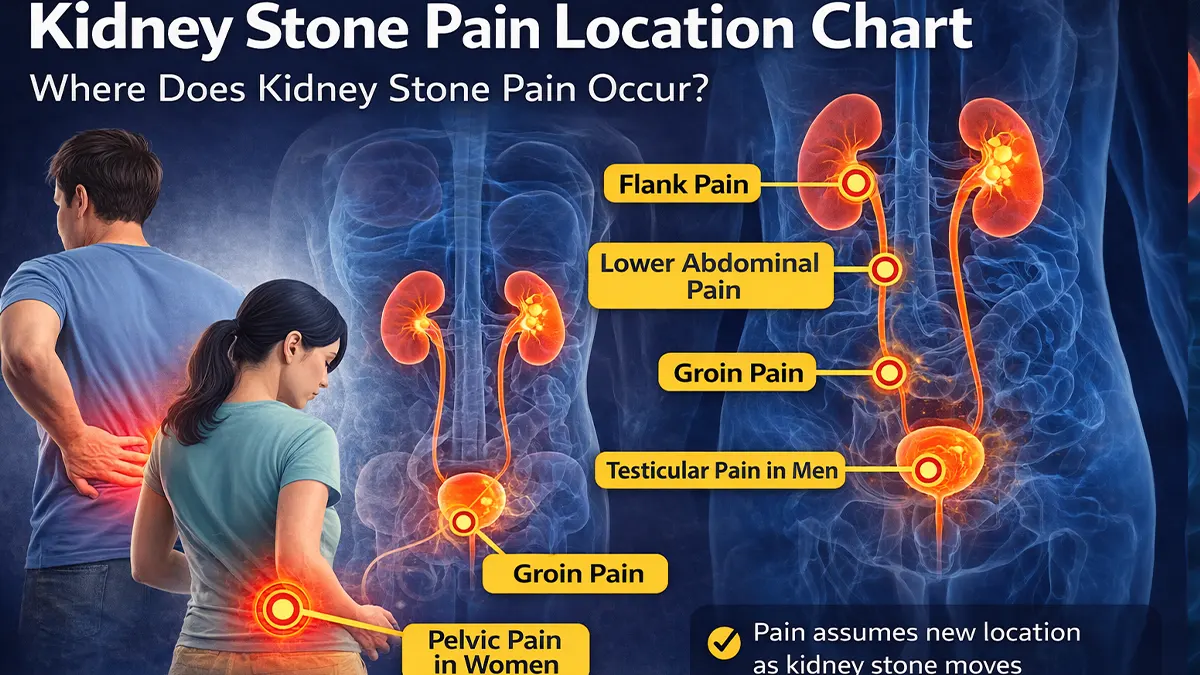
Kidney stone pain location chart helps understand where kidney stone pain occurs in the body. Pain usually starts in the lower back or flank and moves to the abdomen or groin as the stone travels through the urinary tract.
Kidney stones are a common urinary condition that can cause intense and sometimes unbearable pain. One of the most important clues that helps identify kidney stones is the location of the pain. Understanding where kidney stone pain occurs and how it moves through the body can help in early diagnosis and timely treatment.
Kidney stone pain typically begins in the lower back or side and may radiate toward the abdomen, groin, or pelvis as the stone travels through the urinary tract. The severity, location, and pattern of pain often depend on the size and position of the stone.
Table of Contents
What Causes Kidney Stone Pain?
Kidney stone pain occurs when a stone blocks the flow of urine or irritates the lining of the urinary tract. As the ureter contracts to push the stone forward, it causes severe cramping pain known as renal colic. This pain can fluctuate in intensity and may come in waves.
The pain can be sudden and sharp, making it one of the most painful medical conditions experienced by individuals.
✔ Kidney Stone Symptoms article
Kidney Stone Pain Location Chart Overview
A kidney stone pain location chart helps visualize how pain progresses as the stone moves through the urinary system.
Typical pain progression includes:
- Kidney (flank area)
- Upper abdomen
- Lower abdomen
- Groin
- Bladder region
Adding a pain location chart image in your article can significantly improve user understanding and engagement.
Common Locations of Kidney Stone Pain
Flank Pain (Most Common Location)
The earliest and most common symptom of kidney stones is flank pain. This pain occurs on one side of the lower back, just below the ribs. It can be severe and may radiate toward the front of the abdomen.
Flank pain usually indicates that the stone is still in the kidney or has just entered the ureter.
Lower Abdominal Pain
As the kidney stone moves down the ureter, pain shifts to the lower abdomen. This type of pain can feel similar to digestive discomfort or cramps.
In some cases, individuals may mistake this pain for gastrointestinal issues, delaying proper diagnosis.
According to a kidney stone pain location chart, flank pain is usually the first symptom when stones form in the kidney.
Groin Pain
When the stone approaches the bladder, the pain often spreads to the groin area. This is a classic sign of kidney stones moving through the urinary tract.
Groin pain is often sharp and can increase during urination or physical movement.
A kidney stone pain location chart clearly shows how pain shifts from the back to the groin area.
Testicular Pain in Men
Men with kidney stones may experience pain radiating toward the testicles. This occurs because the nerves supplying the kidneys and reproductive organs are connected.
This symptom can be alarming and may be confused with other conditions such as hernia or infection.
Pelvic Pain in Women
Women may experience pelvic discomfort that resembles menstrual cramps or urinary tract infections. This overlap in symptoms can make diagnosis challenging without proper medical evaluation.
How Kidney Stone Pain Feels
Kidney stone pain is different from typical muscle or back pain. It has distinctive characteristics:
- Sudden onset
- Sharp or stabbing sensation
- Pain that comes in waves
- Severe intensity
- Restlessness due to inability to find relief
- Pain that shifts location
Unlike muscular pain, kidney stone pain does not improve with changes in posture or rest.
Kidney Stone Pain vs Back Pain
Understanding the difference between kidney stone pain and common back pain can help in early identification.
Kidney Stone Pain:
- Severe and sudden
- Radiates to abdomen or groin
- Associated with urinary symptoms
- Comes in waves
Muscle or Back Pain:
- Dull and localized
- Improves with rest or medication
- Often related to movement or posture
Other Symptoms Associated with Kidney Stone Pain
Kidney stone pain is often accompanied by additional symptoms, including:
- Burning sensation during urination
- Blood in urine
- Frequent urge to urinate
- Nausea and vomiting
- Fever and chills (in case of infection)
- Cloudy or foul-smelling urine
These symptoms should not be ignored, as they may indicate complications.
When Kidney Stone Pain Becomes Dangerous
While mild kidney stones may pass naturally, certain symptoms require immediate medical attention.
Seek emergency care if you experience:
- Severe, unbearable pain
- Persistent vomiting
- Fever or chills
- Blood in urine
- Difficulty urinating
- Pain lasting more than a few days
Ignoring severe symptoms can lead to urinary tract infections, kidney swelling, or permanent kidney damage.
Factors That Influence Pain Location
Several factors affect where kidney stone pain occurs:
- Size of the stone
- Location within urinary tract
- Movement of the stone
- Individual pain tolerance
- Presence of infection or blockage
Larger stones tend to cause more intense pain and may require medical intervention.
Diagnosis of Kidney Stone Pain
Doctors use several methods to diagnose kidney stones and determine the source of pain:
- Physical examination
- Urine tests
- Blood tests
- Ultrasound
- CT scan
- X-ray imaging
Imaging tests are particularly useful in identifying the exact location and size of the stone.
Prevention Tips to Reduce Kidney Stone Pain Risk
Preventing kidney stones can significantly reduce the risk of severe pain and complications.
Effective prevention strategies include:
- Drinking adequate water daily
- Limiting salt and processed foods
- Reducing intake of high-oxalate foods
- Maintaining a healthy body weight
- Following prescribed dietary guidelines
- Managing underlying health conditions
Lifestyle changes play a crucial role in preventing recurrence.
For more detailed medical guidance on kidney stones, you can refer to trusted health authorities like the National Kidney Foundation or Mayo Clinic. These organizations provide expert-reviewed information on kidney stone symptoms, causes, prevention, and treatment options, helping patients make informed healthcare decisions.
Doctors often use a kidney stone pain location chart to identify the stage and position of kidney stones.
Conclusion
Kidney stone pain can vary in location and intensity depending on the movement and size of the stone. Pain typically starts in the lower back or flank and may radiate to the abdomen, groin, or pelvis. Understanding these pain patterns can help individuals recognize symptoms early and seek timely medical care.
Early diagnosis and preventive measures are essential for protecting kidney health and avoiding complications. If you experience persistent or severe pain, consulting a healthcare professional is the best course of action.
FAQs
Where does kidney stone pain start?
Kidney stone pain usually begins in the lower back or flank area.
Can kidney stone pain move?
Yes, pain often shifts from the back to the abdomen or groin as the stone travels.
Is kidney stone pain constant?
No, it typically comes in waves and varies in intensity.
Does kidney stone pain affect both sides?
Usually, pain occurs on one side depending on the stone’s location.
How long does kidney stone pain last?
Pain may last for several hours to days until the stone passes or is treated.
Author
Yamanandan Reddy
Health Content Writer & Frontend Developer
Yamanandan Reddy is a health content writer and frontend developer with over 4 years of experience in website design and digital content creation. He writes research-based health articles to help readers understand symptoms, causes, treatments, and prevention methods related to common health conditions.
His articles are written using information from trusted medical sources such as the World Health Organization (WHO), Mayo Clinic, and the Centers for Disease Control and Prevention (CDC).
Sources
The information in this article is researched and verified using trusted medical resources, including:
• World Health Organization (WHO)
• Mayo Clinic
• National Institutes of Health (NIH)
• Centers for Disease Control and Prevention (CDC)
Disclaimer
The information provided on HealthyWayCare.com is for educational and informational purposes only. It should not be considered medical advice, diagnosis, or treatment. Always consult a qualified healthcare professional before making any medical decisions or starting any treatment.
9 thoughts on “Kidney Stone Pain Location Chart – Where Does Kidney Stone Pain Occur?”