

Early signs of kidney disease often go unnoticed because symptoms develop slowly in the early stages. Recognizing these early signs of kidney disease can help prevent serious complications and long-term kidney damage.
Kidney disease is often called a “silent condition” because it can progress for months or even years without obvious symptoms. Many people discover kidney problems only after significant damage has already occurred. Unfortunately, by that stage, treatment options become limited.
Understanding the early warning signs of kidney disease can help you take timely action, protect your kidney function, and avoid serious complications like chronic kidney disease (CKD), dialysis, or kidney failure. This guide explains kidney disease symptoms in simple language so you know exactly when to seek medical help.
Table of Contents
🔍 What Is Kidney Disease?
Kidney disease occurs when one or both kidneys lose their ability to filter waste, excess fluids, and toxins from the blood. Healthy kidneys play a vital role in:
- Removing waste products
- Balancing fluids and electrolytes
- Regulating blood pressure
- Supporting red blood cell production
- Maintaining bone health
When kidney function declines, waste builds up in the body, affecting multiple organs. Chronic Kidney Disease (CKD) develops gradually and often goes unnoticed in the early stages.
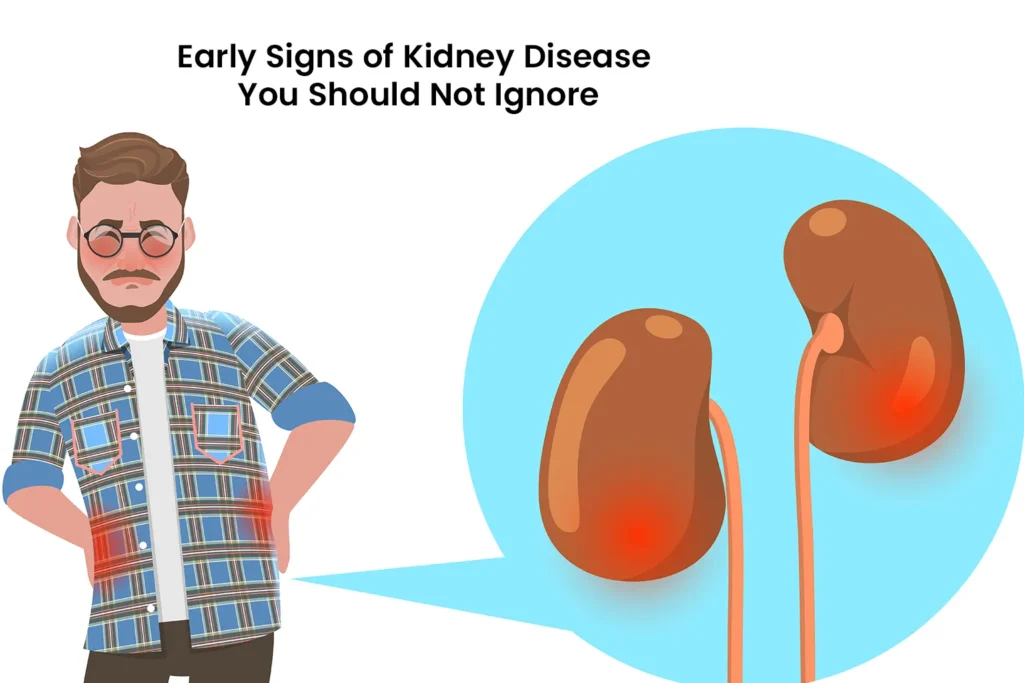
🚨 Early Signs of Kidney Disease You Should Not Ignore
1️⃣ Changes in Urination Patterns
Changes in urination are often the first noticeable sign of kidney problems. Watch out for:
- Urinating more frequently, especially at night
- Passing very little urine
- Foamy or bubbly urine (sign of protein leakage)
- Dark, cloudy, or bloody urine
- Pain or burning while urinating
These symptoms may indicate kidney damage, infection, or obstruction and should never be ignored.
👉 UTI Symptoms in Men and Women
2️⃣ Persistent Fatigue and Weakness
Healthy kidneys help produce erythropoietin, a hormone that supports red blood cell production. When kidneys are damaged, anemia can develop, leading to:
- Constant tiredness
- Lack of energy
- Poor concentration
- Feeling weak even after rest
Many people mistake this for stress or vitamin deficiency.
3️⃣ Swelling in Feet, Ankles, Hands, or Face
Damaged kidneys cannot remove excess sodium and fluids effectively. This leads to fluid retention, causing swelling (edema) in:
- Feet and ankles
- Hands
- Face and eyelids (especially in the morning)
Persistent swelling is a strong warning sign of kidney disease.
4️⃣ Shortness of Breath
Kidney problems can cause breathlessness due to:
- Fluid buildup in the lungs
- Anemia reducing oxygen delivery
If you feel short of breath without exertion, it may be linked to kidney dysfunction rather than a lung issue.
5️⃣ Loss of Appetite, Nausea, and Vomiting
As toxins accumulate in the bloodstream, digestive symptoms may appear, including:
- Nausea
- Vomiting
- Metallic taste in the mouth
- Loss of appetite
- Unintentional weight loss
These symptoms often worsen as kidney disease progresses.
6️⃣ Persistent Itching and Dry Skin
Kidney disease disrupts mineral and electrolyte balance, leading to:
- Severe itching
- Dry, flaky skin
- Skin discoloration
Many people treat this as a skin problem, delaying diagnosis.
7️⃣ High Blood Pressure
High blood pressure is both a cause and a consequence of kidney disease. Damaged kidneys struggle to regulate blood pressure, increasing the risk of:
- Heart disease
- Stroke
- Faster kidney damage progression
Uncontrolled BP is a major red flag for kidney health.
8️⃣ Muscle Cramps and Sleep Problems
Electrolyte imbalance due to kidney dysfunction can cause:
- Muscle cramps
- Restless legs
- Difficulty sleeping
- Frequent night-time urination
Sleep disturbances often worsen kidney-related fatigue.
👉 Prostate Problems: Causes & Symptoms
🧠 Who Is at Higher Risk of Kidney Disease?
You are at higher risk if you have:
- Diabetes
- High blood pressure
- Family history of kidney disease
- Frequent painkiller (NSAID) use
- Obesity
- Smoking habits
- Heart disease
- Recurrent urinary tract infections (UTIs)
High-risk individuals should undergo regular kidney function tests.
🧪 How Kidney Disease Is Diagnosed
Doctors use simple tests to detect kidney disease early:
- Blood tests (Creatinine, eGFR)
- Urine tests (protein, albumin, blood)
- Blood pressure monitoring
- Ultrasound or imaging tests
Early detection can slow or even halt disease progression.
According to the National Kidney Foundation
💊 Treatment and Management Options
Treatment depends on the stage and cause of kidney disease:
- Blood pressure control
- Blood sugar management (for diabetics)
- Kidney-friendly diet
- Reducing salt and protein intake
- Avoiding harmful medications
- Treating infections promptly
- Dialysis or kidney transplant (advanced stages)
Early treatment improves quality of life and survival.
🥗 Lifestyle Tips to Protect Kidney Health
Simple daily habits can make a big difference:
- Drink enough water (as advised by your doctor)
- Reduce salt and processed foods
- Eat fresh fruits and vegetables
- Maintain healthy weight
- Exercise regularly
- Avoid smoking and alcohol
- Do not self-medicate painkillers
- Get routine health checkups
❓ Frequently Asked Questions
❓ Can kidney disease be cured?
Early-stage kidney disease cannot always be cured but can be effectively managed to prevent progression.
❓ Is kidney disease painful?
In early stages, kidney disease is usually painless. Pain appears mainly during infections or stones.
❓ How often should kidney tests be done?
High-risk individuals should test kidney function every 6–12 months.
❓ Is foamy urine serious?
Persistent foamy urine may indicate protein leakage and requires medical evaluation.
❓ Can diet improve kidney health?
Yes, a kidney-friendly diet can slow disease progression significantly.
🏁 Conclusion
Kidney disease does not happen overnight, but ignoring early warning signs can lead to irreversible damage. Paying attention to your body, adopting healthy habits, and seeking timely medical care can protect your kidneys and overall health.
⚠️ Medical Disclaimer
This article is for informational purposes only and does not replace professional medical advice. Always consult a qualified healthcare provider for diagnosis and treatment.
1 thought on “Early Warning Signs of Kidney Disease You Should Never Ignore”