
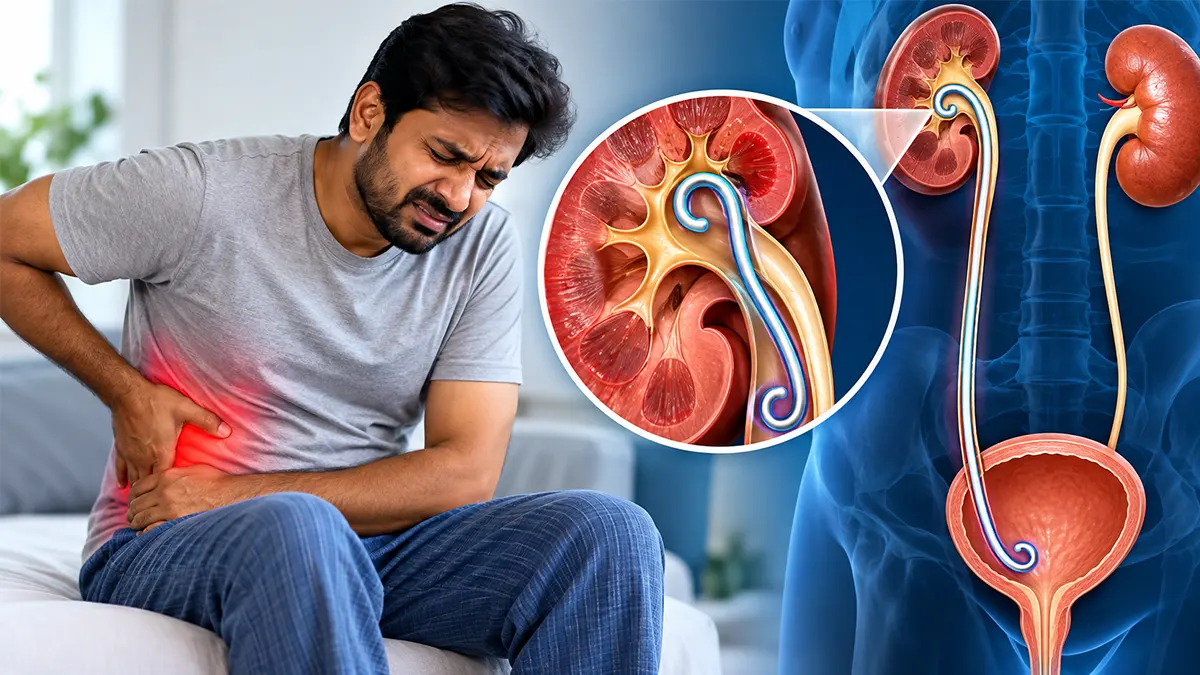
Finding effective ureteral stent pain relief can make the difference between a miserable recovery and a smooth healing process after kidney stone surgery. Whether you just had ureteroscopy (URS), laser lithotripsy (RIRS), or shock wave lithotripsy (ESWL), waking up with a temporary plastic tube inside your urinary tract often surprises patients. In fact, many people say the stent feels more annoying than the stone itself. According to clinical data from the Cleveland Clinic, up to 80% of people with ureteral stents experience uncomfortable symptoms such as bladder spasms, frequent urination, pink-tinged urine, or a sharp pulling ache in the back while peeing.
The good news is that stent discomfort does not mean your surgery failed—and you do not have to just “tough it out” until removal day. By combining targeted prescription medications that relax the urinary tract with simple daily bladder-calming habits, you can dramatically reduce friction, cramping, and urgency.
Below, we explain why a Double-J stent causes pain in two specific places, share 6 proven ways to get fast ureteral stent pain relief, and highlight the warning signs that require a call to your urologist.
Table of Contents
Key Takeaways: Ureteral Stent Pain Relief & Recovery Rules
- Up to 80% of patients feel stent symptoms: Bladder irritation, sudden cramping spasms, peeing more often than usual, and mild blood in the urine are normal reactions to a foreign tube resting inside your ureter and bladder.
- Two-zone pain mechanism: The bottom coil of the stent rubs against your bladder wall as it empties (causing pelvic spasms and urgency), while the hollow tube allows a small amount of urine to flow backward toward your kidney when you pee (causing temporary flank ache).
- Combination medication works best: Clinical urology trials published by the National Institutes of Health (NIH) show that pairing an alpha-blocker (like tamsulosin/Flomax) with a bladder antispasmodic (like oxybutynin or solifenacin) delivers the strongest ureteral stent pain relief.
- The 10-pound lifting limit: Avoiding heavy lifting (anything over 10 pounds, or the weight of a gallon of water) and intense exercise prevents the stent coils from rubbing raw spots along your bladder lining.
Why Does a Double-J Stent Hurt? (The Science Behind Ureteral Stent Pain Relief)
On Healthy Way Care, many readers ask why a soft, flexible silicone or polyurethane tube—only about 10 to 15 inches long and a quarter-inch wide—causes so much discomfort. Understanding ureteral stent pain relief starts with how a Double-J stent is shaped and why your urologist placed it.
After kidney stone removal, the delicate inner lining of your ureter often swells up from the laser, scope, or stone fragments. Without a stent holding that narrow muscular tube open, postoperative swelling or tiny stone dust could block urine from draining out of your kidney—leading to dangerous kidney swelling (hydronephrosis) or infection.
To keep the stent from slipping out of place, both ends are curled into a “J” shape (which is why doctors call it a Double-J stent):
- The Top Coil Sits Inside Your Kidney (Causing Flank Reflux Pain When Peeing): Normally, a one-way valve where your ureter enters your bladder stops urine from flowing backward. Because a ureteral stent holds that valve open, squeezing your bladder to pee pushes a small wave of urine backward up the tube into your kidney. That sudden pressure spike triggers a sharp, squeezing ache in your side or lower back right at the end of urination (see our Kidney Stone Pain Location Chart to see where kidney and bladder pain zones connect).
- The Bottom Loop Sits Inside Your Bladder (Causing Bladder Spasms & Urgency): The lower curl of the stent rests directly on the sensitive nerve-rich floor of your bladder (the trigone). Every time you walk, bend over, or finish emptying your bladder, the shrinking bladder wall squeezes down onto that plastic loop. Your bladder mistakes the coil for a stone or full bladder, triggering sudden cramping (bladder spasms) and a constant urge to urinate every 15 to 30 minutes.
6 Proven Ways to Get Fast Ureteral Stent Pain Relief at Home
1. Ask Your Urologist for an Alpha-Blocker (Tamsulosin / Flomax)
Even if you are a woman or a young adult with zero prostate issues, the single most effective prescription foundation for ureteral stent pain relief is a daily medication called tamsulosin (Flomax) or a similar alpha-blocker.
- How it relieves pain: The ureter and the lower neck of your bladder are lined with smooth muscle fibers controlled by alpha-1 receptors. Taking tamsulosin relaxes those smooth muscles, widens the ureter around the stent, reduces pressure inside the kidney when you pee, and softens the squeeze of the bladder neck against the bottom coil.
- Practical tip: Take tamsulosin at the exact same time each day (often 30 minutes after the same meal) and stand up slowly from bed, as it can mildly lower blood pressure.
2. Calm Overactive Bladder Spasms With Antimuscarinics or Mirabegron
If your worst symptom is a sudden, stabbing cramp in your lower pelvis or feeling like you urgently need to pee 30 seconds after leaving the bathroom, targeted bladder relaxants are essential for ureteral stent pain relief.
- How they relieve pain: Medications such as oxybutynin (Ditropan), tolterodine (Detrol), solifenacin (Vesicare), or mirabegron (Myrbetriq) calm involuntary contractions of the bladder wall muscle (detrusor muscle) so your bladder stops clamping down on the lower loop of the stent.
- Why combination therapy wins: Research published by the National Institutes of Health (NIH) demonstrates that combining tamsulosin + oxybutynin reduces both flank pain and daytime/nighttime bladder spasms significantly better than taking either medication alone.
3. Soothe Burning Urination With Urinary Tract Analgesics (Phenazopyridine)
During the first 48 to 72 hours after cystoscopy and stent placement, your urethra and bladder lining are often raw and irritated, causing a sharp burning or stinging sensation (dysuria) whenever urine passes.
- How it relieves pain: Over-the-counter or prescription phenazopyridine (AZO, Pyridium) acts like a targeted local numbing soothing agent specifically for the inner lining of your lower urinary tract.
- What to expect: Phenazopyridine turns your urine a bright neon orange or reddish-orange color that can stain underwear and contact lenses. Do not confuse this harmless orange medication dye with heavy blood clots, and only use it for the short duration recommended by your doctor.
4. Use Doctor-Approved Anti-Inflammatories or Acetaminophen Safely
Reducing postoperative swelling around the ureter walls is a core step in ureteral stent pain relief, but choosing the right pain reliever depends on your kidney function (eGFR).
- How to choose safely: As noted by the Cleveland Clinic, anti-inflammatory medications (NSAIDs like ibuprofen or prescription ketorolac) calm ureter swelling and spasms effectively if you have healthy overall kidney function. However, if you have chronic kidney disease (eGFR below 60), dehydration, only one kidney, or take blood pressure pills, ask your urologist to use acetaminophen (Tylenol) instead so you do not restrict kidney blood flow.
5. Apply Warm Sitz Baths and Heating Pads Over Your Flank or Pelvis
You do not have to wait for pills to kick in to get physical ureteral stent pain relief during an acute wave of bladder cramping.
- How heat works: Placing a warm heating pad over your lower abdomen (just above the pubic bone) or soaking in a 15- to 20-minute warm bath (sitz bath) increases local blood flow, relaxes tight pelvic floor muscles, and interrupts pain signals traveling from the irritated bladder nerves.
- Peeing posture hack: Instead of straining or pushing hard to finish peeing—which forces more urine backward up the stent into your kidney—sit down on the toilet, lean slightly forward, take a slow deep breath, and let urine flow out gently by gravity.
6. Drink Steady Water to Keep a “Liquid Cushion” Inside Your Bladder
Many stent patients make the mistake of stopping water intake because they are tired of running to the bathroom or scared of the flank ache that happens when they pee. Paradoxically, dehydration makes stent pain much worse!
- Why hydration provides ureteral stent pain relief: When your bladder is nearly empty and filled with dark, concentrated, acidic urine, the muscular walls collapse tightly onto the plastic stent coil and burn the irritated mucosa. Drinking steady plain water throughout the day keeps a gentle “liquid cushion” inside your bladder so the walls don’t rub directly against the stent loop, while also flushing out tiny blood clots and stone dust.
- Evening timing trick: Drink plenty of water from morning until 6:00 PM, then taper down during the last 2 hours before bed so you can sleep with fewer nighttime bathroom trips.
Related Guide on Healthy Way Care: Once your stent is out, preventing another stone is your #1 priority. Explore our Calcium Oxalate Kidney Stones Guide and our Foods That Cause Kidney Stones Avoid List.
Quick Comparison Table: Ureteral Stent Pain Relief Medications & Home Remedies
Use this clinical reference chart to match your exact stent symptom with the right ureteral stent pain relief method:
| Stent Symptom You Feel | Why It Happens With a Double-J Stent | Best Ureteral Stent Pain Relief Solution |
| Sharp flank/back ache right when peeing | Urine briefly flows backward (refluxes) up the hollow stent into the kidney | Tamsulosin (Flomax) + sit down and let urine drain gently without pushing or straining |
| Sudden pelvic cramping & constant urge to pee | Shrinking bladder wall squeezes down onto the bottom loop of the stent | Bladder antispasmodics (Oxybutynin, Solifenacin, Mirabegron) + 20-minute warm sitz bath |
| Burning or stinging in the urethra when peeing | Irritation from the cystoscope camera and lower stent coil | Phenazopyridine (AZO/Pyridium) for 2–3 days + steady water intake to dilute urine acid |
| Pink or light reddish urine after walking | Bottom coil lightly rubs the sensitive bladder lining during physical movement | Rest flat for 30–60 minutes, drink 2 glasses of plain water, and avoid lifting >10 lbs |
| Constipation making pelvic pressure worse | Full bowel presses directly against the front wall of the stented bladder | Stool softeners (docusate/Miralax) + high-fiber foods (essential if taking opioid pain pills) |
What to Avoid While Seeking Ureteral Stent Pain Relief (4 Recovery Mistakes)
Even the best medications cannot deliver full ureteral stent pain relief if daily habits keep irritating your urinary tract. Avoid these four triggers while your stent is in place:
- Lifting anything heavier than 10 pounds (4.5 kg): For at least the first several days (or throughout your stent placement if you are sensitive), avoid lifting heavy groceries, children, or gym weights heavier than a gallon of water. Heavy lifting spikes abdominal pressure and forces the stent coils to scrape against your kidney and bladder lining.
- Drinking bladder-irritating beverages: Coffee, energy drinks, spicy foods, artificial sweeteners, alcohol, and carbonated sodas irritate the bladder trigone and trigger intense spasms (read our guides on Beer for Kidney Stones: Myth or Dangerous Mistake? and The Truth About Sparkling Water and Kidney Stones).
- Pulling on a stent dangle string yourself (unless explicitly instructed): Some short-term stents (kept in for 3 to 7 days) have a thin extraction string taped outside the urethra. Never tug or accidentally catch this string on underwear or washcloths; if it slips out early while your ureter is still swollen, your kidney can block up rapidly.
- Having sexual intercourse during the first week: Urologists advise avoiding sexual intercourse for at least one week after stent placement (and never while an external extraction string is present) to prevent discomfort, stent displacement, and urinary tract infections.
What to Expect During Ureteral Stent Removal (And Post-Removal Spasms)
Most temporary stents stay in place for a few days to 2–3 weeks while your ureter heals. Removal happens in one of two quick ways:
- String Removal: If your stent has an external string, your provider (or you, if guided by your urologist) gently pulls the string out in a few seconds.
- In-Office Cystoscopy Removal: If your stent has no visible string, your urologist applies a numbing anesthetic gel to your urethra, passes a thin flexible camera into your bladder, grasps the bottom coil, and slides the stent out in less than 1 to 2 minutes.
Pro Tip for Removal Day: It is common to experience mild ureter cramping for 24 to 48 hours after stent removal as your ureter readjusts. Ask your urologist if you should take a dose of tamsulosin or your prescribed pain reliever 1 hour before your removal appointment and keep drinking plenty of water afterward.
Emergency Red Flags: When to Call Your Urologist Immediately
While mild pink urine and bladder urgency are normal, contact your healthcare provider or go to urgent care right away if you notice any of these warning signs:
- Fever above 100.4°F (38°C) or shaking chills (a sign of urinary tract or kidney infection).
- Thick dark blood or large blood clots in your urine (looking like tomato soup), or inability to pass urine (urinary retention).
- Cloudy, thick, or foul-smelling urine accompanied by worsening burning.
- Constant, severe kidney pain that does not fade after you finish urinating, or persistent nausea and vomiting.
- The stent visibly slips out into your underwear or toilet bowl prematurely.
Conclusion
Experiencing bladder spasms, frequent bathroom trips, or a brief flank ache when peeing can feel exhausting, but smart ureteral stent pain relief makes recovery manageable. By asking your urologist for a combination of an alpha-blocker (tamsulosin) and a bladder antispasmodic (like oxybutynin), keeping a steady “liquid cushion” of plain water in your bladder, using warm sitz baths or heating pads, and avoiding lifting over 10 pounds, you can keep your urinary tract calm until the day your stent comes out.
Frequently Asked Questions (FAQs)
1. Why does my kidney hurt when I pee with a ureteral stent?
A Double-J ureteral stent holds open the natural one-way valve between your bladder and ureter. When your bladder contracts to push urine out, a small amount of urine flows backward (refluxes) up the stent into your kidney, causing a temporary squeezing ache in your flank that usually fades within a few minutes of finishing urination.
2. What is the best medication for ureteral stent pain relief?
Clinical studies show that the most effective medical ureteral stent pain relief combines an alpha-blocker like tamsulosin (Flomax)—which relaxes the ureter and lower bladder muscle—with a bladder antispasmodic like oxybutynin, solifenacin, or mirabegron to stop painful bladder wall spasms.
3. Is blood in the urine normal while you have a ureteral stent?
Yes. Light pink, peach, or tea-tinted urine that comes and goes—especially after walking, climbing stairs, or housework—is normal for as long as the stent remains inside because the soft plastic coils gently brush against your bladder lining. However, thick dark red blood, large clots, or trouble peeing requires immediate medical attention.
4. How many days after placement does ureteral stent pain start to improve?
For most patients, urethral burning and intense bladder irritation peak during the first 2 to 4 days after surgery and gradually settle down as the bladder adjusts to the coil. Mild urgency or intermittent pink urine may continue until the stent is removed.
5. Does drinking more water help or hurt ureteral stent pain?
Drinking plenty of plain water helps provide ureteral stent pain relief. When you are dehydrated, concentrated acidic urine burns your irritated bladder lining and your empty bladder walls squeeze directly onto the plastic loop. Staying hydrated creates a fluid cushion inside your bladder and prevents blood clots from blocking the stent.
6. Does ureteral stent removal hurt?
Ureteral stent removal is very fast—usually taking less than 1 to 2 minutes in the urologist’s office after numbing gel is applied. Most patients feel a brief tugging or urge-to-pee sensation rather than sharp pain, though mild ureter spasms can occur for 24 hours afterward.
Author & Editorial Standards
Written by Yamanandan Reddy — Health & Wellness Writer Yamanandan Reddy writes research-backed patient education guides at Healthy Way Care, helping readers understand kidney stone surgery recovery, urinary symptoms, medication safety, and evidence-based prevention using official clinical guidelines.
Medical References & Clinical Sources:
- Cleveland Clinic — Ureteral Stent: Purpose, Procedure, Results, Complications & Removal
- National Institutes of Health (NIH / PMC) — Efficacy of Tamsulosin, Oxybutynin, and Their Combination in the Control of Double-J Stent-Related Lower Urinary Tract Symptoms
- National Institutes of Health (NIH / PMC) — Ureteral Stent Discomfort: Etiology and Management
- National Institutes of Health (NIH / PMC) — Comprehensive Overview of Ureteral Stents Based on Clinical Aspects, Material and Design
Medical Disclaimer: The information provided on Healthy Way Care is for educational and informational purposes only and is not a substitute for professional medical advice, diagnosis, or treatment. Always consult your urologist or healthcare provider before starting any medication or if you experience fever, heavy bleeding, or severe pain after kidney stone surgery.